
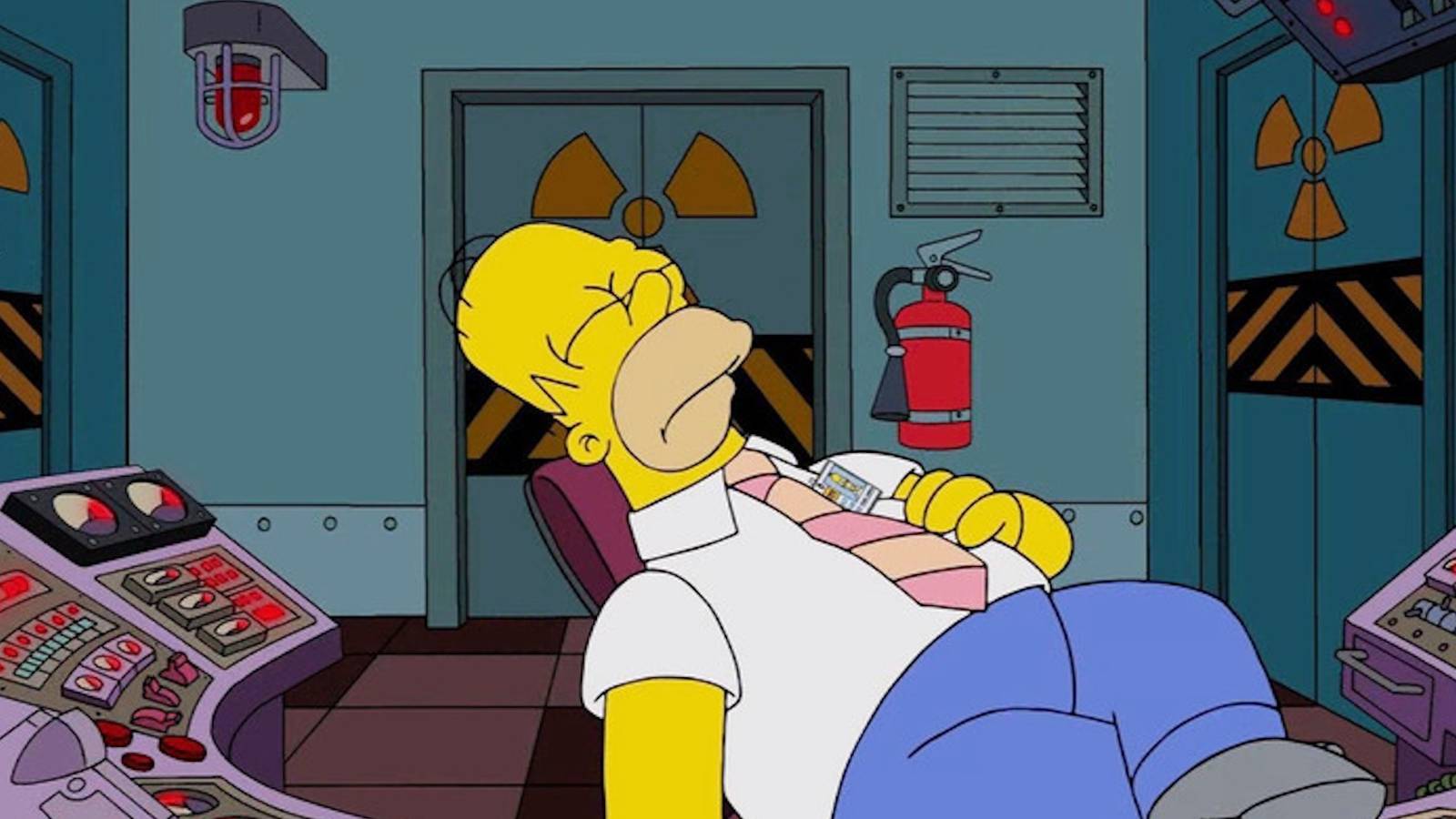
Homer Simpson (Dan Castellaneta) has had a staggering number of jobs over the course of The Simpsons’ extraordinary run — pegged at nearly 200 positions as of 2016 — and it’s only grown since then. Springfield Isotopes’ mascot, astronaut, snowplow operator, Sanitation Commissioner, prank monkey, death, tomacco inventor and proprietor… you name it, Homer’s done it.
Yet one job has stood as Homer’s anchor vocation from the start: safety inspector at the nuclear plant. A respectable job, to be sure, and despite his grip on it being tenuous at best, the fate of Springfield perpetually rests on his ability to press a button in the event of an emergency. But a massive twist in the Season 35 premiere changed that history in just three minutes.
Homer Becomes the Sector 7G Safety Inspector in ‘The Simpsons’
In the very first episode of The Simpsons, Homer gets a job as a mall Santa to raise money after Bart’s (Nancy Cartwright) tattoo removal wipes the family’s Christmas gift budget out, and in the second, “Bart the Genius,” he’s a kwyjibo — or at least that’s Bart’s Scrabble faux-term for him. It isn’t until “Homer’s Odyssey,” the third episode, that he’s revealed to be a worker at the Springfield Nuclear Power Plant. (Briefly, that is, given he’s fired in the episode’s opening minutes when he crashes an electric cart into a cooling vent.) Circumstances drive Homer to embark on a public safety crusade, eventually turning his attention to the nuclear plant, and gaining people to join his cause. In order to stop the oncoming tide, Mr. Burns (Harry Shearer) offers Homer a new position as the plant safety inspector, replete with a higher salary. Torn between his principles and the well-being of his family, Homer accepts the offer.
And that’s been his role ever since — largely spent sleeping and eating doughnut— but he has actively saved the plant twice. In Season 3’s “Homer Defined,” after creating a near-meltdown thanks to jelly from a doughnut, Homer selects the correct override button by recounting “Eenie, Meenie, Miney, Moe,” and uses the same tactic to prevent a meltdown at the Shelbyville Nuclear Power Plant. The sheer luck spawned the creation of the phrase “to pull a Homer,” defined as “to succeed despite idiocy.”
The second time occurs in “King-Size Homer,” an episode that sees Homer become morbidly obese in order to work from home. A stay-at-home work terminal is set up, which requires him to press the “Y” button repeatedly. He sets up a drinking bird to do the task, but when it tips over and a meltdown is imminent, Homer arrives at the plant to use the shutdown switch, getting stuck in the hatch of a radioactive gas tank, blocking the gas from escaping with his girth.
‘The Simpsons’ Season 35 Episode “Homer’s Crossing” Changes Everything
Then comes Season 35’s “Homer’s Crossing,” and everything we thought we knew changes. While talking with Lenny (Shearer), an emergency breaks out at the plant. Strangely, the safety console in Homer’s office stays silent, while Lenny’s office erupts in lights and alarms. Some other workers rush in, including Mr. Burns, and they handle the situation deftly, ending the emergency as quickly as it began. With everything calm once again, Homer asks what’s going on, to which Lenny reveals that Homer’s office is fake. The buttons are fake. The knobs, screens, levers… fake, fake, and fake. And when things go wrong, he’s never alerted.
Homer asks if he’s respected as a coworker, and if they think he’s capable at his job, but everyone just backs away and evades the question. He needn’t have asked: even Homer can see what the answer is, “no.” We know it’s not true, of course, given the multiple times over the course of the series that those buttons and lights actually have meant something, but it does make sense. Leaving the fate of Springfield in the hands of Homer Simpson would be like letting Barney (Castellaneta) have the keys to Moe’s, so entrusting the reliable Lenny is arguably the best decision Burns has ever made regarding the plant.

Related
‘The Simpsons’ Just Ruined Homer’s Biggest and Best Storyline
Oh mother, where art thou?
But it begs the question: why keep Homer employed in the first place? He’s incompetent, and clearly not trusted to do the job he’s hired to do, so there’s no logical reason to keep him. Then again, logic has never been a strong suit of The Simpsons, right up there with continuity, which makes Season 36’s “Shoddy Heat” an outlier of sorts, serving as an illogical plot device that repairs the continuity “Homer’s Crossing” upended.
In the episode, flashbacks reveal that Grampa (Castellaneta), working as a detective, had been investigating the disappearance of his partner. All signs point to Burns having something to do with it, and he vows to keep on the case until the truth is revealed. Caught between the proverbial rock and a hard place, Burns espies young Homer behaving foolishly, and makes Grampa an offer: drop the investigation, and when Homer grows up, Burns promises to give him a job and never fire him. Ridiculous, maybe, but if you were willing to believe Homer had the responsibility of a safety inspector for 34 years, is it really that far removed?