
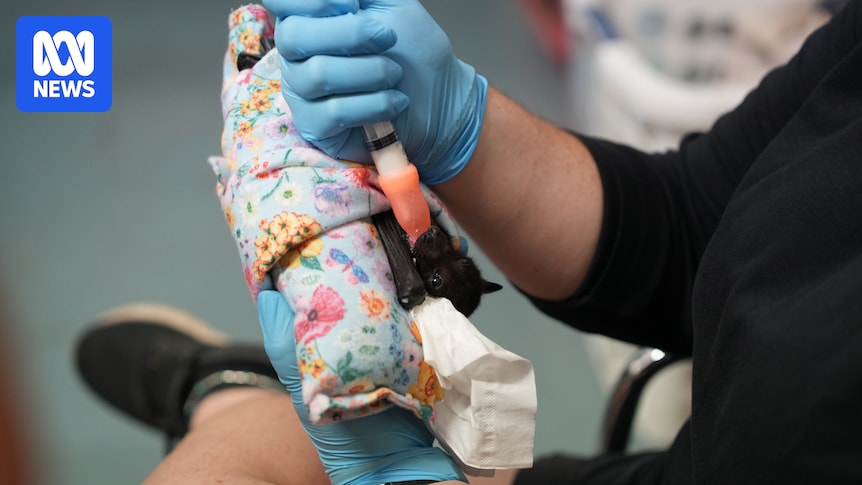
Wildlife rescuers are scrambling to try to save hundreds of flying fox pups after the Northern Territory’s native fruit bat population suffered “mass casualties” in the wake of ex-Tropical Cyclone Narelle.
Hundreds of dead and dying juvenile flying foxes have recently covered the streets of Katherine and Pine Creek, south of Darwin, after their parents abandoned them ahead of last month’s extreme weather event passing over the Northern Territory.
In response, more than 20 wildlife workers and volunteers pulled together to save as many of the surviving pups as possible, completing almost daily rescue missions between Darwin and the small outback towns.
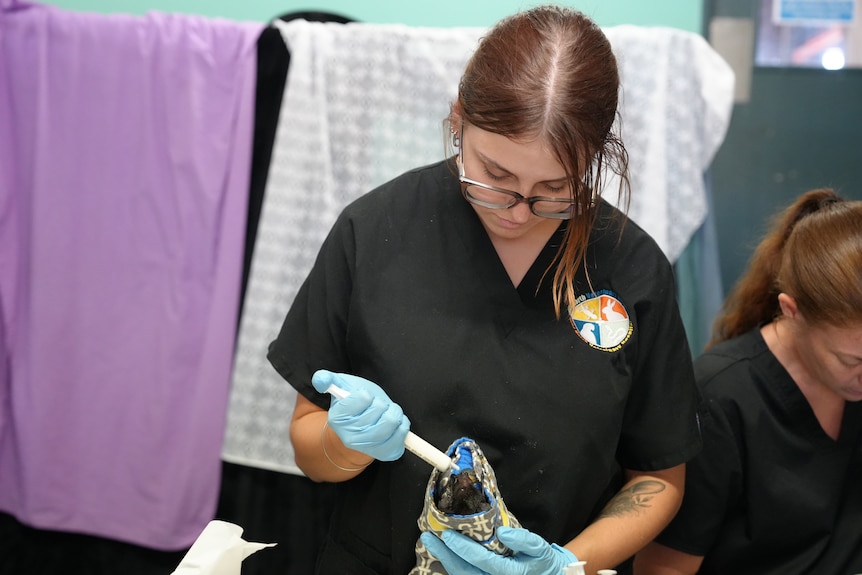
Kacey Farris says hearing the baby bats scream was devastating. (ABC News: Tilda Colling)
Wild North Veterinary Hospital practice manager Kacey Farris said it had been “pretty devastating” listening to the stricken creatures “screaming for their mum”.
“Hundreds are dead; they’re falling around you while you’re trying to rescue other ones, falling to the ground screaming like we just missed them,” she said.
“I’ve never, ever seen mass casualties like this, especially babies.”Interstate transfer denied
With the veterinary hospital’s staff working long hours — covering their own travel costs and care expenses for the dozens of surviving bats — the Darwin team reached out to NT Parks and Wildlife for help.
But Ms Farris said the Country Liberal Party (CLP) government had declined the chance to offer any additional workers or funding, instead taking a few carcasses for autopsies to determine their cause of death.
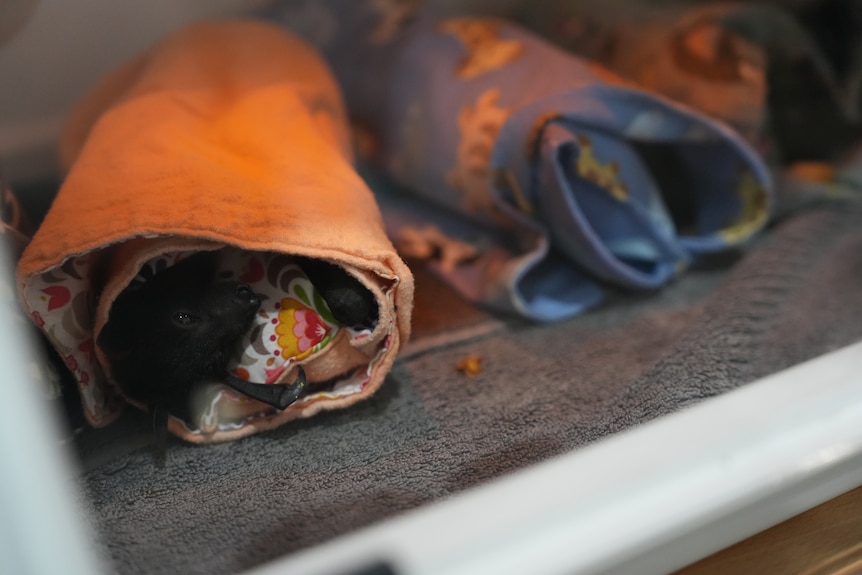
Rescuers have managed to save dozens of the flying foxes, with one volunteer caring for up to 45 at a time. (ABC News: Tilda Colling)
The local vets also applied for a permit to send surviving bats over the border for specialist care, with interstate volunteers ready to take in the pups, but the request was denied.
In a refusal notice seen by the ABC, an NT Parks and Wildlife representative said “the potential animal welfare and biosecurity risks” of transferring the bats across state lines outweighed “the benefits to a species that is abundant and not classified as threatened”.
They said the NT’s chief veterinary officer Rob Williams was investigating the high mortality rates and had not ruled out diseases — including lyssavirus — but, according to the letter, the deaths were likely attributable to natural causes.
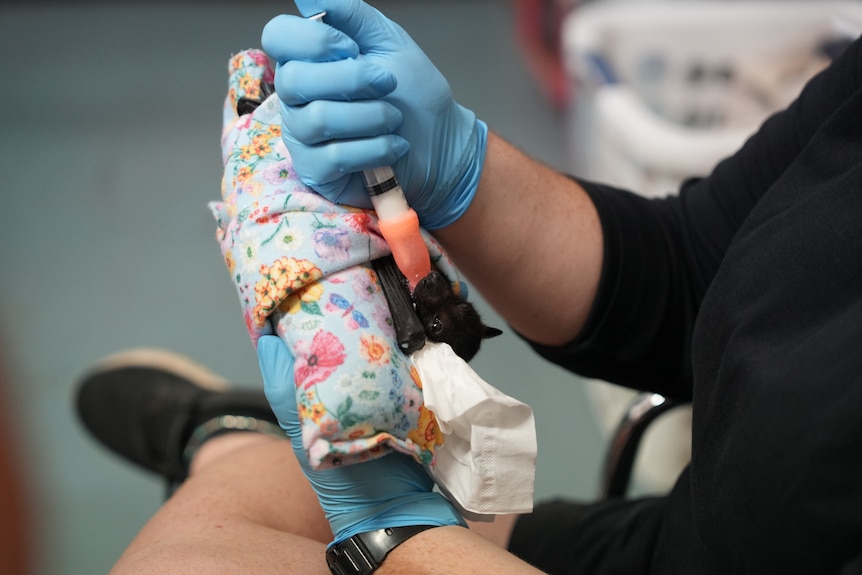
The fruit bat pups need to be fed up to five times a day. (ABC News: Tilda Colling)
“Initial indications are that this is likely to be linked to starvation associated with recent weather events impacting on available food resources,” it reads.
“If so, this is considered to be a natural ecological process that may occur periodically, and bat populations are highly likely to recover as food resources become available.”Public urged to steer clear
Rebecca Webster, a wildlife vet with the Darwin hospital, said her preliminary findings lined up with the cause of death conclusions drawn by Parks and Wildlife.
“From what we gather, the adults all took off prior to the cyclone and they have left their babies there — so most of the babies are orphaned, and there’s hundreds to thousands of babies alone,” she said.
“For the [Northern] Territory to have a flying fox crash at this scale is fairly unprecedented.
“They are a major pollen distributor, so they’re important for spreading our forests [and] regenerating.”
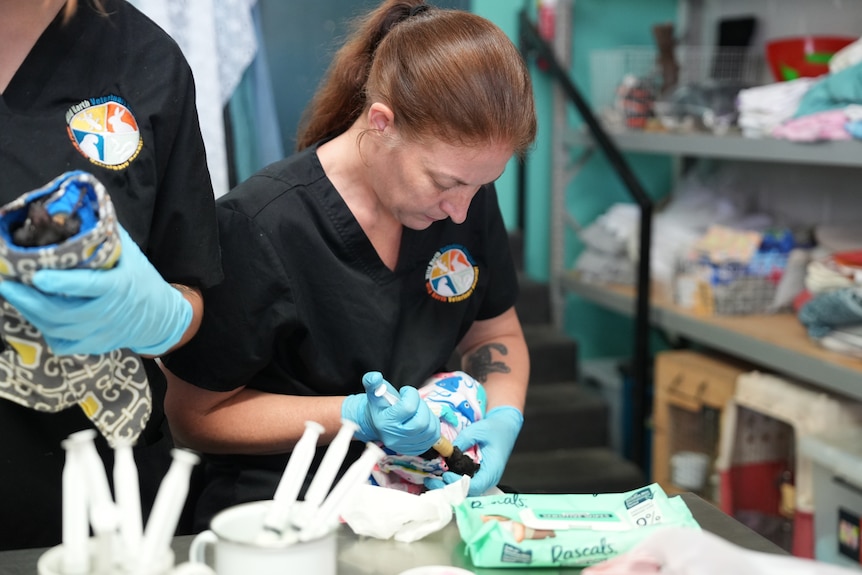
Rebecca Webster says the babies are likely dying of starvation after “the adults all took off” prior to the cyclone crossing. (ABC News: Tilda Colling)
Dr Webster said, even if disease was ruled out, the dead bats still presented a public health risk if they came into contact with children or pets.
Director of the NT’s Centre for Disease Control Vicki Krause said bats were common across the country and represented “an important part of the ecosystem in which people interact”, but urged Territorians to avoid them.
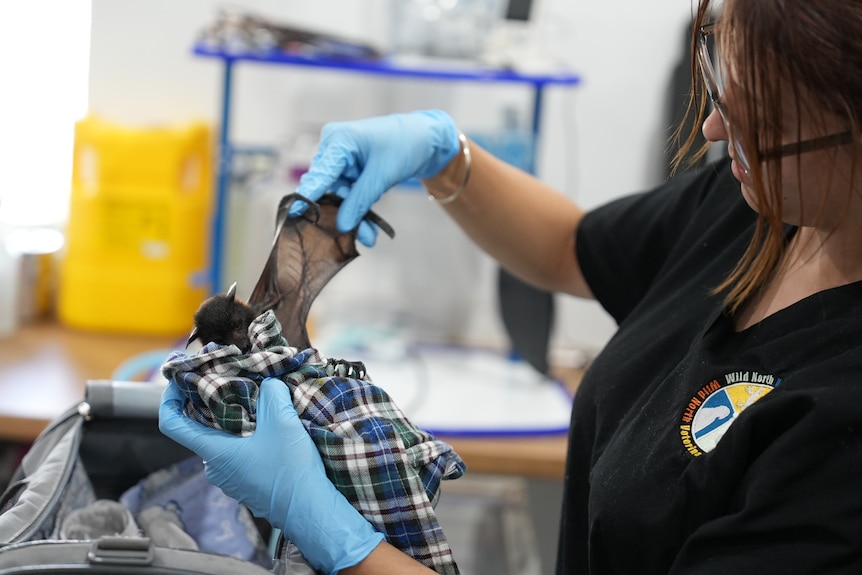
Wildlife carers have been examining the pups as they come in, checking for any additional injuries or signs of disease. (ABC News: Tilda Colling)
“While Australia is currently rabies-free, bats can carry various viruses — including the Australian bat lyssavirus (ABLV), which can cause a rabies-like infection,” she said in a statement.
“There have only been four human cases of ABLV disease in Australia, with the most recent case occurring in 2025 in New South Wales.”
NT Parks and Wildlife declined to comment.
Volunteers work around the clock
So far, an estimated 160 pups have been rescued and relocated to Darwin — but only about half of them will survive long-term.
Veteran wildlife carer Ally Syzac is one of the many volunteers who have been taking in the surviving bats to care for them at home.
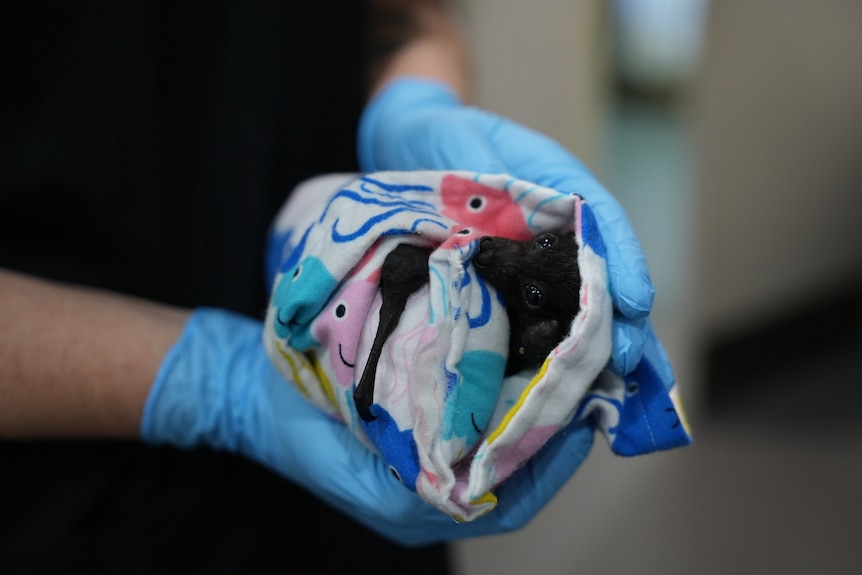
Carers have taken on as many as 45 flying foxes each, caring for them at their own homes. (ABC News: Tilda Colling)
“Most of the ones that are in at the moment are on five feeds a day, so our morning starts pretty early,” she said.
“On top of that, of course, having to get kids ready for school, getting to work — a lot of us also work full-time — so we’re trying to do this in and around our jobs.”
She said the pups were “growing really fast”, so it was important to ensure they received all the right nutrition “so they can have their best chance to be released”.
These volunteers have been working around the clock, with one local carer taking in 45 bats on her own.
The bat poo worth hundreds of millions of dollars
“This has probably been the biggest natural event I’ve seen in regard to flying foxes since I’ve been in the Territory,” Ms Syzac said.
“We do this because we love animals and we work with our hearts, but they get broken almost on a daily basis.”