

The future of Stellantis’ idled Brampton Assembly Plant in Ontario is quickly becoming a flashpoint, as both labor leaders and government officials push back against the possibility of the automaker assembling electric vehicles tied to its Chinese partner, Zhejiang Leapmotor Technology (Leapmotor).
At the center of the controversy is the idea that Stellantis could use the Brampton facility to assemble so-called “knockdown kits”—vehicles largely built in China and shipped to Canada for final assembly. While that may sound like a way to bring production back to the plant, critics argue it does little to support local jobs or the broader North American supply chain.
 European-Spec Leapmotor C10 EV. (Leapmotor).
Unifor, the union representing Canadian autoworkers at Stellantis facilities, has been especially vocal about its concerns. The organization confirmed that Stellantis is exploring multiple options for Brampton, including potential collaboration with Leapmotor, a company in which Stellantis holds roughly a 20% stake and a controlling interest in its global export operations.
However, Unifor leadership isn’t convinced this path aligns with what was promised to workers.
Unifor National President Lana Payne didn’t mince words, stating the union has “serious concerns” about the potential partnership and what it could mean for Canadian jobs.
 Unifor President Lana Payne speaking at the October 2025 Brampton Rally. (Unifor).
The concern largely revolves around how much real manufacturing would actually happen in Canada. If most of the vehicle’s components—and even major assembly—take place overseas, Canadian workers could be left with only a fraction of the work traditionally associated with a full-scale assembly plant.
That’s a major issue for a facility like Brampton, which historically supported thousands of jobs and played a key role in Stellantis’ North American production footprint.
Ontario Premier Doug Ford has also stepped into the conversation, making it clear he’s not on board with any plan that sidelines local workers or suppliers.
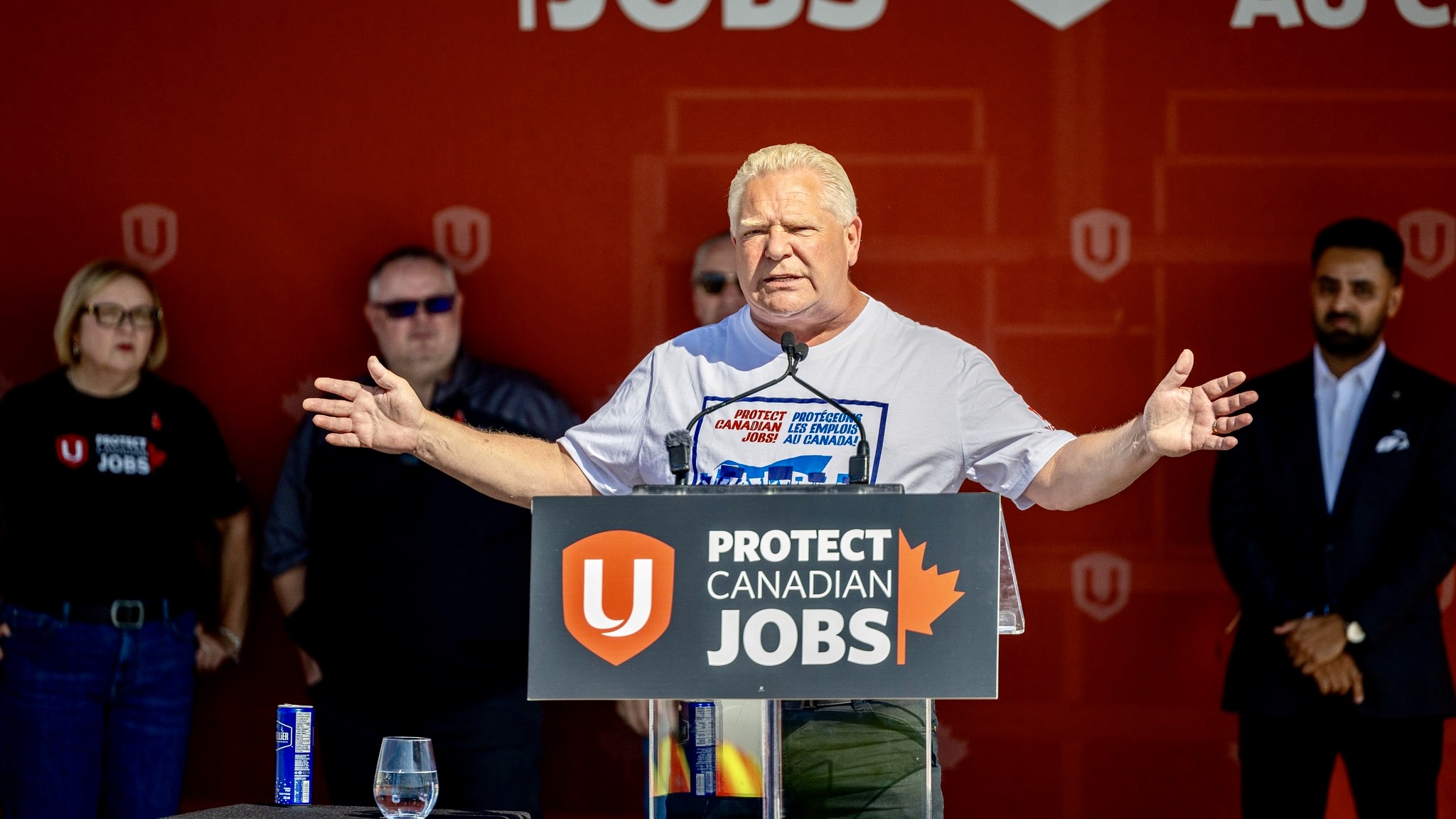 Ontario Premier Doug Ford at the October 2025 Brampton Rally. (Unifor).
Speaking about the possibility of importing largely pre-built vehicles for final assembly, Ford said, “If they’re bringing kits over made in China, all that does is undermine every single auto worker we have in Ontario. I am dead against it.”
Ford’s stance reflects a broader concern among Canadian officials that the country could become a “final assembly hub” rather than a true manufacturing center. That distinction matters, especially under the United States-Mexico-Canada Agreement (USMCA), which requires a significant percentage of vehicle content to originate within North America.
If Stellantis were to rely heavily on imported parts or near-complete vehicles from China, it could raise questions about compliance with those requirements, while also limiting the economic benefits typically associated with automotive production.
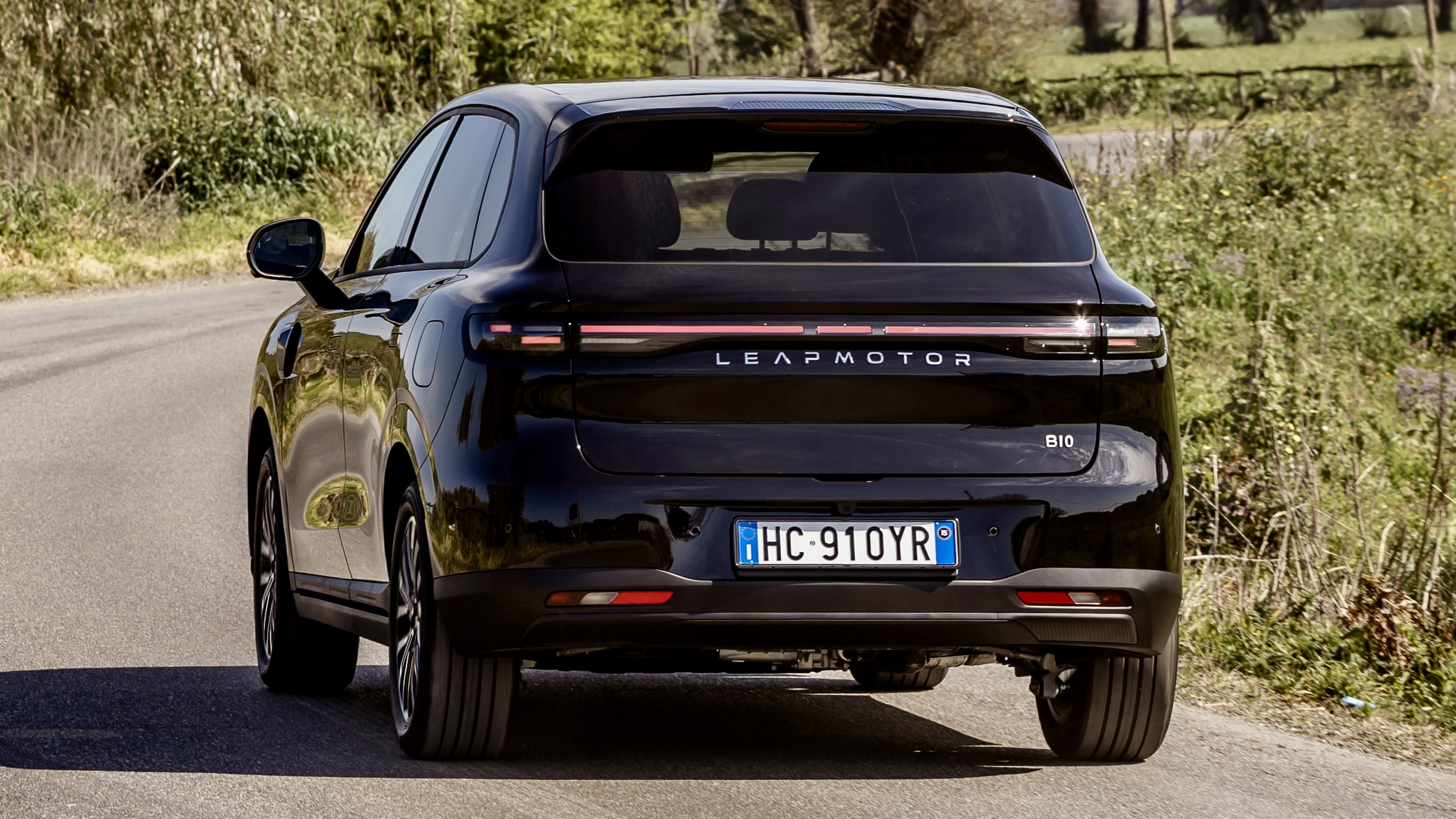 European-Spec Leapmotor B10 REEV. (Leapmotor).
The situation is further complicated by shifting global trade dynamics. Recent tariff policies in the United States have already forced automakers to rethink production strategies across North America. Stellantis, for example, previously moved planned production for Brampton to the U.S., leaving the Canadian plant without a clear future.
Now, as the company evaluates its next move, it finds itself balancing cost efficiency, global partnerships, and political pressure from both labor groups and government officials.
From a business standpoint, partnering with Leapmotor could offer Stellantis a quicker and potentially cheaper path into the growing EV market. Leapmotor brings established electric vehicle technology and production capabilities, which could help Stellantis accelerate its EV rollout without the same level of upfront investment.
But that strategy comes with trade-offs—especially in regions like Canada, where maintaining domestic manufacturing jobs is a top priority.
For Unifor and the Ontario government, the message is clear: any future plan for Brampton needs to deliver real, meaningful production—not just a symbolic return to activity.
There’s still no official confirmation from Stellantis on what direction it will ultimately take. The company has said it is actively evaluating options and remains in discussions with government stakeholders.
 European-Spec Leapmotor C10 EV. (Leapmotor).
What happens next could have ripple effects well beyond Brampton. It’s a test case for how global automakers balance international partnerships with local commitments in an increasingly complex automotive landscape.
For now, one thing is certain—any plan that doesn’t prioritize North American jobs and supply chains is going to face serious resistance.
Like this:
Like Loading…