

Listen to this article
Estimated 3 minutes
The audio version of this article is generated by AI-based technology. Mispronunciations can occur. We are working with our partners to continually review and improve the results.
Armed men mounted further attacks in Haiti’s agricultural Artibonite region on Tuesday, days after a gang’s weekend assault in the area of Jean-Denis left some 70 people dead, according to human rights groups and local residents.
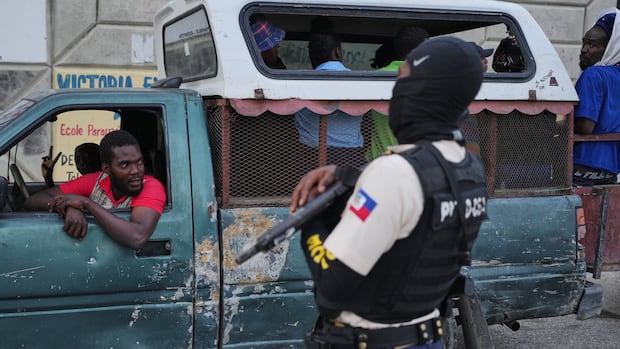
Haiti’s National Police said they were conducting operations in several parts of Artibonite on Tuesday.
Residents of Jean-Denis counted 70 bodies on Sunday morning after an attack by the Gran Grif gang, the Réseau National de Défense de Droits Humains (RNDDH) said in a report, matching the estimates of the Défenseurs Plus rights group. It was far above official estimates, which put the death toll at around 16.
RNDDH said about 30 more people were wounded, and victims included infants, pregnant women, teenagers and an 80-year-old man.
Armed men withdrew from Jean-Denis on Monday, RNDDH said, but on Tuesday they repositioned themselves in nearby Pont Benoit and were attempting to launch another offensive in the town of Marchand Dessalines, about 19 kilometres north.
Videos shared on social media showed armed men reportedly belonging to the Kokorat San Ras gang, a close ally of the powerful Gran Grif, distributing cash to residents in Marchand Dessalines.
Gran Grif has been designated a terrorist organization by the U.S. and the neighbouring Dominican Republic.
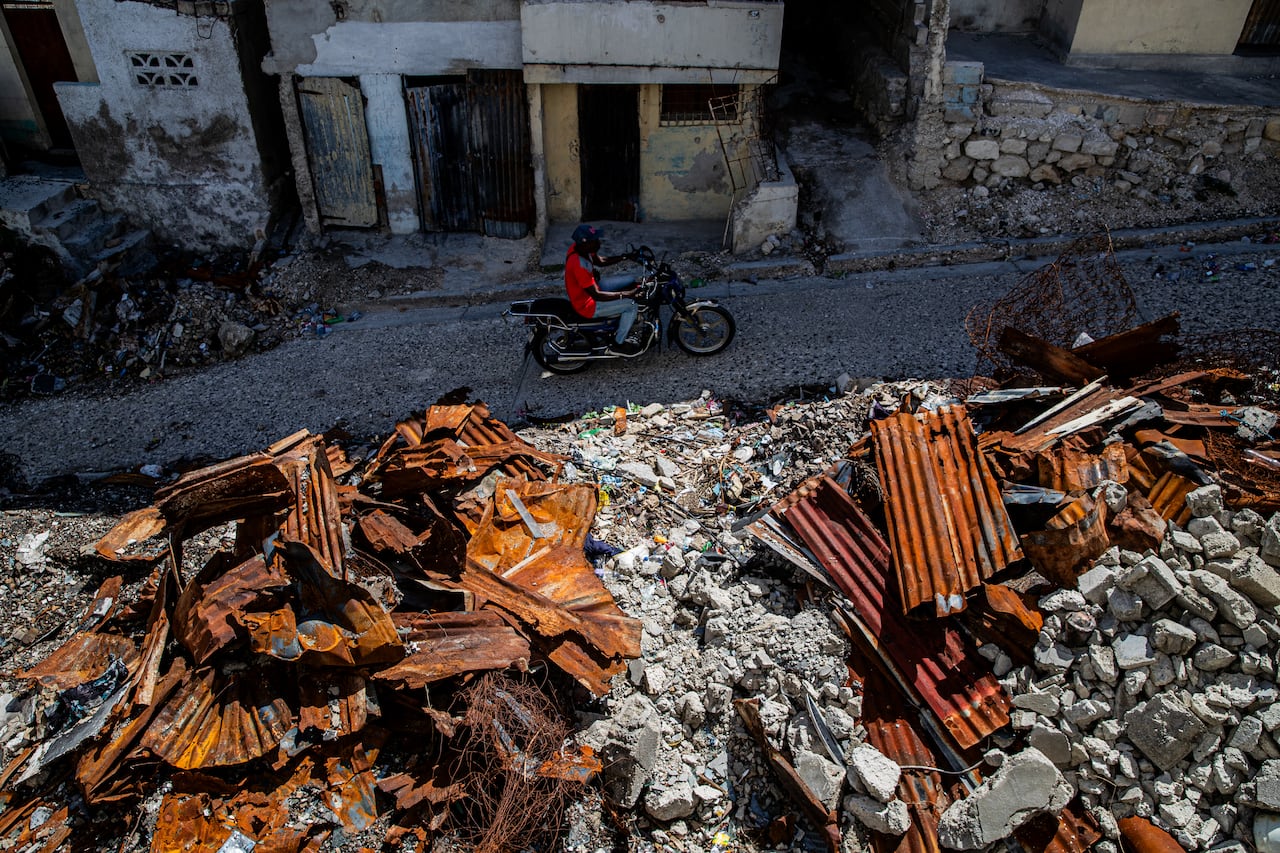 A motorcyclist drives through Port-au-Prince’s Solino neighbourhood earlier this month. (Clarens Siffroy/AFP/Getty Images)Gangs waited to attack at night
Residents told Reuters local self-defence brigades did not have the firepower to hold off the gangs, which would wait during the day when police were present but begin shooting and setting fire to buildings at night.
RNDDH, whose report followed interviews with local authorities, police and residents, said Gran Grif’s attack on Jean-Denis followed weeks of threats. It noted that residents did not flee because they believed the self-defence brigade would protect them.
However, the brigade withdrew as it did not have the firepower to hold off the attack, RNDDH said.
The police response was limited, it noted, with armored vehicles that managed to reach the scene staying just a few hours before withdrawing on Monday.
Local authorities told the rights group that most of their armored vehicles were out of service and that units belonging to the UN-backed security force had to await authorization from the capital before deploying.
Meanwhile on Tuesday, Prime Minister Alix Didier Fils-Aimé received a UN delegation and discussed the arrival of an expanded mission of a so far only partially deployed security force, which has suffered from lack of equipment, troops and funds.