
Getty Image
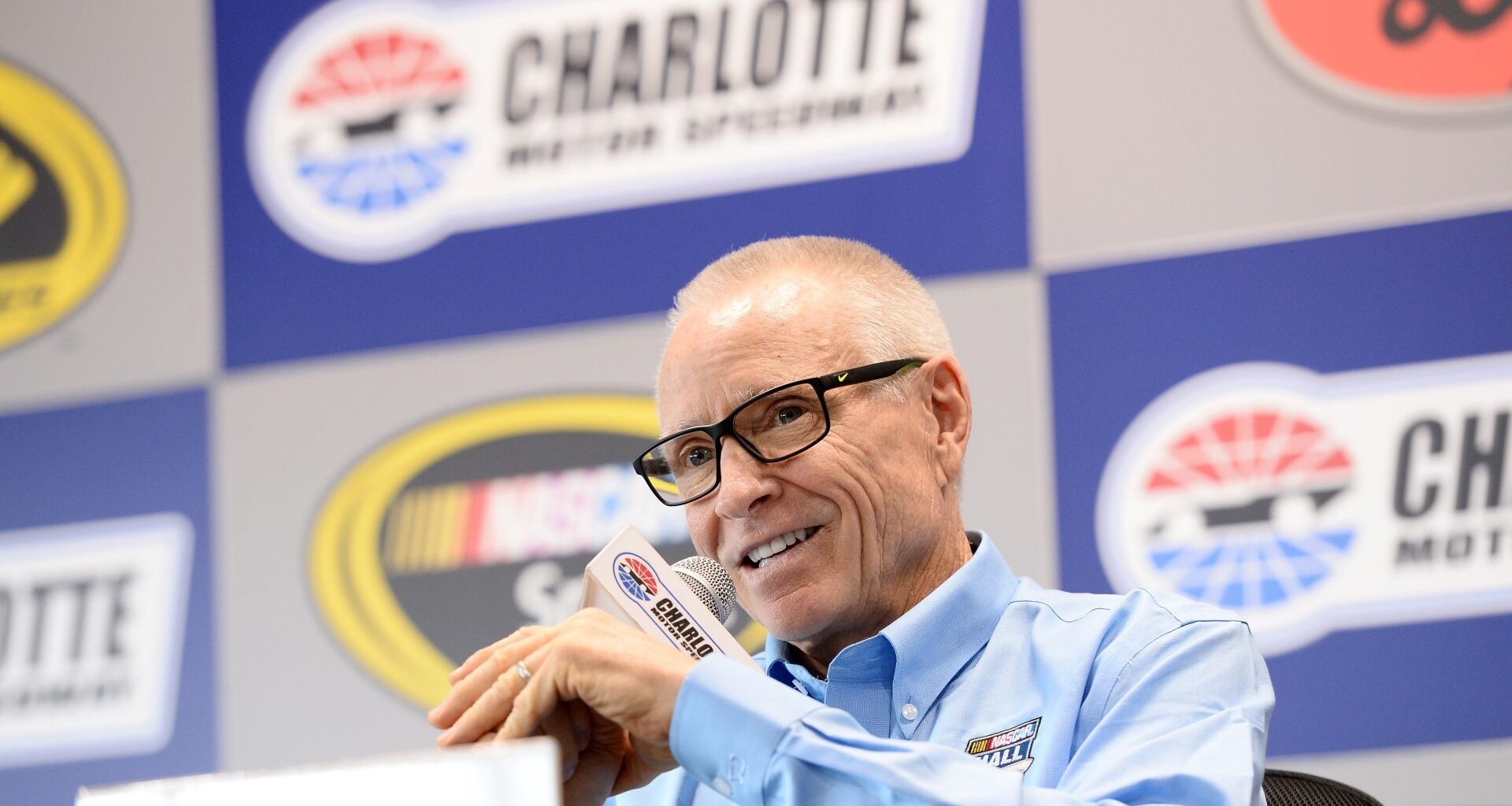
CHARLOTTE, NC – MAY 28: 2016 NASCAR Hall of Fame inductee Mark Martin speaks with the media prior during qualifying for the NASCAR XFINITY Series Hisense 300 at Charlotte Motor Speedway on May 28, 2016 in Charlotte, North Carolina. (Photo by Blaine Ohigashi/Getty Images)
Mark Martin did not hold back when comparing NASCAR manufacturers. On the Door Bumper Clear podcast, the Hall of Famer explained how funding and support differ across the sport.
He pointed to Ford Motor Company, Toyota, and Chevrolet, outlining how each approaches spending and driver development. Martin based his comments on his long career, including 23 years as a Ford contract driver.
His remarks focused on how manufacturers invest in teams and young drivers. The discussion showed clear differences in strategy across NASCAR.
Mark Martin Explains Ford’s Spending Approach
Martin described Ford as careful with money during his time in NASCAR. He said the company did not spend as much as other manufacturers outside of direct team support.
“So, my experience with Ford is they’ve always been super tight with the purse. Really tight with the purse.”
He confirmed that “purse” meant pocketbook, referring to spending. His point was that Ford handled funding beyond its core teams. He said the company did not invest heavily in wider programs, including driver development.
“I can guarantee I was a Ford contract driver for 23 years. And I felt like that the reason we were less favored… is because they participated less… they spent less money outside of what they did for their teams.”
Martin added that he did not know the exact level of support Ford gave to organizations linked to figures such as Jack Roush. Even so, he said his experience showed a pattern of lower spending than his rivals’. His comments focused on the broader structure rather than specific teams. He described a system in which Ford focused mainly on its existing teams rather than expanding support to a wider group of drivers.
Toyota’s Driver Development Program Stands Out
In contrast, Martin highlighted Toyota’s broader investment model. He praised the company’s approach to developing young drivers and building a structured pipeline.
“Thank goodness for Toyota, for their driver development program is absolutely spectacular.”
Toyota has built a system that identifies talent early and supports drivers as they move through different levels of racing. Martin pointed to this broad approach as a key difference from Ford. Instead of limiting support, Toyota spreads its resources across more drivers.
He explained that this model creates more opportunities for drivers to grow within the system. The program focuses on long-term development and consistent backing. Martin’s comments showed that Toyota’s strategy relies on scale and structure. By supporting a larger pool of talent, the company builds depth across its lineup. This approach has become a defining part of Toyota’s presence in NASCAR.
Chevrolet Uses a Targeted Strategy
Martin said Chevrolet takes a different path compared to Toyota. He described it as more focused, with investment directed at selected drivers rather than a wide group.
“Chevrolet doesn’t do a broad program as Toyota does… but they do a very targeted program.”
He gave Tristan McKee as an example of that approach.
“Tristan McKee is a product of that. He’s going to be a superstar in NASCAR, that kid.”
Martin explained that Chevrolet may not spend as broadly as Toyota, but it places strong support behind drivers it selects. This targeted model allows the company to concentrate resources on specific prospects.
He also noted that Ford’s current direction may be shifting. He suggested that the company could be focusing more on Formula 1, though he made clear this was his own observation.
“Right now, it looks like they’re even less. They’re probably shifting their money toward F1. I don’t know. I’m an outsider looking in.”
Martin’s comments outlined three different approaches in NASCAR. Ford focuses on core teams, Toyota builds a wide development system, and Chevrolet targets selected drivers. His experience showed how these strategies shape opportunities across the sport.
Dogli Wilberforce is a writer covering NASCAR, Formula 1, and the IndyCar Series for Heavy Sports. He has also written for Sportsnaut, FanSided, Total Apex Sports, and Last Word on Sports. Wilberforce focuses on the NASCAR Cup Series, breaking down news, driver stories, and key moments with a clear, fast, and engaging style. His work connects headlines to context, helping readers understand what matters most in the sport. More about Dogli Wilberforce
More Heavy on NASCAR
Loading more stories