
Updated April 7, 2026 02:09PM
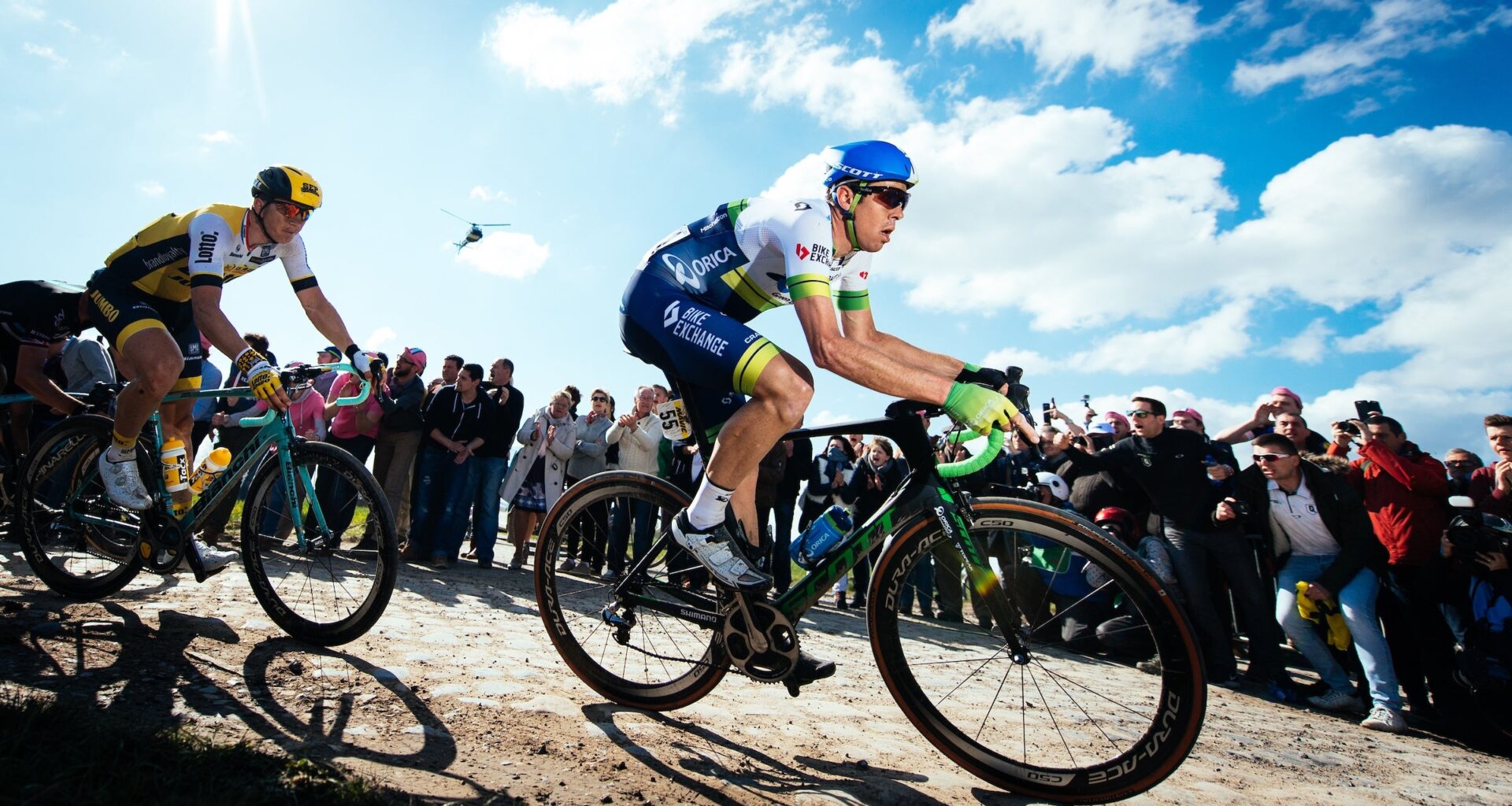
It was the least expected outcome. Rounding the bend of the Roubaix open-air velodrome was a bedraggled group of classics men led by Australian Matthew Hayman. Tom Boonen, racing in one of his last editions of the Hell of the North, was right behind him, desperately trying to overhaul the Australian to become the only person to win Paris-Roubaix five times.
But he couldn’t come around. Instead, Hayman won.
“If I hadn’t seen it with my own eyes,” Robbie McEwen, a former sprinter and classics regular, said on the broadcast, “I wouldn’t have believed that outcome.”
There were so many extraordinary things about Hayman’s win. For the last 100km, the Australian kept finding things turning his way, some small, some big, culminating in the final sprint where, finally, with 100 meters to go it started to happen.
Nevertheless, away from all the drama, the human story lines, and the racing machinations of the day, there is also a deeper, technical backstory that is interesting to explore 10 years on from that thrilling edition of the race. Among many groundbreaking stats and unique takeaways, Matthew Hayman’s bike was a watershed technical moment in the long and storied history of bike technology at Roubaix.
It was the start of the aerodynamic era.
What bike was Matthew Hayman riding?
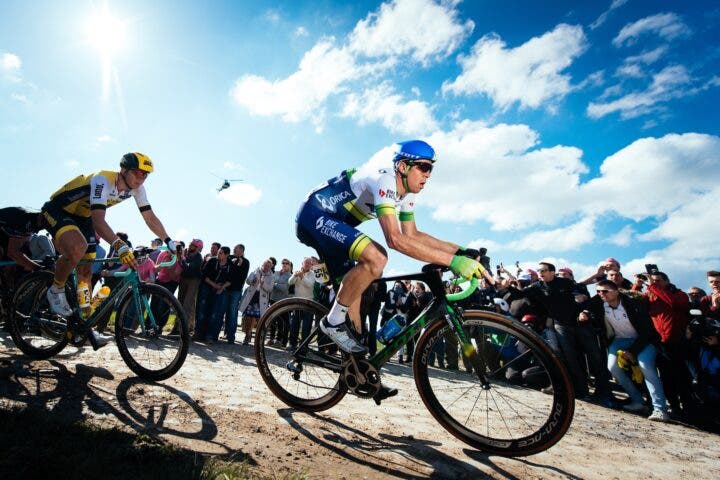 Matthew Hayman won the 2016 Paris-Roubaix aboard his Orica-BikeExchange team-issued Scott Foil, the brand’s aero bike. (Photo: Gruber Images)
Frameset
Unlike other companies at the time, Scott did not have a true endurance bike. Instead, the Australian outfit had the option of the aerodynamic Foil, or the lightweight Scott Addict. In the mid 2010s aero-bikes were still selectively used, as those early aero bikes were heavy, stiff to a fault, and often had proprietary brakes and other parts that made them tricky.
Nevertheless, they were starting to creep into the peloton as more brands innovated frames that were better suited for a modern peloton. Sprinters, domestiques, and breakaway artists were the riders who would be equipped with bikes like the Trek Madone (refined in 2015 when Trek split its road line between the Madone and Émonda) and the Specialized Venge ViAS (introduced later in 2016).
In retrospect, Paris-Roubaix is an aero bike’s perfect playground. To start, the race is fast. Even in 2016 the race was well over 40 kph, meaning any tech that works better at a faster speed would be extra beneficial at a race that is generally faster. What’s more, there is very limited elevation gain, making the weight penalty of aero optimization effectively a non-factor in the race.
The confounding variable is the cobbles, of course. The roughness of the stones always necessitated more compliant equipment, at very least bigger, more durable tires. Most aero bikes from that generation could do neither.
Even still, the Foil was at the very least built with enough clearance to hold the requisite 28mm tubulars that would have been too much for most of the aero bikes at the time. As for compliance? That was a priority baked into the design philosophy from the start, as Scott felt the aero bike landscape was neglecting ride quality in its pursuit of speed.
With Hayman’s win, Scott’s approach was vindicated, and the same design philosophy went market-wide over the next few design cycles, culminating in the tech of today’s race where pre-race favorite Tadej Pogačar will also ride an aero bike that was built with compliance concerns front and center.
Groupset
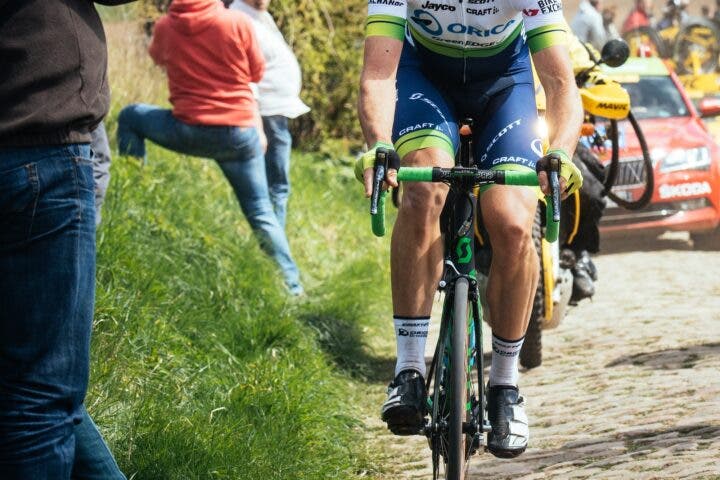 (Photo: Gruber Images)
Hayman’s bike was equipped with an 11-speed Shimano Dura-Ace Di2 groupset with 50mm-deep Dura-Ace C50 wheels to match. The 11-speed Dura-Ace was a very popular vintage, especially among WorldTour teams as 13 of the 18 ran Shimano groupsets that year. While Di2 was introduced in 2009 and had already been on multiple Tour de France-winning bikes, it was not yet universal among Shimano athletes.
Up until the change to disc brakes started to accelerate, there were still mixed preferences among the peloton. Hayman was certainly in the camp that embraced the technology with blip sprint shifters, and a change to a larger 53/44t chain-ring combination compared to the standard 53/38t arrangement.
The big tech discussion from that time in tech was not the compliance of frames so much as it was the adoption of modern electronic shifting. Even among the Specialized top athletes who were uniformly riding the Roubaix, Shimano Di2 versus mechanical Dura-Ace was a genuine debate. Notably, Peter Sagan was one of the last riders to pivot away from mechanical shifting at the highest level, while Boonen was quick to adopt Di2 shifting even for the rough roads of Roubaix.
Wheels and tires
 (Photo: Gruber Images)
The C50 Dura-Ace wheelset was a staple amongst the peloton in 2016 and Hayman was not alone in racing the 50-mm deep tubular wheels at Roubaix. Even with reduced braking and the increased risk of failure, deep carbon rims came into the Roubaix peloton in the early 2010s and quickly were adopted throughout after performances like Fabian Cancellara’s long (for the time) solo in 2010 demonstrated how the aero tech could weather the technical nature of the course and provide a significant benefit.
Similarly, the 28mm Continental tubulars that Hayman squeezed into his frame were pretty standard for the pre-aero era. Even in 2012, Roubaix tires were already bouncing around the 27-28mm size — for the teams that could, others were less fortunate and had to try and keep up with 24-25mm — and one notable example, Europcar’s Sebastian Turgot rode a Colnago cyclocross bike and 30mm tubular tires to second on the day.
While his aero frame, Shimano Di2 drivetrain, and general bent towards new aero tech were new, there were still many fully-baked Paris-Roubaix tech ideas that had been around for half a decade.
In the battle between aero and compliance, aero started winning
 (Photo: Yuzuru SUNADA)
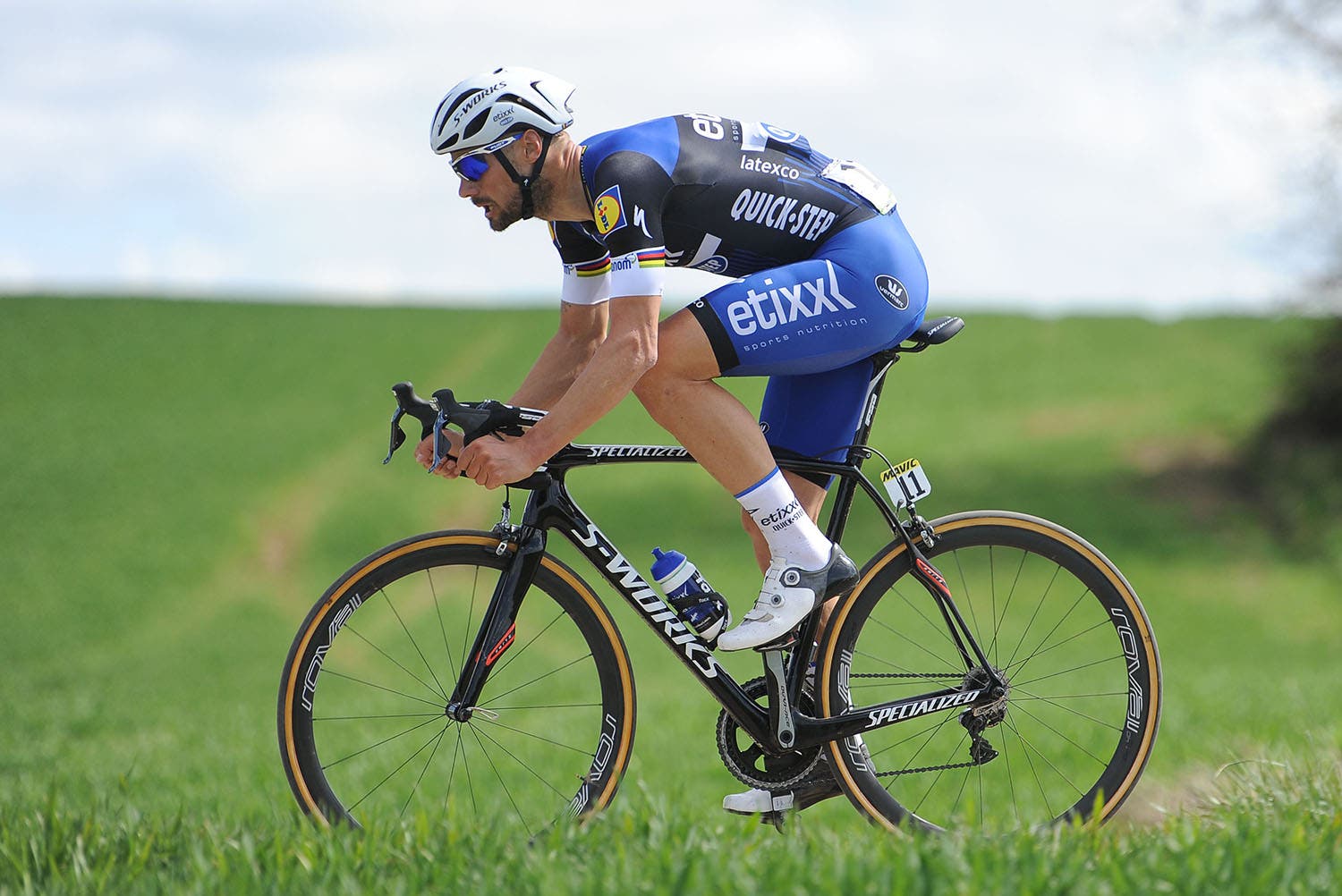
In the lead group in 2016, while Hayman was aero optimized, others were still erring on the side of compliance with the likes of second-place finisher Tom Boonen riding the Specialized Roubaix and third-place Ian Stannard running the Pinarello K8-S.
In 2016, the Specialized Roubaix had the Zertz inserts in the fork and seat stays of the bike. Beyond the frame, Boonen has a few other alterations for the race beyond the stock build with double-layered bar tape, a standard FSA seatpost, Roval carbon wheels, a long stem, ceramic bearings, and a Shimano Dura-Ace Di2 groupset. For tires, it was the 2016 special of 28mm Specialized Cotton tubular tires.
Similarly, Stannard’s K8-S also had a suspension, or perhaps more accurately a damping system, with the K8-S’s proprietary elastomer-based miniature rear shock positioned at the top of the seat stays. Beyond the frame, the Team Sky leader’s bike was pretty similar to Hayman’s with a Shimano Dura-Ace Di2 groupset, Shimano C50 wheels, and wide 27mm tubular tires.
It is worth noting that Hayman’s bike could have been different because at the start of the race, his objectives behind the bike build may have been very different from those of the rest of the riders he ended up racing at the end.
Hayman came into the 2016 Paris-Roubaix on the back of a two-month rehab from a broken collarbone he sustained on opening weekend. Hayman, who had a few top-10s at Paris-Roubaix in addition to a few other top-fives in Belgian classics throughout his career, perhaps looked at that rehab period as a reason to get into the early breakaway rather than fighting in the bunch to make splits in the thick of the big cobblestone sections.
Finding the breakaway at Paris-Roubaix is an interesting paradox because the start of the race has no cobblestones. In 2016, the first stones came 100km into the 257km race, meaning Hayman and his other breakaway hopefuls had to plan almost as much for the fast paved breakaway formation phase at the start of the race to the 150km of mixed surface riding that followed. That could have been what pushed the Australian to opt for the aero bike rather than seeking out something more comfortable, like his competitors, who were never going to touch the wind in the first 100km, would.
While aero frames have remained, compliance has returned in subtle ways
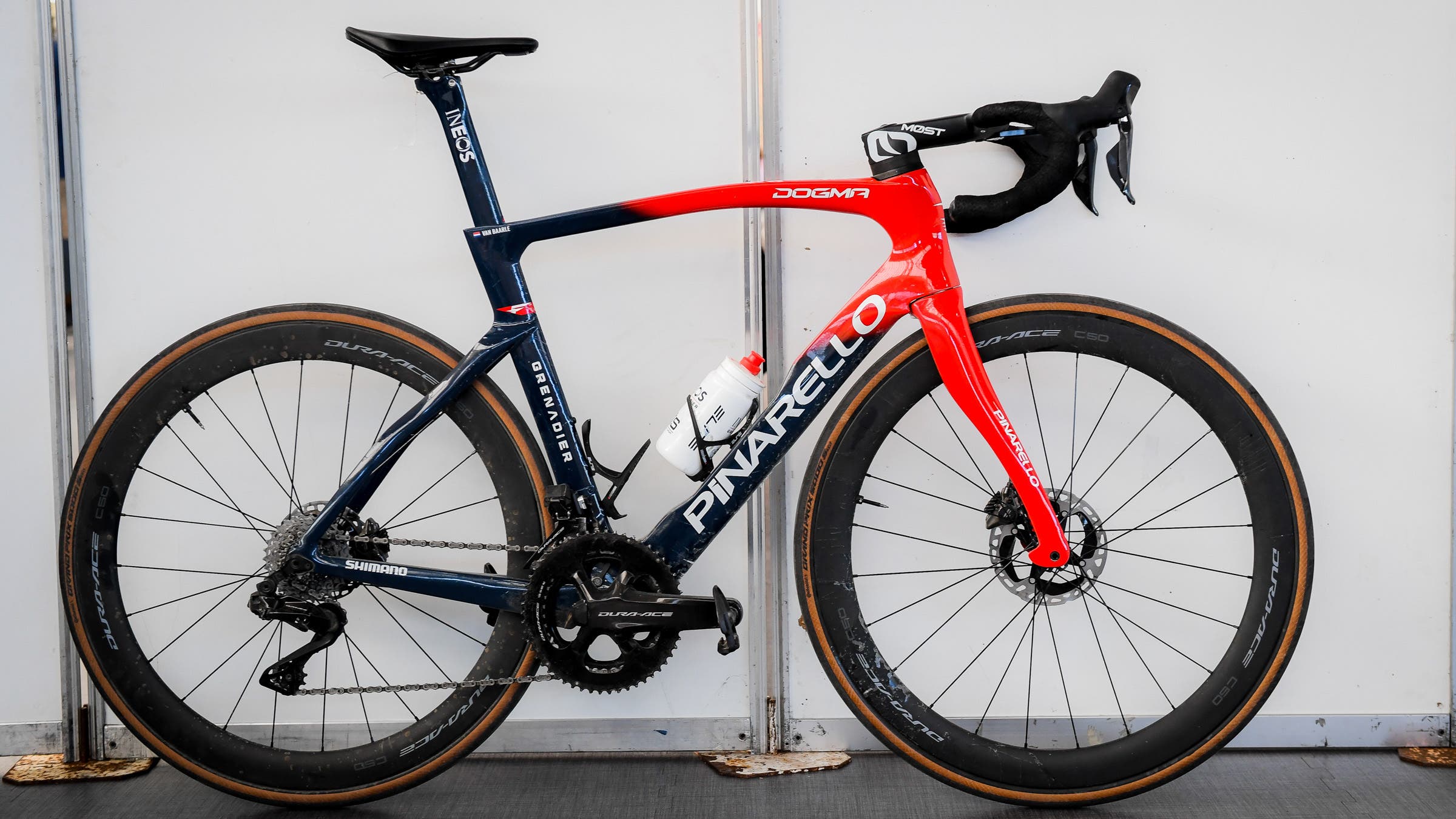 Dylan Van Baarle’s Paris-Roubaix-winning bike from 2022 was very much in the lineage of the configuration Hayman won on in 2016. (Photo: Ben Delaney/Velo )
Much has been made of how “Roubaix bikes” have died over the 10 years since Hayman’s win. While that is probably a separate article, it is true, to an extent.
It didn’t happen overnight — Greg Van Avermaet won in 2017 on a BMC Granfondo; Peter Sagan won on a Specialized Roubaix in 2018; Philippe Gilbert won the race in 2019 on a disc-brake Roubaix in 2019. Yet, after the pandemic, it has been all aero bikes as Sonny Colbrelli, Dylan Van Baarle, and Mathieu van der Poel all have used the most aerodynamic bike available to them.
The tech has become normal, for the most part, as the race has gotten lightning fast. For what seems like most of the peloton, the only equipment change these days is tires and perhaps an extra layer of bar tape.
While many lament that change, it seems like what started with Hayman’s Scott Foil has become standard because bikes are simply better at being multiple things. Aerodynamics have advanced to the point where, as a system, they can be engineered to optimize drag savings while simultaneously providing a platform for an aero bike with up to 35mm of tire clearance. Even with 30mm tires having floated around the pits at Roubaix for years, that shift is mechanically massive. With that size of a change, it seems obvious that the rest of the bike can look a whole lot more normal if the normal standard has moved so much.
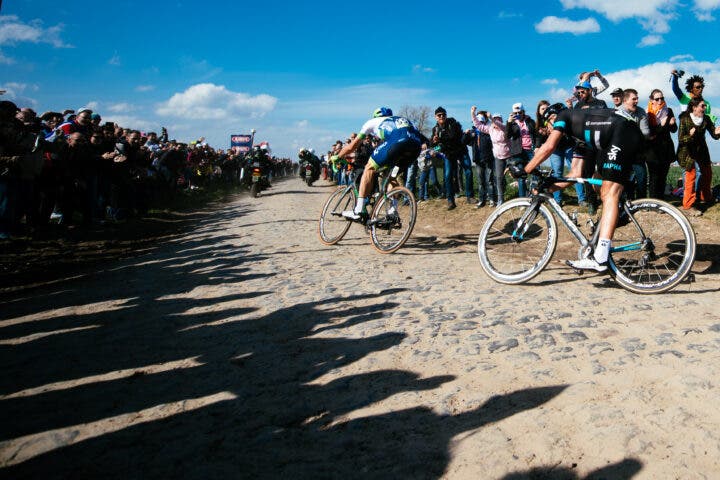 Hayman and Stannard in the mix towards the end of the 2016 race. (Photo: Gruber Images)
Ten years on: Matthew Hayman’s 2016 Scott Foil spec list in full
Frameset: Scott Foil
Stem: Integrated Scott Foil
Handlebar: PRO alloy
Front brake: Shimano Dura-Ace
Rear brake: Shimano Dura-Ace
Brake levers: Shimano Dura-Ace Di2 STI Dual Control ST-9070
Front derailleur: Shimano Dura-Ace Di2 FD-9070
Rear derailleur: Shimano Dura-Ace Di2 RD-9070
Shift levers: Shimano Dura-Ace Di2 9070
Cassette: Shimano Dura-Ace CS-9000, 11-25T
Chain: Shimano Dura-Ace CN-9000
Crankset: SRM Shimano 11-speed, 53/44T
Pedals: Shimano 9000 Dura-Ace
Wheelset: Shimano C-50tubular
Tubulars: Continental Competition Pro LTD in 28mm
Saddle: Fizik Antares
Seatpost: Ritchey Foil
Bike tech’s role in modern cycling’s great cinderella
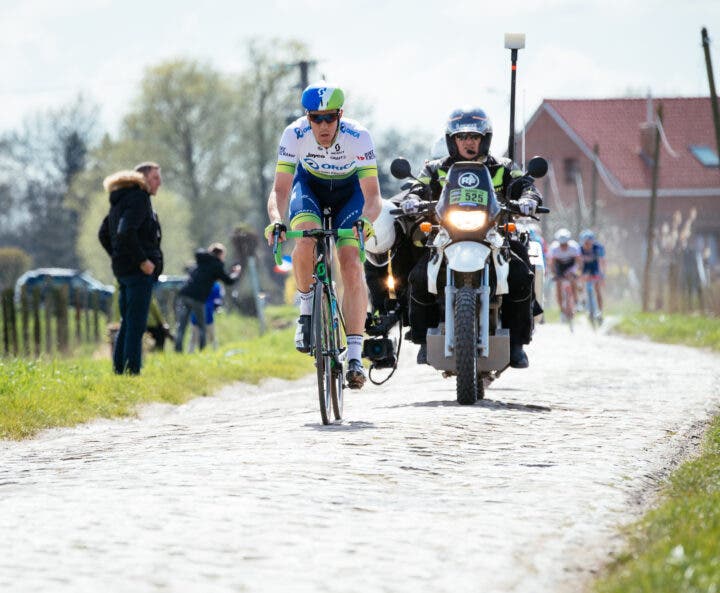 Matthew Hayman spent lots of time in the wind at the 2016 Paris-Roubaix, and the aero elements of his setup certainly helped (Photo: Gruber Images)
Ultimately, Matthew Hayman’s win at Paris-Roubaix came down to a lot of factors. The race that year was a great one, but throughout the chaos of the middle of the race, the Australian got a few key breaks.
His early breakaway got caught by a strong chasing group with around an hour and a half of racing left. Team Sky had suddenly massed at the front as the race headed to the crux of the race: the Auchy-lez-Orchies and Mons-en-Pevele section. Additionally, Fabian Cancellara and Peter Sagan were chasing close behind, trying to get back on terms with Boonen and the Sky train out front. Hayman, compared to that firepower, looked to be riding for a top 10.
Then, as it often does, all hell broke loose.
First, Team Sky began crashing. In a 3-kilometer stretch, three out of the four Team Sky riders crashed, all their own fault, completely whipping away their numerical advantage and leaving Stannard alone out front. Simultaneously, Cancellara crashed behind, pulling him out of contention and leaving Sagan, who miraculously bunny-hopped the Swiss star’s bike, without allies in the chase. He was out of the running as well.
All around Hayman for the next 50km, the race unfolded, with all the major contenders so clearly marking the other bigger names in the dwindling front group. But through it all, he skated by, finding clean lines, blasting through gaps that started forming, and using his experience to keep making the splits.
Ultimately, in the velodrome, the script flipped, Hayman made all the right moves, and rode like a rider who knew exactly how to win. He deserves all the credit for it. Yet, he won by a few feet over one of the greatest Roubaix champions of all-time. It is the kind of margin that makes you think where watts could have been gained, lost, and conserved.
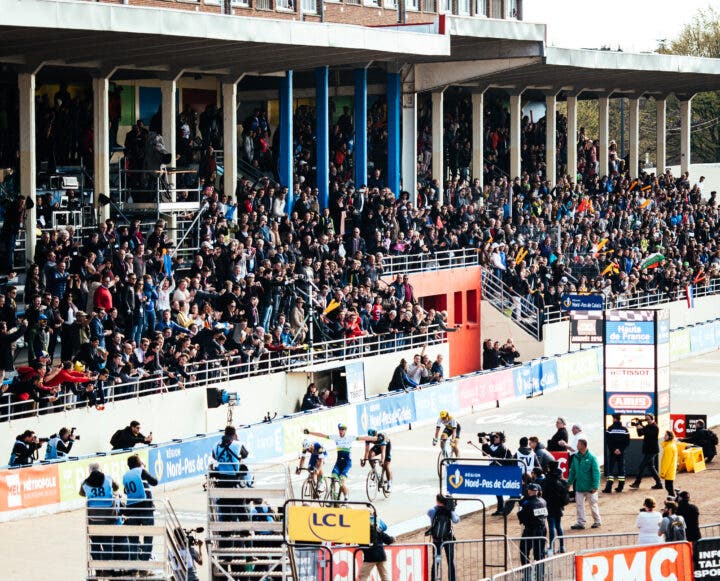 (Photo: Gruber Images)
While the win was undoubtedly down to Matthew Hayman’s complete skillset as a Paris-Roubaix veteran, the bike factored into that math that slowly pushed the probability in his favor. In a story that has deep human interest and drama, the tech side is fascinating too, both from what it meant of the day, and how it has been reflected in the winning bikes since.