
Supply disruptions fuel calls for deeper cuts beyond recycling
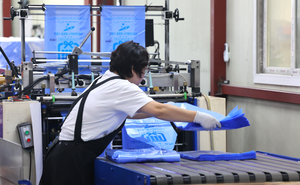
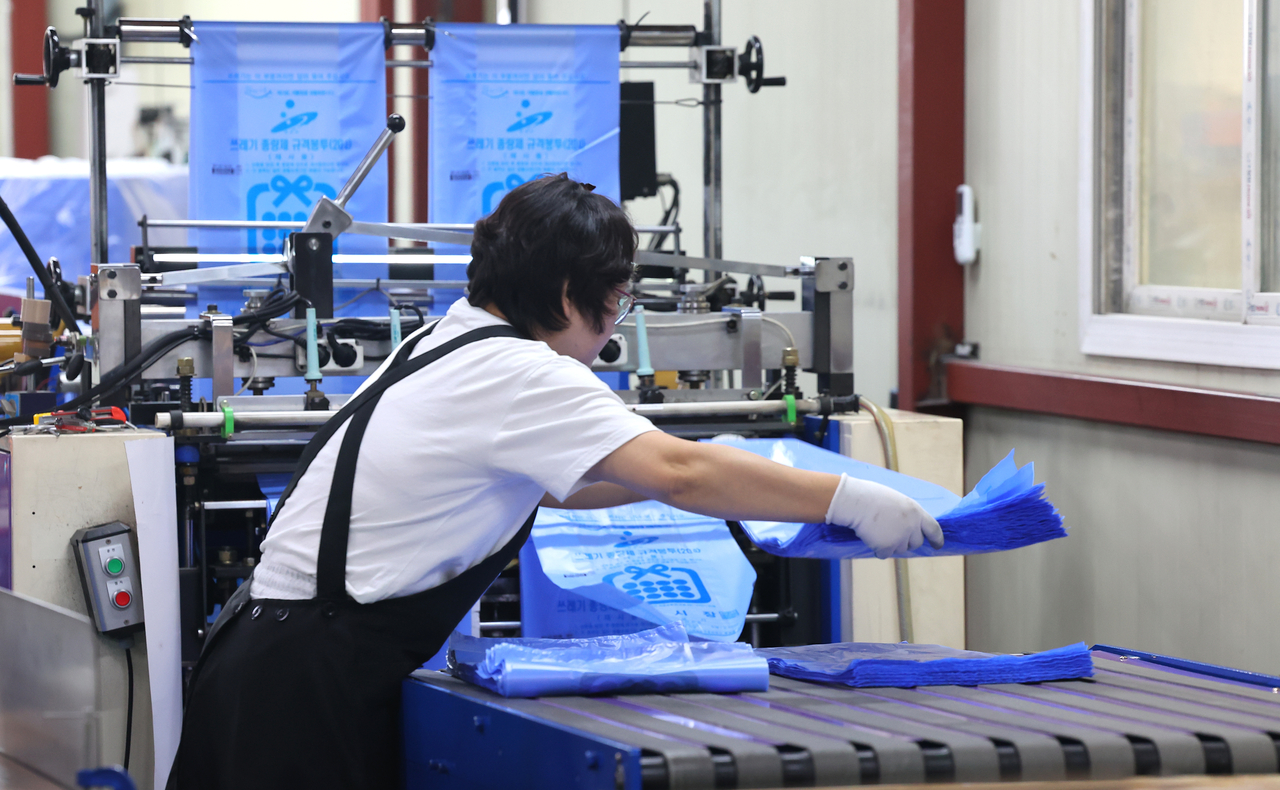 An employee stacks official South Korean trash bags produced at a factory in Incheon on Thursday, amid reported stockpiling of the bags due to fears of supply disruptions caused by the Middle East war. (Yonhap)
South Korea’s long-delayed effort to reduce its dependence on plastics has come into sharper focus as the country grapples with supply instability driven by the conflict in the Middle East.
Despite being one of the world’s largest plastic consumers, Korea has repeatedly rolled back efforts to curb usage, and current policies still rely heavily on recycling and alternatives, raising questions about their effectiveness.
Environmental groups and experts cite plastics’ vulnerability to geopolitical shocks as a reason to accelerate the transition toward an economy less dependent on plastic, warning that without reducing production and consumption, the country will remain exposed to recurring disruptions.
Korea’s efforts to encourage reusables have repeatedly been watered down or reversed, leaving per capita plastic use above 100 kilograms, nearly double the global average, according to OECD data.
Mandates on reusable cups were rolled back during the COVID-19 pandemic, while a 2022 push to restrict plastic straws, stir sticks and bags was indefinitely delayed in 2023.
As a result, plastic waste rose from 8 million tons in 2017 to 14.6 million tons in 2023, driven in part by rapid growth in logistics and delivery services, according to KPMG.
President Lee Jae Myung pledged to reduce plastic waste, and the Ministry of Climate, Energy and Environment released a draft roadmap in December. But a final version has yet to be announced.
Experts say the government’s weak stance in the face of public complaints and industry concerns has led to repeated policy reversals.
The country’s reliance on plastics — it was the world’s fourth-largest plastic producer as of 2023 — is increasingly seen as a structural vulnerability as geopolitical tensions disrupt supply chains.
Conflict involving the US, Israel and Iran has affected petrochemical flows from the Middle East and tightened supplies of naphtha, a key feedstock for plastics.
More than half of Korea’s naphtha imports come from the region, while domestic production also depends on Middle Eastern crude. Limited stockpiles have already prompted emergency measures that prioritize allocation to critical sectors such as medical supplies.
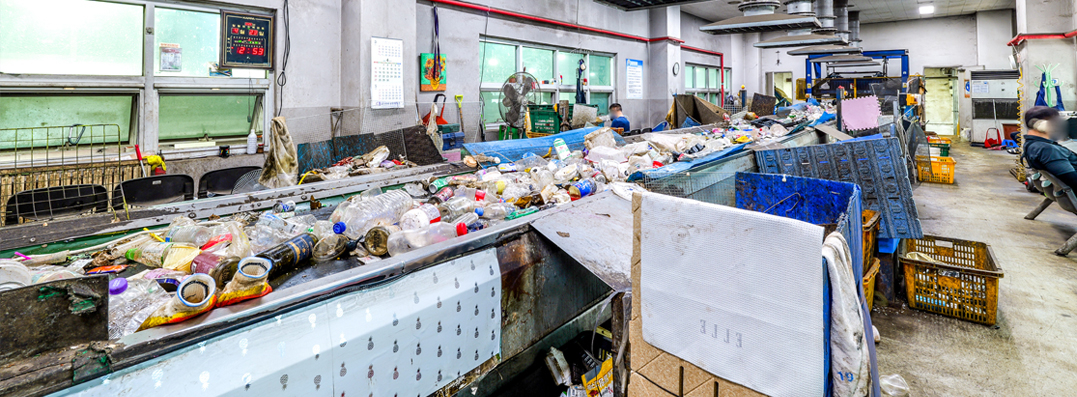 Plastic bottles are sorted at a recycling facility in Yangju, Gyeonggi Province. (Yangju Urban Corp.)
Alternatives under scrutiny
Tightened plastic supplies have drawn attention to substitutes, with related companies seeing stock gains as geopolitical tensions intensify.
Paper has emerged as a key alternative. South Korea produces around 10 million tons annually, with a large share sourced from recycled materials, according to an industry official.
However, experts caution that paper is unlikely to replace plastic due to material limitations and environmental trade-offs.
“Plastic’s insulation and chemical stability help prevent decay or deterioration of products, whereas paper is less capable in this regard, which limits its use as a packaging material,” said Lee Duk-hwan, professor emeritus at Sogang University.
“It is unlikely that society will accept the inconvenience of returning to conditions seen decades ago, before plastics became widespread.”
Paper’s environmental credentials are also questioned, as its production and disposal can generate pollution and often require additional treatment such as film coating.
Reflecting such concerns, the government’s December draft proposed restrictions on all types of straws, regardless of material.
Similar doubts surround bioplastics, often presented as another alternative, with commercialization still limited.
“There have been attempts to develop polymers from biological sources, but they are still far from large-scale application,” Lee said. “One common method involves using starch to produce plastics, but this raises concerns over competition with food resources and potential ethical issues.”
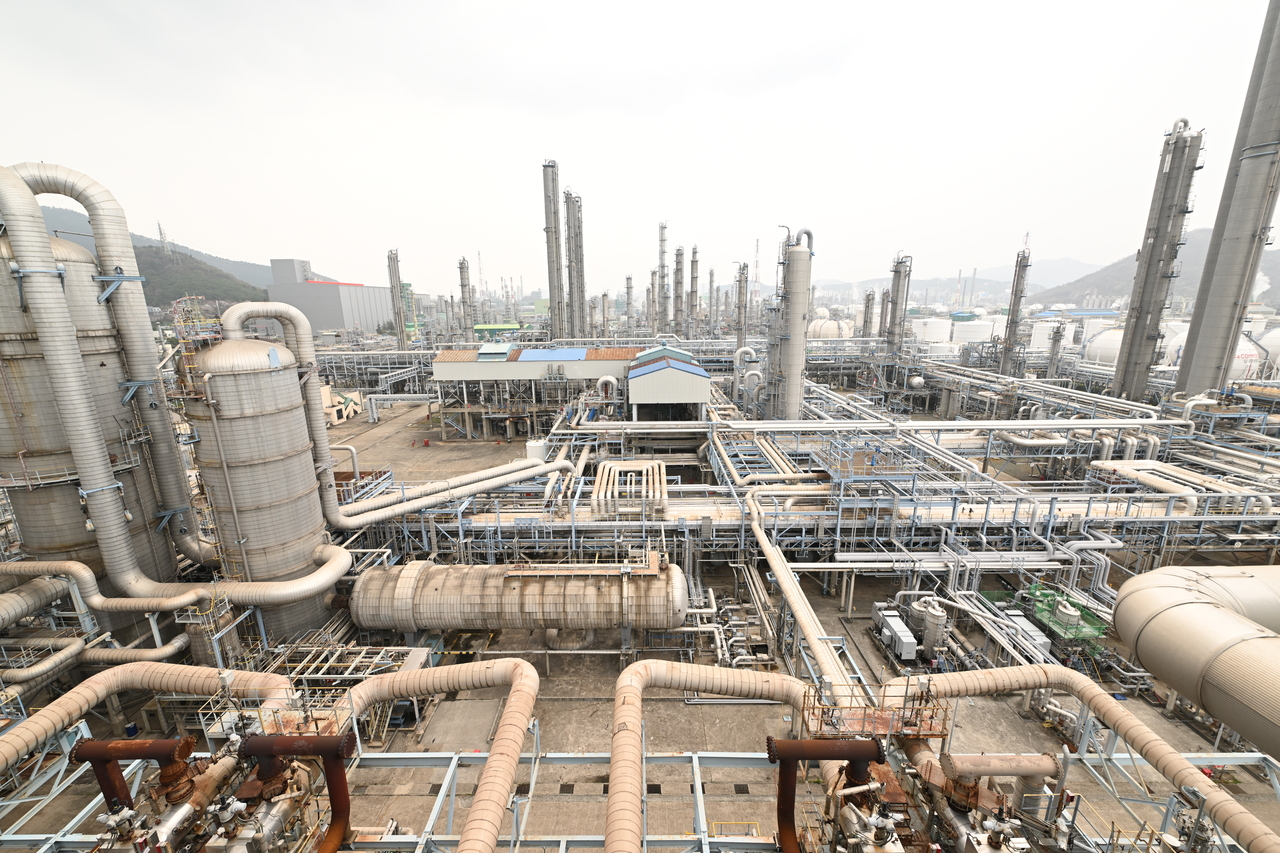 Naphtha cracking facilities, which produce naphtha, a key material for plastics, operate in Yeosu, South Jeolla Province, on April 1. (Yonhap)
Beyond recycling and material substitutes
Experts and civic groups argue that policy should go beyond recycling and alternative materials, calling for direct measures to curb plastic production. They warn that plastic dependence has grown faster than efforts to reduce it, raising supply risks in essential sectors such as healthcare.
“Last year’s comprehensive anti-plastic roadmap draft also remains centered on recycling-based waste management, with quantitative targets focused on plastic waste rather than production,” said Park Sang-hyun of Green Korea.
“No matter how much single-use items or waste are reduced, continued production of plastic raw materials inevitably creates pressure to expand their use.”
While acknowledging the difficulty of rapid change due to impacts on jobs and industry, experts stress that transitioning toward more sustainable consumer goods industries must remain a long-term goal.
Government data underscores the limits of recycling: only about 26 percent of plastic waste is turned into new products, with the rest incinerated or landfilled. Plastic waste has continued to grow at an average annual rate of about 7 percent over the past three years.
Experts say the present moment should serve as a turning point for reducing reliance on plastics, noting that repeated cycles of oversupply and shortages in petrochemical materials pose risks to both the environment and industrial stability.
“Even before the latest Middle East-driven supply crunch, there were concerns that low-priced naphtha in the global market was pushing Korea’s petrochemical industry to the brink,” said Hong Su-yeol, chief researcher at Resource Recycling Consulting.
“Such disruptions are likely to recur. It is important to reflect on the lessons from the current supply chain crisis at this point.”
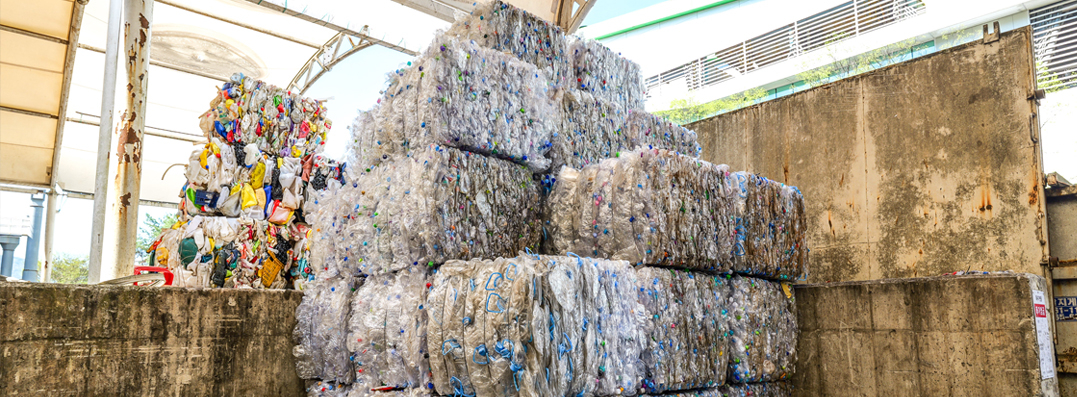 Plastic bottles are compressed into blocks and stored at a recycling facility in Yangju, Gyeonggi Province. (Yangju Urban Corp.)
forestjs@heraldcorp.com