
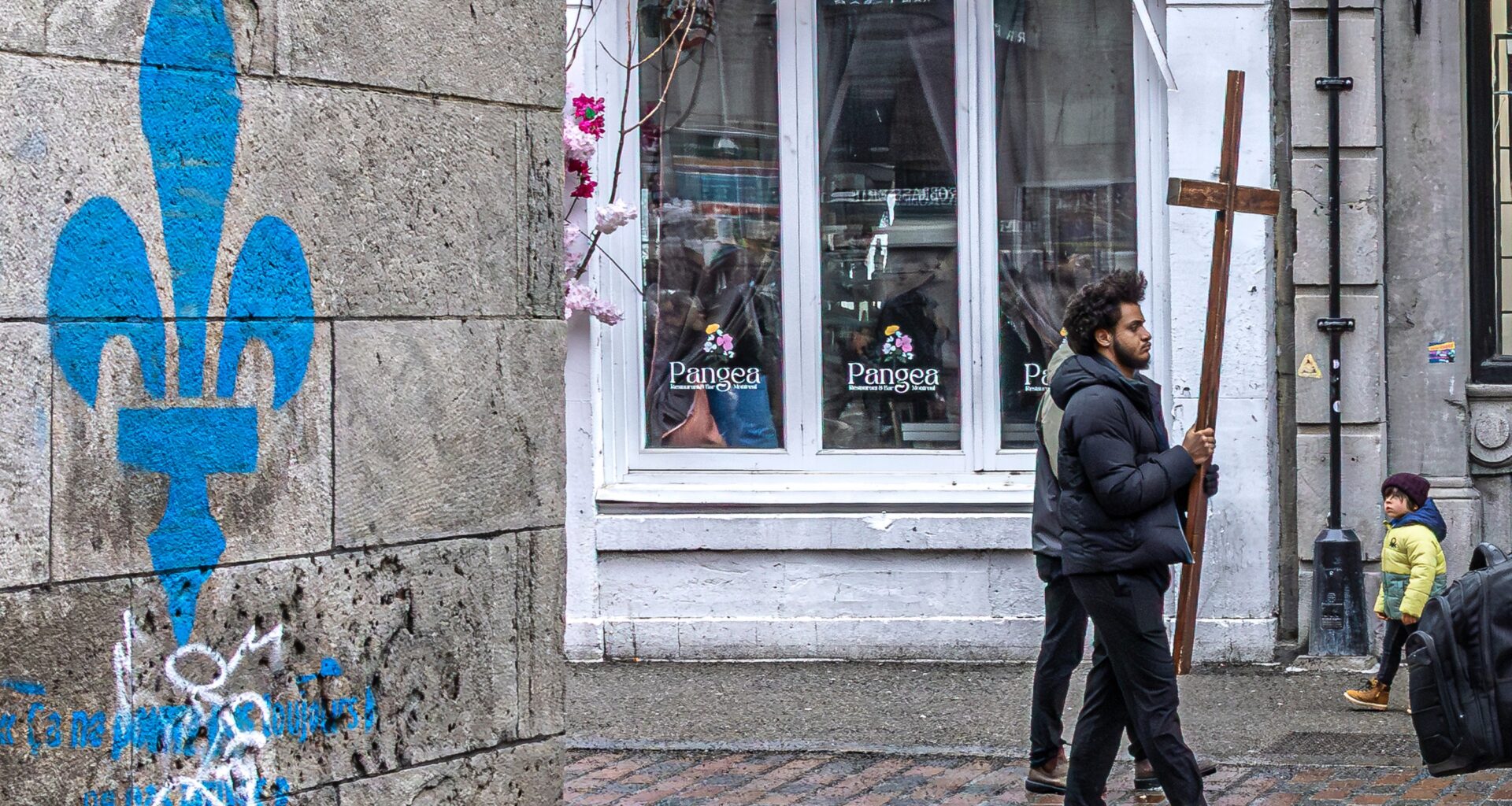
Quebec’s National Assembly adopted another secularism bill last week, turning Bill 9 into law.
The legislation includes a ban on religious symbols in daycares and new rules about praying in public.
The new law strengthens and expands the reach of earlier “laicity” legislation, including Bill 21. Opponents argue the new law breaches one of the core principles of state laicity set out by the Coalition Avenir Québec government in Bill 21: that citizens are free to practise their religion. The Supreme Court is expected to rule on a challenge to Bill 21 later this year, and depending on the outcome of that process, opponents of Bill 9 have already signalled they intend to challenge this new law as well.
As with Bill 21, the Quebec government used Section 33 of the Canadian Constitution, the so-called “notwithstanding clause”, to shield Bill 9 from charges it breaches rights outlined in the Quebec and Canadian charters. The Supreme Court ruling on Bill 21 will clarify, among other things, whether there are any limits on how governments can use the notwithstanding clause.
Meanwhile, here is a breakdown of what this new law does:
Extends the ban on wearing religious symbols to daycares, private schools
While Bill 21 banned certain public servants in positions of authority or involved in educating children from wearing religious symbols (such as teachers, school principals and vice-principals, police officers, judges, Crown prosecutors, prison guards, government lawyers, etc.), as of September 2026, Bill 9 extends that ban to employees of:
subsidized daycare centres and the co-ordinating offices of home daycares;
subsidized private schools (the government can revoke accreditation and subsidies if these schools don’t comply to the new rules within three years of Bill 9’s enactment);
private health institutions under agreement with the government (such as privately-operated long-term care homes);
intermediate resources (such as government-subsidized seniors homes run by private or community organizations);
family-type resources (such as foster families for children in youth protection, or home-based settings for adults with disabilities);
the youth protection system (DPJ), and those involved in youth justice supervision or custody; and
those providing welcome, francization or integration programs for immigrants.
Extends the ban on face coverings
The new law requires people to have their faces uncovered when they are:
receiving a service from a daycare;
receiving a service from a university or CEGEP;
in a place under the authority of a daycare centre, university or CEGEP; or
receiving education, training or professional development services from certain government-subsidized entities.
Prohibits collective religious practice on public roads or in parks
Bill 9 forbids “collective religious practice,” such as praying in a group, in public roadways or parks unless a municipality specifically authorizes it. In order to authorize such an activity, the municipality must ensure it does not compromise public safety, is of short duration, is accessible to all and does not impede access to the public domain.
Religious practice is defined as “any action that could reasonably constitute the manifestation of a religious conviction or belief.” The Supreme Court defined a “religious belief” in a 2004 ruling as “a practice or belief that one exercises sincerely with the aim of communicating with a divine entity or within the framework of a spiritual faith.” Critics argue this clause could lead to the banning of all kinds of activities, including outdoor yoga or meditation classes or Christmas concerts.
Prohibits religious practice in public institutions
Bill 9 forbids religious practice in public institutions such as universities and CEGEPs, private institutions subsidized by the government, intermediate resources and family-type resources (such as foster homes), childcare centres (CPEs), subsidized daycare centres, recognized home childcare providers, and anyone contracted to provide services to those types of institutions.
Exceptionally, religious practice will be allowed in certain university chapels, including Loyola Chapel at Concordia University, Marie-Guyart Chapel at Université Laval, Birks Heritage Chapel at McGill University, and St. Mark’s Chapel at Bishop’s University.
Prohibits disruption of religious practice within a place of worship
The law says “No one may prohibit, limit, hinder or disrupt a religious practice within a place of worship or impede access to such a place.”
Puts new limits on requests for accommodation on religious grounds
The bill prohibits public institutions such as hospitals, schools, etc., from offering exclusively a diet based on a religious precept or a tradition when providing restaurant services. If they offer kosher meats, for example, they must also offer non-kosher meat options. The government has not yet decreed the date at which this new rule will come into force.
When dealing with a request for accommodation on religious grounds, the body must ensure the request is consistent with equality rights of men and women, and does not impose undue cost or hardship on the body receiving the request.
No accommodation may be granted in connection with a request that a service be provided by a person based on that person’s sex, gender identity or gender expression, unless it is a medical service or unless the provision of the service involves physical contact with the person who receives it.
When an employee requests time off work on religious grounds, consideration must be given to, among other things, “fairness with regard to the employment conditions of the other personnel members.”
If a request for accommodation concerns a child’s absence from school or daycare, the centre or school must ensure educational goals are not compromised.
New rules for subsidized private schools
Subsidized private schools can no longer offer educational services based on religious standards or precepts during regular class hours, on the transmission of religious convictions or beliefs, or on religious practice, and cannot select students or staff based on religious criteria.
Editor’s Picks