
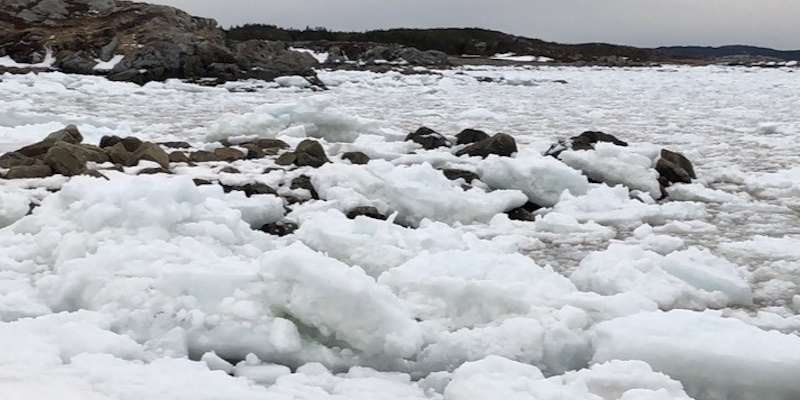
Sea ice off Twillingate, 2019 (VOCM News)
Environment Canada says there may be more winter ice off the coast of Newfoundland and Labrador, but it’s expected to dissipate sooner.
Senior meteorologist with the Canadian Ice Service, George Karaganis says the early part of the winter was warmer than normal over Baffin Island and Labrador.
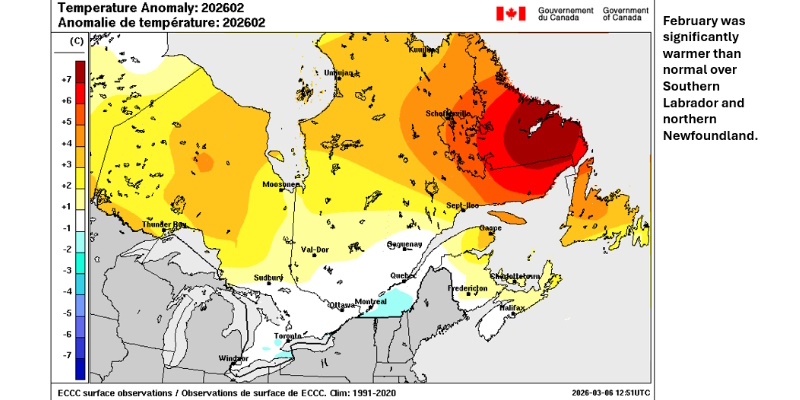
February was significantly warmer than normal over Southern Labrador and northern Newfoundland according to Environment Canada
He says it was 5 to 6 degrees warmer than normal off Baffin Island, causing a delay of a month and half in the formation of sea ice. “That’s meant that ice has been significantly lower than normal in January, in February and then March, right to the middle and end of March.”
That’s similar to the pattern seen over the last few years says Karaganis.
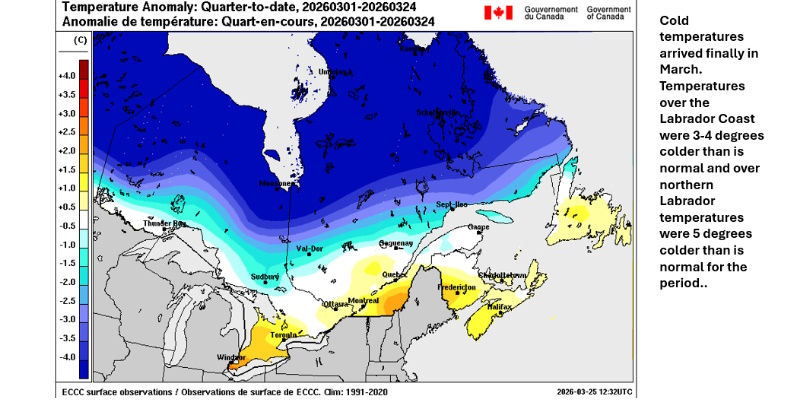
Cold temperatures arrived finally in March according Environment Canada. Temps were 3-4 degrees colder than normal and 5 degrees colder than normal for the period in northern Labrador
He says by March the cold Arctic air had finally arrived, and the amount of ice that formed in the Davis Strait is greater than that seen in previous years.
Despite a greater amount of ice, Karaganis says it’s not as thick because of its late formation, and that means it will dissipate more quickly.
He says that thinner ice is also moving down into warmer water, meaning it is breaking apart more quickly.
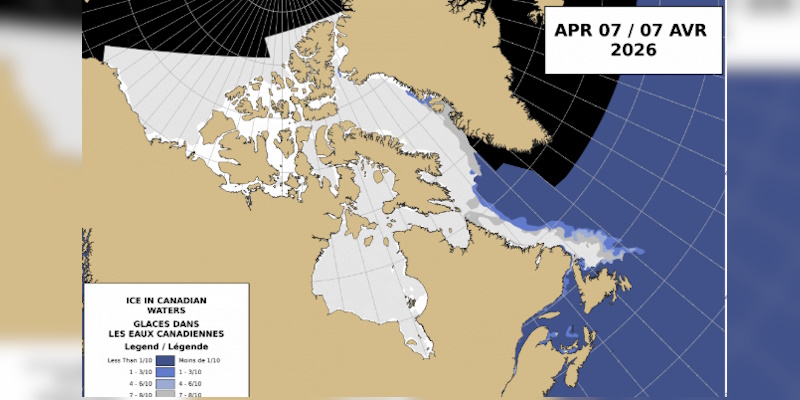
Part of an animated map of ice movement along the coast via Environment Canada