
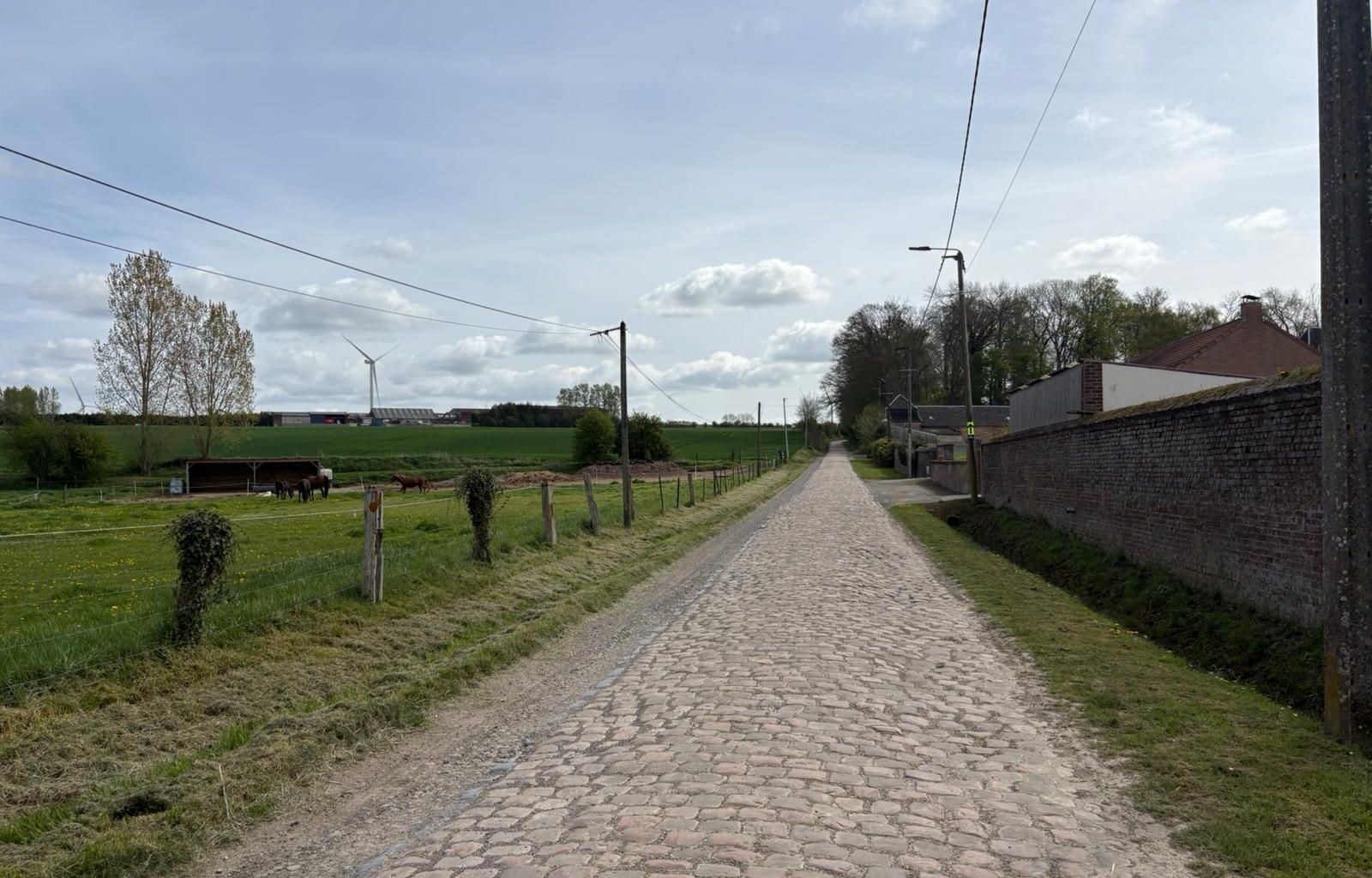
The men’s Paris-Roubaix features no fewer than 30 cobbled sectors, making up just shy of 55km of the 258km-long route. Each section of pavé is ranked from one to five stars based on its length and difficulty, with some of the cobblestones in much better condition than others.
However, for this 2026 edition of Paris-Roubaix, the men’s route will include a pavé sector that is not just testing due to the terrain, but also an added element of elevation.
Article continues below
You may like
The 800m, three-star stretch of pavé has an average elevation of 3.4%. While that isn’t likely to put too many riders in trouble on its own, the sector’s position in the route, shortly after the opening four pavé stretches that come thick and fast, may add an extra edge.
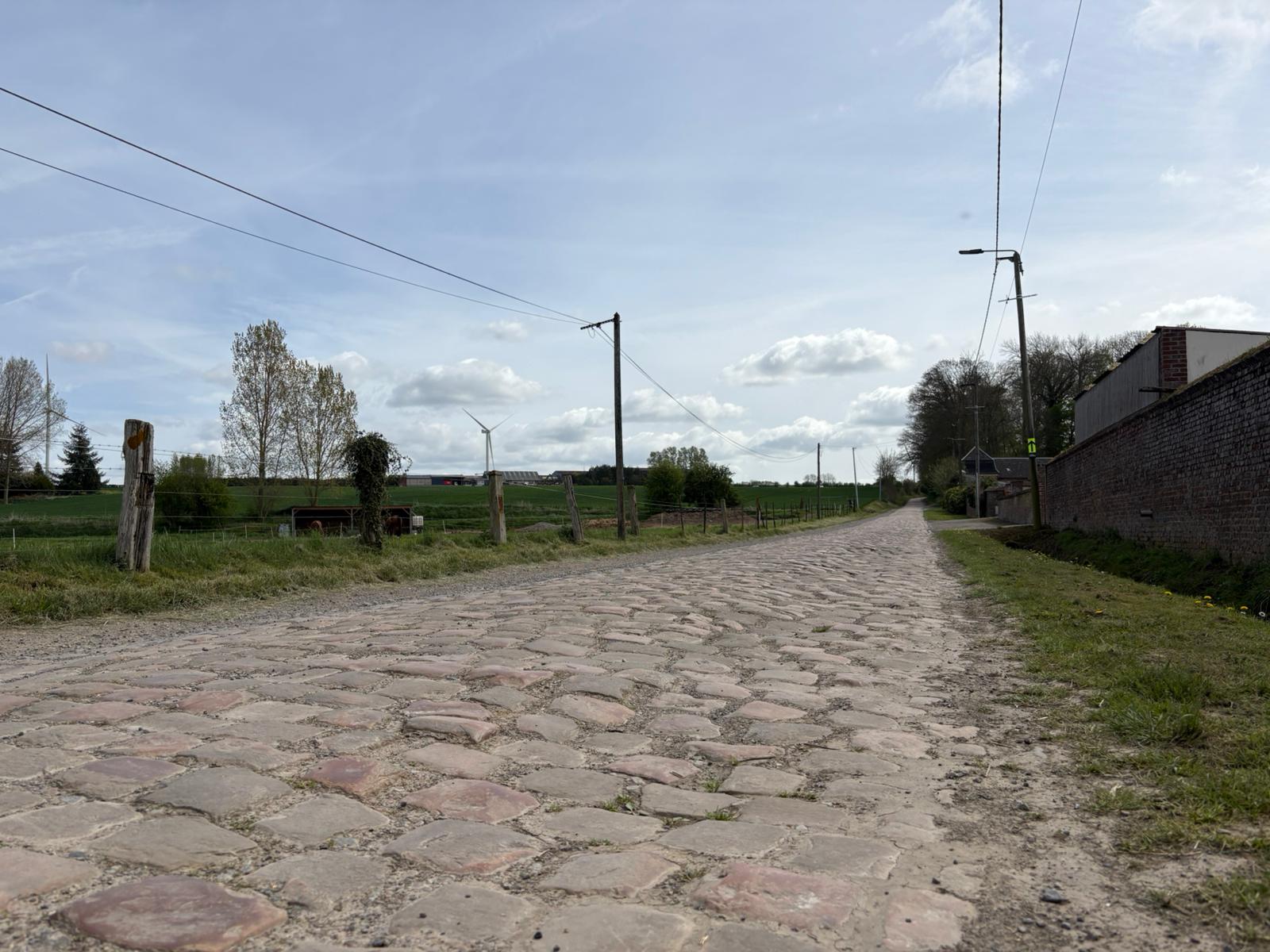
A closer look at the cobbles (Image credit: Future/Pete Trifunovic)
“It’s not the worst sector, and those before it are harder, but this goes slightly up. The condition of the sector before [Viesly à Briastre] is much worse; this one is okay,” long-serving Soudal-QuickStep sports director Tom Steels explained at the end of the sector.
“It’s already the fourth sector, so riders can be eliminated, but it depends on the two sectors before. It’s not an easy one, and there’s a big gap between this and the next sector, he added.
In both 2023 and 2024, Mathieu van der Poel’s Alpecin-Premier Tech squad set an infernal pace in the opening kilometres of pavé, decimating the bunch in the process. With the added complexity of this small rise to also contend with, there could be early action again this time around.
My viewFrom the cobbles of Paris-Roubaix From the cobbles of Paris-Roubaix
Pete Trifunovic
Engagement Editor
Running adjacent to a small cattle farm, the addition of Briastre adds a small element of uphill action into the early cobble sectors. The elevation alone isn’t likely to make many of the peloton shudder with fear; however, while this sector might not singlehandedly inflict damage on the peloton, coming quickly after the first four pavé sectors may mean that it puts extra distance between those already in the gutter or who have had mechanical misfortune.
While the sector gently ramps up as it passes the farm and fields of cattle on its right, the conditions of the cobblestones here are far less treacherous and crowned than elsewhere on the course, potentially due to Briastre rarely featuring on the race route. Once at the top of the 800m stretch, riders will take a left back onto the tarmac and towards Solesmes via the main road, and aim to thrive or survive over the 25 sectors still to come.
Get unlimited access to our unrivalled 2026 Spring Classics coverage with a Cyclingnews subscription. We’ll bring you breaking news, reports, and analysis from some of the biggest races on the calendar, including Milan-San Remo, Paris-Roubaix and the Tour of Flanders. Find out more.