
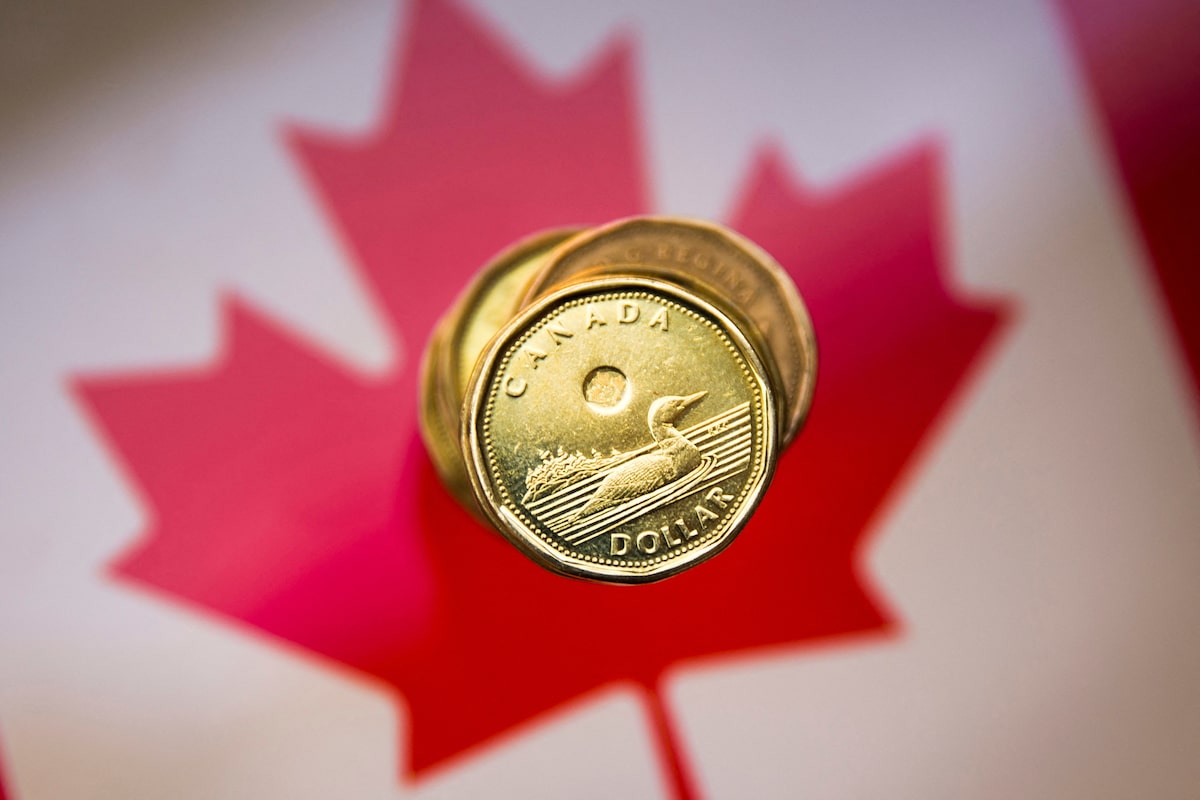
The Canadian dollar weakened against its U.S. counterpart on Friday as investors weighed subdued domestic jobs data and awaited peace talks between the United States and Iran, but the currency held on to much of its weekly gain. Canada’s economy added 14,100 jobs in March, roughly matching expectations, after shedding 83,900 in the prior month, while the unemployment rate held steady at 6.7%.
“Lackluster domestic growth momentum at the start of the year plus trade uncertainty continue to hamper the CAD,” Shaun Osborne and Eric Theoret, strategists at Scotiabank, said in a note.
“But we do expect growth to pick up and trade headwinds to fade late this year, which supports our call for some CAD gains in the medium term.”
The United States-Mexico-Canada Agreement, which has shielded much of Canada’s exports from U.S. tariffs, is set for review by a July 1 deadline.
Investors were pricing in 33 basis points of tightening this year from the Bank of Canada, little changed from before the data.
The Canadian dollar was trading 0.1% lower at 1.3834 per U.S. dollar, or 72.29 U.S. cents, after moving in a range of 1.3800 to 1.3840.
For the week, the currency was up 0.8%, as a ceasefire deal in the Middle East reduced safe-haven demand for the greenback. It was the biggest weekly gain for the loonie since January.
Iran said that blocked Iranian assets must be released and that a ceasefire must take hold in Lebanon before peace talks can proceed, throwing last-minute doubt over negotiations scheduled for Saturday in Pakistan. The price of oil, one of Canada’s major exports, rose 0.9% to $98.75 a barrel on concerns over Saudi Arabia supply disruptions and limited flows through the Strait of Hormuz, but was still on track for its biggest weekly fall since June.
Canadian bond yields were mixed across a steeper curve, with the 10-year up 2.2 basis points at 3.474%.