
April 10, 2026
By Nehal Malik
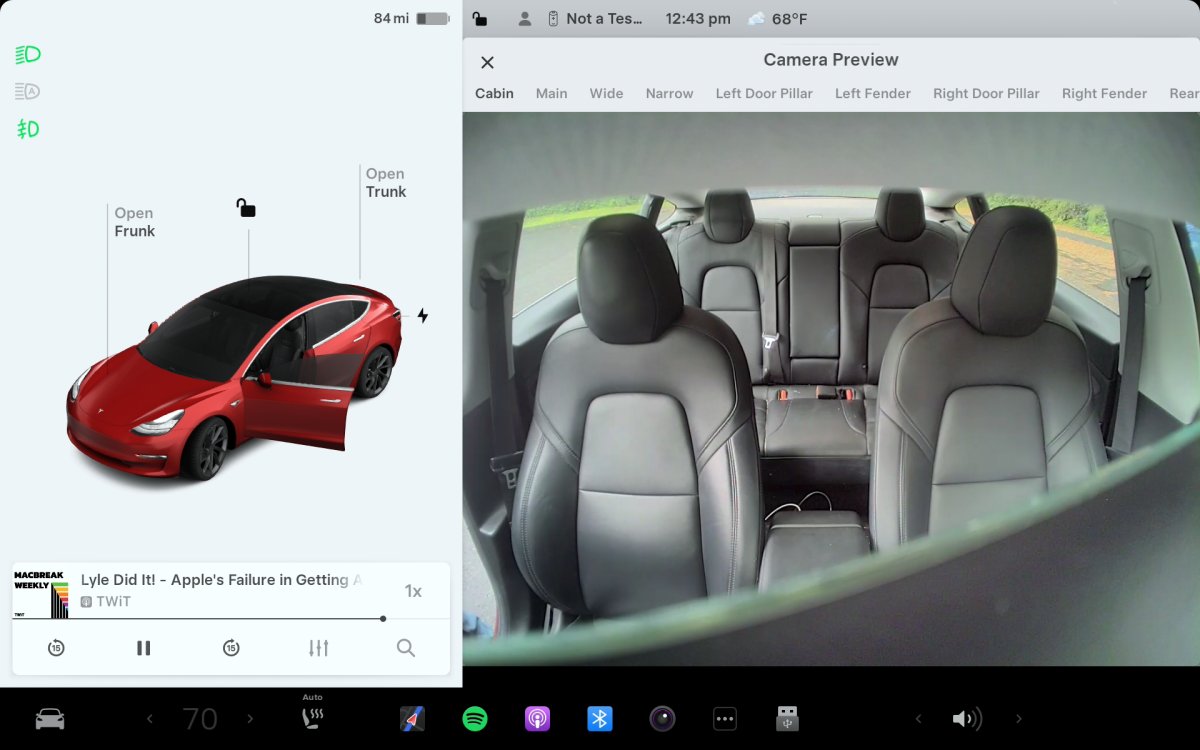
Tesla is teaching its vehicles to better understand who exactly is sitting behind the wheel. In a fascinating discovery hidden within the latest software code, it appears that Tesla’s cabin cameras are now being trained to estimate a driver’s age.
The find was shared by well-known Tesla hacker @greentheonly, who frequently digs into the car’s backend to see what features are being developed behind the scenes. According to Green, software update 2026.8.6 introduced this new capability.
More Than Just a Selfie Camera
While the 2026.8.6 release notes focus on public-facing additions like anti-dooring warnings for the Cybertruck and Comfort Braking for the refreshed Model Y, the age-checking code hints at a much smarter driver monitoring system. Tesla hasn’t activated any specific user features based on this data yet, but the potential applications for safety and security are massive.
For instance, Tesla could use age recognition as a secondary lock to prevent underage drivers from shifting the car into drive or activating Full Self-Driving (Supervised). It could also allow the car to tailor its driving style; FSD could theoretically choose to drive more conservatively if it detects an elderly driver who may prefer smoother transitions and more cautious lane changes.
Enforcing the Robotaxi Rules
This technology could be particularly vital for the upcoming Cybercab. Tesla’s specialized robotaxi features an even larger cabin camera than the current consumer lineup, and the company has already established minimum age requirements for riders using the Robotaxi network. Without a human driver to check IDs, an automated age-verification system would be the only way to ensure that young children aren’t hailing autonomous rides without adult supervision.
Beyond age, this type of biometric monitoring could eventually evolve into a “health check.” Future iterations of the cabin camera might detect if a driver is having a medical emergency based on facial cues or posture, allowing the car to autonomously pull over and call for help. It could also be used to automatically apply parental controls, such as limiting top speed or acceleration when a teenager is detected in the driver’s seat.
A New Era of Biometric Safety
As Tesla moves toward a future where the car is more of a living space than a machine, understanding the occupant’s profile becomes essential. Whether it’s adjusting the driver monitoring sensitivity based on risk factors associated with different age groups or simply ensuring the right person is in the right seat, biometric data is the next frontier.
While some might find the idea of their car “guessing” their age a bit intrusive, the safety benefits of preventing unauthorized use or optimizing FSD for different demographics are hard to ignore. As Tesla continues to iterate on FSD with v14 and v15, we expect this “driver age” checking to move out of the code and into the official release notes.
Subscribe to our newsletter to stay up to date on the latest Tesla news, upcoming features and software updates.
April 10, 2026
By Nehal Malik
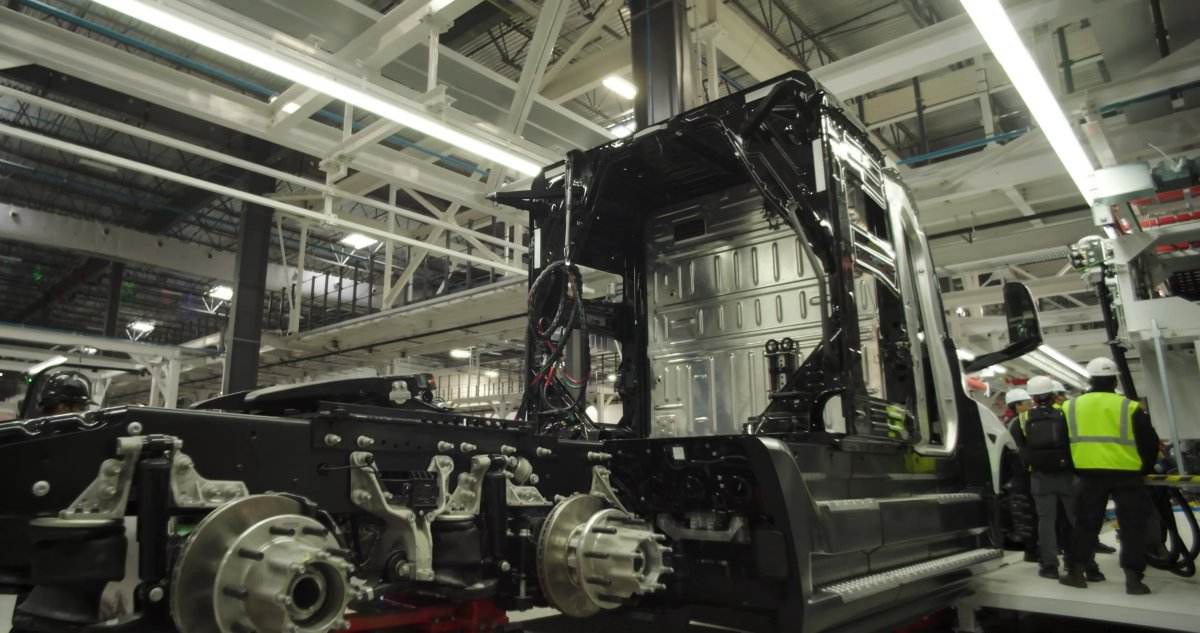
Tesla is finally ready to move the needle on its most ambitious heavy-duty project. After years of development and limited pilot runs, the automaker has provided an exclusive first look inside its dedicated Semi factory in Sparks, Nevada. This massive facility is situated just down the road from Gigafactory Nevada and is being specifically engineered for high-volume mass production.
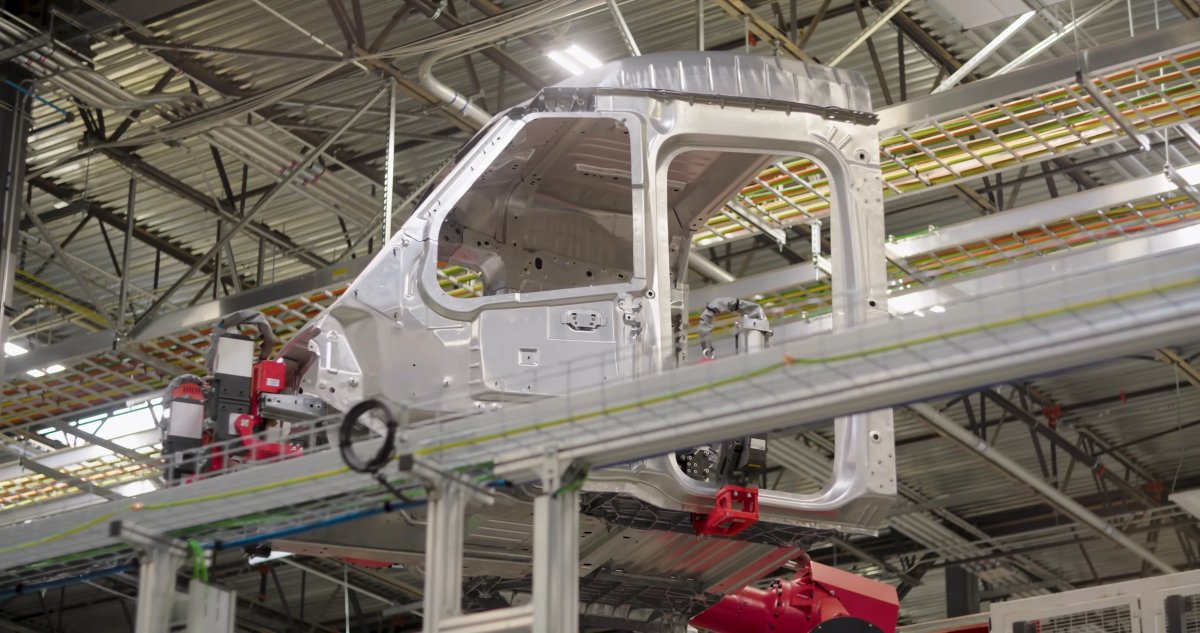
A new walkthrough from the YouTube channel Core Memory offers our first detailed glimpse into the “machine that builds the machine” for the electric Class 8 truck. Semi Program Director Dan Priestley guided the tour, highlighting how the factory was designed to produce thousands of trucks in the “minimum viable space” using hundreds of robots and a massive overhead conveyance loop.
Inside the Semi Factory
One of the most impressive technical feats in the new plant is the overhead carrier system. These carriers are among the largest of their kind in the world, capable of moving sub-assemblies weighing well over 10,000 pounds. As the truck moves through the line, the system automatically adjusts the height of the vehicle so that technicians can work at the perfect ergonomic level.
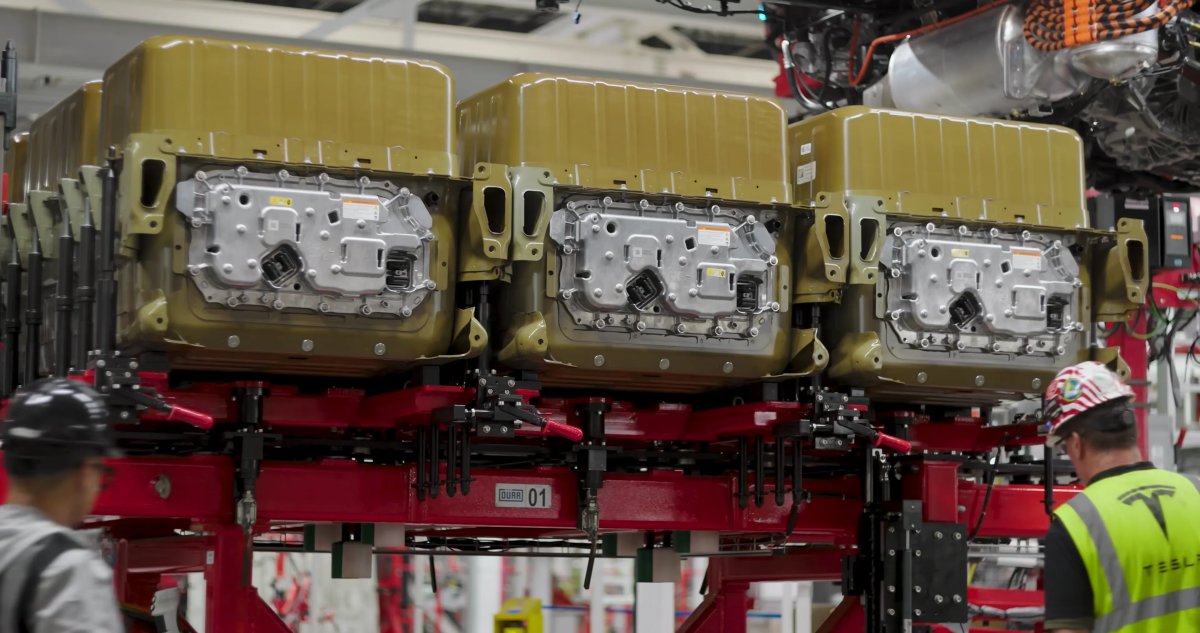
Priestley also demonstrated the “battery marriage” process, where three cube-shaped battery packs are fastened into the frame. Unlike the “pancake” style packs found in Tesla’s passenger cars, the Semi’s packs are cubic and structural, designed to retain heat better in cold weather and endure over one million miles of operation. The facility also features a massive “light tunnel” for final quality checks, which is scaled up specifically to handle the Semi’s height and width.
 Redesigned for Mass Production
The Semi being built in Nevada is a significant evolution from the early prototypes. The refreshed design Tesla unveiled last fall includes major engineering breakthroughs like a fully electric steering assist system and a 48-volt low-voltage architecture borrowed from the Cybertruck. The truck even uses Cybertruck-derived steering actuators and 4680 battery cells to improve manufacturing efficiency.
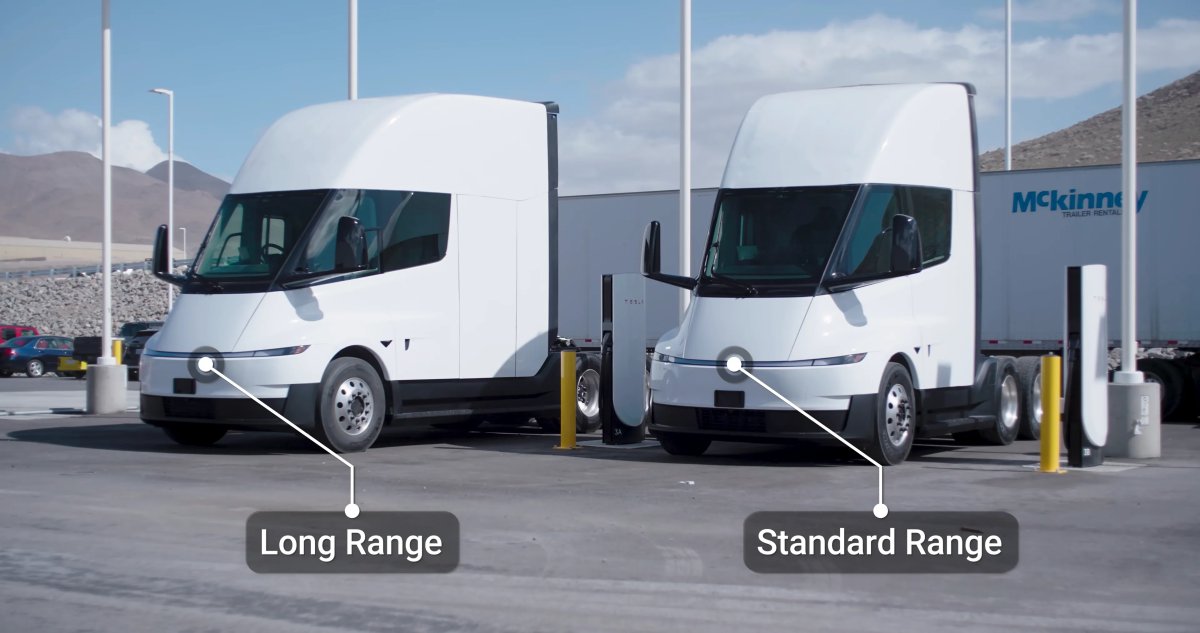
Tesla is also focusing on fleet versatility. The truck comes in two primary versions: a 325-mile Standard Range and a 500-mile Long Range. While both trucks look similar, the Standard Range model features a shorter wheelbase, making it lighter and more maneuverable. For operators, the Semi now includes a modified version of Powershare to power refrigerated trailers directly, eliminating the need for separate diesel-powered generators.
Scaling the Future of Freight
Tesla’s ultimate goal with this factory is to reach a production capacity of 50,000 Semi units annually. To support these ambitions, the company is building a dedicated Megacharger network capable of delivering up to 1.2 megawatts of power. These stations can recover 60% of the truck’s battery in just 30 minutes, keeping fleet turnaround times competitive with diesel.
As the factory prepares to exit its “prepping for start of production” phase and kick off mass production, the focus shifts to convincing the logistics industry. With lower maintenance costs, regenerative braking for safety on steep grades, and a center-seating cockpit with 10 exterior cameras, the Semi is positioned to be a game-changer. Priestley said in the video, which was shot last month, that the factory is “on the cusp of starting to produce first assemblies off these lines,” with Tesla planning to begin mass production in earnest later this year.
April 10, 2026
By Nehal Malik
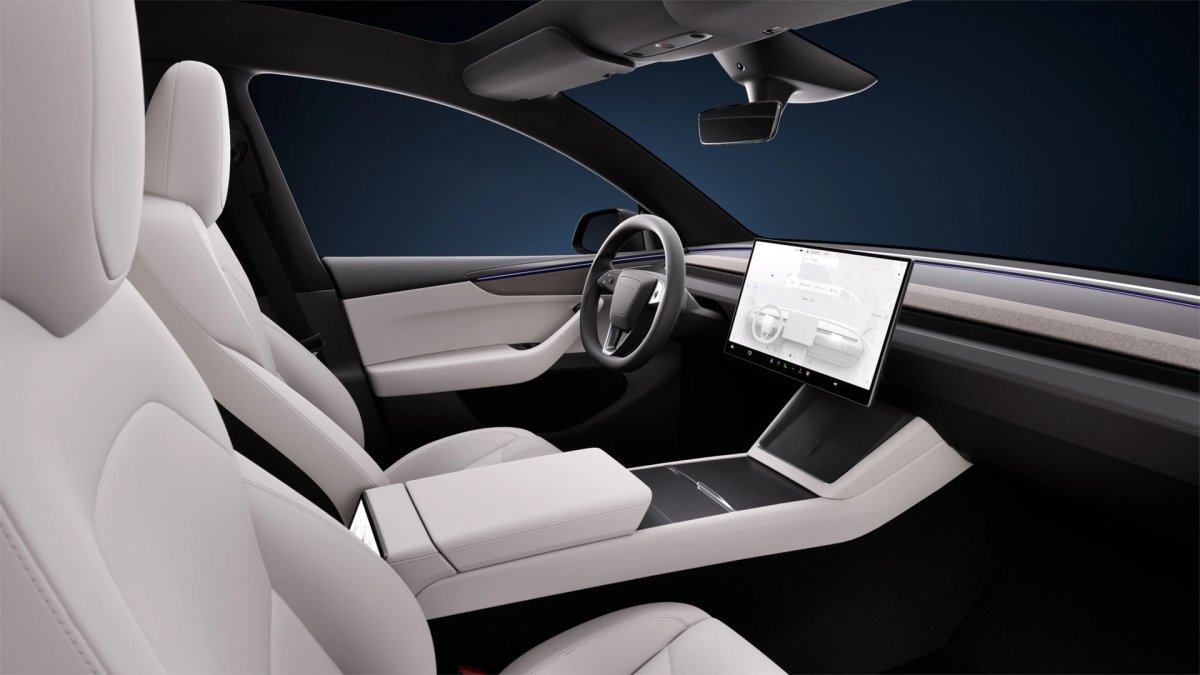
Tesla is refreshing its best-selling SUV with a cleaner, more cohesive look. The automaker has officially discontinued the classic “Black and White” interior on all Model Y Premium trims built at Gigafactory Shanghai, replacing it with a new option called Zen Grey.
According to industry analyst @sawyermerritt, the change is already in effect for Model Y Premium units destined for Australia, New Zealand, South Korea, Japan, the Philippines, and other markets served by exports from Giga Shanghai. This new interior was previously exclusive to the six-seat Model Y L, which has recently begun its own global expansion into new markets.
Tesla has released a video of the new Zen Grey interior from Giga Shanghai built Model Y Premium trims. The White interior has been discontinued.
With Zen Grey, the following trim pieces are no longer black like they were in the white interior:
• Arm rests
• Door grab handles… pic.twitter.com/QSREdWtlDg
— Sawyer Merritt (@SawyerMerritt) April 10, 2026 A Brighter, More Unified Design
The most noticeable difference with the Zen Grey interior is just how much of the cabin is now covered in the lighter shade. While the outgoing white interior featured a stark contrast between bright seats and a dark center console, Zen Grey opts for a much more balanced aesthetic. The new color is softer than the previous “ultra-white” and extends to several areas that were previously black.
Several key trim pieces have been updated to match the Zen Grey palette, including:
For comparison, here’s what the Black and White interior option looked like:
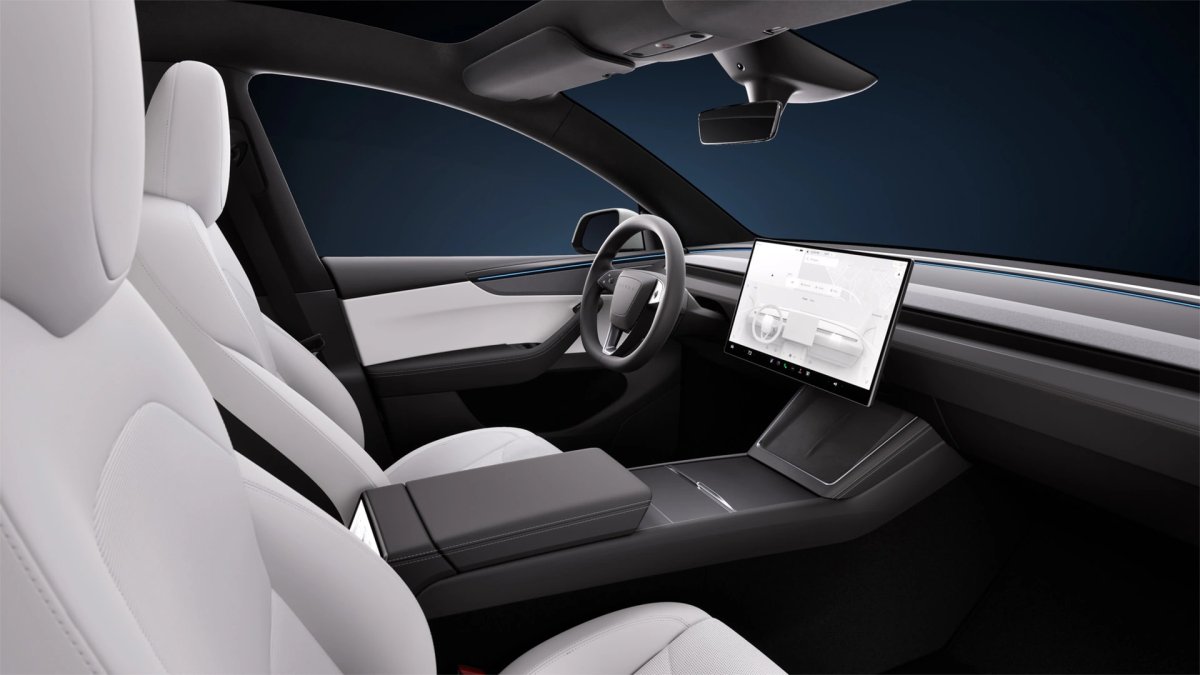
By swapping these black plastic and vinyl surfaces for Zen Grey, Tesla has created an interior that feels significantly more open. The lighter center console, in particular, changes the entire vibe of the front cabin, making it feel more like a high-end lounge than a traditional car cockpit.
Giga Shanghai Leading the Way
Tesla often uses its Shanghai facility as a testing ground for design changes before rolling them out to factories in Fremont, Austin, and Berlin. We saw this earlier this year when Giga Shanghai introduced the black headliner and a higher-resolution screen for the Model Y before those features made their way to the West. It is highly likely that Zen Grey will become the new standard for “white” interiors globally over the coming months.
The factory is currently a hub of engineering activity. Beyond interior refreshes, Tesla is reportedly working on redesigned door handles for the Model 3 and Model Y to comply with new Chinese safety regulations that ban flush electric handles. This constant iteration ensures that the Model Y remains competitive even as newer rivals enter the space.
The Future of the Model Y Cabin
The move to Zen Grey suggests that Tesla is listening to feedback about the maintenance and “starkness” of its original white interior. The new shade provides the same airy feel without the clinical brightness of the old trim. As the Model Y continues to top sales charts across the globe, these incremental updates give us a good look at the brand’s evolving design language.
If you were about to place a Model Y order in an export market, you can now configure your vehicle with this updated look. For those in North America and Europe, it might only be a matter of time before the “Zen” aesthetic reaches your local delivery center.