
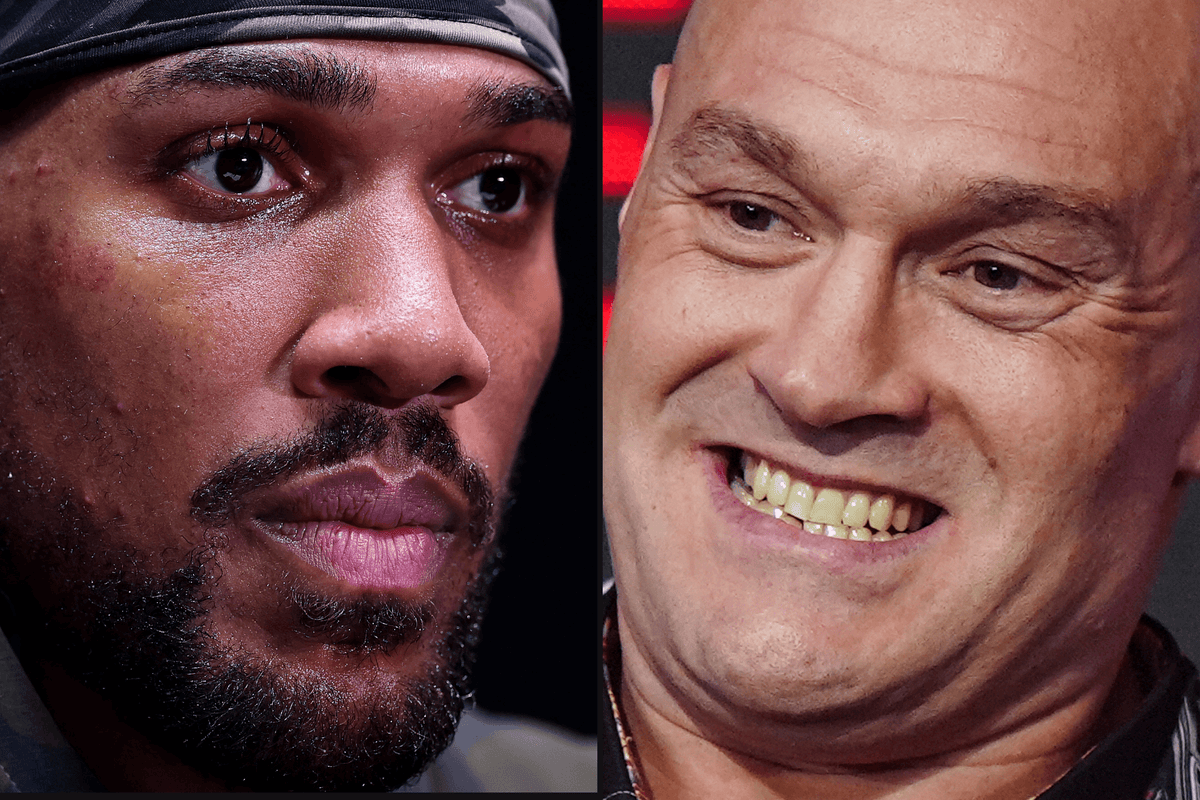
The talks are already ongoing. They have been for more than six years, really. They may go on for a while longer yet. That’s boxing.
Tyson Fury against Anthony Joshua is the all-British heavyweight showdown the world was waiting for half a decade ago, and it remains a possibility.
First, Fury must beat Arslanbek Makhmudov this weekend. It’s the two-time world heavyweight champion’s first fight in 16 months, so nothing is guaranteed at the Tottenham Hotspur Stadium on Saturday night, even if he is taking on a limited opponent in the 6ft 5in (197cm) Russian, who has an underwhelming record.
Joshua, recovering from a car crash in December that cost the lives of his two dearest friends, may also want a warm-up bout this summer before he can face his compatriot.
There have been discussions over venues and money. Croke Park in the Irish city of Dublin is the latest potential stage for a fight that would be backed by Saudi Arabia’s sovereign wealth via boxing powerbroker and Ring Magazine owner Turki Al-Sheikh.
This is a fight which has been close before but defeats, exclusive TV contracts, sponsorship, purse splits and even a U.S. judge instructing Fury to face Deontay Wilder for a third time over a contract dispute have so far scuppered it.
There will no doubt be more shenanigans in the discussions, although the money Al-Sheikh can stump up has seen the usual points of contention in negotiations vanish and contracts get signed quickly elsewhere. It’s amazing what a few extra zeroes can do to get ink on paper.
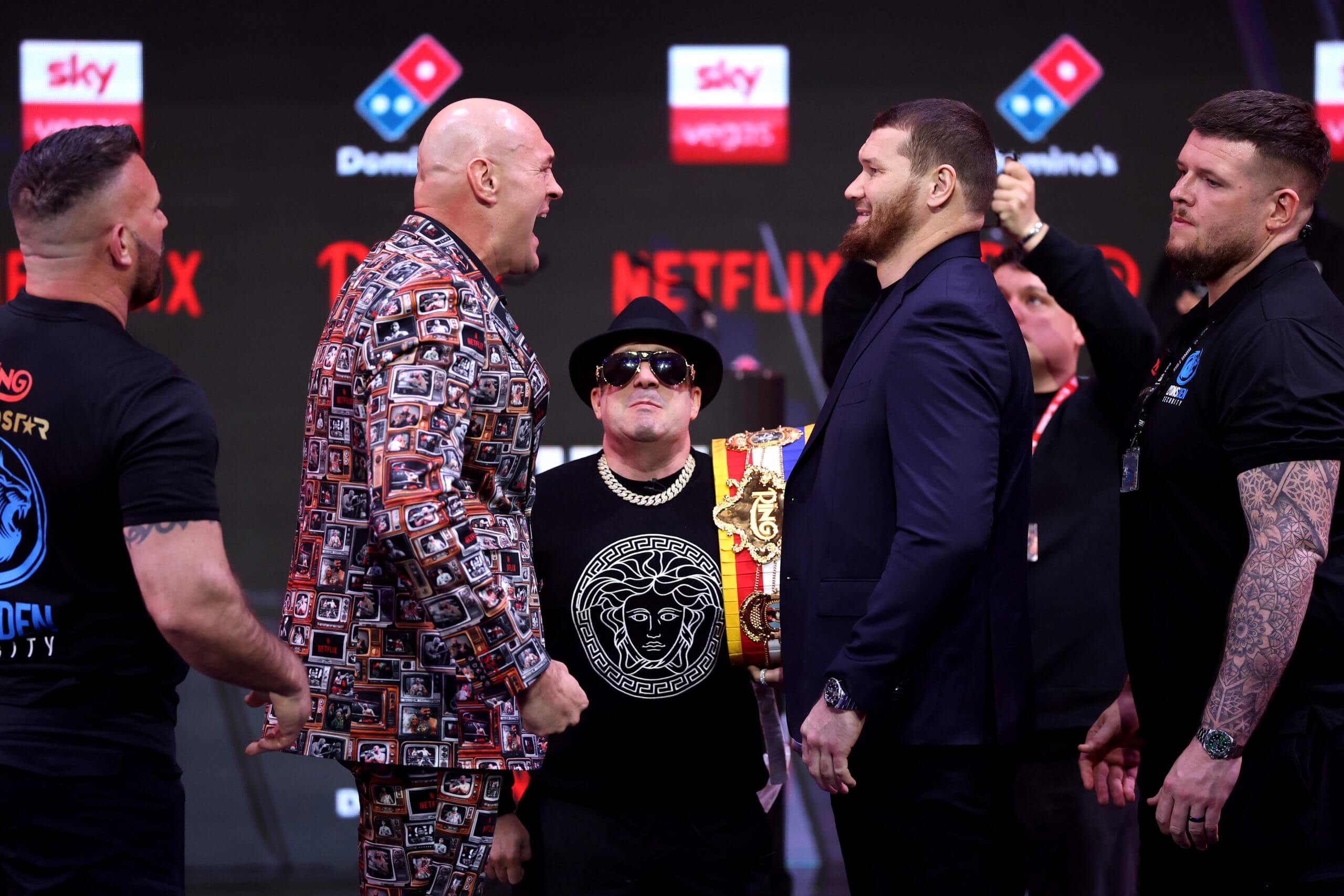
Tyson Fury takes on Arslanbek Makhmudov at London’s Tottenham Hotspur Stadium on Saturday (Richard Pelham/Getty Images for Netflix)
There is still a chance the bout never happens, too. That’s boxing. A sport littered with fights which happened too late or not at all.
Ahead of Fury’s meeting with Makhmudov, The Athletic speaks to key stakeholders to get insight on some of boxing’s most well-known and bizarre negotiations.
Joshua’s showdown with Fury is not the only missed opportunity in this era of heavyweights.
In 2018, all roads led to “AJ” against Wilder. The British heavyweight held the WBA, WBO and IBF titles while the American had the WBC belt. They were two undefeated fighters with ferocious power, it was the U.K. vs the U.S. and, with Fury only returning to the sport at the time following more than two years out, it felt back then like it was the bout to decide who was the No 1 heavyweight in the world.
Yet negotiations continually stalled.
“Eddie Hearn, protecting his fighter, did not want to make the fight of Joshua and Deontay,” Shelly Finkel, the manager of Wilder, tells The Athletic. “And at one point, Joshua said, ‘Get me the $50million and you got it (a fight)’.
“And we got the $50million offer to him and he didn’t take it. And there was always an excuse, but the excuse was trying to blame Deontay when he (Wilder) wanted the fight.
“We sent the offer on email for the fight to happen in Las Vegas and it just didn’t happen.”
Joshua’s side look at it differently.
At the time, he was tied to an exclusive UK TV deal with Sky Sports and an international rights one with DAZN.
“You’ve got to remember what AJ was doing at that time in terms of numbers, when you think back to the tickets he was selling, the events he was involved in, and Deontay wasn’t doing that,” says Frank Smith, CEO of Matchroom Boxing. “That’s just the reality and that’s taking nothing away from Deontay, because he’s a big star in the sport.
“It’s never about fighters not wanting to fight. AJ fought Oleksandr Usyk twice. He wasn’t afraid of anyone.”
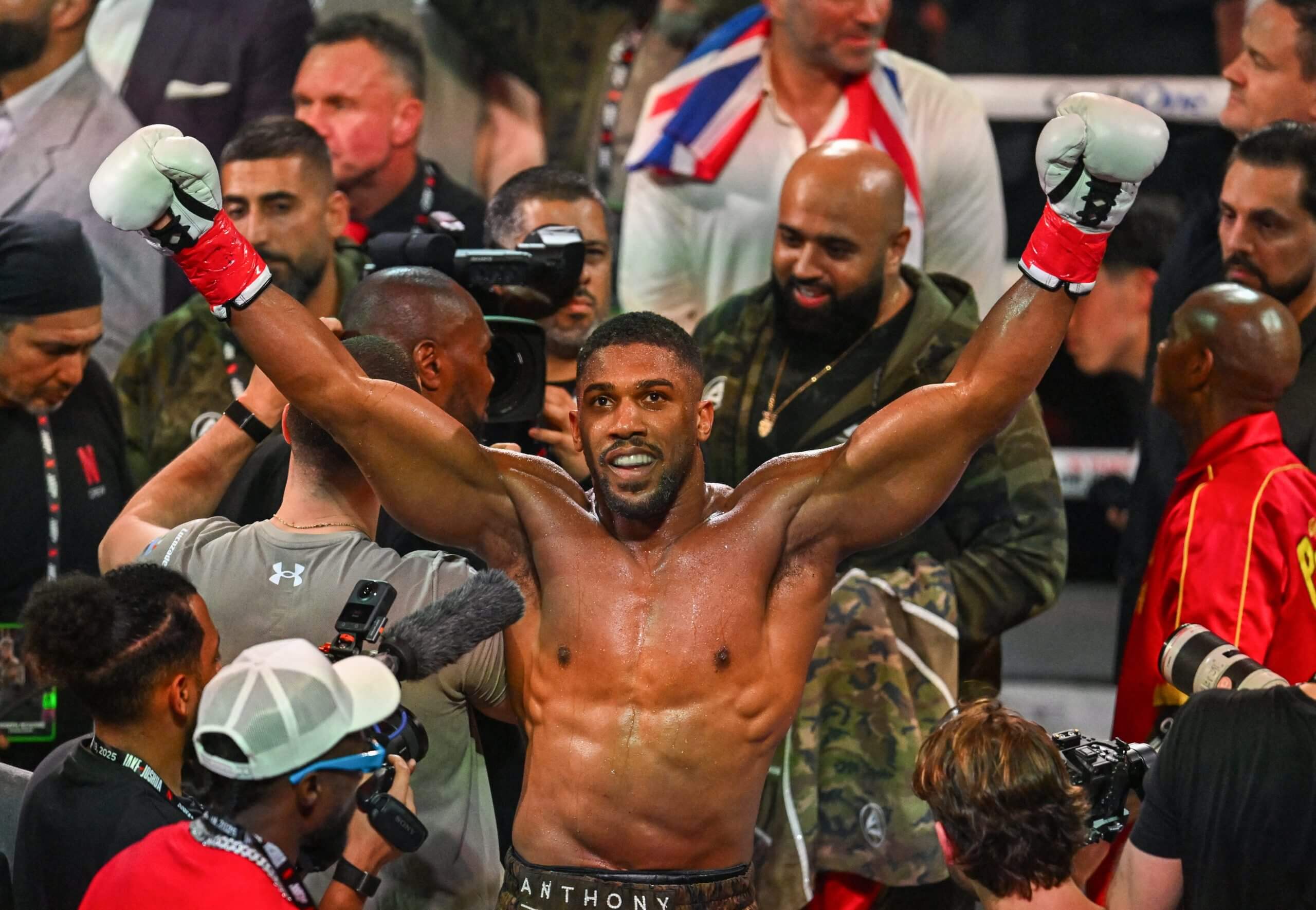
Anthony Joshua’s most recent fight saw him beat YouTuber-turned-boxer Jake Paul in December (Giorgio Viera/AFP via Getty Images)
Smith has been involved in some bizarre negotiations. Not least with his own father-in-law.
In 2016, Matchroom Sport boss Eddie Hearn was trying to make a fight between Chris Eubank Jr and Kazakhstan’s Gennady Golovkin, who was a unified middleweight champion at the time.
Talks were taking place in Matchroom’s HQ in Brentwood, Essex, just east of London. It’s the former Hearn family mansion but it was Chris Eubank Sr, a former two-weight world champion himself, who was leading the discussions.
One of the items he wanted included in the contracts was that ex-WBA featherweight champion Barry McGuigan would be the co-commentator. McGuigan, who had previously been a TV analyst, was no longer working with broadcasters by that time and Sky Sports was putting on the fight between Eubank’s son and Golovkin. It was strange, and it was never going to happen.
“I remember being in the room,” says Smith, who is now married to Eubank Sr’s daughter, Emily.
“He was also annoyed Barry Hearn (Eddie’s former promoter father) had the scorecard from his draw with Nigel Benn (in 1993) on the wall. We all know Eubank Sr is the way Eubank Sr is but, obviously — I’ll be careful with the way I represent that — he is what he is, you know? It’s what makes him great, what makes him the character he is, but moments like that where you’re just sitting there thinking, ‘Man, this has absolutely nothing to do with it, you know?’”
Eubank Jr eventually failed to agree terms on a number of matters, and Kell Brook moved up from welterweight to take on Golovkin instead.
Smith believes egos — and not just from the fighters but also their teams — are often a reason big bouts fall apart, but also because of minor, seemingly irrelevant details.
“Sometimes it stands in the way so much of fights getting done,” he says, offering that contracts for bouts can be up to 40 pages long.
“Stuff like, ‘I want to be in the home corner. I want to be in this dressing room. I want to be this person in the ring (in terms of which boxer enters first). I want to be on the left of the poster (promoting the bout)’.
“Who remembers who was on the left-hand side or right-hand side of a fight poster? Who remembers who walked second to the ring? So many people favour ego over sense.”
Debates over ring walks, fight posters and more are something British boxing stalwart Frank Warren also despises when negotiating its big events. He describes those aspects as “boring bulls**t”.
Warren has been around the sport for almost 50 years. He has seen it all. The strangest request he got from a fighter was that one wanted a manicurist in his hotel as part of the contract.
That boxer certainly wasn’t from Mike Tyson. Warren brought the once-labelled “Baddest Man on the Planet” to the UK in 2000 for fights with Julius Francis and Lou Savarese.
Upon arrival, Tyson spotted a rare McLaren supercar on display in a car showroom. It was worth just over $1million at the time and he demanded it.
“He got off the plane, drove past McLaren on Park Lane in London and saw the car,” Warren tells The Athletic.
“He started saying, ‘I want one’. Thankfully, at the time, you weren’t allowed to drive McLarens in the U.S. It saved me a few quid, thank God.”
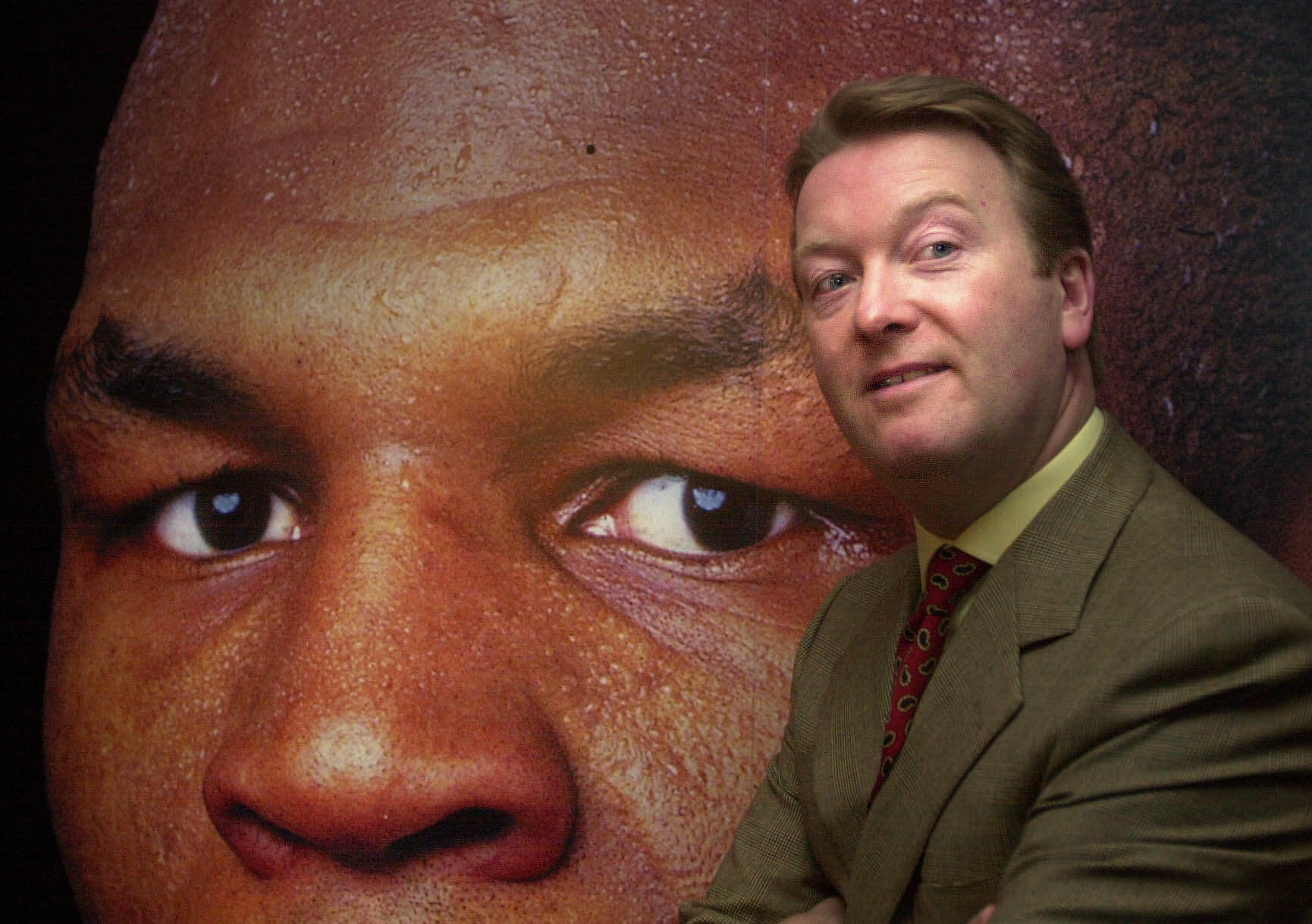
Frank Warren promotes Mike Tyson’s fight with Lou Savarese in Glasgow in 2000 (David Cheskin – PA Images/PA Images via Getty Images)
A few months later, Tyson was back in the UK and ended up in a row with Warren as he claimed the promoter should foot the bill for £2million worth of jewellery. Warren took a punch from the former heavyweight champion in the dispute.
“I couldn’t go home to my wife and tell her I’ve spent £2million on jewellery for someone else,” says the Hall of Fame promoter.
Sometimes, more serious issues cause delays to bouts.
Floyd Mayweather’s 2015 win over Manny Pacquiao remains the richest bout in boxing history as it generated in excess of $500million at the time through pay-per-view subscriptions, tickets and sponsorship.
But it took years to get on, after talks broke down in 2009 around Mayweather’s insistence on Olympic-style drug testing by the United States Anti-Doping Agency (USADA), as reported by UK newspaper The Guardian.
The point of contention was that Pacquiao did not want to have blood drawn within 30 days of the bout, as he felt it weakened him.
It was only six years later that they eventually agreed a deal, which only added to the anticipation and therefore the money both made from the bout, but Mayweather won comfortably, with many believing it happened far too late in both their careers.
There are mind games not only during negotiations but after them, when fights are almost ready to take place.
Northern Ireland’s Carl Frampton faced English rival Scott Quigg in a super-bantamweight world title unification clash in 2016. The fight had been a number of years in the making as both rose up the ranks but they eventually agreed to face each other at Manchester Arena.
Quigg, hailing from Bury, just north of Manchester, had frequently fought at that venue under trainer Joe Gallagher. It is primarily an entertainment space rather than a sporting one, so there are no ‘home and away’ dressing rooms as you’d find at a stadium but there is a big one reserved for the headline performers of a given night.
Having used it previously, Quigg wanted it again for this fight. Frampton refused, threatening to pull out of the bout just 48 hours beforehand if the matter was not resolved to his satisfaction.
“To be honest, I would have got changed in a cupboard,” Frampton tells The Athletic. “That genuinely didn’t annoy me.
“I wasn’t thinking, you know, ‘If I’m in this dressing room, I have a better chance of winning’, but I knew he would be stewing on it. I knew it was winding him up and I held my ground. There was talk we were saying, ‘Well, the fight doesn’t go ahead if we don’t get the changing room’, but that was bull. The fight was always going to happen but we used it to wind him up.”
The media lapped it up: precious news lines to get a few more column inches out of the fight.
Later that year at the same venue, Derek Chisora faced Dillian Whyte on the undercard of Joshua’s IBF heavyweight title defence against little-known American Eric Molina.
The all-British bout was added by Hearn to boost pay-per-view sales but when Chisora refused to engage at a press conference to sell the fight, the promoter had a problem.
Hearn confronted Chisora but the Londoner was dismissive, saying he wanted a cut of the pay-per-view after initially turning it down in favour of a guaranteed sum.
In a bizarre twist of negotiations, Chisora said he would play ball if Hearn gave him the watch on his wrist — a £30,000 Rolex Sky-Dweller. Hearn instead promised to buy him one if the PPV sales on Sky Sports beat a certain target.
“There were a few Rolexes with fighters,” says Frank Smith.
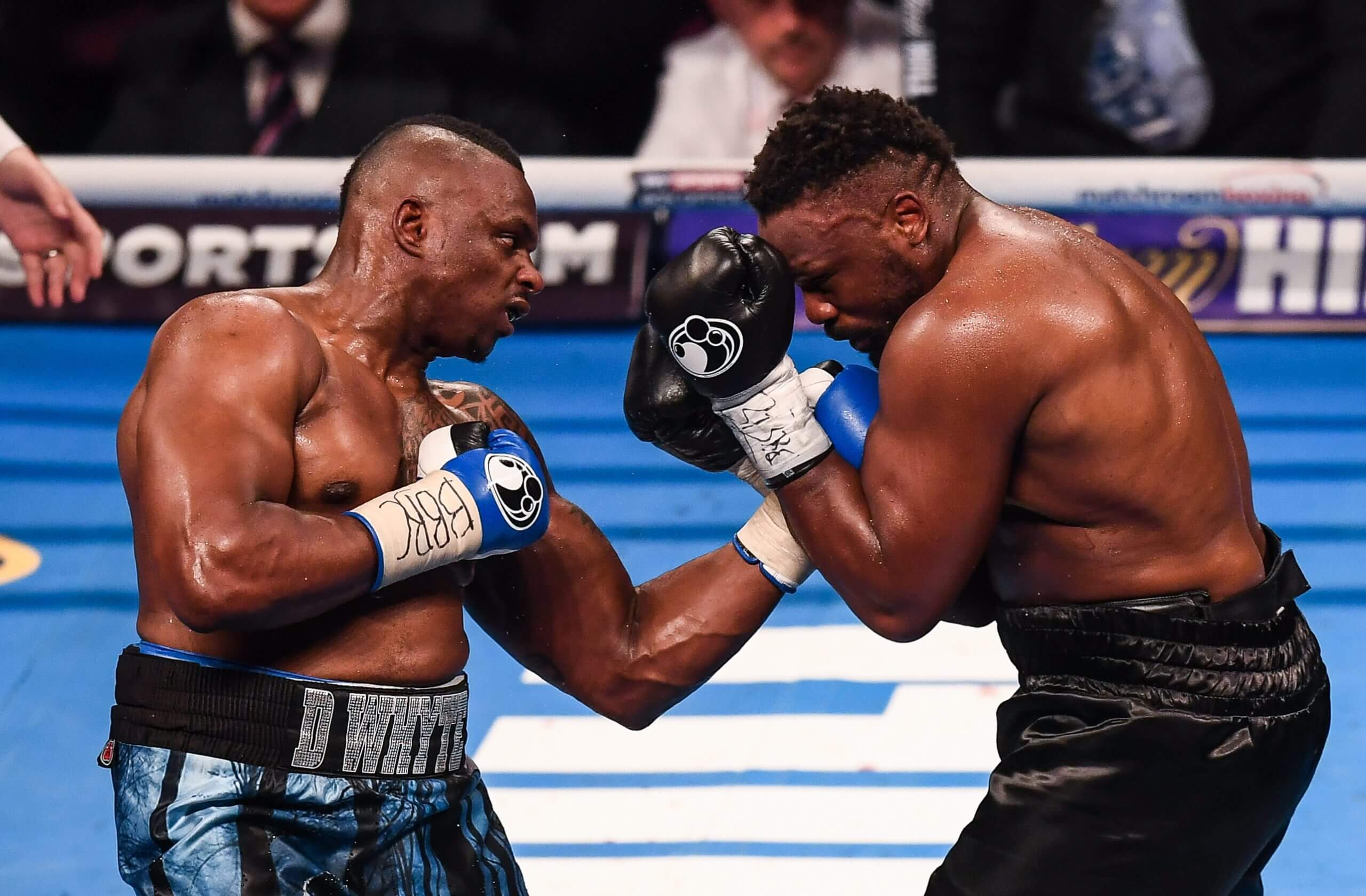
Derek Chisora’s 2016 meeting with Dillian Whyte, left, had a very specific watch-based stipulation (Stephen McCarthy/Sportsfile via Getty Images)
A few months later, at the pre-fight press conference, Chisora threw a table at Whyte. The British Boxing Board of Control issued him with a two-year suspended ban and £25,000 ($33,500) fine.
“He wouldn’t pay the fine,” says Smith. “So we had to pay that as well.”
Joshua finally facing Fury would certainly be worth more than a few Rolex watches.
Fury’s fight this weekend is another hurdle the potential Joshua showdown has to clear, but there will surely be others.
Joshua’s potential desire for a warm-up bout in the summer will rule out the possibility of them fighting outdoors at Croke Park in September.
Yet the money on offer from Saudi entertainment company Sela obviously makes these negotiations a little easier and can make those hurdles disappear, as previously mentioned.
Joshua will be ringside on Saturday night. It will be interesting to see if he’s pushed to get in the ring afterwards to start the build-up as we wait to see if this fight with Fury ever happens.