
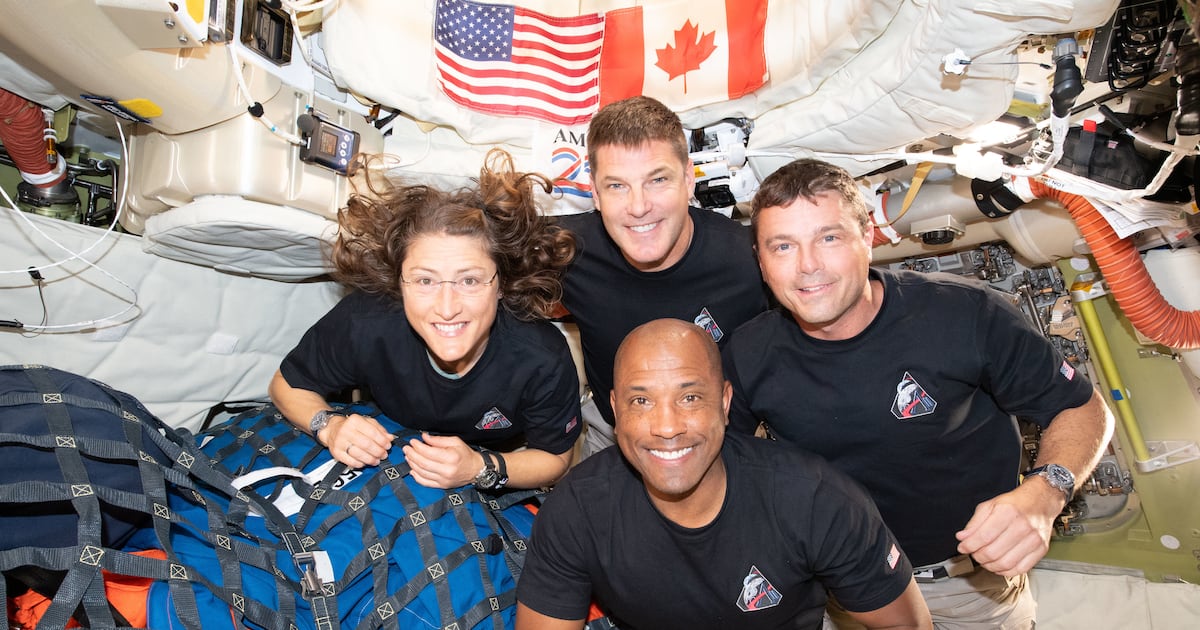
Former astronaut Clayton Anderson describes what the crew likely experienced as the vessel splashed down.
The Artemis II astronauts returned to Earth yesterday evening after a 10-day voyage around the moon, with one former NASA astronaut calling this mission a “huge success.”
“We proved that we can do it again,” former NASA astronaut Clayton Anderson told CTV News Channel on Saturday.
“The mission was a huge success, with some minor hiccups.”
Canadian Space Agency (CSA) astronaut Jeremy Hansen served as the mission specialist, making him the first Canadian to ever go to the moon.
Hansen was onboard the Orion spacecraft with three NASA astronauts — commander Reid Wiseman, pilot Victor Glover, and mission specialist Christina Koch.
Minor issues to be fixed
Clayton points to the two minor issues the crew faced during the mission: communication issues with Outlook and the toilet malfunctioning on the spacecraft.
“While those may be considered minor, the idea here is that you want to eliminate any possible areas of concern, especially a toilet,” he said.
“I think that’s a very big item for them to look into, but they’ll figure it out, we always do, and we’ll move on with better ideas and keep pressing to the future.”
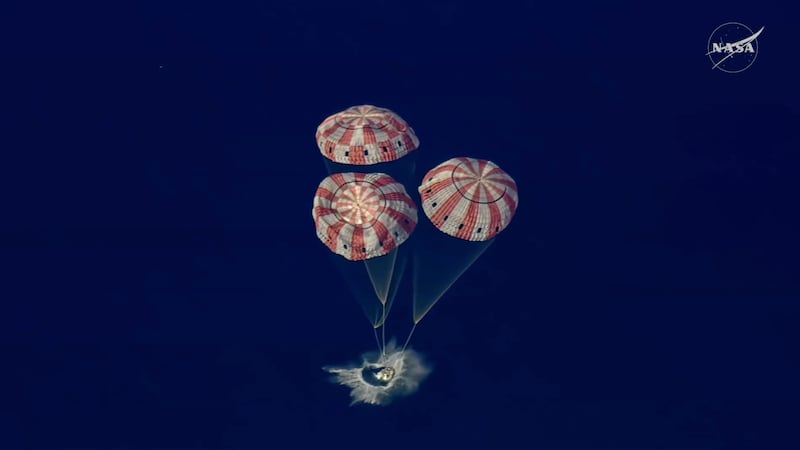 Splashdown In this image from video provided by NASA, the Artemis II Orion capsule splashes down in the Pacific Ocean, on Friday, April 10, 2026. (NASA via AP) Splashdown
The crew splashed down in the Pacific Ocean near San Diego at 8:07 p.m., after hurtling roughly 40,000 km/h through the Earth’s atmosphere, where the heatshield was subject to temperatures half as hot as the sun.
A series of parachutes were deployed to help slow down the spacecraft.
Anderson says this period is a “very dynamic time.”
“They’re very focused on monitoring data to make sure that everything’s going well, so that they don’t have to do anything or call anyone to make sure that something has to happen,” he said.
“They’re focused, they’re strapped into their seats — probably pretty tightly — and they’re starting to feel the effects of gravitational pull again, which can be discomforting, but they’re also anticipating everything that’s going to happen.”
“I’m sure they were nervous.”
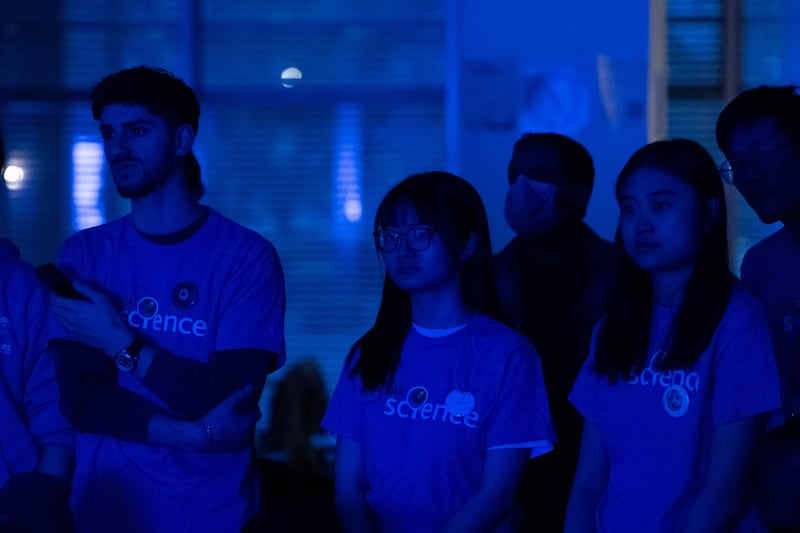 Space enthusiasts Space enthusiasts gather to watch the Artemis II Orion Spacecraft capsule splashdown in the Pacific Ocean, over a live stream at the University of Toronto, in Toronto on Friday, April 10, 2026. THE CANADIAN PRESS/Arlyn McAdorey ‘Artemis generation’
The Artemis II mission is the first crewed mission to fly to the moon and back to Earth in 54 years.
The last time humans went to the moon was at the end of the Apollo program in December 1972 — Apollo 17.
Anderson, who says he witnessed Apollo 8 and considers himself part of the “Apollo generation,” says this mission impacts a new generation, some calling the “Artemis generation.”
“You have a new generation of young people who are watching this with the same awe that I watched it with, and hopefully are deciding what their future is going to be — a future in outer space,” he said. “This has been a great accomplishment.”
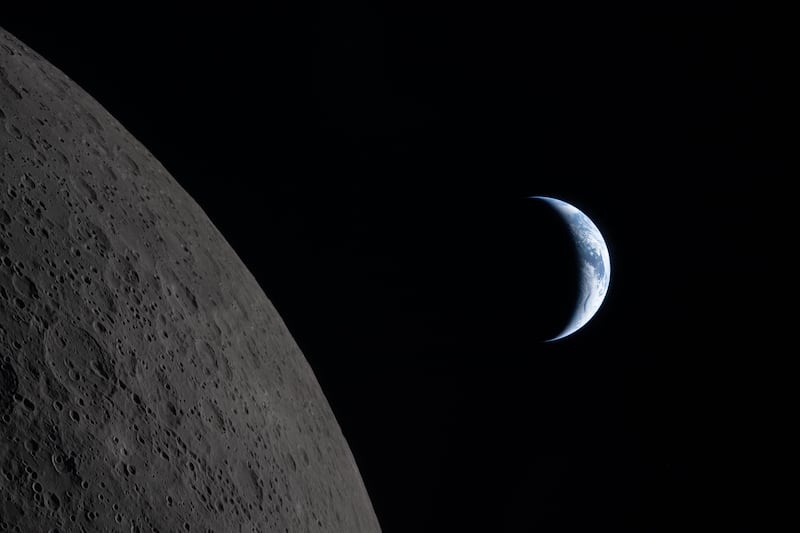 NASA Artemis Moonshot In this image provided by NASA, the Artemis II crew captured this view of the Earth next to the Moon before Earthset during a lunar flyby, Monday, April 6, 2026. (NASA via AP)
“(…) I think this is a great example of what we can do as humans when we work together.”
Artemis II, which launched on April 1, is a test to support later missions of the Artemis program.
Artemis III, with a target launch in mid-2027, will be another crew mission to conduct further tests, while Artemis IV, scheduled for 2028, is designated to be a lunar landing.