

Listen to this article
Estimated 4 minutes
The audio version of this article is generated by AI-based technology. Mispronunciations can occur. We are working with our partners to continually review and improve the results.
Members of a Hamilton residents’ group are calling for a public meeting with the company that runs the Dundas Quarry, following its request to import 38 million cubic metres of soil.
According to a proposal posted on the Environmental Registry of Ontario in January, Amrize Canada is seeking permission from Ontario’s Ministry of Natural Resources to bring in fill as part of a “rehabilitation” project. The proposal states the soil would be used to turn parts of the quarry into woodland, grassland and lake habitats.
“More detail is needed on that,” Amanda Andrews of Dundas & Greensville Environmental Concern, said. Her group organizes around various environmental issues and monitors developments in the northwestern part of the city.
When it comes to the quarry, “rehabilitation is a good thing but it has to be done properly,” Andrews said, adding residents fear contaminated soil could impact the local aquifer and water supply.
The group also wants to know where the fill would come from, what specifically it would be used for, when it would be brought in, and who would test it for contaminants, she said.
Plan would be subject to ‘strict’ regulations: Amrize
In an emailed statement to CBC Hamilton, Amrize did not directly address the group’s concerns, or respond to questions about when the work would start or where the fill will come from.
Once rehabilitation work is complete, spokesperson Anna Salomao said, a portion of the quarry “will be permanently inactive and will no longer serve operational purposes.” She said the proposed amendment “includes the creation of a 94-hectare lake, along with expanded woodland, grassland, and wetland habitat.”
The company said its plan is under review and, if approved, “will be subject to strict regulatory requirements, including detailed conditions for the type, quality, and management of any sourced material, as well as environmental protection and monitoring.”
According to the Ontario government website, excess soil refers to soil, crushed rock or soil mixed with rock or crushed rock, that has been excavated as part of a project and removed from the project area. Its use and transportation is regulated provincially.
Amrize also said its team has been “actively engaging with government representatives and members of the community to provide information and respond to questions.”
“We’ve been really specific that we’re requesting a public meeting,” Andrews said, adding that’s what the community wants instead of one-off responses to questions.
In early March, CHCH News reported Flamborough–Glanbrook MPP Donna Skelly said she too had questions about the development and was aware of residents’ concerns.
CBC Hamilton asked Skelly if she has since been in contact with the company but did not receive a response.
In late March, Flamborough Today reported Skelly said she asked Amrize to speak directly to residents but would not be hosting a public meeting herself.
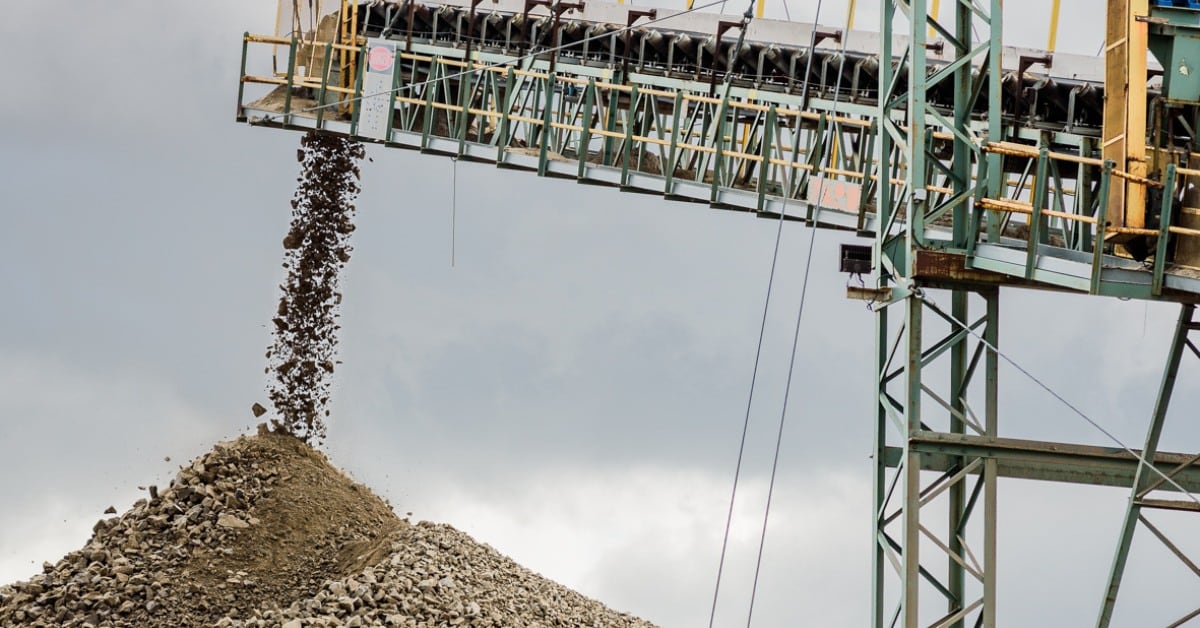 Amrize is seeking to bring in over 38 million cubic metres of soil, according to a planning proposal. (Lafarge Canada/Facebook)
Members of the public were able to comment on the proposal between Jan. 20 and Feb. 19. A spokesperson for the Ministry of Natural Resources told CBC Hamilton the proposal is in the “addressing comments stage.”
Generally, the Ministry requires that applicants requesting to import excess soil consider the potential impacts to the community, including traffic, noise and dust. Changes that could affect water resources must go before the Ministry of Environment, Conservation, and Parks.
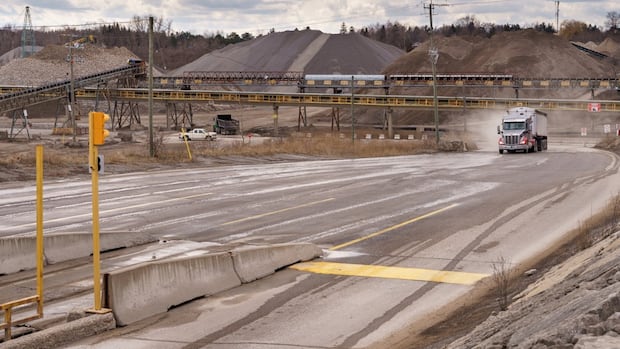
The Dundas Quarry, which borders Brock Road between Highway 5 and Concession Road 5 W., produces aggregates, a term that refers to materials including sand, gravel, clay, and bedrock.
For Andrews, development there is one of several ongoing concerns, including new housing projects her group fears could negatively impact the local environment.
Overall, she said she’d like “more collaboration” from developers and for officials to take a bigger picture view when assessing site-specific impacts of development, considering what their cumulative impacts might be.
Hers has “never been an anti-industry group,” Andrews said, but it wants “a more sustainable and long-term approach.”