
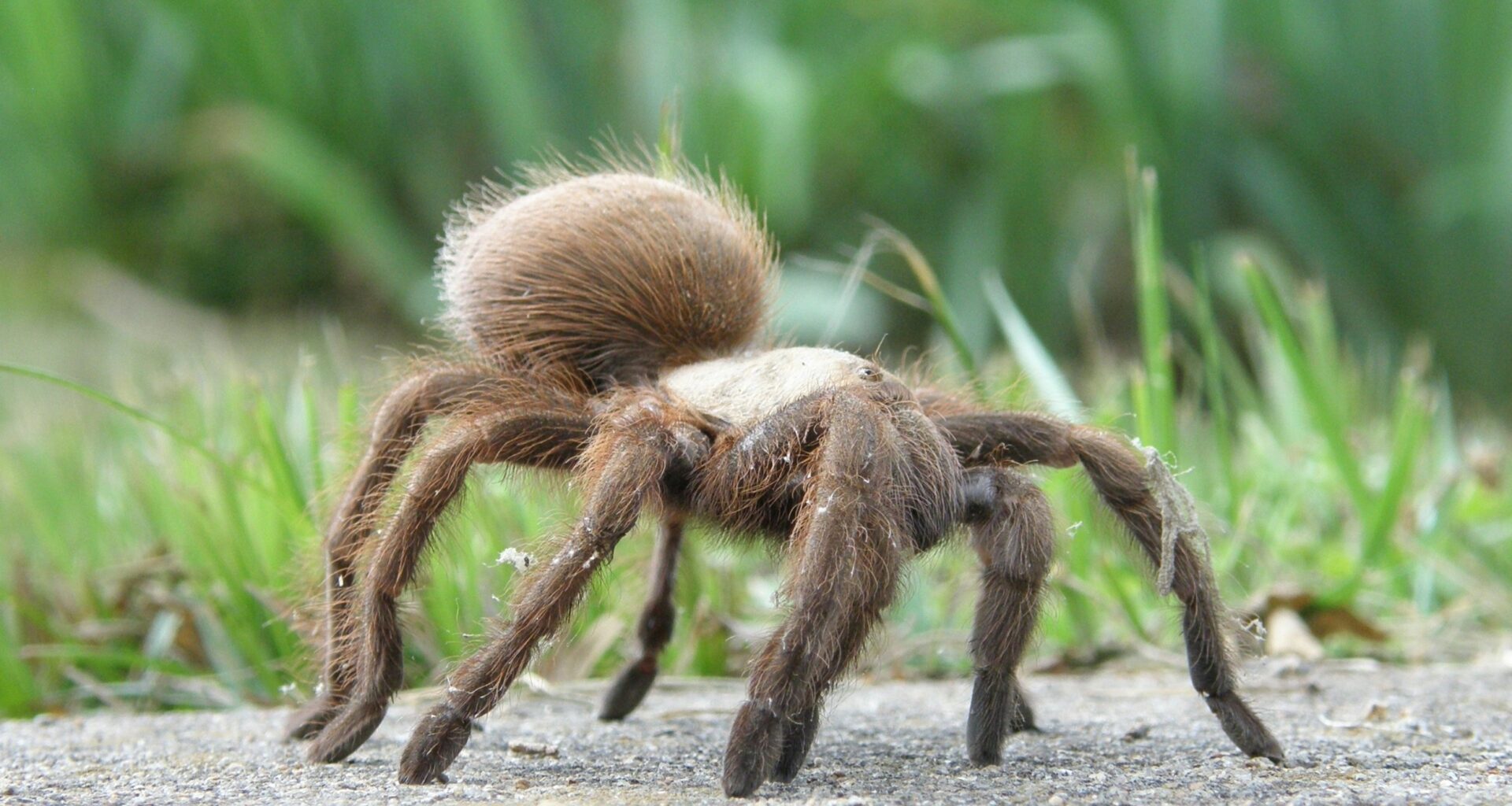
Tarantulas may look slow and silent, but a closer look reveals something surprising. These spiders do not just wander around randomly.
New research shows that tarantulas can learn, remember, and make smart decisions while moving through their environment. This discovery changes how we think about spider intelligence and behavior.
How tarantulas find their way

Spatial orientation means understanding your position and moving correctly in your surroundings. Scientists now see this ability in tarantulas that live in trees and those that live underground.
A study from the University of Turku shows that these spiders move with purpose. Many travel to specific places to hunt and then return home without getting lost.
The research also explains that tarantulas use two types of information. One comes from their own body movements, like direction and distance.
The other comes from the environment, such as light, vibrations, and chemical signals. This mix helps the spider stay oriented even in complex spaces.
Night hunting shows memory in action
Some tree-living tarantulas follow a clear routine. Every night, they leave their shelters and move toward places full of insects.
Many head toward lights that attract prey. After hunting, the same spider returns to the same shelter.
In one case, a tarantula travelled along wooden beams, turned at a right angle, and reached a feeding spot near a light. This repeated path shows memory.
The spider likely remembers both the route and the location. This behavior saves time and energy while improving hunting success.
Burrowing spiders show flexibility
Tarantulas that usually live in burrows also show unexpected behavior. During dry seasons, some climb trees to search for food.
In flood-prone areas, these spiders move into shrubs or trees to avoid water. This ability to change behavior based on conditions shows flexibility.
A tarantula does not rely only on fixed habits. Instead, it adjusts its actions to survive. This kind of behavior suggests learning from past experience.
Growing up changes behavior
As tarantulas grow, their behavior can also change. Young spiders often stay close to their homes.
Adults move farther away and explore more areas. This shift happens because larger spiders need more food and bigger prey.
A blind cave-dwelling tarantula shows this clearly. Younger ones stay near safe spots, while adults move more freely. This change shows how growth affects behavior and decision-making.
Tarantulas use senses to return home
When disturbed, tarantulas quickly return to their burrows. Many move in a straight path without confusion. This behavior appears even in blind species that live in dark caves.
The discovery shows that tarantulas do not depend only on vision. Instead, they use internal body signals and environmental cues together.
These include vibrations, air movement, and even chemical traces. This system helps them move safely even in total darkness.
Tarantulas learn from experience
Scientists once believed spiders relied only on instinct. New research shows something different. Tarantulas can learn from experience and improve their behavior over time.
“Previous studies have shown that tarantulas can learn to avoid unpleasant stimuli, navigate complex mazes, and remember spatial locations over time,” said Alireza Zamani, lead author of the study.
“These abilities suggest that their nervous systems support more flexible behavior than traditionally assumed.”
Experiments support this idea. In maze tests, tarantulas learned to avoid heat and bright light. Over time, they made fewer mistakes and reached their goal faster. This shows clear learning and memory.
How tarantulas use senses to survive
Tarantulas rely heavily on their senses. Silk plays an important role. A spider leaves silk trails that help it find its way back home.
Chemical signals in the environment guide movement and hunting choices. Prey leaves behind chemical traces, which help a tarantula decide where to hunt.
Light and habitat features can also affect where a spider chooses to stay. This means navigation comes from both learning and sensory input working together.
Scientists still have more to learn
Even with these discoveries, researchers remain careful. Some behavior may come from learning, while some may come from built-in sensory systems. Scientists still need more experiments to separate these effects.
“Overall, studies on spider learning are still relatively recent, especially for tarantulas,” noted Zamani.
“Observations from the field, combined with controlled experiments, will be important for understanding how sensory cues, memory, and experience interact to help these spiders navigate and search for prey.”
This research changes how we see tarantulas. These spiders are not just simple hunters. They can learn, adapt, and respond to their environment in smart ways.
From climbing trees to remembering hunting paths, tarantulas show behavior that feels almost strategic.
Future research will help uncover even more about how these fascinating creatures behave and survive.
The study is published in the journal Ecology and Evolution.
—–
Like what you read? Subscribe to our newsletter for engaging articles, exclusive content, and the latest updates.
Check us out on EarthSnap, a free app brought to you by Eric Ralls and Earth.com.
—–