
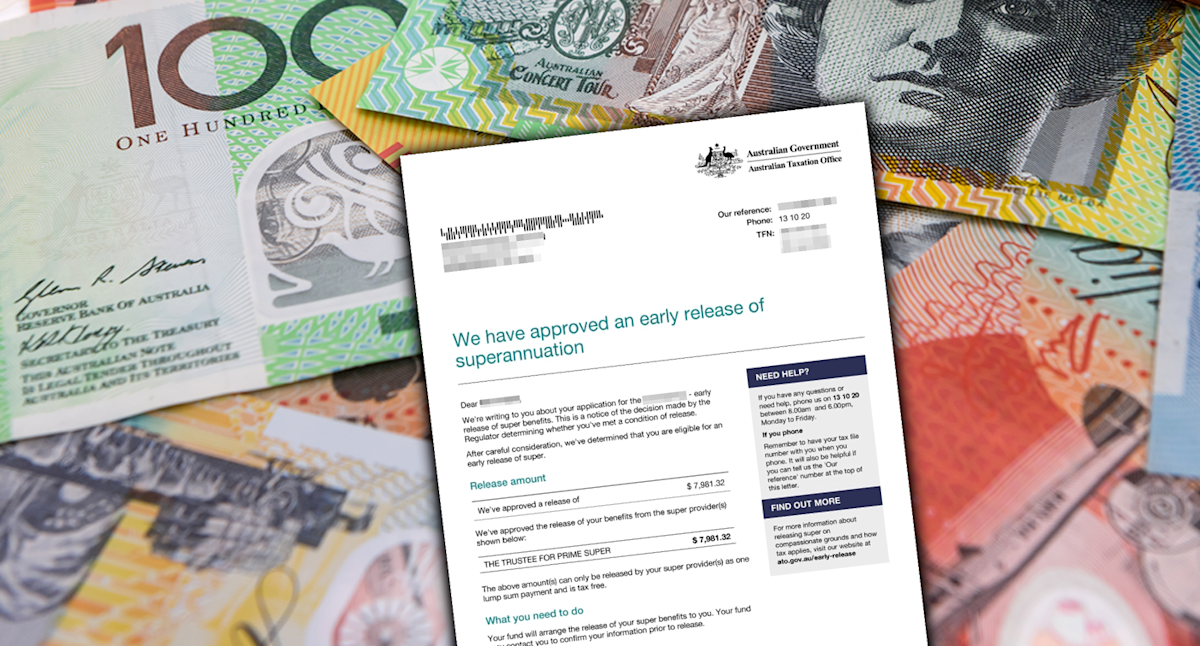
 Early superannuation is restricted to strict criteria as the ATO and health authorities again warn about a growing trend. (Source: Getty/ATO)
The Australian tax office has sounded the alarm over a worrying trend that could hamper the retirement plans of Australians who partake in it. The ATO says it is continuing to monitor “recent growth in applications” for people to seeking early access to their superannuation for suspect medical procedures.
The tax office and Australian health authorities are warning about bad actors who encourage patients to pull money out of their retirement fund on compassionate grounds. In many cases, social media is used to lure in clients who are then instructed how to apply for release of funds on compassionate grounds despite some treatments being “overpriced or unnecessary”.
“It is unacceptable for anyone to pressure Australians into accessing their superannuation savings early,” ATO Deputy Commissioner Ben Kelly said in a statement on Tuesday.
RELATED
It’s not the first time authorities have raised the issue. In October, the public was cautioned about a spike in the trend after $1.4 billion was released on medical grounds in the 2024-25 financial year. Of the 93,500 applications in the medical category that year, about 30 per cent were rejected.
In response to concerns about inappropriate conduct, the Australian Health Practitioner Regulation Agency (AHPRA), along with the Dental and Medical Boards of Australia, recently released updated guidelines for doctors and dentists.
Both rogue medical practitioners and patients are warned that penalties can apply to individuals who make false or misleading statements on medical reports to the ATO Commissioner to access compassionate release of superannuation.
Two doctors have been referred to tribunals for allegedly providing false documentation to the ATO. Meanwhile another doctor has been given a formal caution, while a dentist has had conditions imposed on their registration.
“Patients need to be able to trust that their practitioner is recommending treatments based on clinical need, not the prospect of financial gain,” AHPRA CEO Justin Untersteiner said.
“If you have concerns about the conduct or performance of a registered practitioner, we want you to notify Ahpra. Every notification we receive is taken seriously and carefully assessed, and we look into every concern to determine what action, if any, is required to protect public safety.”
Story continues
The ATO received nearly 100 related complaints between 2019 and 2025, with the public told they can make a tip off here.
According to ATO guidelines, access for medical reasons will only be granted for “critical” services, rather than everyday or cosmetic work.
The services have to be certified by two professionals as necessary to:
Alleviate acute or chronic pain
Treat a life-threatening illness or injury
Alleviate acute or chronic mental illness
Among the red flags highlighted by the ATO this week revealed what patients should look for if they’re feeling unsure about the system.
They included telehealth appointments, rather than physical, in-person examinations being conducted by the doctor or dentist.
It also warned about any medical businesses charging fees to assist you with preparing or submitting a compassionate release of superannuation or requiring you to use a specific provider to prepare and submit the application.
“Compassionate release of superannuation is an important safety net to help fund necessary health care where people cannot otherwise afford it. It should only be considered as a last resort and only when it is really necessary,” ATO Deputy Commissioner Ben Kelly said.
“It’s important to remember there are limited circumstances where someone can access their super early for medical or dental treatments, such as to treat a life-threatening illness or injury, to alleviate acute or chronic pain or acute or chronic mental illness.”
Australian workers can only tap into their retirement nest eggs when they finish work completely or reach preservation age, which is 55 to 60, depending on when they were born.
They can also access their super after 65, even if they are still working.
But the following are grounds that can be used in compassionate requests for early access:
Medical treatment for you or your dependent
Medical transport for you or your dependant
To modify your home or vehicle to accommodate special needs arising from your or your dependant’s severe disability
Palliative care for you or your dependent’s terminal illness
Death, funeral or burial expenses for your dependant
To prevent foreclosure or forced sale of your home
Get the latest Yahoo Finance news – follow us on Facebook, LinkedIn and Instagram.