

Listen to this article
Estimated 5 minutes
The audio version of this article is generated by AI-based technology. Mispronunciations can occur. We are working with our partners to continually review and improve the results.
School board trustees and parents in Ottawa are worried that sweeping changes announced Monday for Ontario’s English school system are another knock against local control over education.
Education Minister Paul Calandra laid out his plans Monday as part of the Putting Student Achievement First Act, which includes limiting elected trustees’ financial responsibilities, largely removing their role in central bargaining, and replacing the director of education with a CEO with business qualifications and a chief education officer.
With all those changes, Ottawa-Carleton District School Board (OCDSB) trustee Lyra Evans said it isn’t clear trustees still have a real role in education.
“If trustees don’t have the ability to make changes and they don’t have the ability to do anything other than advocate, how is having a trustee with no power better than not having a trustee?” she asked.
She said putting a business-oriented CEO in charge gets the meaning of education backward.
“Education is a service that is intended to educate our kids to make sure that we are preparing people for the world ahead of us,” Evans said. “When it becomes all about counting dollars and cents, I think we have missed the plot.”
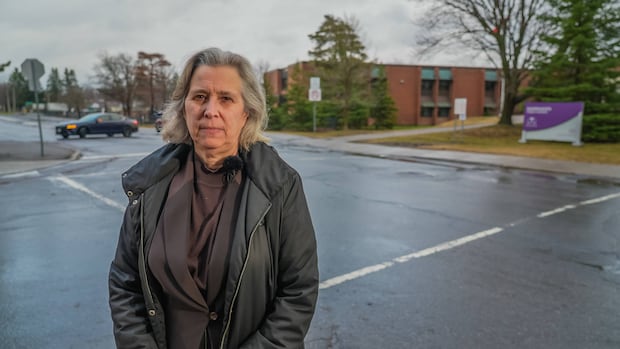
 Ottawa-Carleton District School Board trustee Lyra Evans. (Michel Aspirot/CBC)
But another OCDSB trustee, Donna Blackburn, said the changes aren’t nearly as drastic as some feared. She said the power of trustees has been eroded over time, and this is just another step in that direction.
“This whole big kerfuffle today is much ado about not much,” she said of Calandra’s announcement.
Calandra had signalled over the past year that he was considering getting rid of public English-language trustees altogether, citing alleged financial mismanagement at some boards. But that wasn’t in Monday’s announcement.
“Obviously, I’m very relieved that the position of trustee will remain,” Blackburn said. “And quite frankly, most of it’s not a big surprise to me, and some of it I actually welcome.”
Calandra instead announced limiting trustees’ discretionary expenses and their honoraria to $10,000. Both Evans and Blackburn said that could limit the range of candidates who are willing to take on the burden of running for election and serving as a trustee.
“Ten thousand dollars before taxes means you are not going to get people who are the best candidates for the job,” Evans said.
The honorarium for an OCDSB trustee was about $16,000 as of last year, though they’re receiving nothing while the board remains under supervision. Blackburn said that given her workload, already amounts to less than minimum wage.
“There are concerns about who would be attracted to this job,” she said. “For the most part, you would have retired people or people who are quite wealthy and would have the time to do it without proper compensation.”
The OCDSB is one of eight boards currently under direct provincial control. Calandra said they will remain under supervision “for as long as it takes to put them back on the right track.”
“They will not be returned a minute before,” Calandra told reporters on Monday.
The province also plans to cap the number of trustees per board to a maximum of 12, which currently only affects the Toronto District School Board.
 Education Minister Paul Calandra visits students at Highfield Junior Public School in Toronto on March 11. (Nathan Denette/The Canadian Press)
In the classroom, the government will require teachers to use approved learning resources such as lesson plans and guides.
The legislation also wants to instate mandatory written exams on “official exam days” for grades nine through 12, and will also require “attendance and participation” to be part of the final grades for high school students.
“I had a really big issue with that,” said Alicia Vrieswyk, an Ottawa parent whose child has special needs. She noted that children with complex needs and medical conditions may be absent more often, and worries for their attendance score.
“I think that that really sort of negates diverse learners,” she said.
Vrieswyk said she’s worked with trustees during the elementary program review as part of a parent advocacy group, and is concerned about the “top-loading” of the board with the current provincial supervisor for OCDSB, a new CEO and a chief education officer.
“We had such great interactions with the trustees last year … they could see on a human level, on a student success level,” Vrieswyk said. “They’re taking away any of the power the trustees actually had.”
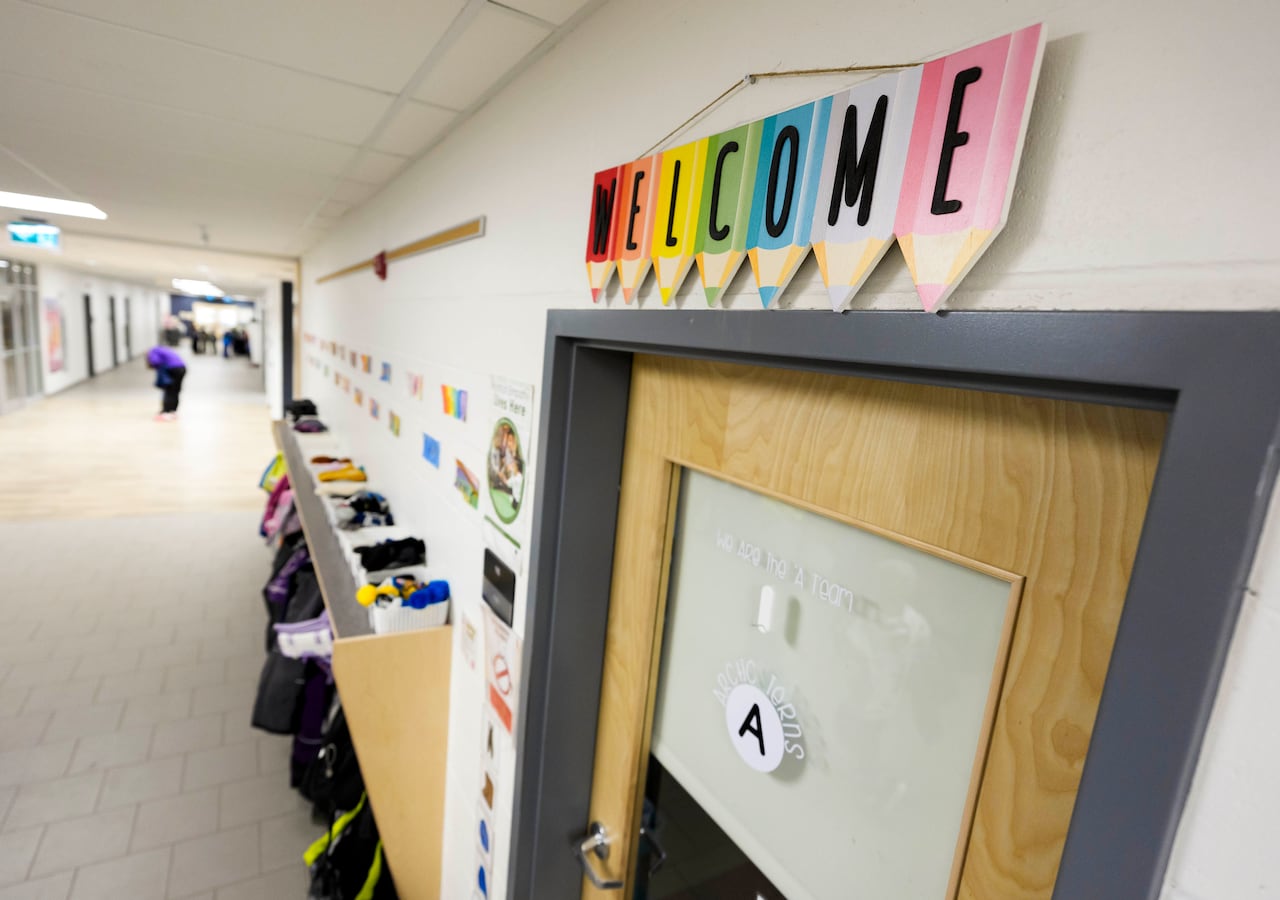 A welcome sign over the door of an Ottawa classroom. Alicia Vrieswyk, a parent with children in the Ottawa public and Catholic school boards, says she’s concerned about the sweeping changes proposed by the legislation announced Monday. (Justin Tang/The Canadian Press)
She wonders how much the salaries for those new oversight roles will cost taxpayers.
“Between all of those hefty price tags, I’m not sure how that equates to a students-first approach,” Vrieswyk said.
Calandra told reporters Monday that existing directors or superintendents may be able to fill some of the roles as CEO or chief education officer, and doesn’t foresee a financial impact of introducing the oversight positions.