
Montreal, Quebec, Canada
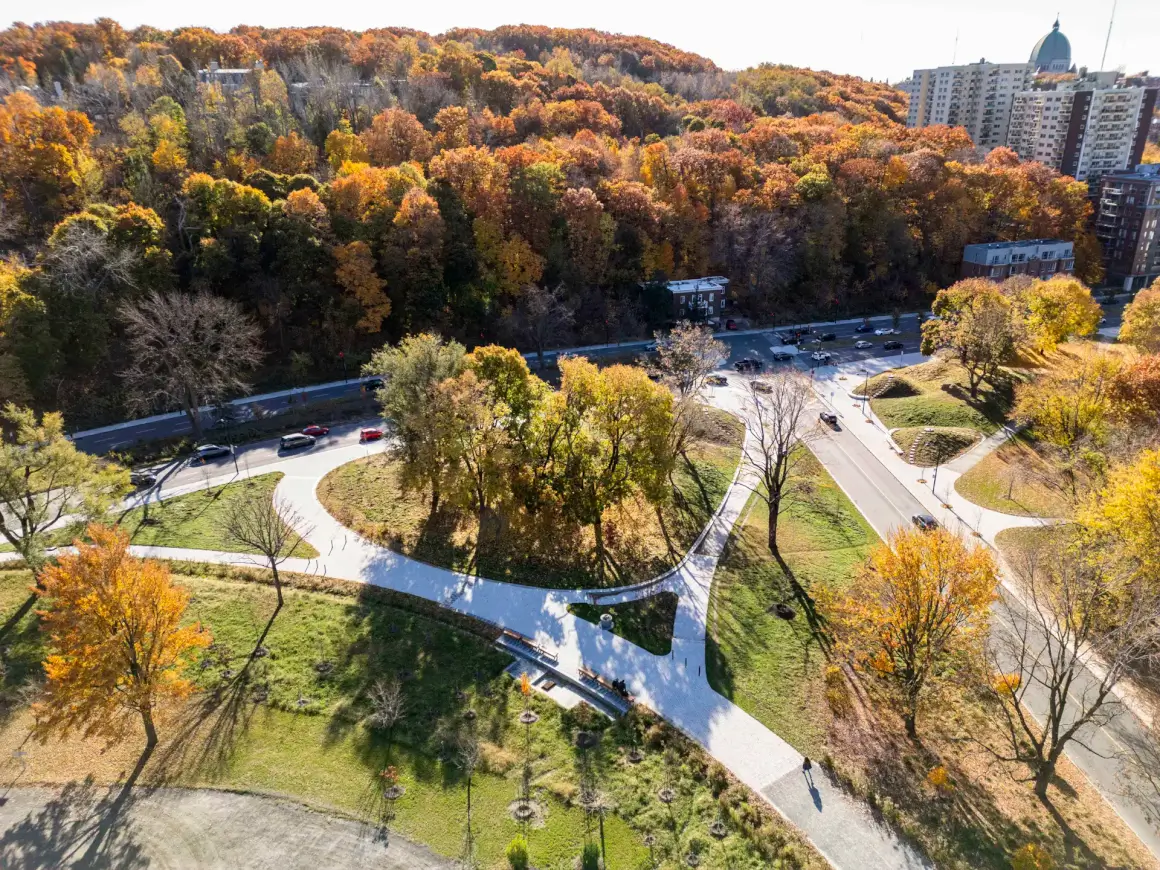
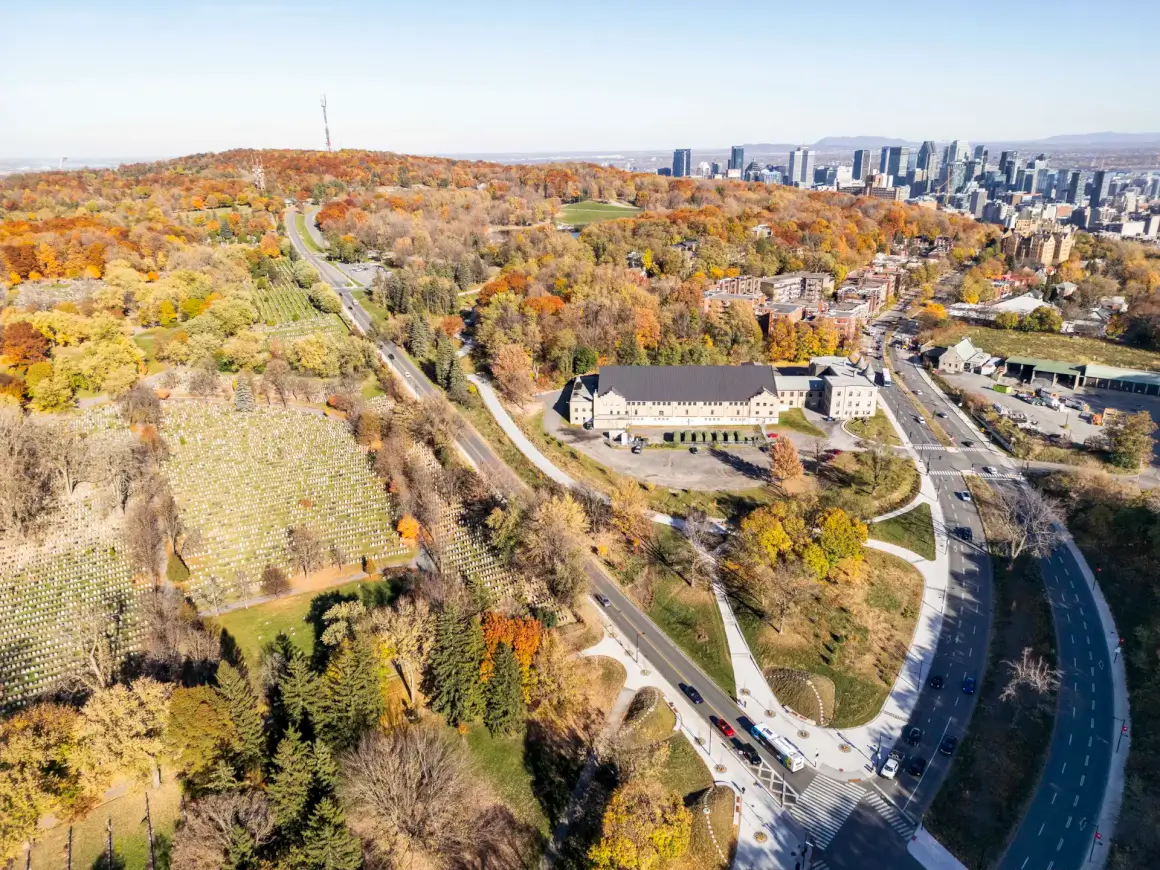
As part of the City of Montreal and the Quebec Ministry of Culture and Communications’ efforts to enhance and improve accessibility to the Mount Royal Heritage Site, our multidisciplinary team was tasked in 2018 with designing and implementing the redevelopment of the Remembrance/Côte-des-Neiges intersection, one of the site’s main gateways.
This Heritage Site is a cultural landscape that encompasses three peaks, two university campuses, three distinct cemeteries, and Mount Royal Park, designed by Frederick Law Olmsted and opened to the public in 1876.
The park is considered a work of art, being the only park Olmsted designed within an urban mountain context. It remains a key landmark and destination for Montreal.
Remembrance Gateway by civility, received an 2025 International Architecture Honourable Mention from The Chicago Athenaeum: Museum of Architecture and Design.
The existing intersection, built in 1958 based on plans by the renowned New York-based civil and landscape architecture firm Clarke & Rapuano, was designed to accommodate the growing car culture of the city.
The plan featured separated roadways, wide planted medians, and elevated interchanges intended to minimize levelled, urban intersections.
However, this design did not prioritize pedestrian and cyclist movement, creating barriers for non-motorized users.
While the Clarke & Rapuano design holds historical value, Montreal has spent the past 25 years working to remove the elevated interchanges.
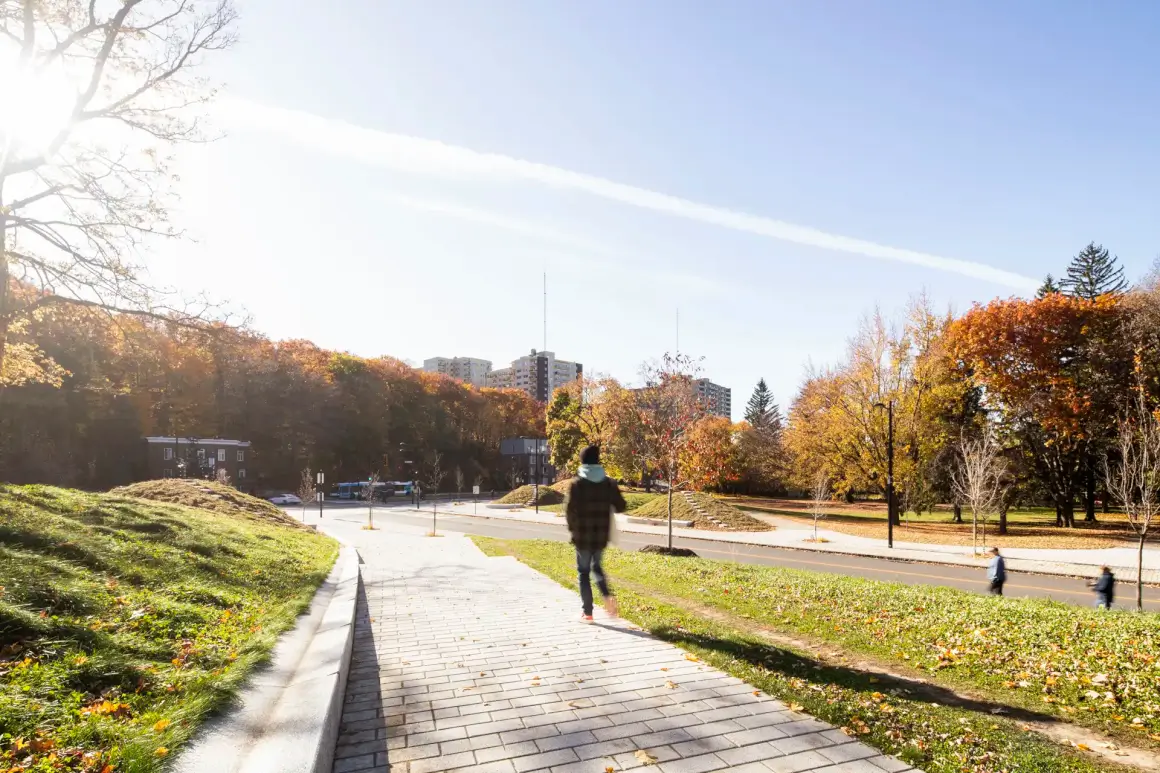
This shift aims to improve accessibility to Mount Royal Park in all forms, ensuring a more inclusive, user-friendly experience.
Completed in 2024, the redesigned Remembrance/Côte-des-Neiges intersection restores a level crossing that is safer and more accessible for all transportation modes and that reinforces the uniqueness of the city’s mountain.
Drawing inspiration from the original parkway design, a wide, wooded median is introduced at the centre of Côte-des-Neiges Road.
The topographical embankments of the old, elevated interchange, along with many of the existing trees, are incorporated into the new landscape design.
Following one of Frederick Law Olmsted’s key principles for Mount Royal Park, the new layout emphasizes a gradual, immersive ascent from the surrounding neighbourhoods to the mountain’s inner glades and peaks.
The plan replaces the southern vehicular right-of-way of the former parkway with a section of the mountain’s pedestrian and cycling ring road.
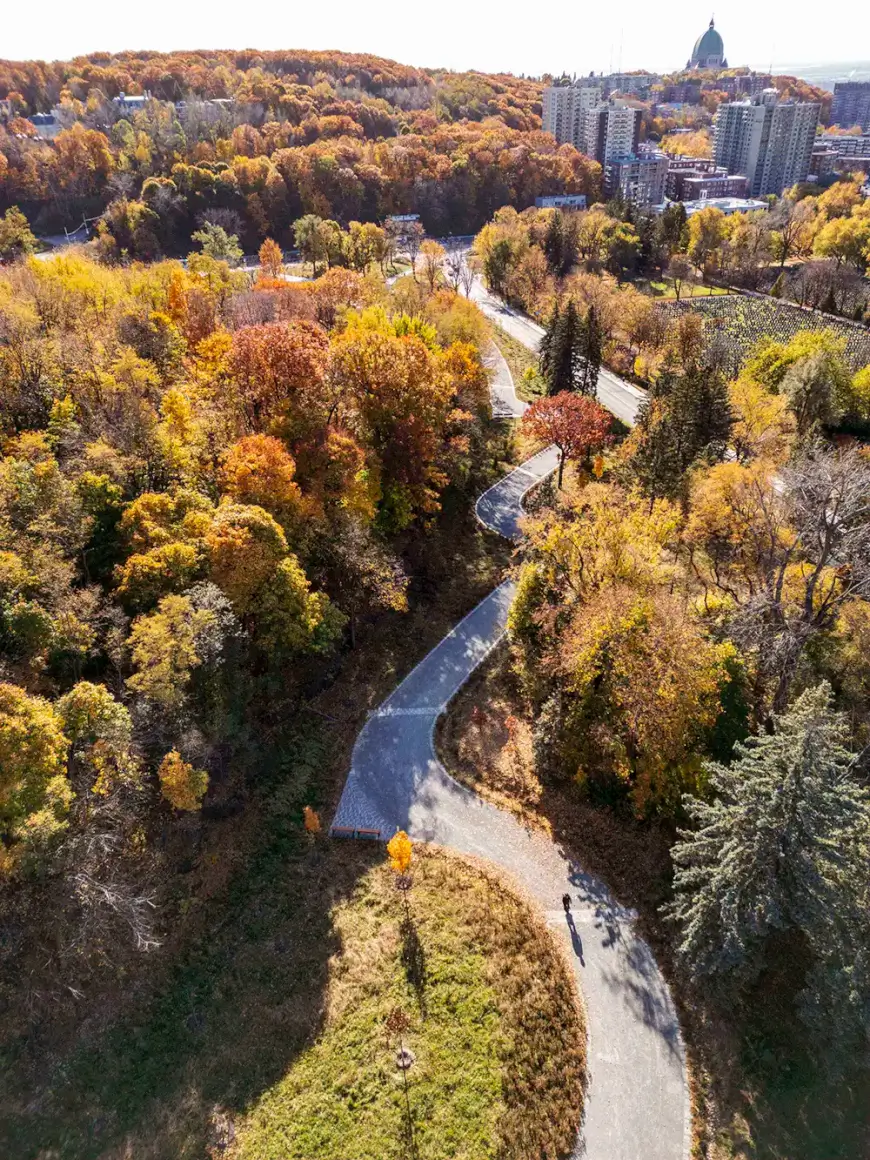
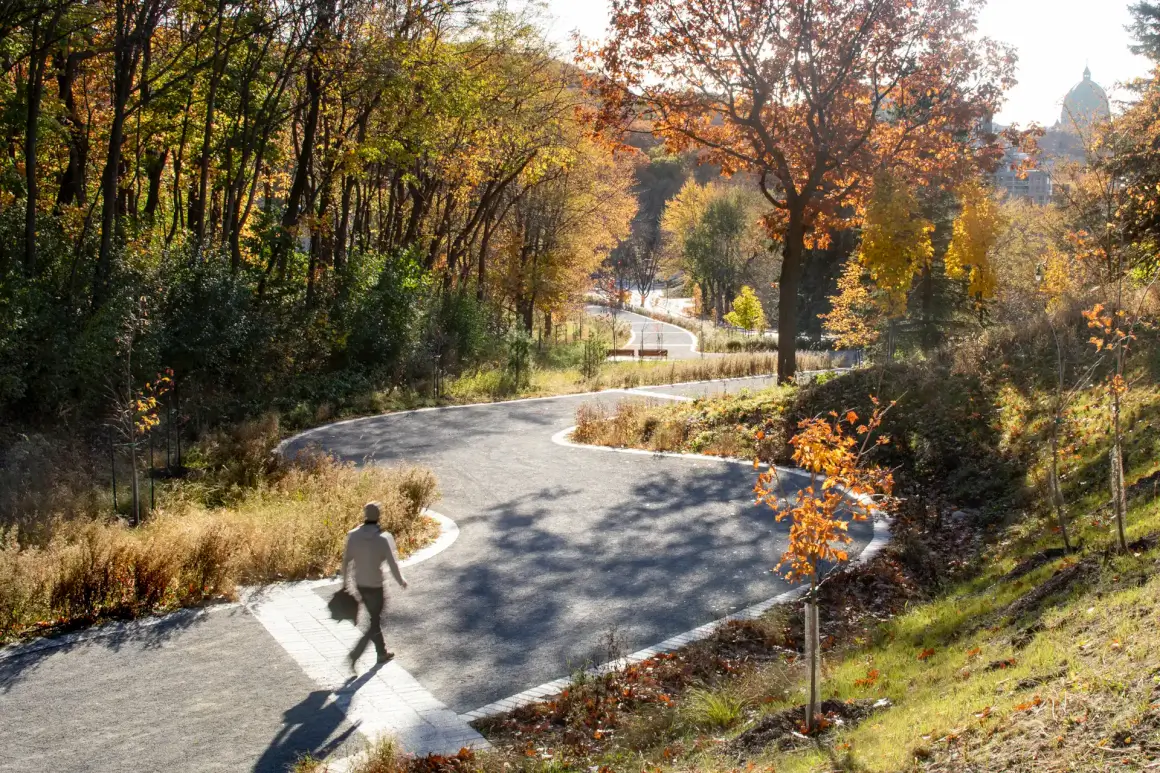
The meandering path, adapted to the site’s topography, creates a new forested environment leading from the intersection to the park’s central Beaver Lake.
The design minimizes the slope to align with Olmsted’s vision of a comfortable, scenic ascent.
True to his intentions, the gravel path is bordered with granite cobblestones and includes seating areas. Along the path, new plantings and a naturalized water collection trough evoke the wooded ambiance of the mountain.
The project is a major greening operation that involves the planting of hundreds indigenous trees, shrubs and herbaceous strata specific to the mountain’s ecosystem.
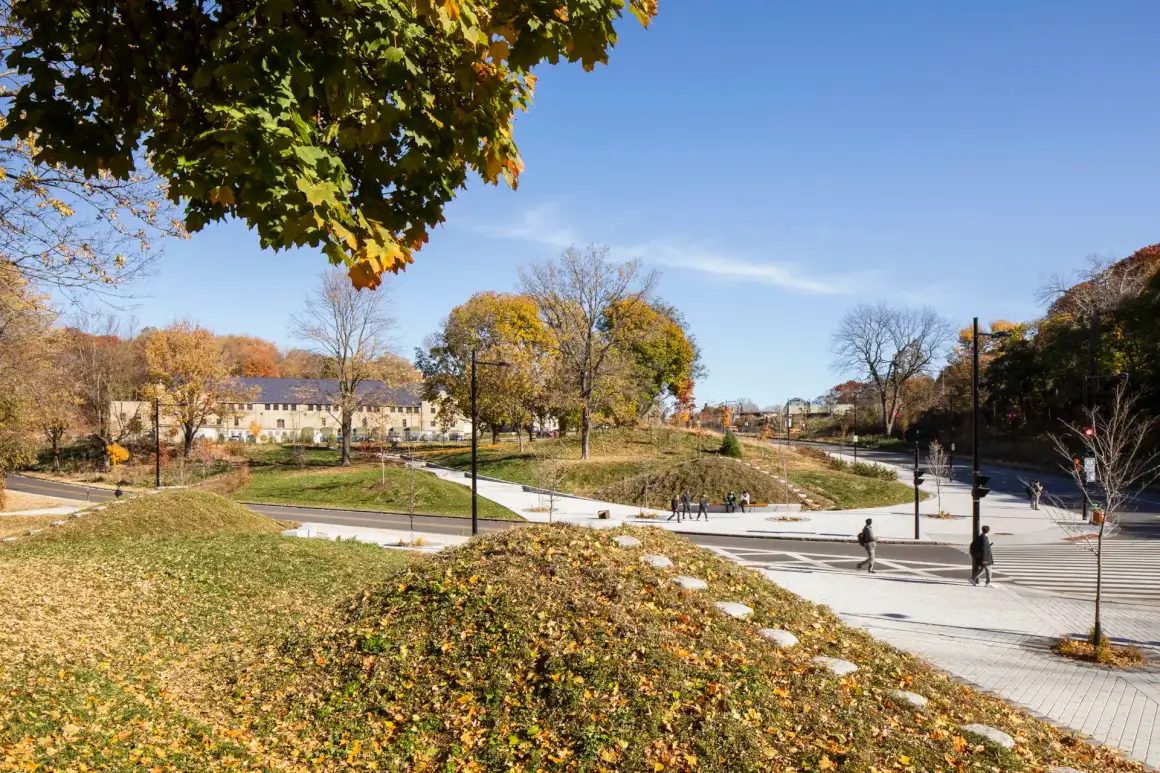
At the intersection’s threshold, the design celebrates Mount Royal’s three distinct peaks, a defining geological feature of Montreal’s iconic landscape and skyline.
A triad of topographical knolls forms an evocative conceptual landscape. Stone steps allow visitors to ascend each knoll, where bronze arrows point toward the individual summits.
The knolls and their integrated benches create inviting spaces for rest, transforming the area into both a meeting place and an outdoor hall, marking the gateway to the unique, landscape experience of Mount Royal.
Project: Remembrance Gateway
Landscape Architects: civiliti
Lead Landscape Architectes: Peter Soland and Julie St-Arnault
Design Team: Fannie Duguay-Lefebvre, Pascal Forget, Etienne Ostiguy, Martine Vincent, Giang Tran, and Jean-François Bédard
Associate Landscape Architects: Vlan Paysages
Design Team: Emmanuelle Tittley and Jean-Marc Pommier
Collaborating Engineers: FNX-innov (now Artelia Canada) and Nadeau Foresterie Urbaine Inc.
General Contractors: Eurovia Québec Grands Projets (Phase 1) and Ramcor Construction Inc. (Phase 2)
Client: Ville de Montréal
Photographers: Adrien Williams
Post Views: 17