

As the Spring Classics draw to a close, we look at how our riders recover from the enormous demands that races like Paris-Roubaix put on their bodies.
Riders are required to perform at high intensity for hours at a time, with only limited time to recover before the next effort. For teams, this reality makes recovery one of the most important areas of modern performance support. At Soudal Quick-Step the performance staff are constantly working to ensure riders can restore, reset and be ready to perform again the following day.
One of the tools used within this broader recovery strategy is ketone ester, through the team’s partnership with KetoneAid.
Ketones are molecules naturally produced by the body when it begins to use fat as a fuel source. In recent years they have attracted growing interest in endurance sports, not only for their role as an energy substrate, but also for their potential to support recovery following intense exercise.
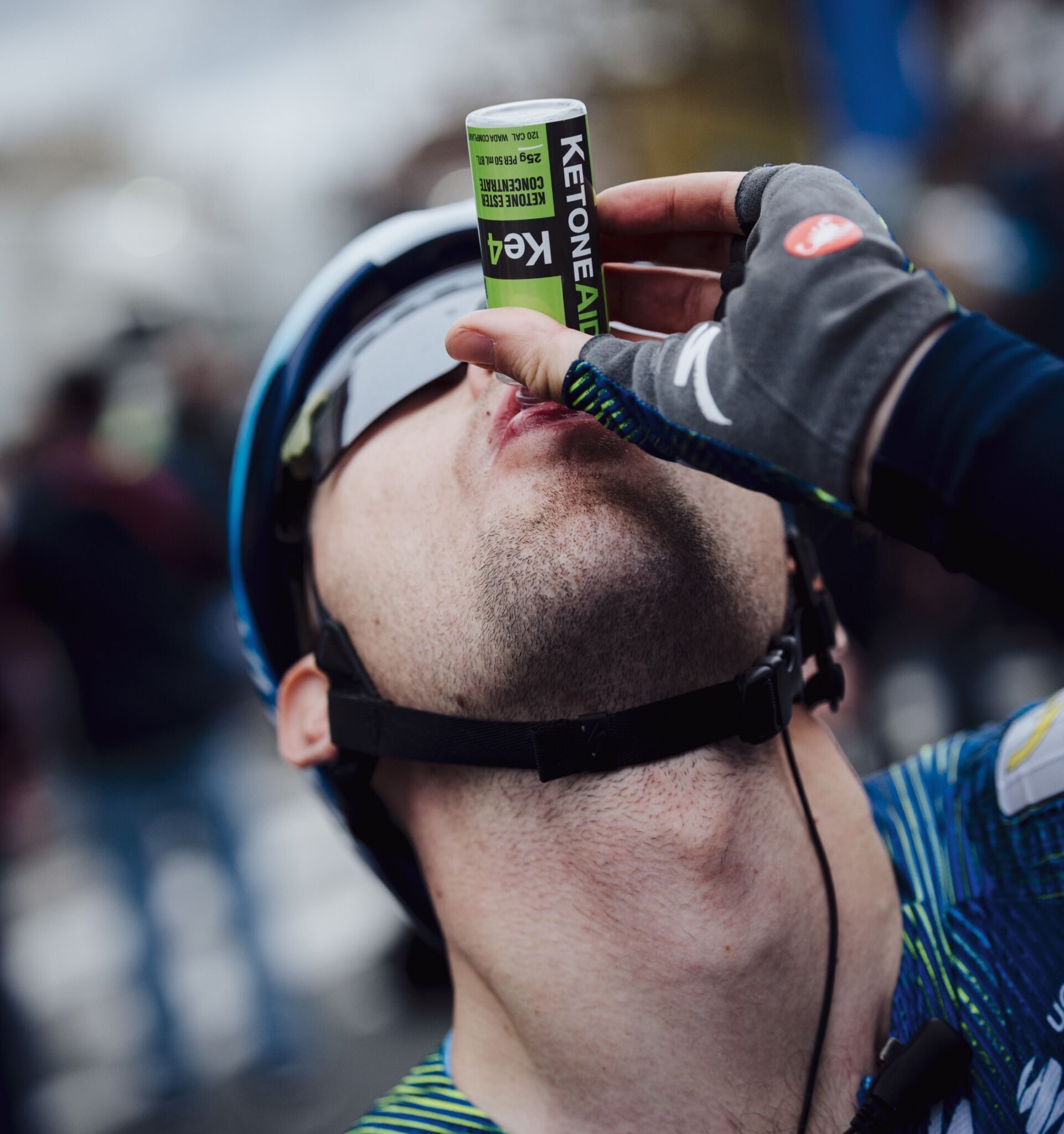
Rather than replacing traditional nutrition strategies, ketones represent an additional metabolic pathway that the body can use alongside carbohydrates and fats.
“Professional cycling places repeated stress on the body”, explains team doctor Dr. Phil Jansen. “In stage races especially, riders may spend five hours racing at high intensity and then need to recover quickly enough to do it all again the next day. Supporting that recovery process is a key part of what we do.”
Not all ketone drinks are the same. For example one type is called “ketone salts”, they deliver a relatively low increase in circulating blood ketone levels, while carrying an excessively high salt load. Another is called a “Ketone diol” (R 1,3 butanediol), while often marketed for performance enhancement in commercial products, it is a non-ethanol alcohol precursor that can produce sedative-like effects, making it difficult to match ketone levels, because the more you take, the more the side effects kick in. The products supplied by KetoneAid use a ketone ester, the form used in the substantial majority of peer-reviewed research in endurance sport, and the only form with an established clinical safety and efficacy record. Ketone esters allow athletes to raise ketone levels more efficiently, providing a readily available energy substrate that the body can utilize during the recovery phase after intense exertion.
The interest in ketone ester comes from its ability to elevate ketone levels quickly and in a predictable way.
“That makes it an interesting tool in endurance sport, where the goal is not just to perform once, but to repeat those performances over many days”, says Dr. Jansen.
Recovery in professional cycling is influenced by many factors, including nutrition, hydration, sleep and training load. Ketone ester use forms part of that wider strategy, helping riders support their metabolic balance after demanding efforts. The ability to restore energy systems efficiently is particularly important during stage races and during the intense blocks of racing that define the classics season.
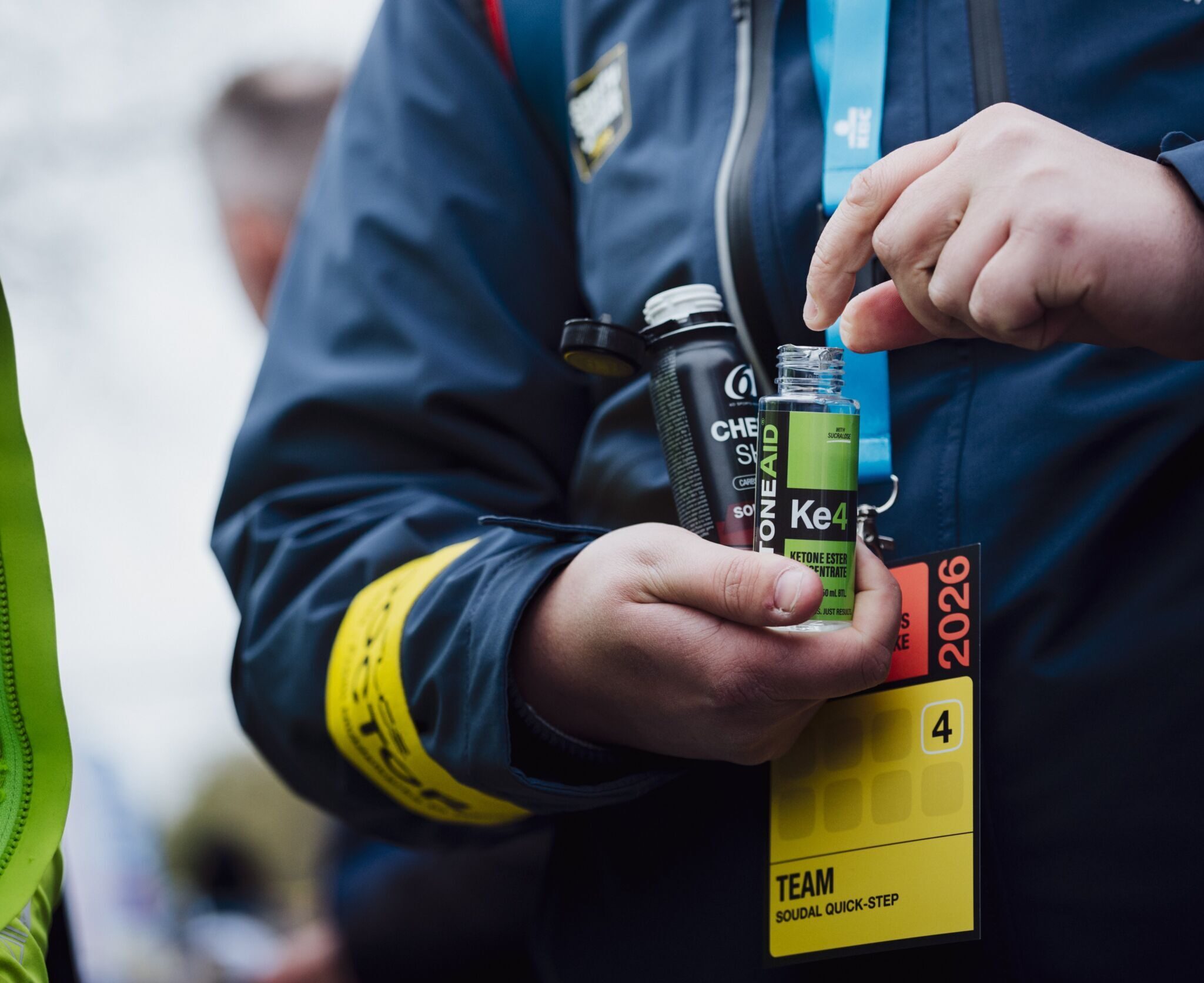
“When riders are exposed to repeated high-intensity efforts, the body is constantly working to restore equilibrium”, explains Dr. Jansen. “Ketones provide an additional metabolic fuel that may support the recovery process during those periods.”
Beyond physical recovery, ketones have also attracted interest in research exploring their potential relationship with VO2max, cognitive function and sleep quality – three factors that are increasingly recognised as important for athlete well-being and performance.
At Soudal Quick-Step ketone ester use is used as part of a broader philosophy centered on long-term performance and athlete health. This approach combines careful nutritional planning, sleep optimisation, recovery strategies and scientific monitoring throughout the season.
Photo credit: ©Wout Beel