
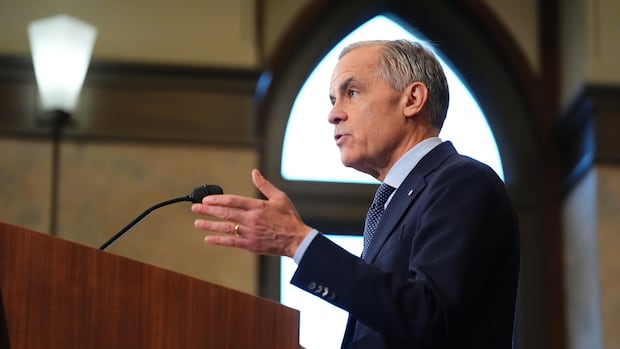
Prime Minister Mark Carney says he will use his newly won majority to push through legislation that the opposition parties have stymied in recent years, saying his immediate focus will be quickly passing affordability measures and a bill designed to turbocharge home construction.
The Liberal candidates in two Toronto ridings trounced their opponents in Monday’s byelections, improving on the party’s already strong showing in both seats at the last general election. The party also won a closely fought contest in Terrebonne, a Montreal-area riding that has long been a Bloc Québécois stronghold.
Carney framed those victories, particularly the one in Quebec, as a strong endorsement of the government’s agenda.
He said the electoral wins show the majority wasn’t achieved by floor-crossings alone.
“I think, very clearly, Canadians want the government to govern,” he said.
“That is the product of the last 24 hours: strong support, increasing support. The proportion of votes cast for the Liberal Party went up quite a bit. It’s a strong vote in favour.”
Carney said he “didn’t go out and celebrate” last night, but looks forward to full control of the House of Commons so that he won’t have to deal with what he described as “showboating,” particularly at parliamentary committees, where filibustering has been a feature in recent years.
The Liberals’ anti-hate bill, for example, was held up for months by a Conservative filibuster over the party’s concerns that it could restrict free speech and religious freedoms. That led to some lengthy, off-topic soliloquies, including on the virtues of puppies, among other zany topics.
“We are going to have less of that and more substance. I think all parliamentarians in the end will appreciate that, even if it’s a change for some of them,” Carney said.
“It’s time to get serious and we’re going to be serious.”
WATCH | ‘More substance,’ less showboating with majority, Carney says: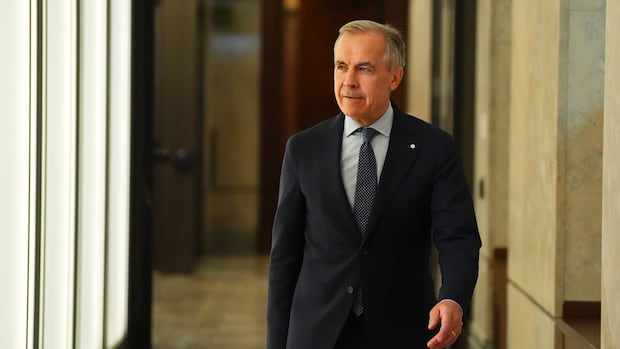
‘We’re going to have more substance,’ less showboating with majority government, Carney says
Prime Minister Mark Carney says debates in committee should be more substantive now that his Liberal Party has a majority government. ‘All Parliamentarians, in the end, will appreciate that, even if it’s a change for some of them,’ he said.
Now that the Liberals hold the levers of power, the parliamentary committees are expected to be reconstituted, which will dilute opposition power by giving the Liberals a majority on each committee.
While that will help government legislation pass through Parliament faster, it also means Liberal members can more easily shut down opposition probes into government missteps or alleged wrongdoing.
The Conservatives have been jockeying to haul Finance Minister François-Philippe Champagne before committee after he recused himself from decisions regarding Alto, the high-speed rail project, due to a personal conflict of interest: his partner works as a vice-president at the Crown corporation.
That project was partially funded in Champagne’s budget last fall.
The fate of such an inquiry is now uncertain.
While the the Liberals have obtained limited opposition support for parts of their agenda like changes to how natural resources projects are approved, the Carney government struggled to move much of it through Parliament in its first year.
Fewer than half of government bills have become law — a figure that is expected to increase in short order now that Carney won’t have to cajole other parties to back his policies.
Still, Conservative Leader Pierre Poilievre said he will continue to press Carney on what he described as a lacklustre first year as prime minister.
Speaking in the Commons on Tuesday after his party’s dismal results in those three byelections, Poilievre said the Liberal government hasn’t approved a new oil pipeline and housing costs are still among the world’s highest.
While Carney also announced that he was temporarily lifting the gas tax to provide some relief to Canadians dealing with high energy prices amid the war in Iran, Poilievre said Liberal efforts on affordability are still falling short.
He wants the tax gone for the rest of the year, not just until Labour Day.
WATCH | What the majority government means: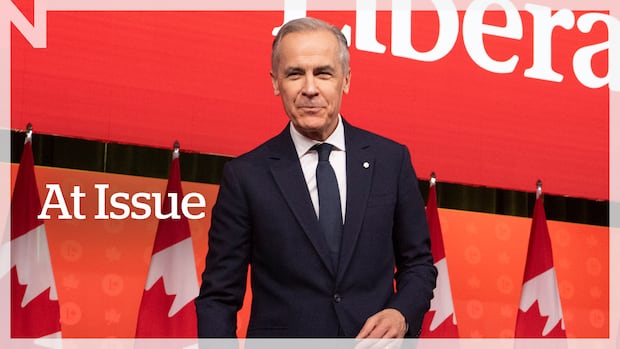
At Issue | What a majority means for Carney’s Liberals
At Issue special edition: Byelection wins give Prime Minister Mark Carney a majority government — Canada’s first since 2019. What will the power dynamic shift mean for Parliament Hill and what could this kind of stability mean for the Liberals?
“The prime minister wants Canadians to give up, to become complacent, to just disappear so that he can exercise his power and authorities without any accountability,” Poilievre said.
“Well, that’s not going to happen. Canadians deserve us to fight for them … I will lead that fight and at the next general election Canadians will take back control and we will rebuild the country,” he said.
Although Poilievre received a strong endorsement from party members in his January leadership review, he has since struggled to keep his caucus united and on message.
While the party captured about 30 per cent of the vote at the last general election in Scarborough Southwest, the Conservative candidate is on pace to take roughly 18 per cent of ballots cast this time — a double-digit drop-off.
The Conservative vote share also plunged in University-Rosedale. The party’s candidate slipped from second to third place and its vote share is about half of what it was last time.
In Terrebonne, the Conservative collapse was even more pronounced. The party’s candidate there, Adrienne Charles, had just three per cent of the vote — down from the over 18 per cent she pulled in last year.
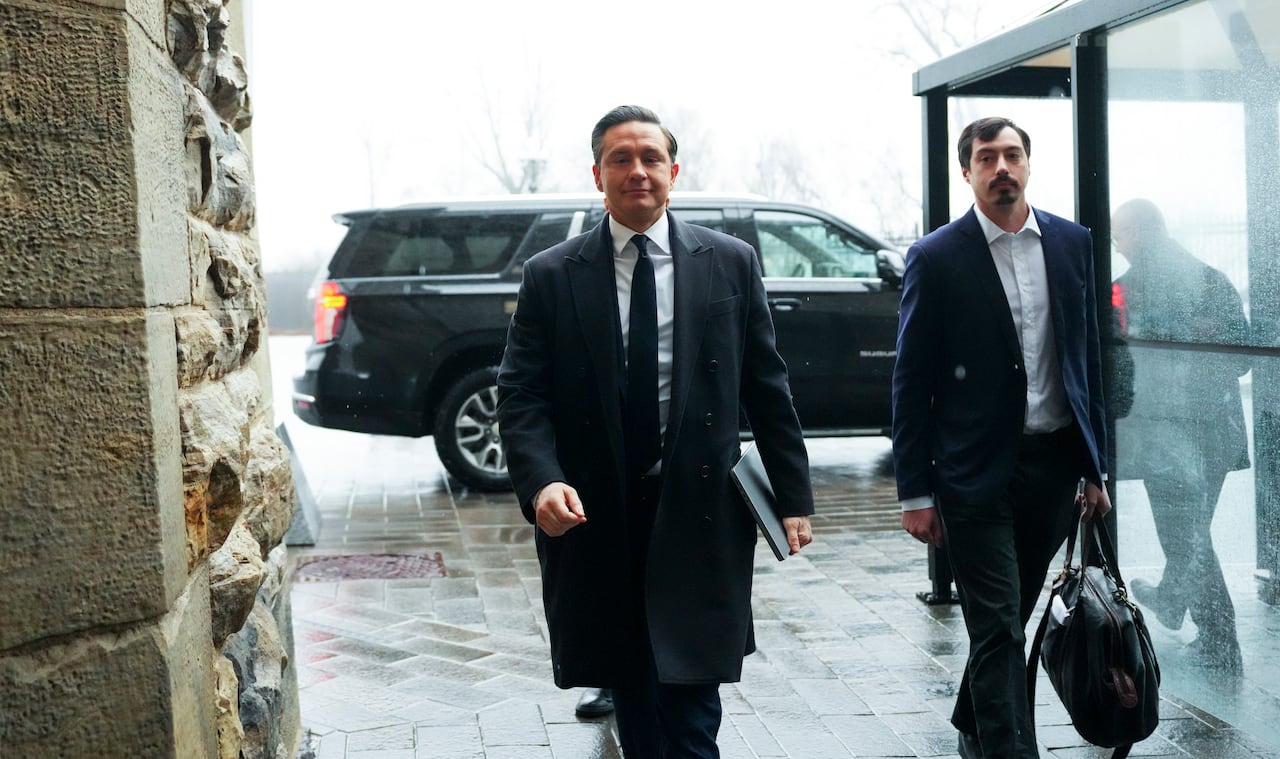 Conservative Leader Pierre Poilievre says Carney is leading a ‘costly majority.’ (Sean Kilpatrick/The Canadian Press)
Some Conservative MPs publicly endorsed Poilievre’s continued leadership on Tuesday.
“He’s awesome, he’s fantastic,” MP Costas Menegakis said. “We’re united as a caucus behind our leader.”
Asked if there were any lessons learned from Monday’s results, Menegakis said: “None.”
MP Ben Lobb said Poilievre still has “the right vision for Canada,” and is well placed to hold the government accountable in this new majority era.
“I 100 per cent support Pierre,” Lobb said. “Polls go up and polls go down.”
Pressed to say if he thinks Poilievre should stay on as leader, Carney said it wasn’t his place to say so.
“I can’t look into the heart of Mr. Poilievre,” the prime minister said. “I’ll continue to work with him and all parliamentarians to advance the interest of Canadians.”