
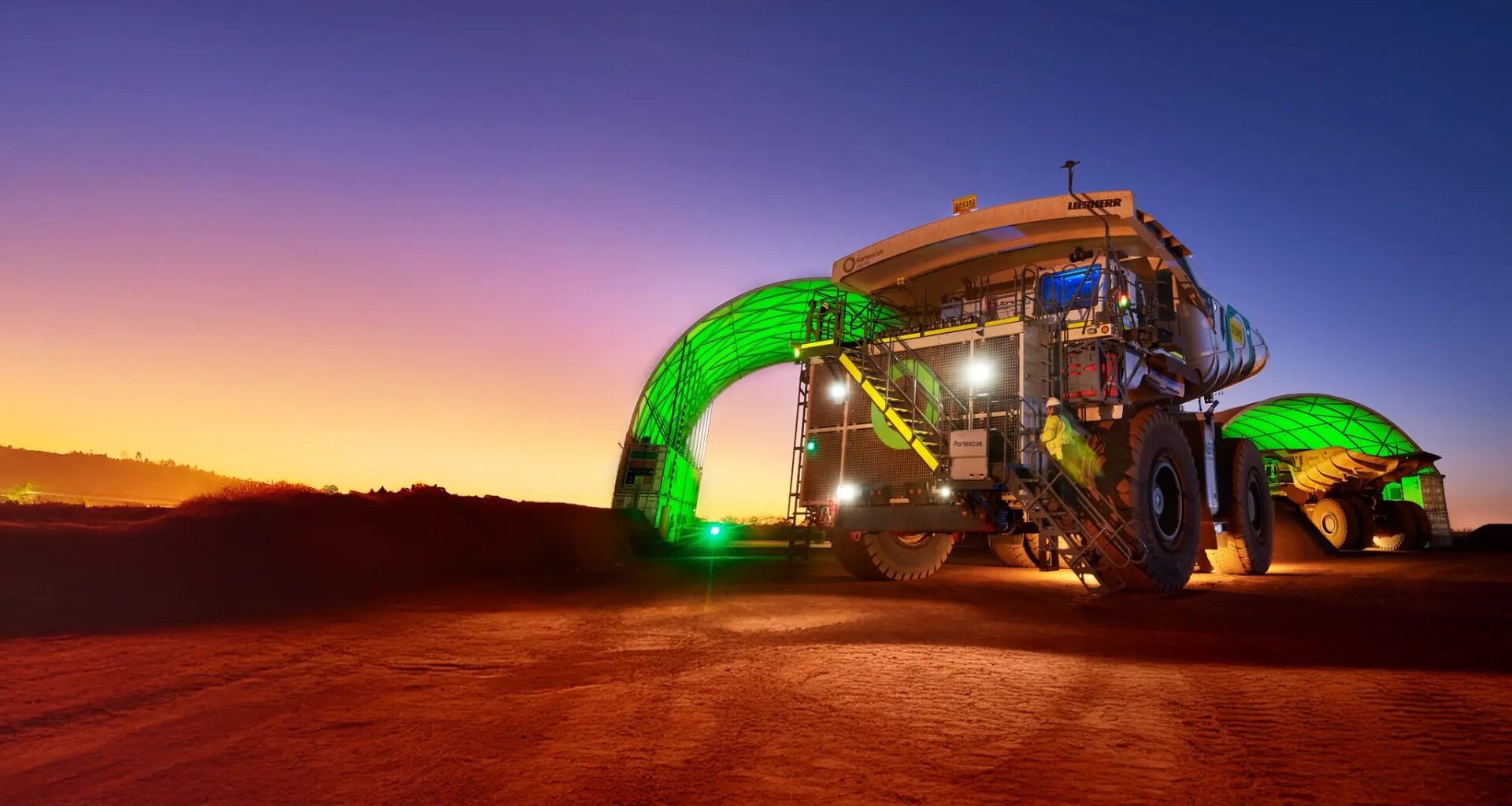
Fortescue, an Australia-based metals mining major, is working to eliminate fossil fuel usage by shifting to its off-grid renewable energy hub as early as next year. The facility being built at Fortescue’s Pilbara ore site consists of a mix of solar and wind energy and boasts up to 5 gigawatt-hours (GWh) of battery energy storage system (BESS).
Energy-intensive activities such as mining have been considered difficult to decarbonize due to the intermittent nature of renewable energy. Attempts made so far include purchasing renewable energy from the grid to offset carbon emissions or using on-site electrified transportation.
Fortescue has taken bold steps to transition its mining operations to renewable energy. “Unlike other large renewable hubs, which feed intermittently into national or other power systems, Fortescue’s off-grid system will be the largest of its kind dedicated to decarbonizing major industry, around the clock,” the company said.
Energy security through renewables
While the goal of switching to renewables is usually driven by net-zero targets, Fortescue is also making the shift to secure its energy needs. Recent events have once again exposed the fragility of global energy systems, leading to significant price fluctuations.
“As global energy supply chains become increasingly unstable and the massive risks of fossil fuel dependence are exposed, Fortescue is moving faster, proving industry can power itself with green energy, control its costs, and take back control of its largest risk – energy,” the company added in a press release.
By next year, the company is expected to save AUD 142 million ($100 million), achieving the dual goals of reducing fossil fuel use and achieving cost savings.
Island off-grid system
Fortescue has built an islanded system that can operate as a standalone high-voltage renewable energy network. A utility-scale solar and wind generation setup, combined with a multi-gigawatt BESS, is designed to provide continuous power to Fortescue’s mining operations.
By early next year, the facility will reach a capacity of 290 MW, allowing “green processing” of Pilbara facilities during the day. By 2027, the company aims to power round-the-clock operations without using any fossil fuels.
At full scale, the facility will boast 1.2 GW of solar capacity, more than 600 MW of wind generation, and up to 5 GWh of battery energy storage. Fortescue aims to achieve this by 2028, two years ahead of its Real Zero Plans, scheduled for December 2030.
“This deployment shows that a fully integrated renewable energy system can be built at speed and scale, delivering immediate benefits in cost, certainty and energy security,” the press release said.
Interestingly, the company is not just looking to green its own operations but also to commercialize this model globally and offer it to others through licensing or as “Energy as a Service”.
The company has built proprietary artificial intelligence (AI) systems and in-house technologies that can help scale renewable energy adoption. By lowering capital intensity, improving cost profile, and achieving price parity with fossil-fuel-based energy systems, Fortescue is helping ease the deployment of renewables.
We can only hope to see more such deployments in other hard-to-decarbonize sectors soon.