
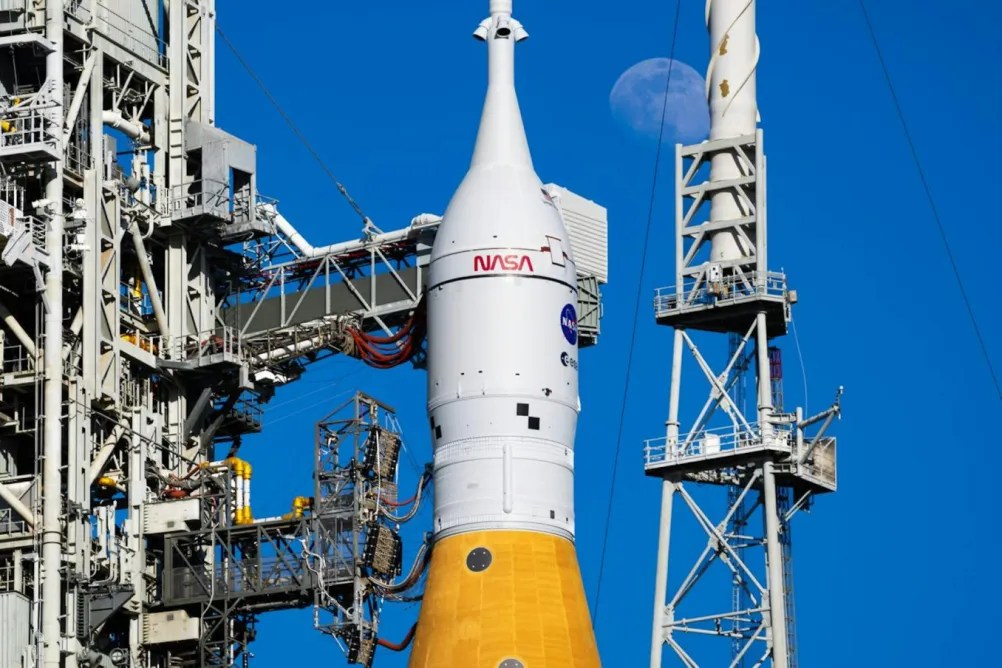
The US’s Artemis II mission aims to enhance lunar exploration, foster international collaboration, and prepare for Mars, driving scientific innovation and technological advancement.
Key Points The US is returning to the Moon with Artemis II to advance lunar exploration, foster international collaboration, and prepare for future Mars missions.This initiative promotes scientific innovation and technological development.
The United States is set to return to lunar exploration with the Artemis II mission, which aims to build upon previous missions while fostering international collaboration and laying the groundwork for future endeavors, particularly missions to Mars. This renewed commitment is emblematic of a broader space policy that recognizes the Moon as a strategic staging ground for deeper space exploration.
Artemis II marks a pivotal step in NASA’s Artemis program, which endeavors not only to advance scientific knowledge but also to stimulate technological innovation. By working alongside international partners, the mission aims to create a collaborative model reflecting the global nature of space exploration. This collaboration can enhance mission safety, share costs, and pool expertise, making the exploration of the Moon—and eventually Mars—more feasible and effective.
The intent behind returning to the Moon is multifaceted. Firstly, the Moon serves as an accessible laboratory for testing new technologies and systems essential for human exploration beyond Earth. For instance, the Artemis missions will evaluate life support systems and habitat construction in a relatively close, yet challenging extraterrestrial environment. Secondly, lunar exploration promises to yield valuable scientific data that can expand our understanding of the Moon’s geological history and its potential resources, such as water ice, which could sustain life and fuel future space missions.
Moreover, the Artemis II mission is seen as a stepping stone for setting a sustainable presence on the Moon. This endeavor will facilitate the establishment of a lunar base, which could support longer stays and more complex missions, whether for scientific research or commercial purposes. Ultimately, this groundwork is not only aimed at returning humans to the lunar surface but is also critical for the ambitious goal of sending astronauts to Mars in the coming decades.
Through Artemis II and subsequent missions, the US is demonstrating its resolve to lead in space exploration while inspiring a new generation of scientists, engineers, and astronauts, thus promoting a vision of sustained human presence in outer space.
Read the original article : Why is the US going back round the Moon with Artemis II? A space policy expert explains
Other People are Reading