
Last Friday evening, NASA’s Artemis II mission came to an exciting end as the Orion spacecraft splashed down safely in the Pacific Ocean. The mission marked the first time in 53 years that astronauts have traveled around the moon. Its success brings NASA one step closer to its goal of sending humans to the moon again.
The Artemis II mission was a historic 10-day journey that took four astronauts around the moon and back – a journey of 695,000 miles (1,118,500 kilometers). It was NASA’s first mission to the moon with astronauts since the Apollo program in the 1970s. The mission has set a new record for the farthest distance from Earth ever traveled by humans.
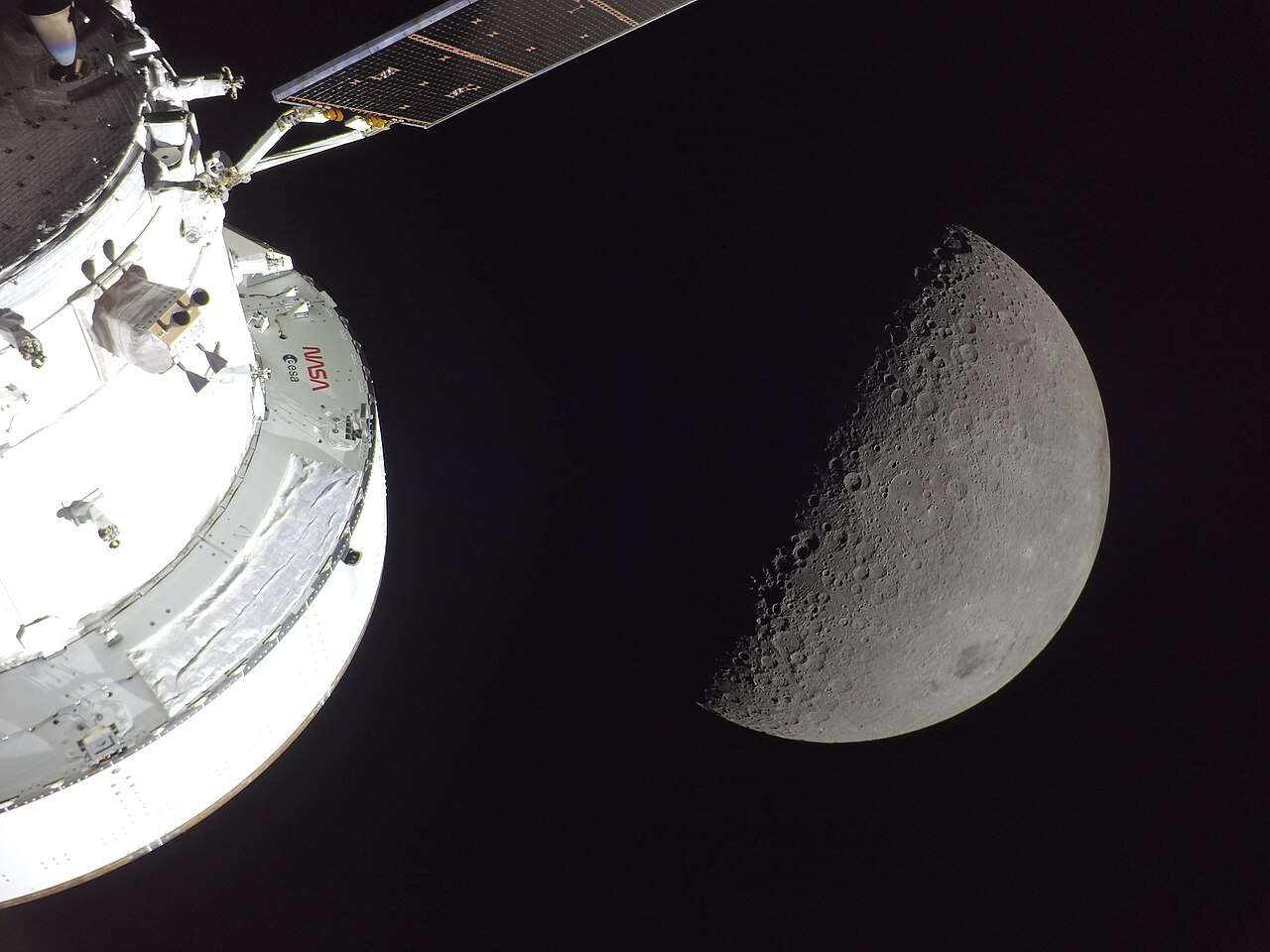 The Artemis II mission was a historic 10-day journey that took four astronauts around the moon and back. The mission set a new record for the farthest distance from Earth ever traveled by humans. Above, a “selfie” by the Orion spacecraft, with the moon in the background.
(Source: NASA [Public Domain], via Wikimedia Commons.)
As the Orion spacecraft returned to Earth, it faced extreme heat, entering the atmosphere at speeds of roughly 24,000 miles per hour (38,600 kilometers per hour). About 4 miles (6.7 kilometers) above the ocean, parachutes popped out to slow the spacecraft down before it splashed down in the Pacific Ocean off the coast of San Diego.
The crew – Reid Wiseman, Victor Glover, Christina Koch, and Jeremy Hansen – are now back on Earth, sharing experiences from their incredible trip.
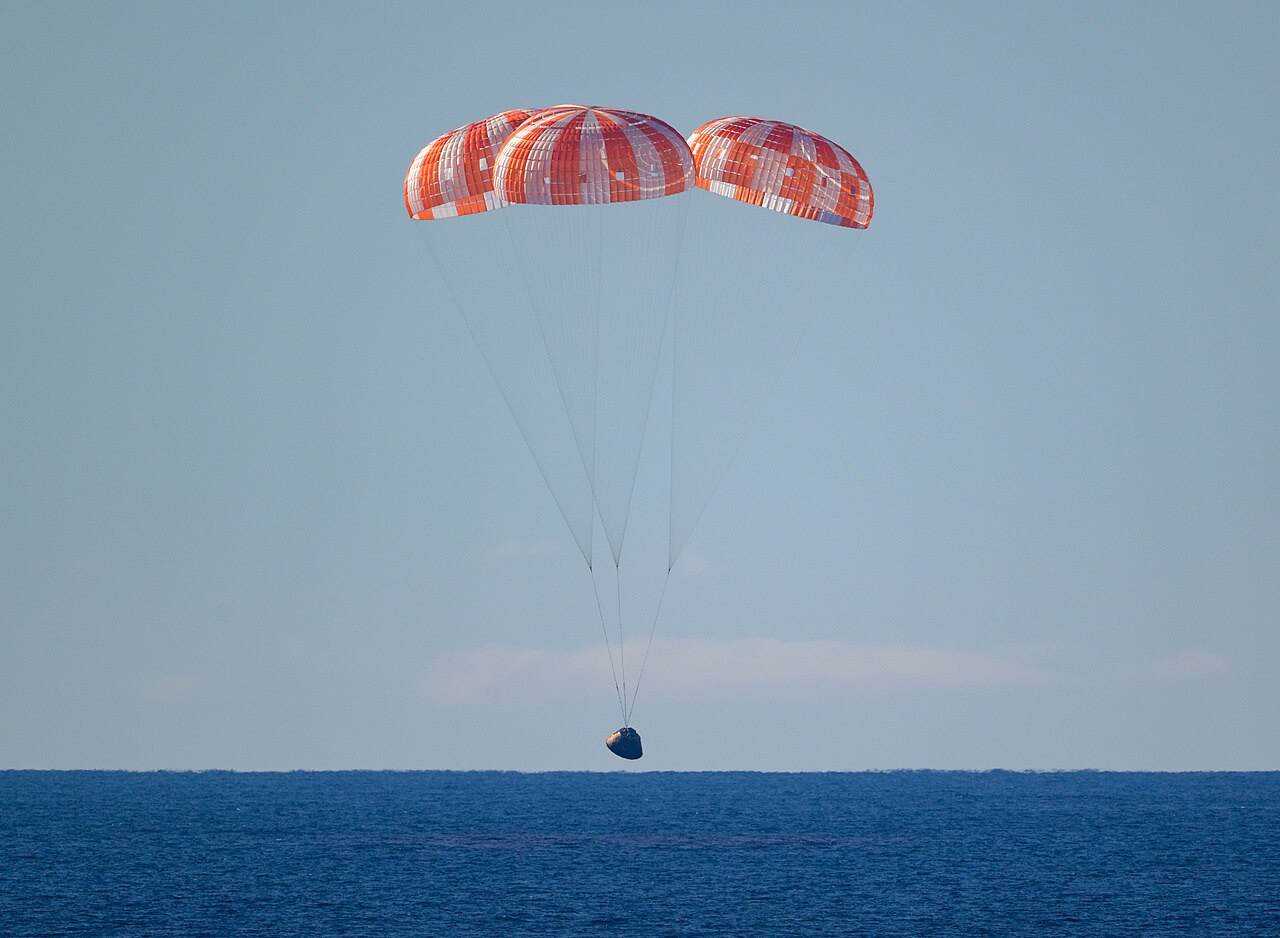 As the Orion spacecraft returned to Earth, it faced extreme heat, entering the atmosphere at speeds of roughly 24,000 miles per hour (38,600 kilometers per hour). Parachutes helped slow the spacecraft down before it splashed down in the Pacific Ocean (above).
(Source: Bill Ingalls/NASA [Public Domain], via Wikimedia Commons.)
On Saturday, the astronauts returned to NASA’s Johnson Space Center in Houston, Texas. They were greeted by a large crowd of NASA workers and guests. The astronauts spoke about their experiences, and the feelings they had while on the mission.
The Artemis II mission has a large collection of “firsts”. The crew included the first woman (Ms. Koch), the first person of color (Mr. Glover), and the first non-American (Mr. Hansen, a Canadian) to go on a lunar mission.
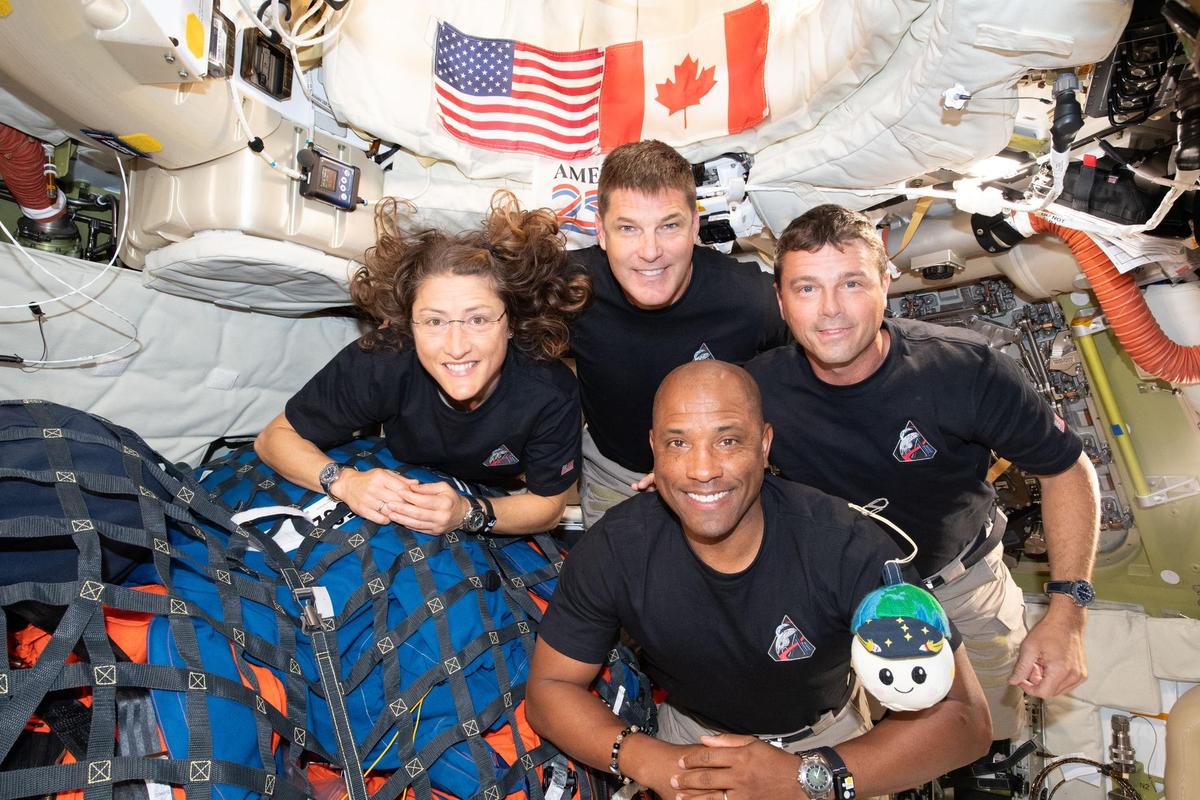 The Artemis II mission has a large collection of “firsts”. The crew included the first woman (Ms. Koch, left), the first person of color (Mr. Glover, bottom), and the first non-American (Mr. Hansen, top) to go on a lunar mission. Mr. Wiseman is on the right.
(Source: [Public Domain], NASA.)
The astronauts were the first people to view the full far side of the moon. They got detailed views of the moon, and noticed craters and colors that have never been seen on the moon before. They saw the edges of the moon shining with light reflected from Earth. “It is truly hard to describe,” said Mr. Glover. “It is amazing.”
The crew made sketches and took photos, which will help scientists identify interesting areas for future study. They used new laser technology to quickly send photos and information back to scientists on Earth.
The success of the mission is an important step toward NASA’s long-term goal of creating a base on the moon. The mission was also a practice run for future missions, including Artemis III, which is expected to land astronauts on the moon in 2028. Mr. Glover noted that the moon’s south pole, where NASA hopes to land in 2028, will be a challenging area to land in and travel across.
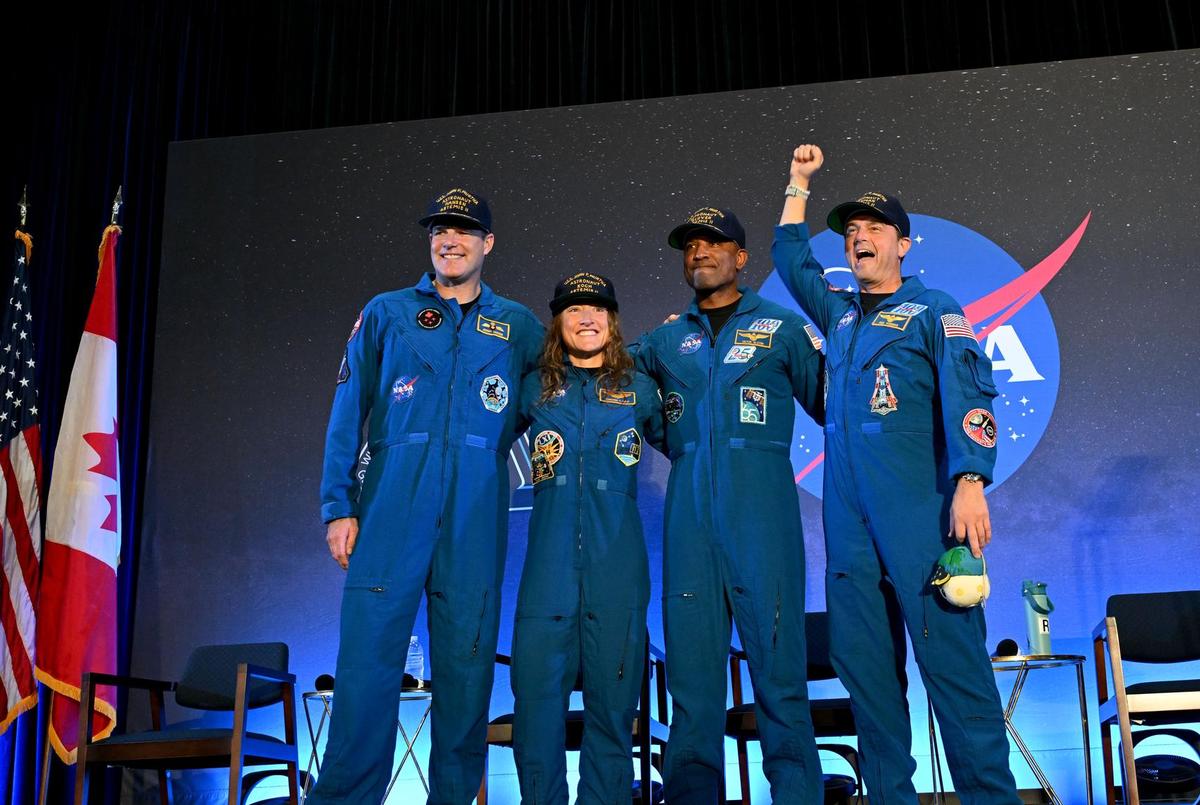 The astronauts said they felt a deep connection to our home planet. Mr. Wiseman, the mission’s commander, said, “Before you launch, it [going into space] feels like it’s the greatest dream on Earth. And when you’re out there, you just want to get back to your families and your friends.”
(Source: [Public Domain], NASA/ Helen Arase Vargas.)
Though the mission was about exploring the moon, the astronauts said they felt a deep connection to our home planet. Mr. Wiseman, the mission’s commander, said, “Before you launch, it [going into space] feels like it’s the greatest dream on Earth. And when you’re out there, you just want to get back to your families and your friends.”
“It’s a special thing to be a human,” he said. “And it’s a special thing to be on planet Earth.”