

Listen to this article
Estimated 2 minutes
The audio version of this article is generated by AI-based technology. Mispronunciations can occur. We are working with our partners to continually review and improve the results.
A specialized local team of the Canadian Space Agency and the National Research Council (NRC) closely watched the Artemis II splashdown last week knowing they played a role in the health of the astronauts on board.
At the council’s Flight Research Laboratory near the main terminal of the Ottawa International Airport, preparing astronauts to do their jobs while weightless and testing equipment that must work without the force of gravity is their specialty.
To slow down muscle loss while making their record-breaking voyage around the moon, Canadian Jeremy Hansen and the other members of the Artemis II mission worked out.
But since you can’t exactly pump iron in space, they used a compact resistance trainer developed by NASA called the Orion flywheel.
 The flywheel is a simple cable-based device for aerobic exercises like rowing and resistance workouts like squats and deadlifts. (NASA)
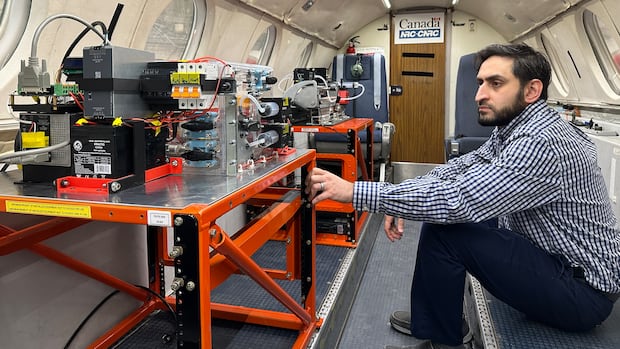
The device functions like a large yo-yo. To make sure it would work in zero gravity, the space agency and the NRC took it to Maniwaki — specifically, in an airplane some 6,100 metres above the western Quebec community.
It is there that NRC Officer Shahrukh Alavi and his team fly their Dassault Falcon 20 in a series of steep dives and recoveries to simulate weightlessness 20 seconds at a time.
“Seeing someone’s face that first moment … it doesn’t matter if they’re a high school co-op student or retired ex-military, they all have that same look of wonder on their face,” smiled Alavi.
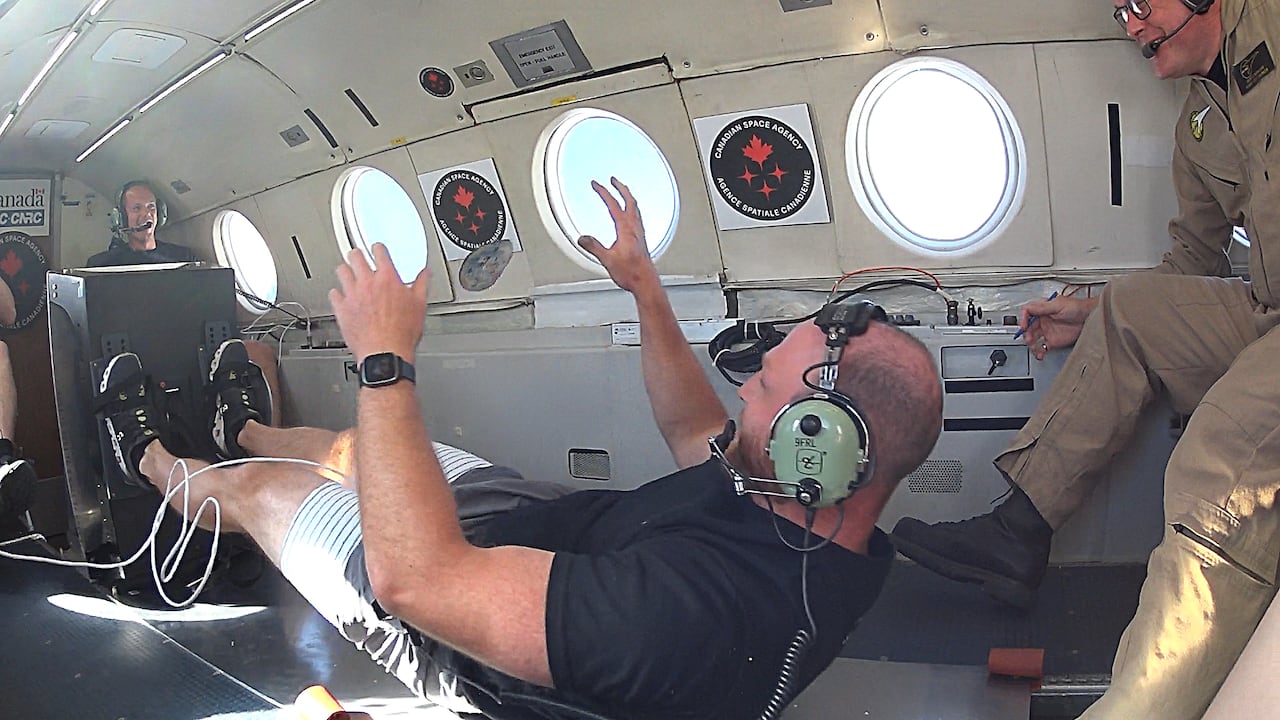 The flywheel being tested in 2024. (Canadian Space Agency)
NRC physiologist Heather Wright said those 20-second bursts are enough to test biometric tools essential for tracking astronaut health in zero gravity, and for understanding sickness in space travel.
“[We are] looking at why some people succumb to various physiological responses when other people don’t,” she said.
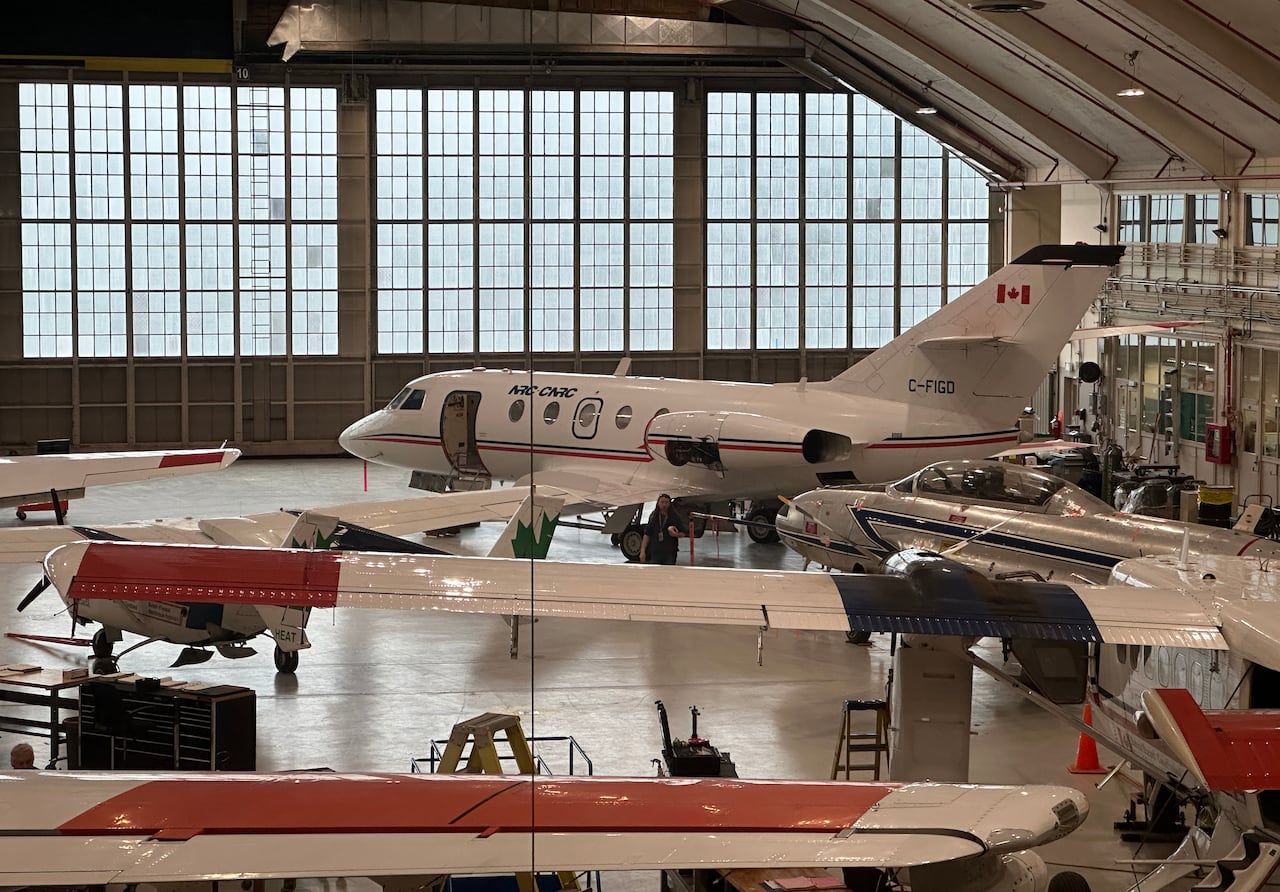 The Dassault Falcon 20 in the centre of a National Research Council hangar on the Ottawa International Airport grounds. (Stu Mills/CBC)
The successful Artemis II mission, made possible with exercise research and biomedical testing carried out high above the Ottawa Valley, has made the perfect 80th anniversary gift for the lab.
Alavi said he followed its journey closely.
“Of course, the launch and the lunar flyby, I was glued to my phone the whole day,” he said.