
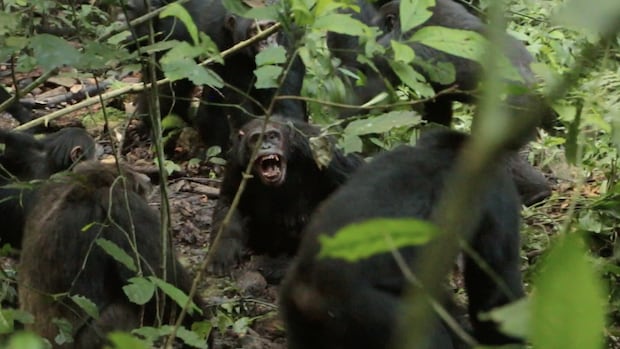
LISTEN | Why did these chimps turn on each other?:
The Current11:19What’s behind a chimpanzee ‘civil war’?
Scientists have documented a violent conflict that broke out among a troop of nearly 200 chimpanzees in Uganda, despite decades of relative tranquility before the killing started.
Researcher Aaron Sandel was there when the first chimp was killed.
“It was a chimp that I had known really well … Erroll, since he was 12 years old, I’d seen him grow up into an adult,” said Sandel, a primatologist at the University of Texas at Austin.
“And here I am witnessing these other chimps — that I also know — attacking and killing him.”
Sandel is the lead author on a study looking at this ongoing chimpanzee “civil war”, published this month in Science. Researchers have studied the group since 1995, offering a long-term “amazing record of their behaviour,” he said.
The chimps live in Ngogo, a densely forested part of Uganda’s Kibale National Park. While they lived in different “neighbourhoods” prior to the conflict, they often intermingled as a larger group to feed, groom or patrol their territory together.
“Part of the reason that they were able to increase in size was because they were so cooperative and they were so successful at actually defending their territory,” Sandel said. He added that the Ngogo chimps also expanded their territory by attacking other groups, succeeding “partly from this lethal aggression, but also from [their own] social bonds.”
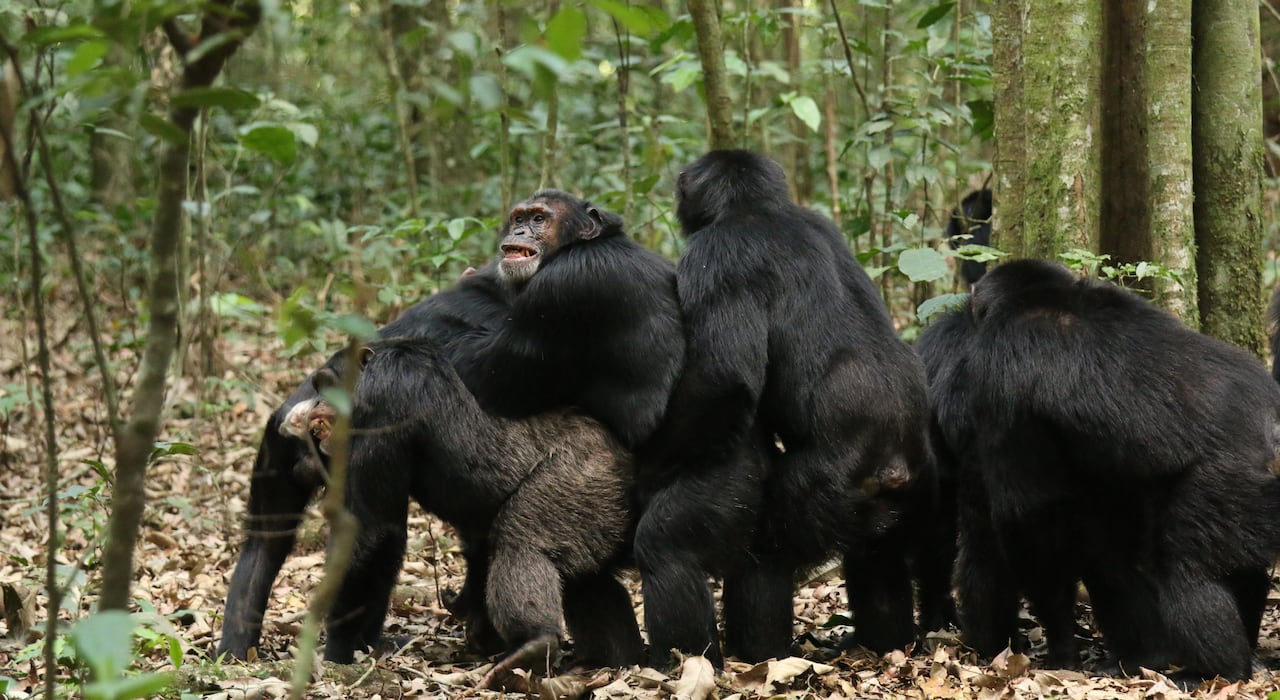
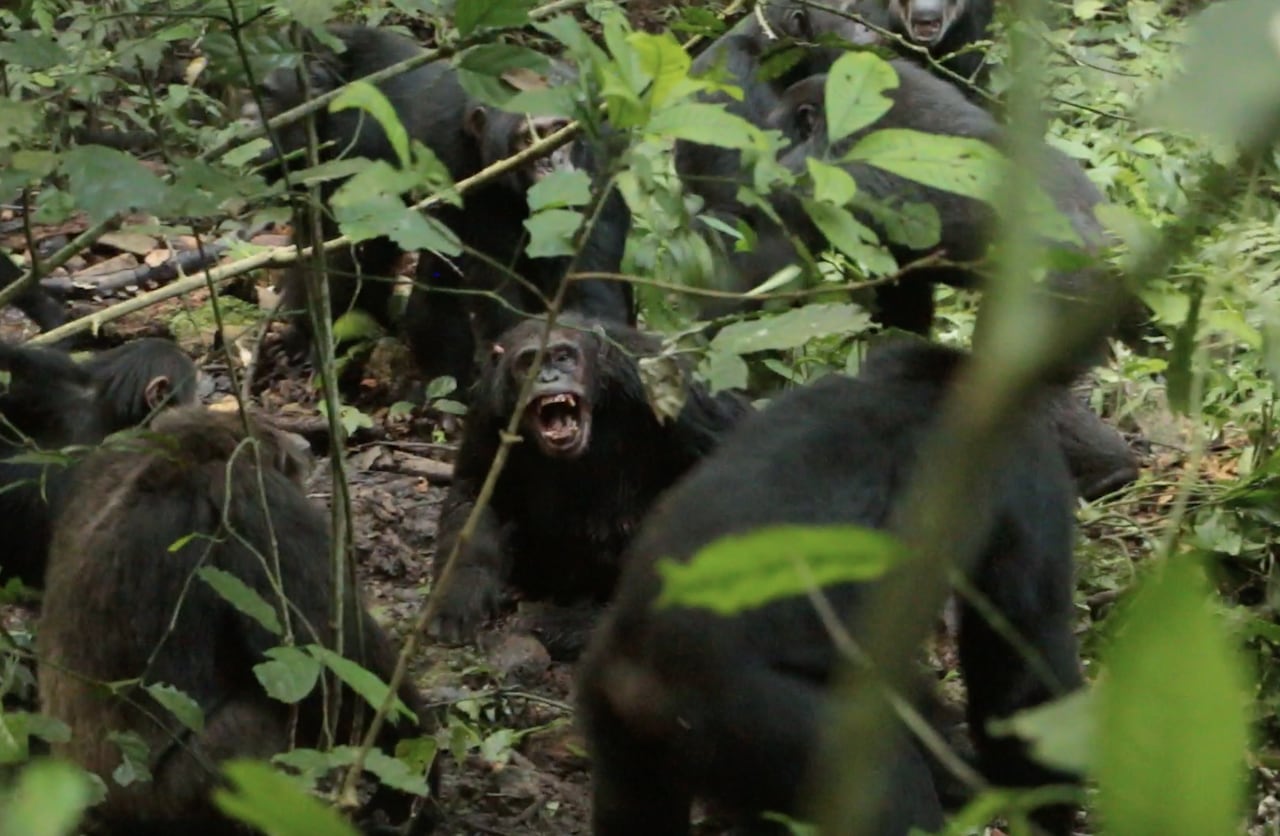 Top photo: A chimp from the central group called Basie, centre, with eyes visible, embraces males from the western group in 2015, before the split. Bottom photo: Chimps from the western group attack Basie in 2019. (Submitted by Aaron Sandel)
That all changed in June 2015, when researchers noticed something shift between the western and central neighbourhoods within the larger Ngogo group. Sandel was with chimps from the western group that day, in the middle of their territory. He remembers the apes hearing calls from other chimps, belonging to the central group. Normally, this would prompt the groups to reunite and intermingle — but Sandel said the western chimps became nervous and quiet.
“When they saw the chimps from the central neighbourhood, they ran — and those central chimps chased them. And [then] they avoided each other for six weeks,” he said.
Sandel said that incident was the start of the split, which progressed until the killing of Erroll in January 2018. In the years that followed, researchers estimate that the western group killed 24 chimpanzees from the central group — including 17 infants.
LISTEN | Primate behaviourist John Mitani talks to As It Happens:
As It Happens6:49Scientist studying chimpanzee conflict wonders: ‘Why did they turn on each other?’
‘Some of them were brothers’
Primatologist Iulia Bădescu said that violent conflict is not unusual for chimpanzees, who are “notorious for being quite xenophobic” when it comes to outsiders.
“They’re not happy to interact with strangers, there’s always violence between neighbouring groups,” said Bădescu, an associate professor in the Université de Montréal’s department of anthropology, who was not involved in the study.
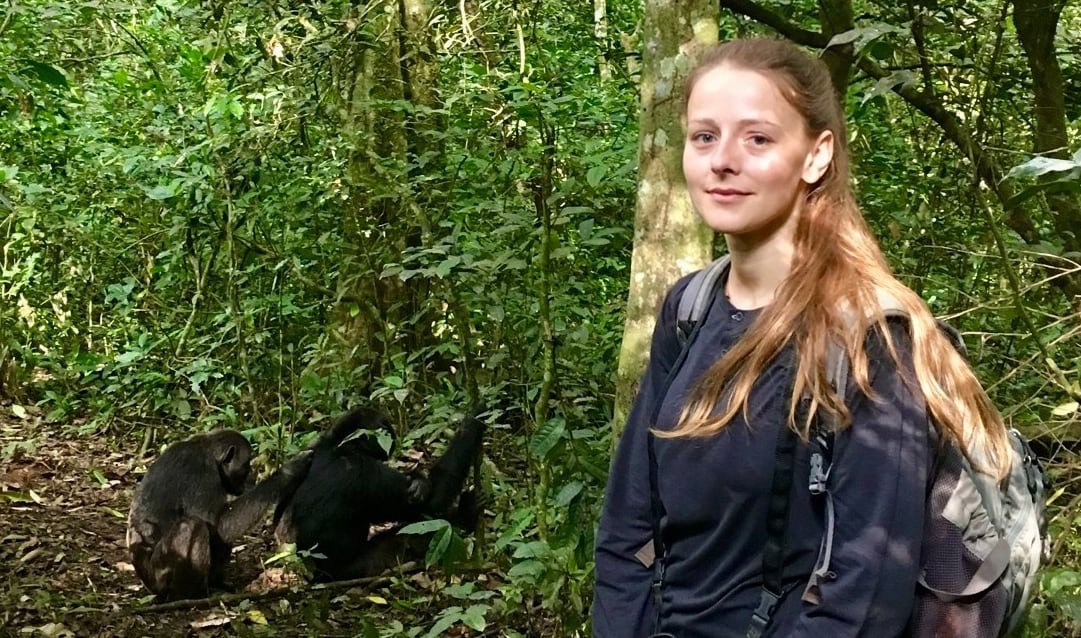 Primatologist Iulia Bădescu in Kibale National Park. She said chimpanzees are ‘notorious for being quite xenophobic’ when it comes to outsiders. (Submitted by Iulia Bădescu)
What makes this case unique is that these chimpanzees “had close intimate relationships,” perhaps stretching across decades, she said.
“Some of them were brothers or closely related kin, and to go from that to behaving as … enemies and be lethal towards each other … was shocking,” she said.
Bădescu has also studied the Ngogo chimps, with a focus on how mothers in the group cared for their young. She visited in 2013 and again in 2018, and saw the shift to violence first-hand.
While famed conservationist Jane Goodall documented violence among chimps in Tanzania in the 1970s, Bădescu said this new study is the first case where researchers have observed a cohesive group start to split and eventually erupt into violence.
John Mitani is also an author of the study, and a primate behavioural ecologist and professor emeritus of University of Michigan.
“How does yesterday’s friend become today’s foe? And why did they turn on each other like this?” he said. “That’s been hard to come to grips with.”
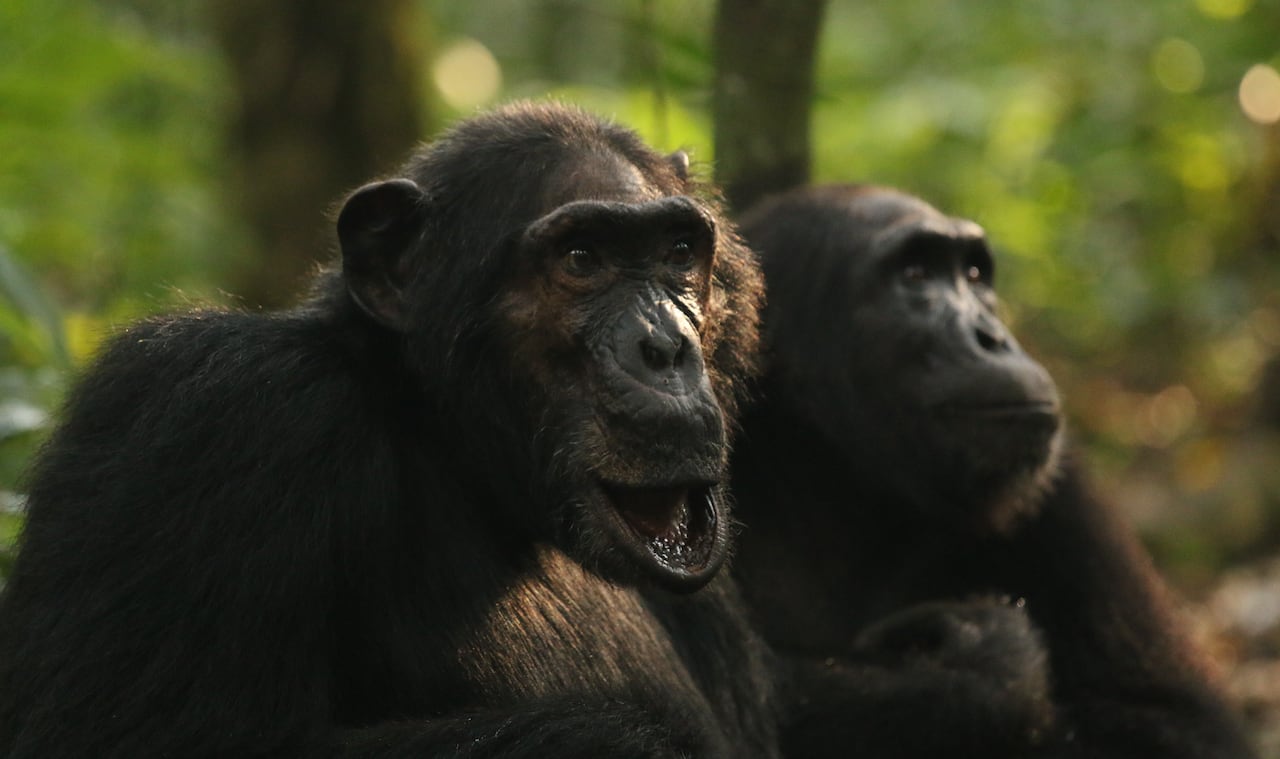 A chimp called BF was the last known male to intermingle between the different groups. (Submitted by Aaron Sandel)What drove this aggression?
Mitani said researchers don’t have a definitive reason for why the group split, suggesting it could have been a combination of factors.
“I do think that the group simply became too large … with over 200 individuals. This is four times larger than most other chimpanzee groups,” he said.
“Feeding competition and reproductive competition intensified, and I think those are two key factors that likely contributed to the split.”
Sandel pointed to the abrupt deaths of several older chimps in 2014, from suspected disease. Some may have been “important connectors among the neighbourhoods,” he said.
“It highlights how important each individual chimp is in terms of the wider sort of social group … it weakened the ties that had existed among the neighbourhoods,” he said.
He said there was also a change in the dominance hierarchy in the central group, as a younger male challenged and usurped the chimp who had been the alpha male for six years. Changes like that increase tensions and aggression in the wider group, he said.
He thinks that chimps in the western group may have sensed that tension, and pulled away rather than “facing the risk of working out where they fell in the hierarchy.”
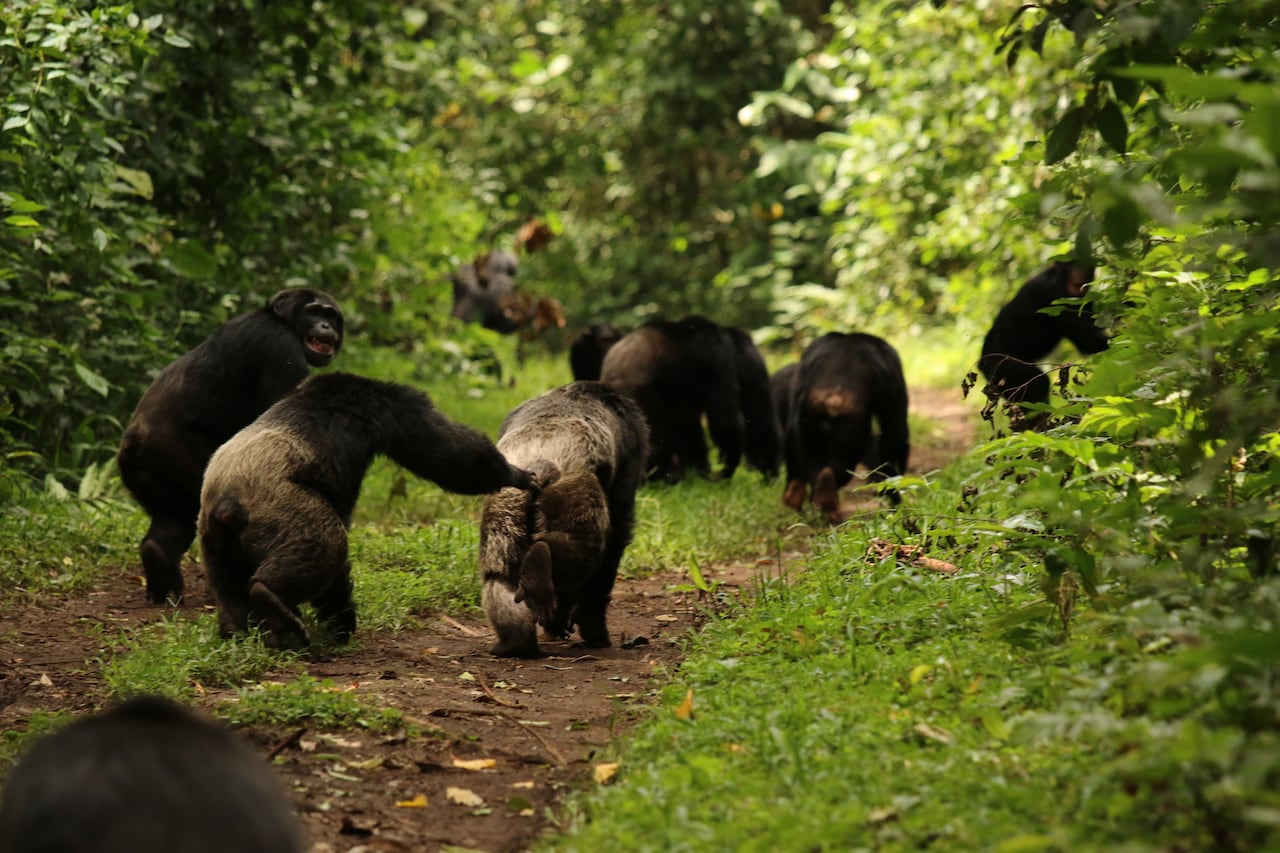 Ngogo chimps react to hearing outsider chimps in 2015. (Submitted by Aaron Sandel)What humans can learn from chimps
Sandel said there may be similarities between chimpanzee and human conflicts, but he also pointed out that apes are without any apparent religion, ethnicity or other things often blamed for human disputes.
While he thinks it’s troubling that our conflicts might just boil down to “your grudges and rivalries with your neighbours,” he said it also offers a reason for hope.
“Maybe we can identify new and better interventions for peace if we recognize that what really matters are our interpersonal relationships … and reconciling after conflict,” he said, pointing out that reconciliation is something chimpanzees are normally very good at.
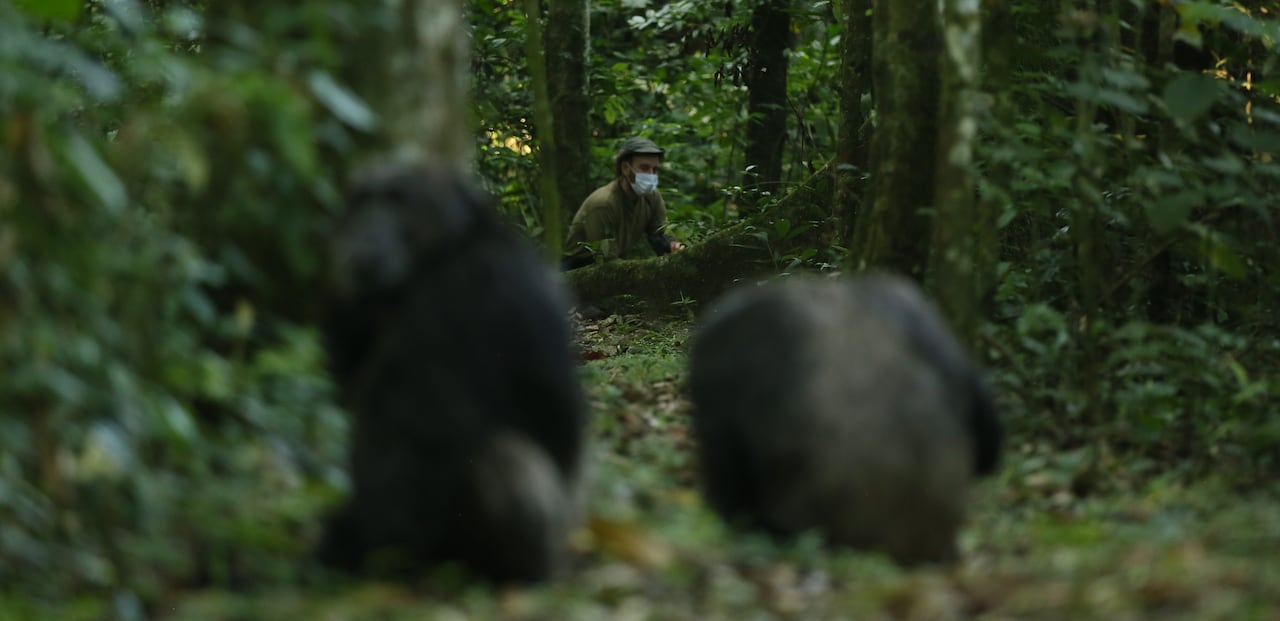 Aaron Sandel observing chimps in Kibale National Park. He thinks humans could learn something from chimpanzee’s usual ability to reconcile after conflict. (Submitted by Aaron Sandel)
Mitani also finds reason for optimism, in the simple fact that humans aren’t chimps.
“We’re an unusually pro-social and cooperative species. We go out of the way to help and aid our neighbours — sometimes those neighbours are complete strangers,” he said.
“While aggression and wars break out among humans from time to time, for the most part, we were able to live peaceably side by side with others.”
Mitani said he’s studied these chimps for 30 years, and it’s just not clear how this ongoing violence will end.
“I love some of them, not all of them. They don’t [all] like me either, universally. So it’s really been hard to watch.”