
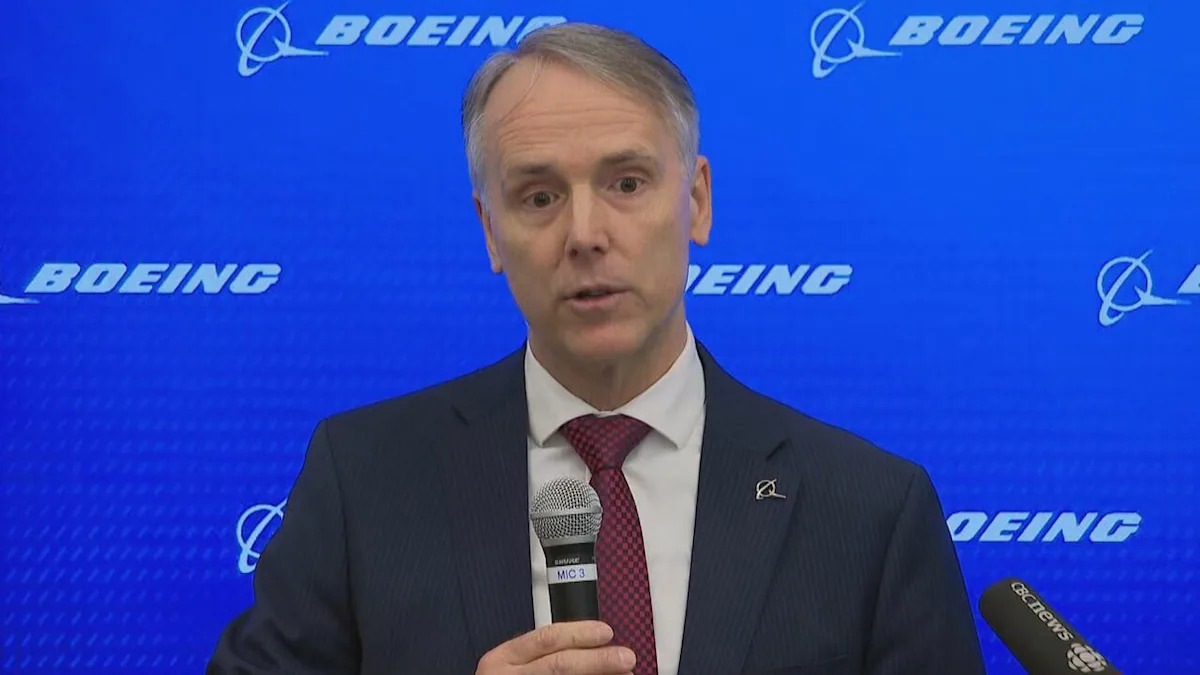
Boeing plans to spend $36 million on composite aerospace manufacturing research and development projects at its Winnipeg facility, where the aerospace company’s president made the announcement.
“Today’s a big day, and we’re excited to see the future unfold,” Al Meinzinger said at the Friday news conference, which also included Winnipeg Mayor Scott Gillingham, Manitoba Premier Wab Kinew and two Liberal members of Parliament representing ridings in the city.
Meinzinger said the Winnipeg site is the country’s largest advanced composite facility, and has been “at the heart of the Canadian aerospace industry” for more than 50 years.
The new funding will be directed to projects that enhance composite fabrication capabilities, including the development of automated processes and collaborative robotics, with some of that work to be done in collaboration with the National Research Council of Canada, he said.
Composite manufacturing materials are used in making airplane parts to increase the aircraft’s fuel efficiency and decrease its weight.
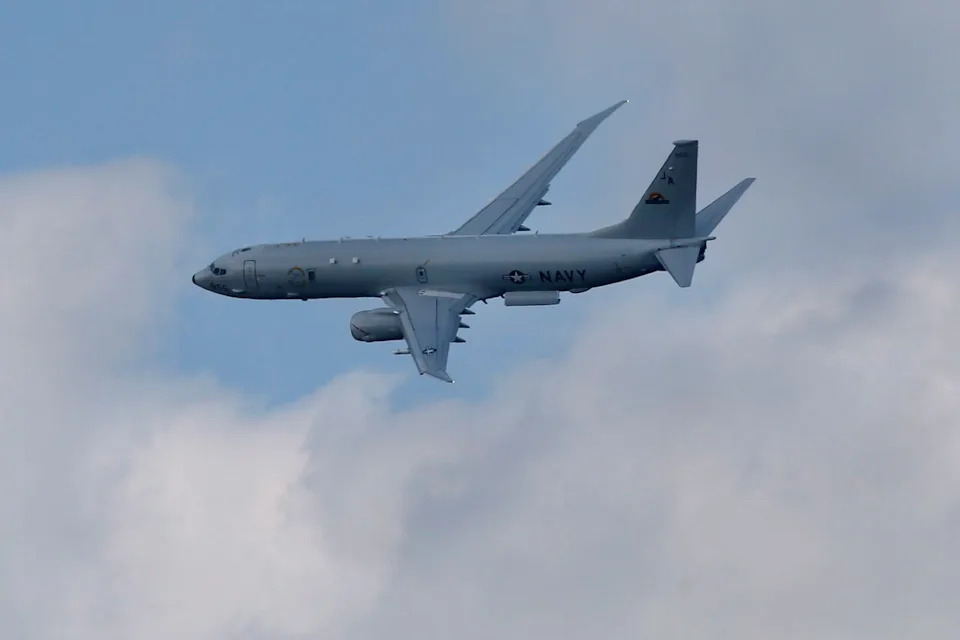
A Boeing P-8A Poseidon flies on display at an air show in England in July 2014. The CP-8A Poseidon has been selected as Canada’s multi-mission aircraft. (Sang Tan/The Associated Press)
Ibrahim Yimer, vice-president of transportation and manufacturing for the National Research Council, said the announcement “demonstrates the power of partnership between industry and government,” and what can be achieved when they “work hand-in-hand.”
Matt Baxter, an engineering senior manager at Boeing’s Winnipeg facility, said the money will accelerate several production automation projects the company has been working on, with the goal of targeting “repetitive and ergonomically intensive” operations to improve workplace safety, product quality and production efficiency.
“We’re proud to keep building advanced aerospace capability in Winnipeg for our customers, for the Manitoba community and for Canada,” Baxter said.
The initiative is part of the federal government’s industrial and technological benefits policy, which selected Boeing’s CP-8A Poseidon as Canada’s multi-mission aircraft, Boeing said in a news release.
That strategy sets the goal of awarding 70 per cent of federal defence contracts to Canadian firms within a decade.
More aerospace investment to come: premier
Doug Eyolfson, member of Parliament for the Winnipeg West riding where Boeing’s Murray Park Road facility is located, said the money announced Friday was significant for the workforce and the future of the site.
“It sends a clear message: This expertise here in Winnipeg is valued, and it is competitive on the global stage,” Eyolfson said.
“[This is] an announcement that really matters to this community. It’s a place that has built a strong reputation in aerospace, and not just across Canada but globally — and that reputation comes from the people who work here.”
Premier Kinew called Manitoba’s aerospace sector “one of the best in the country.” Based on conversations he had with Prime Minister Mark Carney in Ottawa earlier this week, “there are going to be a lot more investments coming” to that sector, said Kinew.
Ben Carr, member of Parliament for Winnipeg South Centre, touched further on Kinew’s comments about the recent Manitoba delegation in Ottawa, saying people in the capital city “are listening to the voices of Manitobans in relation to our aerospace industry.”
“We’re very excited about what’s to come, and the role that all of you will play in those contributions,” said Carr, who is also chair of the House of Commons industry and technology committee.
Meanwhile, Mayor Gillingham on Friday touched again on Winnipeg’s “sky economy,” a term he used to describe the city’s aviation, aerospace and defence sectors in his recent state of the city address. He said those sectors are “going to play a leading role in our future of our community.”
Announcements like the one Boeing made on Friday “will mean that Winnipeggers continue to look more and more to the skies for job opportunities, for science, for trade, for connection, and really for the future of what can be and continues to be a strong and critical, vital sector within our community,” said Gillingham.
“There is so much opportunity here within our community, within Winnipeg. And I’m excited that we continue to be part of it.”