

The seventh novel from Winnipegger Margaret Sweatman is partly a literary thriller and entirely a condemnation of capitalism and environmental abuse.
The former longtime literature and creative writing instructor at University of Winnipeg, Sweatman debuted as a novelist in 1992 with Fox.
A work of historical fiction, Fox explores social injustice and the experiences of women during the 1919 Winnipeg General Strike.

Mikaela MacKenzie / Free Press files
In an act of literary alchemy, Margaret Sweatman’s lyrical, whimsical prose transforms what could have been a hard-boiled thriller into a meditation on greed.
Sweatman takes on similar themes in Night Birds, sharply criticizing wealth inequality, global capitalism and environmental exploitation, contrasted with the importance of art and human connection.
Sweatman opens “in the near future” in a remote region of Transylvania at a shady mining operation owned by gangster Peter Zugravi.
Over lunch, a catastrophe occurs, spewing poisoned water and sludge into the waterways, destroying the countryside and killing hundreds.
The devastation isn’t contained to Eastern Europe.
Just outside Winnipeg lives the mine’s chief investor Farrar, a factory owner currently annoyed at wildfire smoke blowing in from Northern Canada.
When Farrar hears from his business advisor, a cool cynic named Mark, he realizes his business interests are tied to worse enterprises than he’d allowed himself to acknowledge — and that he is deeply in trouble. “Mark said that Peter Zugravi was being ‘irrational,’ that Farrar would be wise to get his family out of the way till Peter ‘calmed down,’” Sweatman writes.
Farrar attempts to convince himself that he acted in good faith all along, even as he sends his wife and daughter to hide on Mark’s private island, defuse Zugravi’s anger and protect his own business interests.
In an act of literary alchemy, Sweatman’s lyrical, whimsical prose transforms what could have been a hard-boiled thriller into a meditation on greed and responsibility.
Businessman Farrar is contrasted with the artistic interests of his father, neighbour and wife, who shape their lives around a desire to create things for joy instead of exploiting others for money.
As Farrar’s neighbour lectures him, “Our economy has been devoured by kleptocrats who’ve stolen most of the world’s money. Just like dragons, devouring the flesh and draining the blood of helpless folk.”
Like the wildfire smoke that drifts in at the start of the novel, environmental warnings overshadow the plot: violent storms destroy homes, unseasonal heat scorches the countryside and drought threatens ahead.
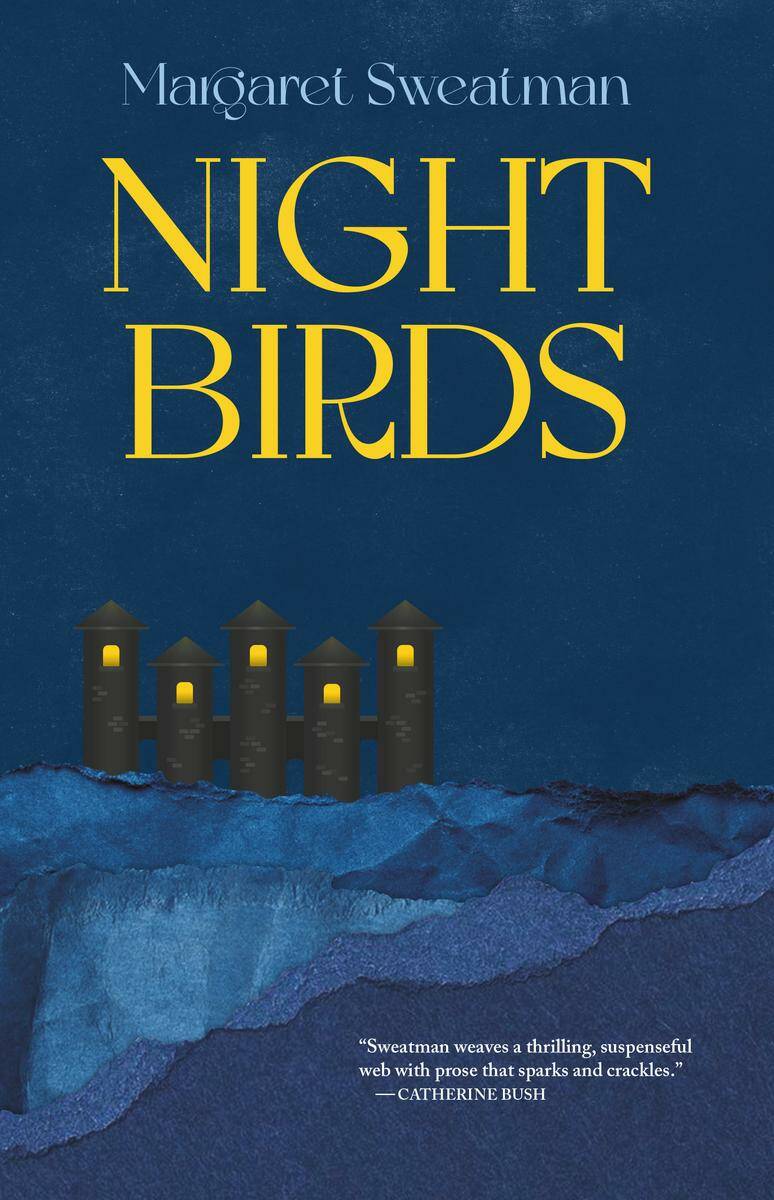
Night Birds
The mining disaster is based on real-life incidents involving cyanide spills and environmentally unsafe mining practices in Eastern Europe, at least one of which involves a Canadian mining firm.
While Sweatman’s characters are ostensibly fictional, Zugravi seems a nod to U.S. President Donald Trump: a crude bumbler who attracts money and followers despite a succession of business failures, criminal practices and obnoxious comments.
Winnipeg Free Press | Newsletter

As Zugravi responds when asked how he avoids paying taxes, he answers, “Because I’m not stupid… Losers pay taxes. I’m not a loser.”
Sweatman contrasts the loudmouth Zugravi with Mark and Farrar who, while more polite on the surface, engage in equally shady work — taking aim at the stereotype of the polite, morally superior Canadian.
In fact, just as Zugravi resembles President Trump, Mark, well-groomed and perfectly mannered, could be seen as a nod to Prime Minister Mark Carney.
Sweatman’s book is a timely warning during these uncertain times, and a triumph by a local author.
Kathryne Cardwell is a writer in Treaty one Territory.