
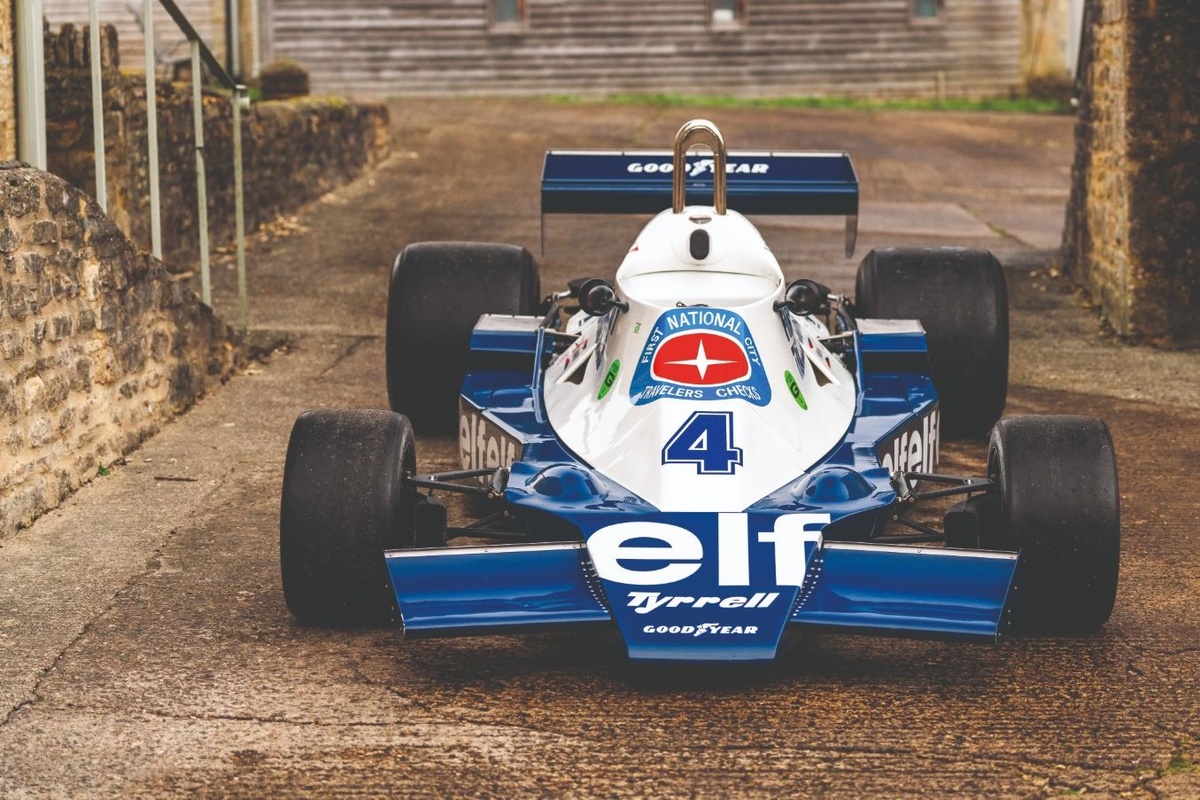
Simple, easy to work on, conventional. On the face of it, the Tyrrell 008 of 1978 was just the antidote for one of grand prix racing’s best-loved ‘indie’ teams following the withering decline of its sensational but complex six-wheeler.
And yet, was the return to four-wheeled normality really just a safe option for Tyrrell? That certainly wasn’t the intention, given what 008 could have been. This car might have beaten Gordon Murray and Brabham to the punch by whooshing on to the grid as Formula 1’s first ground effect-inducing fan car – if only it had worked in its one and only test in that configuration, and if Tyrrell had persevered with a concept it quickly abandoned.
The ungainly, never-to-be-forgotten Tyrrell P34, with its four mini wheels at the front and bulbous rears, was the surprise hit of 1976 – despite Jody Scheckter’s all too obvious scepticism. But it slumped into a troublesome, over-complicated also-ran during its second season. That’s why it was time for a reset and a return to Tyrrell’s double-o model line.
In this regard, the four-wheeled 008 hit the nail and proved a significant addition to the Tyrrell canon on a number of fronts. For starters, it was the first from the Surrey-based team not to be designed by Derek Gardner, the low-key transmissions specialist who had served Ken Tyrrell so well since the Jackie Stewart glory days.
Second, it proved a winner and revived Tyrrell’s status as a contender – albeit briefly. And third, the model, and the specific chassis you see here, played fruitful cameos in its post-contemporary life, both for female racers and the emerging historic F1 scene.
Finally – and this cannot be overlooked – it still bristles today with oh-so-cool late-1970s F1 panache, and carries an endearing association with one of France’s most charismatic daredevil racing idols: Patrick Depailler.
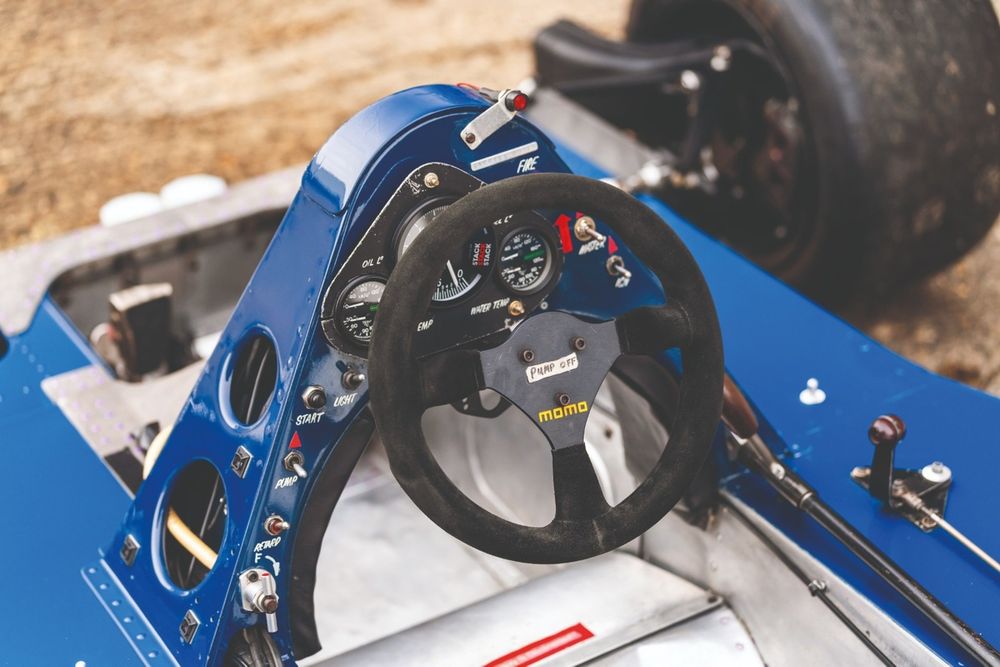
The 008 represented Tyrrell having to go back to the drawing board to re-establish its credentials
Photo by: Jonny Lau/Machina Studios
The six-wheeled P34 existed not as a novelty but for a simple raison d’etre: to chase a new competitive edge in an era when the good old Cosworth DFV had become near-ubiquitous. That challenge remained in 1978, as Tyrrell (literally) went back to the drawing board to re-establish its credentials. Just look at the list of teams running DFVs back then: deep breath… Lotus, McLaren, Shadow, Arrows, Surtees, Wolf, the emerging new Williams team, ATS, Fittipaldi, Ensign, Hesketh, Theodore, Merzario…
Despite Ferrari’s flat 12-powered run to three consecutive constructors’ titles, the DFV was still in its garagiste pomp in the V8’s 12th season as F1’s go-to motor. Standing out from the crowd was only getting tougher.
Gardner’s valiant effort with the P34 had proven a cul-de-sac rather than signalling a new direction. Now it marked the end of his Tyrrell (and F1) tenure. Undermined by the signing of Maurice Phillippe in the summer of 1977, he abruptly quit around the time of the Italian Grand Prix and retreated into industry with automotive parts supplier heavyweight BorgWarner.
“Derek Gardner was still there, and he didn’t allow us into the drawing office! There was a double garage down the bottom of Tyrrell’s woodyard, and Maurice and I had our drawing boards in there” John Gentry
Draughtsman and engineer John Gentry was another new recruit, by Phillippe’s invitation, and witnessed the crossover tension as Gardner’s patience ran out of road. “I got a phone call from Maurice,” says F1 nomad Gentry, who also had spells at March, Shadow and Fittipaldi during the 1970s and had just returned from an enlightening experience running Gilles Villeneuve in Chris Amon’s Can-Am team (now, that’s another story).
“Maurice had moved to Tyrrell, was in the throes of designing the 008 and needed help on the detail stuff. Derek Gardner was still there at the very beginning, they were still running the six-wheeled car, and he didn’t allow us into the drawing office! There was a double garage down the bottom of Tyrrell’s famous woodyard, and Maurice and I had our drawing boards in there. Once Derek left we joined the main office – although there was only one other guy in there.”
The chance to learn from the designer behind Colin Chapman’s era-defining Lotus 49 and 72 was not lost on Gentry, despite Phillippe’s lustre gaining a spot of tarnish by his short-lived stint with Vel’s Parnelli Jones and a false start on a turbo engine project at Renault.
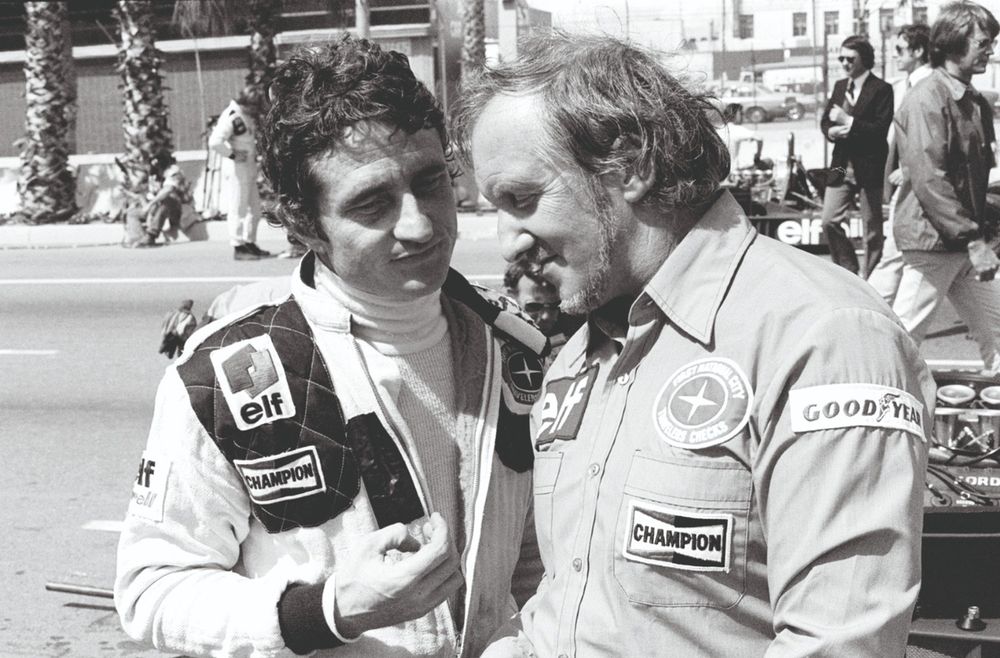
Designer Phillippe, here with Depailler at Long Beach in ’78, didn’t shy from being hands-on
Photo by: Phipps/Sutton Images/Getty Images
“I really enjoyed working with Maurice,” says Gentry. “He didn’t have to, but we’d sit there until 9 or 10pm with him explaining why he did something on a Lotus that he’d designed. He was that kind of guy. He wanted to help you understand.”
Gentry was also witness to Phillippe’s initial plan for the 008 to be much more radical than Tyrrell’s safe return to convention. Lest we forget, the fan car concept wasn’t new. America’s greatest racing pioneer Jim Hall had been way ahead of the game with his Chaparral 2J Can-Am sucker car in 1970.
Now Phillippe picked up the idea, albeit with a little more subtlety. Part of the reason why the 008’s fan has received so little attention over the years wasn’t just down to it never racing, it was also because the fan was unseen. Unlike Hall’s 2J and Murray’s celebrated Brabham BT46B, Phillippe hid his fan from view, buried within the chassis behind the fuel cell and in front of the 008’s DFV.
From the outside, a clue that something was a bit different about Phillippe’s Tyrrell was its lack of visible radiators. That’s because he’d chosen to house the water radiator and oil coolers horizontally underneath and at the back of the chassis. The fan was then mounted via a Silentbloc bush to the end of the crankshaft.
Air was drawn through the floor-mounted radiators and oil coolers, exhausted through the fan and up and over the DFV’s inlet trumpets. A ducted channel at the top of the engine cover was a tell-tale for air exhaustion. Just as Murray would later claim of his Brabham, the fan offered improved cooling – but happened to offer certain advantages for increased grip too…
“We went through a lot of designs for the fan and we were restricted for size,” reveals Gentry. “We had to make the vanes ourselves. The guy in the workshop on a milling machine was incredible.” Some of the designs tried on a test rig were said to give off a sound similar to that of an air-raid siren.
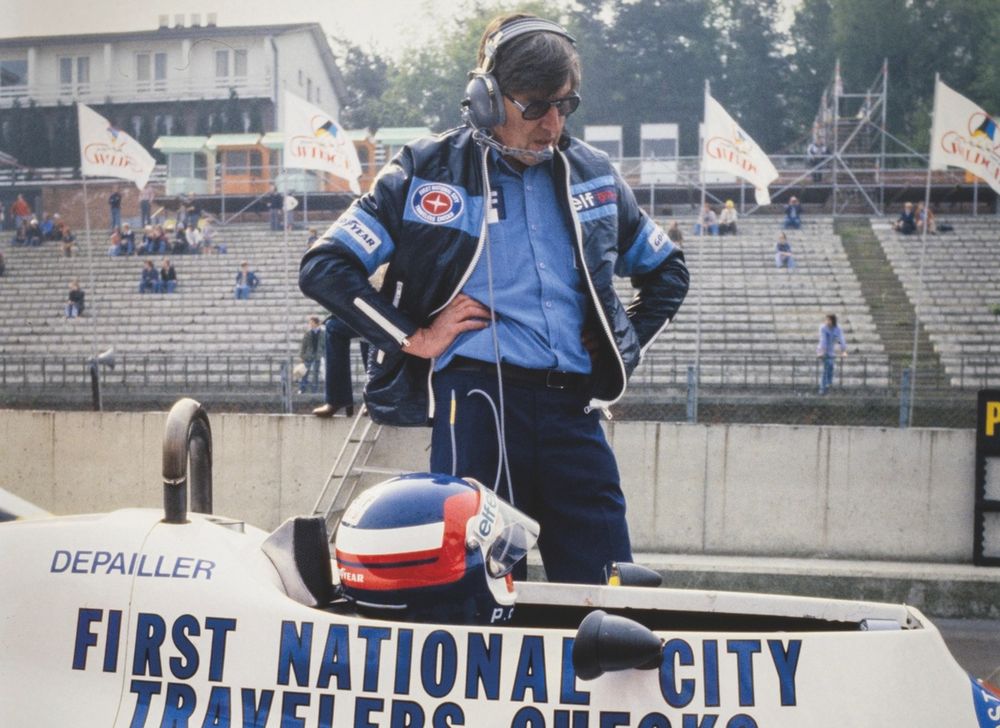
Depailler was the most prolific starter for Ken Tyrrell’s Formula 1 team
Photo by: Phipps/Sutton Images/Getty Images
The apparently radiator-less Tyrrell was transported to the south of France for tests at Paul Ricard – for what turned out to be the Tyrrell fan car’s only on-track appearance. Every time the DFV approached 10,500rpm the system gave trouble.
“It just got too hot,” confirms Gentry of the overheating problems that scuppered the plan. “So in the end the radiators were repositioned, sat on top of the bodywork [just ahead of the rear wheels] as an afterthought. But Maurice was an amazing guy.”
The following summer, when Niki Lauda won all too convincingly on the Brabham fan car’s debut at the Swedish GP, Ken Tyrrell was reduced to one of his famous ‘froth jobs’, such was his fury at Murray’s apparent coup.
With a twist of a knob, it was said you could tune the car from oversteer to understeer without having to adjust wing settings, anti-roll bars and springs
Perhaps his anger was motivated by more than a niggle that he’d given up on a similar concept. It’s also been claimed that an engineer who visited Tyrrell for an interview at the end of 1977 spotted the fan car design on Phillippe’s drawing board, then took a job at Brabham…
No fan car revolution, then, but Phillippe’s 008 still carried other significant innovations. One was active camber control, a system Richard Jenkins describes in his book Tyrrell as effectively F1’s first active suspension system. Phillippe prototyped the concept on his Ford Cortina Mk3 using a pendulum-controlled spool valve.
With a twist of a knob, it was said you could tune the car from oversteer to understeer without having to adjust wing settings, anti-roll bars and springs. But in the shadow of Lotus’s game-changing ground-effect Type 78 and then ‘Black Beauty’ 79, it’s another overlooked innovation.
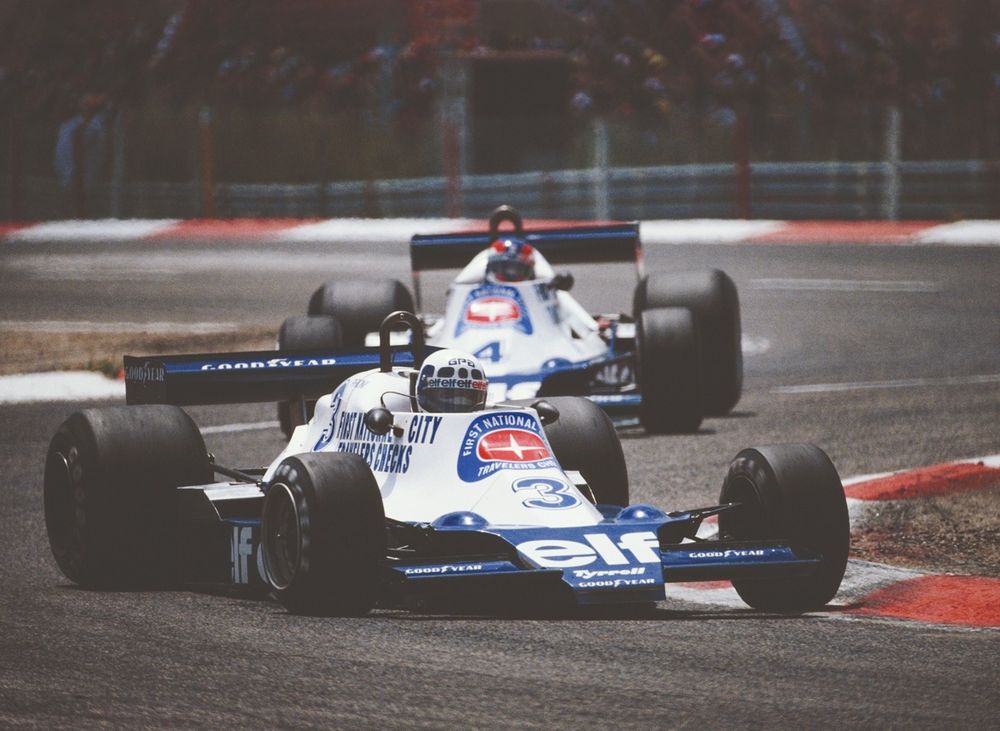
British garagiste Tyrrell ran the all-French line-up of Pironi and Depailler in 1978
Photo by: Schlegelmilch/Getty Images
Instead, perhaps 008’s most significant contribution was its use of early data logging electronics. Sponsor Data General introduced a system developed by Dr Karl Kempf using microprocessors to record suspension behaviour, steering angle, lateral g-force and rotational mobility. Early days for tech that we now take for granted.
In terms of success, 008 is remembered as respectable – but little more. Look at the results from 1978 and you’ll notice Tyrrell was one of only two teams running DFVs to win across the season. But it did so only once. In contrast, the Lotus ground-effect masterpieces claimed eight of the 16 races that year, with Ferrari and Brabham’s Alfa Romeo power scooping up what was left. In reality, Tyrrell was beginning to fall behind the curve as a frontrunning F1 entity.
As for Depailler, entering his fifth full season with Tyrrell, it was beginning to look as if he was destined never to win a grand prix – especially after a near-miss in South Africa. Riccardo Patrese’s Arrows had led and retired with engine failure at Kyalami, leaving Depailler ahead of Lotus duo Mario Andretti and Ronnie Peterson.
When Andretti ran out of fuel, Peterson was let off the leash to go after the Tyrrell – which late in the race spluttered with fuel starvation. When Depailler was held up by Hector Rebaque’s privateer Lotus at Crowthorne Corner on the last lap, Peterson pounced to steal the win. Depailler was said to be distraught in the aftermath.
Still, 1978 turned out to be arguably his most consistently competitive season – when the Tyrrell didn’t let him down. Depailler scored a fifth in Canada, a fourth in Britain, podium thirds in Argentina and Long Beach, that second place in South Africa and another in Austria. But his day of days arrived in Monaco on 7 May, driving 008/3 you see here. The never-to-win mantle was thrown off in style at his 69th attempt.
Depailler qualified fifth around the houses, behind Carlos Reutemann’s pole-winning Ferrari, the Brabhams of John Watson and Lauda, and Andretti’s Lotus. In the race, Reutemann made a poor getaway and so Watson took the lead, with fast-starting Depailler hot on his tail. When Wattie went straight on at the chicane with brake trouble on lap 38, the Tyrrell assumed the position.
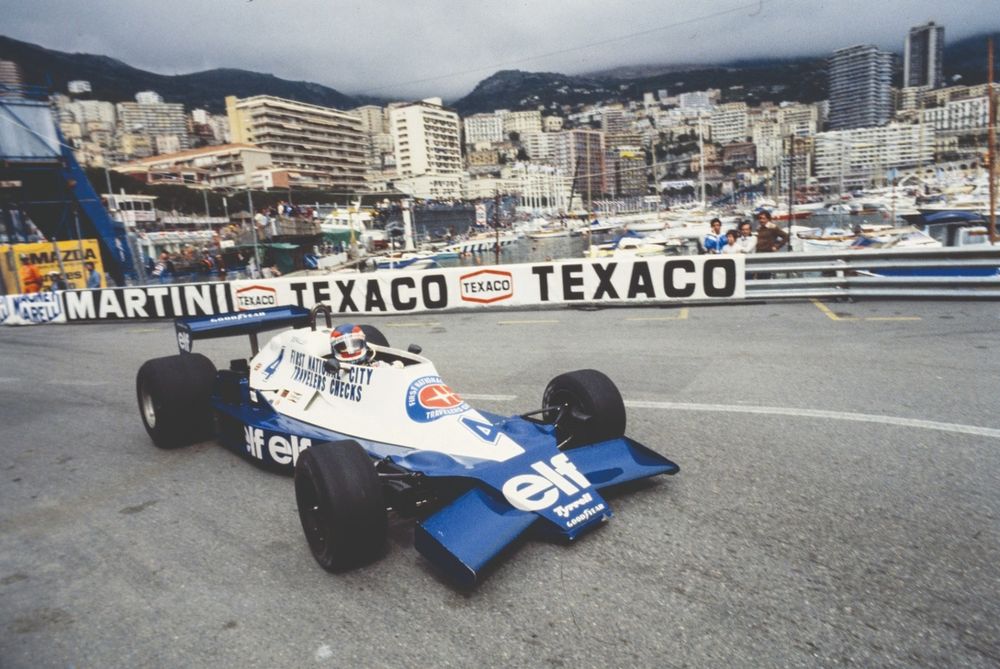
Depailler’s day of days came in Monaco when he won on his 69th attempt
Photo by: LAT/Getty Images
Now Lauda exerted pressure, only for a puncture to relieve the tension, and Depailler ran out a delighted winner, 22 seconds ahead of the recovering reigning world champion. He had become Tyrrell’s first Monaco winner in five years and fittingly, it was Jackie Stewart who interviewed him for TV when he stepped out of 008/3.
According to Jenkins, the race is also an example of how hands-on Phillippe was. In Thursday practice, the long radius rods on the rear suspension were buckling, so the designer flew back to England on the Friday day off, had larger diameter versions made and returned in time to have them fitted for the race. The car ran strongly and like a dream for Depailler’s signature F1 performance.
At this stage, the Frenchman even led the world championship. But a string of retirements in Belgium, Spain, Sweden and France derailed any ambitions of a title bid. Still, the runner-up finish at the Osterreichring was another special day. From 13th on the grid, Depailler shone in a race disrupted by an early stoppage amid chaos when the entire field started on slicks on a damp track, only for rain to return.
From carrying decent support, Tyrrell was left with none. Feast to famine. The team would not win again until the end of 1982
At the restart on full-wet tyres, Depailler led Peterson for what would be an aggregate result – but the Swede was irrepressible and soon passed to win a race of only nine finishers.
The points haul at least lifted Depailler to third in the championship, but an engine failure at Zandvoort set him back and then at Monza he was among those to be caught up in the first-lap accident that ultimately cost Peterson his life. Following an eighth retirement of the campaign at Watkins Glen, two points in Montreal left Depailler fifth in the final standings, with Tyrrell a creditable fourth in the constructors’ behind dominant Lotus, Ferrari and Brabham.
Strangely, given the heights of his later career, rookie team-mate Didier Pironi played only a bit-part in Tyrrell’s revival season. Signed on a two-year deal through the Elf connection to complete an all-French line-up – without a flinch from the proudly British team chief – Pironi started well, scoring points in four of his first six starts.
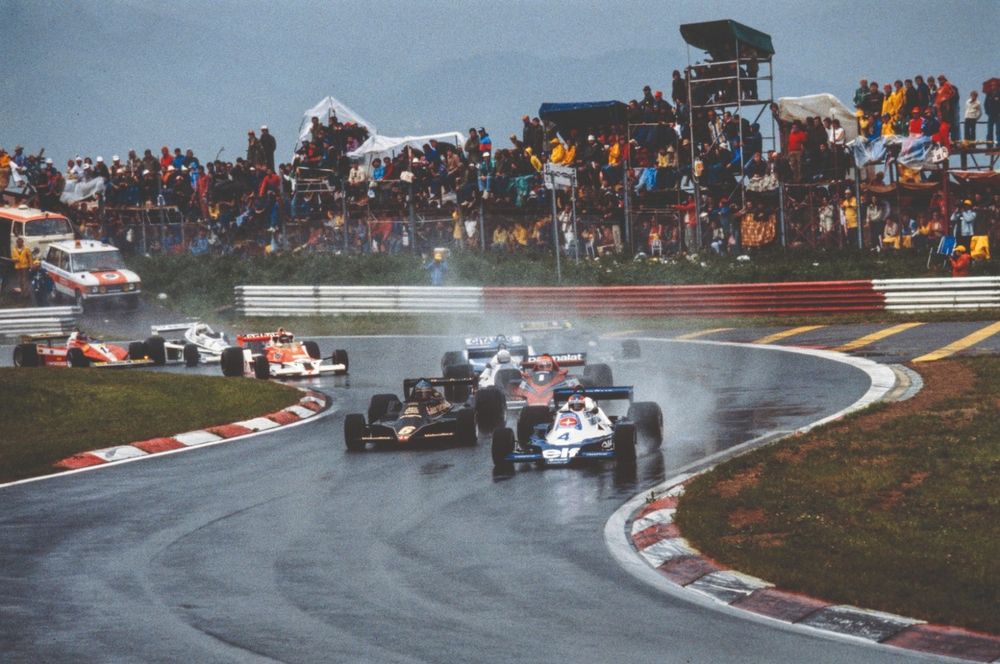
Eventual runner-up Depailler leads Peterson’s Lotus in a soggy Austrian Grand Prix
Photo by: Phipps/Sutton Images/Getty Images
But this cool character found the team a little cold and only scored once more across the rest of the season. That was at Hockenheim, where Pironi should have finished fourth only to confess to being caught napping by Emerson Fittipaldi.
Overall, Tyrrell had gained back vital momentum – which was then immediately lost in the final year of the decade. Firstly, Depailler quit for a drive with Ligier. He would remain Tyrrell’s most prolific GP starter, 80 of his eventual 95 having been made in Uncle Ken’s blue cars. But the switch to the other blue cars was immediately rewarded as the Cosworth-powered Ligier JS11 set the pace in the early rounds of 1979, Depailler doubling his F1 victory score in round five at Jarama.
He was level on points with Ferrari’s Villeneuve at the top of the standings at that stage – only to break both legs in a hang-gliding accident. Depailler returned in 1980 at Alfa Romeo, only to die in a dreadful testing accident at Hockenheim.
As for Tyrrell, losing a driver for 1979 was one thing – but losing not one, but two sponsors was too much. The withdrawal of Elf, which now focused solely on the French promise of Renault’s increasingly potent turbo campaign, was bad enough. But Tyrrell’s two-year deal with First National City bank also came to a close, and in a time of recession it was not renewed.
From carrying decent support, Tyrrell was left with none. Feast to famine. The team would not win again until the end of 1982, with its 23rd and final F1 victory landing the following summer in Detroit. Michele Alboreto’s Motown success was also the 155th and last for the DFV (in DFY form). It was fitting that it landed with Tyrrell – the ultimate garagiste.
As for 008/3, the 1978 Monaco GP winner gained a successful second life. Sold to Melchester Racing, the chassis was campaigned in the 1979 Aurora AFX British F1 Championship by Desire Wilson, the South African doing wonders for the claim that women could compete at this level by scoring three thirds at the start of the campaign.
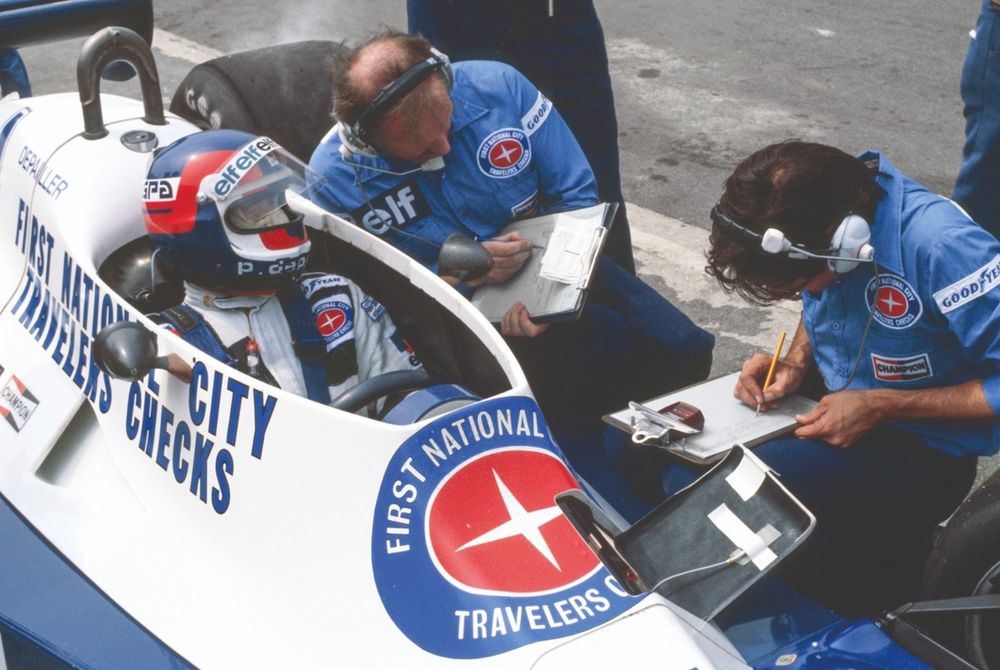
Foremost of the 008’s innovations was the pioneering use of data-logging technology
Photo by: Phipps/Sutton Images/Getty Images
Then in 1981 Pink Floyd drummer Nick Mason added the car to his collection. Under Mason and in the hands of John Brindley, 008/3 resumed active service in the new and quickly burgeoning world of historic motorsport. It’s claimed that the Tyrrell was the first winner of a historic race for 1970s F1 cars, just a few short years after its contemporary grand prix life.
And its story might not yet be over. Two years ago, 008/3 joined the first Tyrrell, 001, for the reopening of the team’s famous shed following its relocation from the old Ockham HQ to Goodwood, and now it’s for sale as a going concern.
The carrot for potential buyers could be a return to the scene of its greatest moment: Monaco, for the Historic Grand Prix. Time, surely, for someone else to channel their inner Patrick Depailler.
Race record
Year 1978
GPs 16
Wins 1
Other podiums 4
Pole positions 0
Fastest laps 0
Key drivers Patrick Depailler, Didier Pironi, Desire Wilson (in Aurora F1)
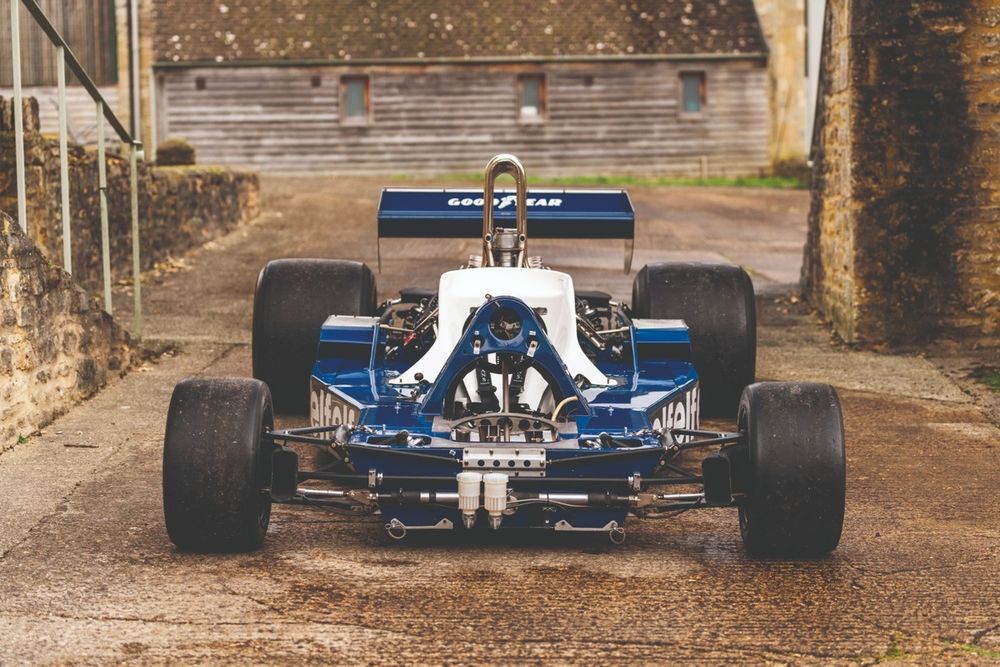
In the wake of the complex P34, the 008 met the criteria of being simple, easy to work on and conventional
Photo by: Jonny Lau/Machina Studios
SPECIFICATION
Chassis aluminium monocoque
Suspension double wishbone front suspension with inboard coil springs and dampers; rear upper links with fabricated steel uprights
Engine normally aspirated Cosworth DFV V8
Engine capacity 2993cc
Power 485bhp
Gearbox Hewland FGA 400 five-speed
Brakes Ventilated discs front and rear, 4-pot aluminium calipers
Tyres Goodyear
Weight 585kg
This article is one of many in the monthly Autosport magazine. For more premium content, take a look at the May 2026 issue and subscribe today.
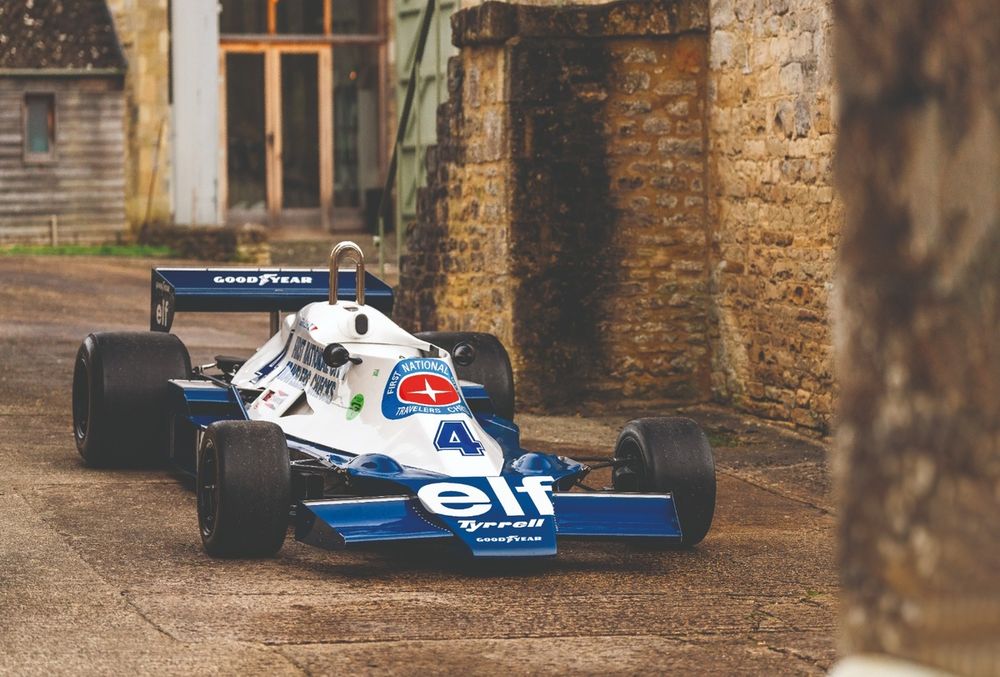
It is claimed that 008/3 was the first winner of a historic race for 1970s Formula 1 cars
Photo by: Jonny Lau/Machina Studios
We want to hear from you!
Let us know what you would like to see from us in the future.
– The Autosport.com Team