
norman lebrecht
April 19, 2026
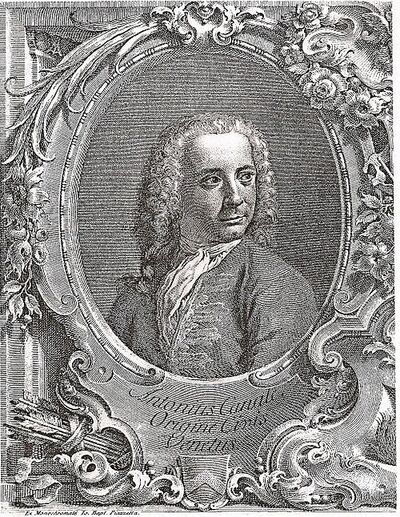
Think of Venice and chances are that what will appear in your mind’s eye will be a painting by Canaletto. His precise, luminous depictions of Venice’s canals, architecture, and festivals, as well as later scenes of London, made him popular among the English who collected his work as a sort of snapshot of where they’d been on their Grand Tour.
But Caneletto, who died on 19th April 1768, that is 258 eight years ago today, was much more than a ‘street photographer’. He is most famous as the premier 18th-century Venetian painter of vedute (detailed cityscapes or “view paintings”), as he painted the daily life of the city and its people. His mastery of perspective, light, and accuracy far outstrips his competitors, of whom there were many.
He was trained by his father, Bernardo Canal, (hence ‘Caneletto’, ‘Little Canal’) a theatrical scene painter, which influenced his later large-scale landscapes that combined structural accuracy with dramatic flair.
Canaletto’s early works remain his most coveted and, according to many authorities, his best painting is “The Stonemason’s Yard“painted in 1725 and now in the National Gallery in London. This depicts a humble working area of the city.
Later, Canaletto painted grand scenes of the canals of Venice and the Doge’s Palace. His large-scale landscapes portrayed the city’s pageantry and waning traditions, making innovative use of atmospheric effects and strong local colours. For these qualities, his works may be said to have anticipated Impressionism.
When he moved to London in 1749 he was immensely popular, turning out so many works in the same style that his painting began to suffer from repetitiveness, losing its fluidity, and becoming mechanical to the point that an influential English art critic George Vertue wrote that the man painting under the name ‘Canaletto’ was an impostor. This story was then spread by unscrupulous art dealers who had been passing off copies of Canaletto’s work as his own and were anxious to see him return to Venice, which he did in 1752, although his reputation never recovered.
Today, his paintings sell for millions. In July 2025, “Venice, the Return of the Bucintoro on Ascension Day” reached £27.5 million, at Christie’s.
Here’s a very informative little film from Christies about that painting, a conversation between Dr James Fox, art historian and broadcaster, and Letizia Treves, Christie’s Global Head of Research and Expertise at Christies and former Chief Curator of Italian and Spanish Paintings at the National Gallery.
Canaletto’s “Venice, the Return of the Bucintoro on Ascension Day“was formerly in the collection of Britain’s first prime minister, Sir Robert Walpole. It hung in 10 Downing Street in the first-floor parlour on the other side of the fireplace from its pendant work: Canaletto’s “Venice, The Grand Canal, Looking North-East from Palazzo Balbi to the Rialto Bridge”.
‘This is one of the most sublime works Canaletto ever painted,’ says Andrew Fletcher, global head of Christie’s Old Masters department.