
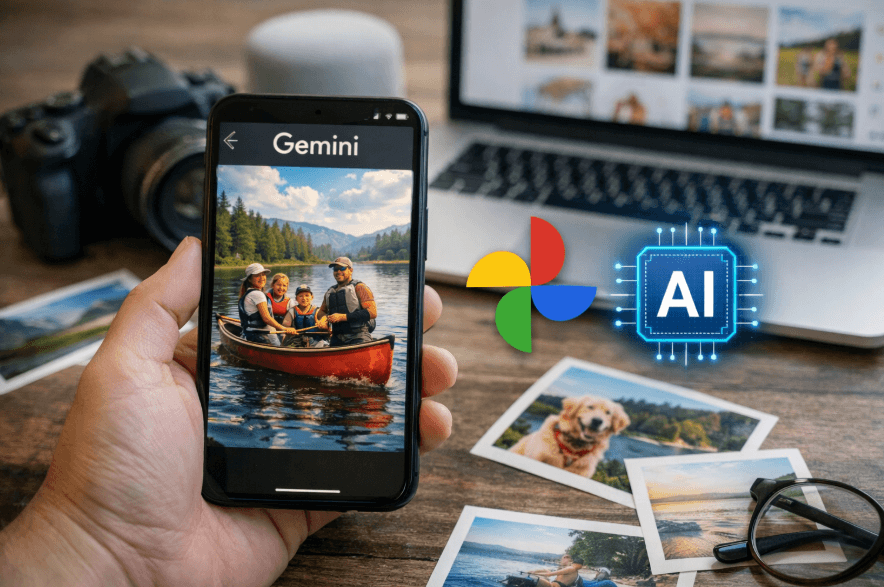
New feature integrates user preferences and Google Photos to simplify and customize AI-generated images
Google is rolling out a new feature in its Gemini app that aims to make AI-generated images more personal and easier to create. Announced on April 16, 2026, the update introduces enhanced “Personal Intelligence” capabilities, allowing users to generate images tailored to their preferences without the need for complex prompts or manual uploads.
The feature is initially launching for select subscribers in the United States, with broader availability expected in the coming months. While no Canadian release date has been confirmed, similar AI tools typically expand to Canada shortly after U.S. rollouts.
AI Image Generation Gets a Personal Touch
At the centre of the update is a new integration between Gemini and Google’s latest image model, Nano Banana 2. Together, they enable the app to draw on a user’s habits, interests, and connected Google services to inform image creation automatically.
Previously, generating highly personalized images required detailed written prompts and reference images. With this update, Gemini can interpret simpler requests—such as “design my dream home” or “show my ideal weekend getaway”—and produce results that reflect the user’s lifestyle and preferences.
This shift reduces the technical barrier for users and aligns with broader trends in AI accessibility, making creative tools more intuitive for everyday use.
Using Google Photos to Personalize Results
One of the most notable additions is the integration with Google Photos. By linking their photo library, users allow Gemini to incorporate real images of themselves, family members, and even pets into generated visuals.
Because Google Photos already allows users to organize and label people and animals, Gemini can use those labels as context. For example, a request like “create a painting of my family at the cottage” can result in an image that reflects actual people and familiar settings.
Users can also experiment with artistic styles, including watercolour, charcoal, or oil painting, without needing to upload or edit images manually. This could resonate with Canadians who frequently document family activities, seasonal travel, or outdoor experiences in their photo libraries.
Simplified Creative Process
The update is designed to streamline the creative process. Instead of crafting detailed prompts, users can rely on Gemini’s built-in understanding of their preferences.
This approach mirrors a broader shift in AI design, where systems anticipate user needs based on context rather than requiring explicit instructions. For users, this means spending less time refining prompts and more time exploring creative ideas.
Built-In Controls and Transparency
Google acknowledges that AI-generated results may not always match user expectations on the first attempt. To address this, the Gemini app includes tools for refining outputs.
Users can:
Provide feedback to adjust results
Select alternative reference images from their library
View which images were used through a “Sources” feature
This level of transparency is increasingly important as AI tools become more integrated into daily digital workflows.
Privacy Remains a Key Consideration
With deeper integration of personal data comes increased scrutiny around privacy. Google states that Gemini does not train its AI models directly on users’ private Google Photos libraries.
Instead, limited data—such as user prompts and responses—may be used to improve system performance over time. Importantly, linking Google services to Gemini remains optional, and users can manage these settings at any time.
In Canada, where privacy regulations such as the Personal Information Protection and Electronic Documents Act (PIPEDA) govern data use, such assurances are likely to be closely examined as the feature expands.
Availability and What’s Next
The personalized image generation feature is rolling out to eligible Google AI Plus, Pro, and Ultra subscribers in the United States. Google has indicated plans to expand access to additional platforms, including desktop versions of Chrome, and to a wider user base globally.
For Canadian users, the rollout will likely follow once regional compliance and infrastructure considerations are addressed.
A خطوة Toward More Intuitive AI Tools
Google’s latest update reflects a growing emphasis on personalization in artificial intelligence. By combining user data with generative models, the Gemini app aims to make digital creativity more accessible and relevant.
As AI continues to evolve, tools that reduce complexity while maintaining user control and privacy will likely shape how Canadians interact with technology—whether for creative projects, communication, or everyday tasks.