
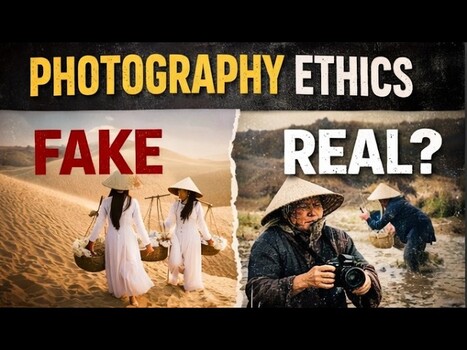
Staging photos and calling them documentary work isn’t a gray area. It’s a breach of trust, and it’s happening more visibly in travel and humanitarian photography at a moment when the credibility of the entire medium is already under strain.
Coming to you from Justin Mott, this pointed video takes on a pattern Mott has watched build for years: photographers staging culturally specific scenes, writing captions that frame them as genuine documentation, and publishing them to audiences who have no reason to doubt what they’re seeing. The specific trigger here is a sponsored Facebook post from an American photographer showing two women in pristine white áo dàis and conical hats carrying shoulder poles with salt across sand dunes in Vietnam. The caption described salt workers, predawn labor, and hardship. Mott, who has spent more than 20 years living and working in Vietnam, recognized the scene immediately. The áo dài is ceremonial dress, worn to weddings and formal events, and his Vietnamese wife’s reaction to the image was laughter. The disconnect between the caption and the reality of what was shown is what pushed him to make the video. He’s clear that staging photos isn’t wrong on its own. Commercial work involves staging all the time. The problem is presenting staged work as documentary truth.
Mott draws a direct line from this incident back to the Steve McCurry controversies, where staged scenes and cloned elements were published under the implicit credibility of photojournalism. He points out that the industry’s response to McCurry was too soft, partly because of his iconic status, and argues that’s exactly the dynamic that allows the pattern to continue. The photographer he’s discussing here has an impressive resume and major publication credits, which means this isn’t a case of someone who didn’t know what they were doing. When your brand is built on documenting the human experience, Mott says, accuracy isn’t optional. He also takes on the broader context: there are fewer trained photojournalists in the field now, and more content creators and travel photographers stepping into documentary spaces without fully understanding the ethical weight that comes with asking people to trust what they’re looking at. Add AI into the mix, and the pressure on that trust gets heavier.
What Mott gets into in the video that’s worth watching closely is how he breaks down the specific cultural details that give the staged image away, and why those details matter beyond just getting the facts right. He also talks about what happens to your credibility once someone spots one image that doesn’t hold up, and how that skepticism spreads across everything else in a portfolio. His point about the responsibility that scales with influence is direct and doesn’t come wrapped in diplomacy. Check out the video above for the full breakdown from Mott.