

Thanks for reading the Her Hoop Stats newsletter. We’re excited to announce a new partnership with Hudl. Hudl’s industry-leading tools – Sportscode, Instat, and Fastmodel – elevate the preparation, performance, and player development of WNBA and NCAA teams. We appreciate their support and look forward to working with them to help bring more insight about the women’s game to you.
You can find HHS on Bluesky, Twitter, YouTube, Facebook, and Instagram.
Haven’t subscribed to the Her Hoop Stats Newsletter yet?
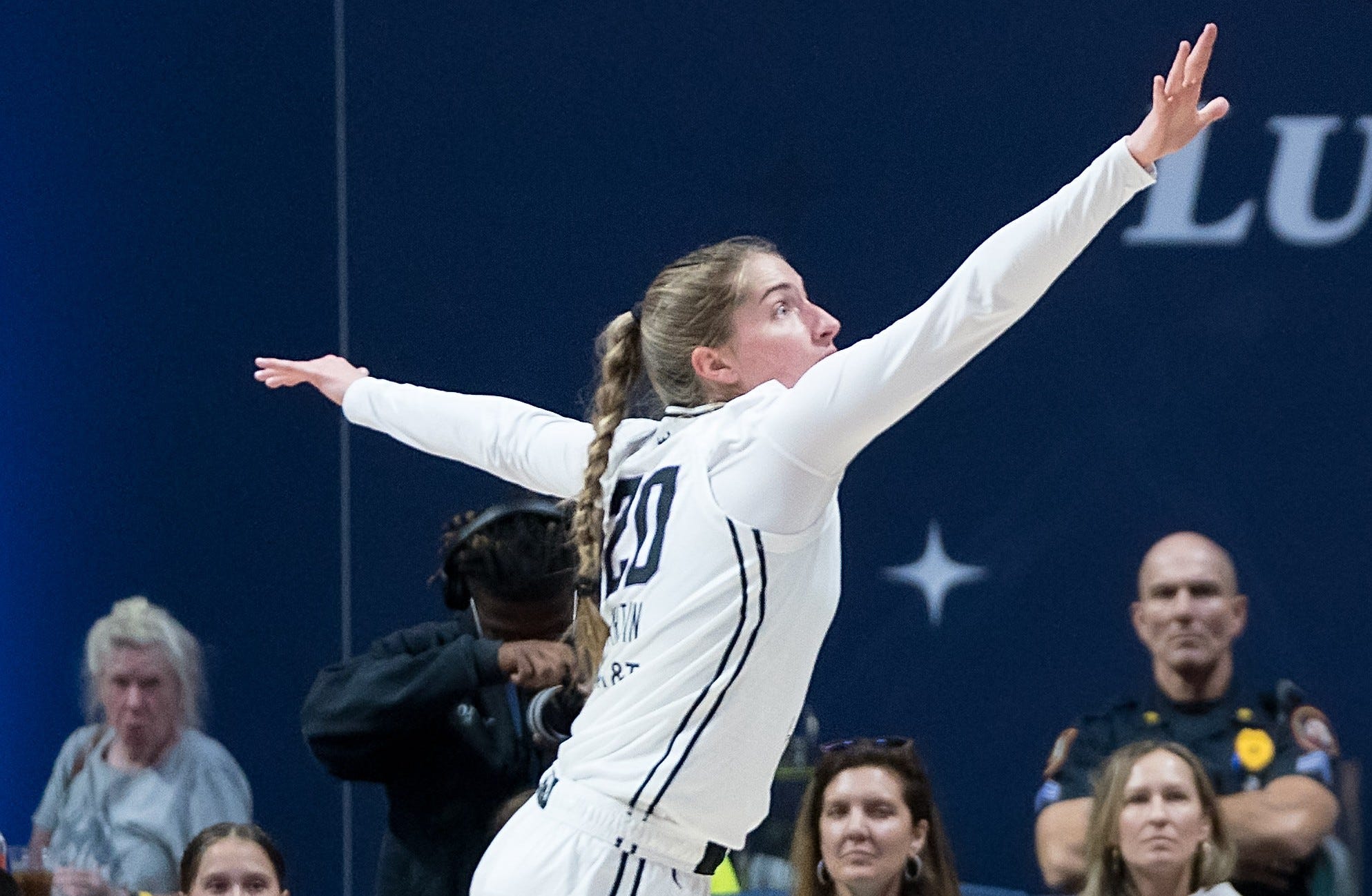 Golden State Valkyries guard Kate Martin. Photo credit: Chris Poss
It’s been a long and winding road this year, but the 2026 WNBA season is almost upon us. After a breakneck signing period where teams rebuilt their rosters in days, training camps opened on Sunday and players are now competing for spots. So with that new Collective Bargaining Agreement in force – although not actually in anyone’s hands – what’s different this year?
Firstly, the numbers we’re all reporting are a lot higher. The base minimum salary this season is $270,000, which is more than anyone in the league made last year. But for relevance to this article that just means the numbers take slightly longer to type into a calculator. Teams are now required to carry 12 players (not free to choose between 11 or 12). There are also two ‘developmental player’ spots available to each team – which I explained a little here and here – but those players don’t count on the 12-player roster or against the salary cap (until and unless they get elevated to the main roster, even if they play in a limited number of games). Teams will also be using training camp to look at players for those development spots, but if they’re on regular contracts (which includes ‘training camp contracts’), they’ll need to be waived and clear waivers before being re-signed to developmental deals. The team can’t just move them directly to developmental spots. We’re still working with a system that is much, much closer to a ‘hard’ salary cap than most other US sports leagues, so the teams have to fit their final 12 main roster players for opening day under the $7,000,000 cap.
One important change for this year when it comes to building those rosters is that for cap purposes, there are only two (very similar) minimum salary values. There’s $270,000 for players with zero ‘Years of Service’ in the WNBA, and $277,500 for everyone else. That’s because they introduced several different tiers of minimum salary under the new CBA based on experience in the league, but however much actual cash a veteran might be receiving, the cap hit drops to that $277,500 figure. It should stop older players from being pushed out of the league because teams only have enough cap space left for cheaper, younger ones.
One other tweak which could affect who teams keep for opening day is that rookie-scale contracts now have much greater potential to become ‘protected’, i.e. guaranteed, salary. Lottery pick salaries are protected for their first season immediately, and salary for the rest of first-rounders becomes protected for their first season if they make the team out of camp. The same will apply for all those first-rounders, including lottery picks, if they make the roster in their second season – the salary becomes protected once they make the team past camp. For second- and third-round picks their salaries remain unprotected in their rookie season, but if they’re still on their rookie-scale contract and make the team out of camp in their second season, the contract becomes protected for that year. For all rookie-scale deals, the third year becomes protected if the team exercises its fourth-year option on their deal. So all of that means a lot more money could become guaranteed on opening day if teams keep players who are on rookie-scale contracts.
But let’s move on from the minutia of the rules and take a close look at who might make the teams on opening day, and where the battles are for those all-important final spots. Players in bold are those I think are pretty much locks to make the roster, italics indicate protected salary (which doesn’t always mean the player is a lock, but usually does). Players in brackets are those already signed to developmental contracts, so are therefore unlikely to be on the main roster on opening day.
PG: Jordin Canada/Te-Hina Paopao/Maite Cazorla/Indya Nivar
SG: Allisha Gray/Isobel Borlase/Holly Winterburn/Paige Robinson
SF: Rhyne Howard/Taylor Thierry/Laila Phelia/Bella Fontleroy
PF: Angel Reese/Naz Hillmon/Sika Koné/Sacha Washington
C: Brionna Jones/Madina Okot/Stephanie Jones
There are no cap issues here in choosing the roster (which you’re going to notice is something of a theme league-wide). The Dream got expensive in the offseason, but moving on from Brittney Griner, acquiring Angel Reese still on her rookie-scale contract, and getting some minor discounts from their returning stars enabled them to keep their core largely intact. They can keep whichever 12 they want, as long as it includes the guaranteed players, none of whom were going anywhere anyway.
There are definitely spots to be fought for here on the end of the roster. I have eight in bold above, including the obvious group with guaranteed money, Reese, last year’s useful rookie Paopao and this year’s first-round pick Okot. I would expect 2024 draft pick Borlase, who’s already made an impact with the Australian national team, and Spain regular Cazorla to stick as well, but you never know exactly how things are going to work out with international players who’ve never been in the US before (or who’ve been gone for a long time). Winterburn is another talented import with a good shot (full disclosure – she’s a Brit, so I’m biased and very much hoping she finds a place in the league). They stuck with Thierry all through last season when she wasn’t contributing much on the floor, so they’ll probably be hoping she shows enough improvement to survive.
The battle looks pretty open for those last couple of spots. They’ll likely keep a fifth post, with maybe Koné the favourite given what we’ve seen from her in her many WNBA stops, but it’s far from a certainty. As with all teams they’ll also be thinking about their development spots and who might be best stashed there rather than on the main roster (although players on standard contracts would have to be waived and then re-signed to development contracts in order to be moved to that position). Cazorla might feel she’s a bit beyond that kind of position at this stage in her career, but any of the others would probably be grateful for the chance to continue making their case for a more permanent role.
PG: Skylar Diggins/Courtney Vandersloot/Hailey Van Lith/Tonie Morgan
SG: DiJonai Carrington/Jacy Sheldon/Rachel Banham/Sydney Taylor
SF: Rickea Jackson/Gabriela Jaquez/Jordan Hobbs/Aicha Coulibaly
PF: Azurá Stevens/Maddy Westbeld/Latasha Lattimore/Megan Nestor
C: Kamilla Cardoso/Elizabeth Williams/Sidney Cooks
After the speedy and surprising rebuild the Sky carried out during the signing period, most of this roster looks locked. I have 10 in bold above, and that might be low. That group definitely look like certainties, with the combination of highly-drafted young talents like Jackson, Jaquez and Cardoso and veterans with guaranteed money like Diggins, Stevens and Carrington going nowhere. Both Carrington and Vandersloot are still recovering from injuries, but the team knew that when they were signed so it shouldn’t affect their spots on the roster.
The Sky made trades with both Portland and Toronto before the expansion draft, giving up minor draft capital in order to keep the Fire and Tempo from selecting any of their players. That suggested they still really valued players like Westbeld and Van Lith and didn’t want to lose them – which would indicate they have strong chances to hold on to those last couple of spots. However, the Sky took Lattimore at No. 21 in this year’s draft, the kind of range where you’re hoping the player at least puts up a fight in camp, so she might have a shot to beat one of them out (or at least earn a development spot). The rest of the camp invites will all be hoping to make an impression, but are probably longshots to actually make the opening day 12.
PG: Leïla Lacan/Shey Peddy/Charlisse Leger-Walker/Harmoni Turner
SG: Saniya Rivers/Mamignan Touré/Diamond Miller/Madison Hayes
SF: Kennedy Burke/Gianna Kneepkens/Nell Angloma/Taylor Bigby
PF: Aaliyah Edwards/Aneesah Morrow
C: Brittney Griner/Olivia Nelson-Ododa/Raegan Beers
While they added Griner and Burke to help teach the kids and win a few games in their final season in Connecticut, the Sun remain a young, rebuilding franchise. So first-round picks like Kneepkens and Angloma will almost certainly be retained and given a chance to be part of their future. The Sun also have lots of extra cap space, so there should be no real fear of that new rule that protects the first-year salary of first-round picks once they make the roster. If we get halfway through the season and they want to move on, they have the room to simply pay out that salary and sign someone else.
Diamond Miller has a guaranteed contract by virtue of being on the fourth year of her rookie-scale deal (the team option fourth year becomes protected if exercised), but that cap room again increases their options. The Sun could afford to pay out her contract in full and keep 12 other players. Given how Miller has performed since her injuries a couple of years ago, both in the WNBA and overseas, it wouldn’t be a big surprise to see that scenario play out.
The final few spots are pretty open (and the Sun may well cycle through several options over the course of the season). Leger-Walker was taken early in this year’s second-round, so must have a good shot to stick. Peddy could play the veteran backcourt role they got from Lindsay Allen and Bria Hartley last year. Touré is another athletic French wing (although she’s 31, so doesn’t fit the same youth movement as much of this roster). Burke is just as comfortable sliding to the 4 as she is at the 3, so Beers doesn’t necessarily need to stick as the fifth big (most teams will probably keep 5 ‘interior’ players and 7 ‘perimeter’, although there’s obviously often some crossover).
PG: Paige Bueckers/Odyssey Sims/Lindsay Allen/Costanza Verona
SG: Arike Ogunbowale/Azzi Fudd/JJ Quinerly/Grace Berger/Shyanne Sellers
SF: Maddy Siegrist/Aziaha James/Alysha Clark
PF: Alanna Smith/Awak Kuier/Amy Okonkwo/Zee Spearman/Grace Sullivan
C: Jessica Shepard/Li Yueru/Kyla Oldacre/Dulcy Fankam Mendjiadeu/Rayah Marshall
I’ve been admittedly conservative with the names I have in bold for the Wings, but they’re bringing a lot of recognisable names to camp. So beyond the obvious core and those they gave guaranteed money, it’s hard to say who’s definitively in.
They gave Awak Kuier a guaranteed $525,000 deal to come back to the WNBA after two seasons away, so especially given they’re relatively tight to the salary cap she won’t be going anywhere. They’ll also probably want to retain Li Yueru, but they have brought in a lot of other centers to fight it out in camp. Okonkwo also had a nice run of games at the end of last season and will be hoping that translates into a spot for 2026.
On the perimeter they have a group of young players in James, Quinerly and Berger who’ve shown flashes of talent, a veteran wing in Clark, and a battle at point guard between Sims, Allen and Italian import Verona. Considering there are only five spots left beyond my bolded names above, some people who many would expect to make a WNBA roster are going to get cut here.
PG: Veronica Burton/Kaitlyn Chen
SG: Tiffany Hayes/Cecilia Zandalasini/Kaila Charles/Kate Martin/Miela Sowah/Ashlon Jackson/Bailey Maupin
SF: Gabby Williams/Janelle Salaün/Justė Jocytė/Caroline Ducharme/Ndjakalenga Mwenentanda
PF: Kayla Thornton/Marta Suárez/Cate Reese
C: Iliana Rupert/Kiah Stokes/Laeticia Amihere/Mariella Fasoula
Even for a team and coach that liked to play small lineups and shoot a lot of threes last season, that’s a hell of a lot of wings. And a lot of the ones lower down the list look like they’re arriving with very little chance of making the roster. I have 10 in bold above, and considering they made the strange trade that jumped all the way down from No. 8 to No. 16 in this year’s draft for only the additional return of a 2028 second-rounder, they’ll probably keep Marta Suárez as well to save a little face on that deal. Laeticia Amihere has always been an impressive athlete and showed signs of developing her basketball skills last season, and Mariella Fasoula is a solid Greek center with a strong European track record behind her, but unless one of them beats out Suárez it’s hard to see where their roster spot is coming from. They gave Kiah Stokes guaranteed money, or I’d absolutely have her down here in a battle to make the team.
There only appears to be one spot for all those bigs because you’d think they’d want to keep a backup for Burton at point guard, which would swallow the 12th spot on the roster. Someone like Gabby Williams could act as Burton’s backup, but keeping a more traditional lead guard would make more sense. Kaitlyn Chen had some decent moments last year and appears the current favourite, because none of the other camp invites are really true point guards. Maybe they’re expecting No. 23 pick Ashlon Jackson from Duke to compete with her for that spot, or even still considering outside additions.
Everyone else in this camp – even fan-favourite Kate Martin – is really going to have to do something unexpected to make the final 12.
That’s it for Part One. Come back on Tuesday and Wednesday this week for breakdowns of every remaining team in the league.
Thanks for reading the Her Hoop Stats Newsletter. If you like our work, be sure to check out our stats site, our podcast, and our social media accounts on Twitter, YouTube, Facebook, and Instagram.