
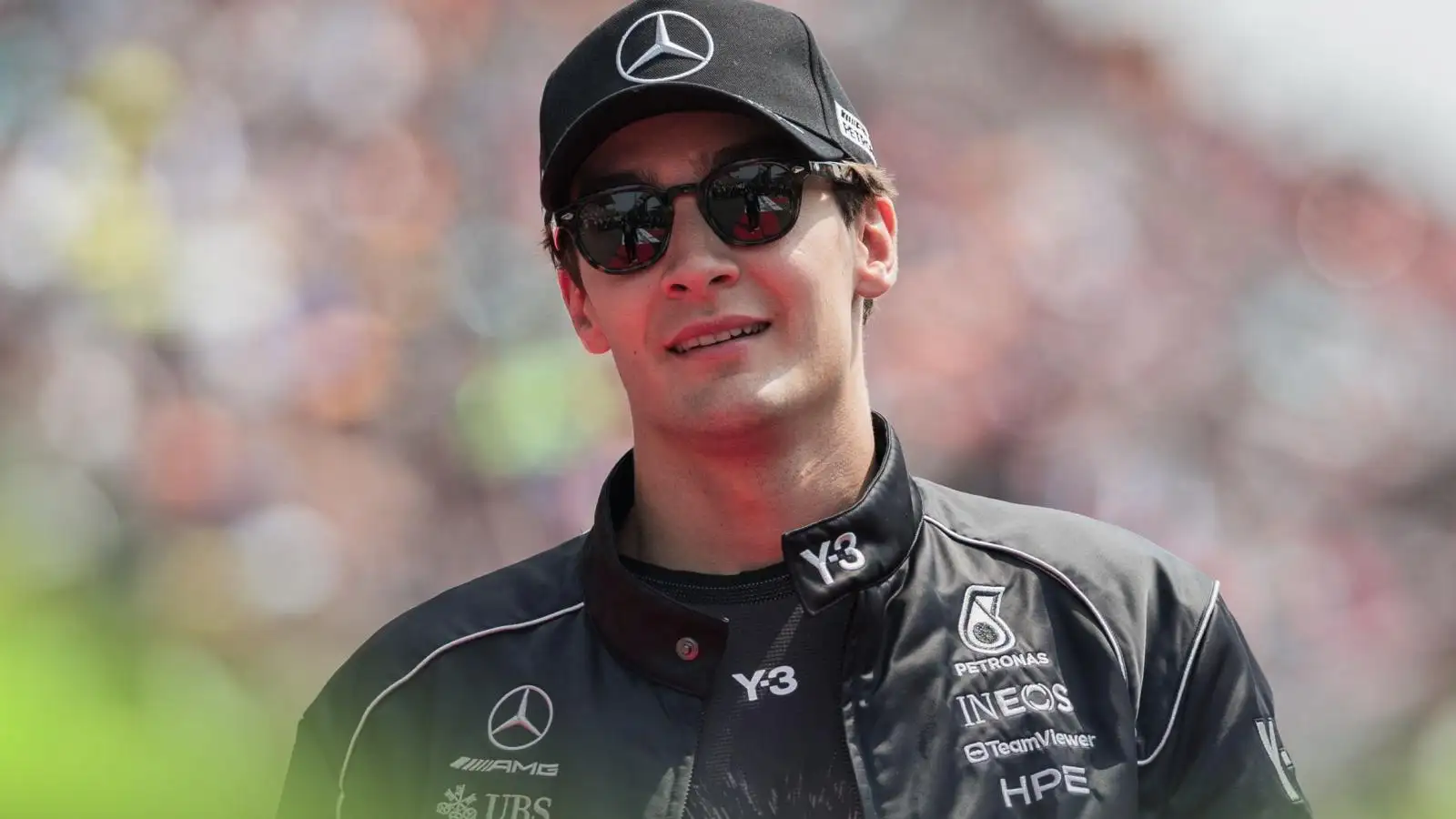
George Russell has said there is “a lot of low-hanging fruit” to be taken up in tweaking the F1 2026 rules, with a change to super clipping recharge limits being a “no-brainer” in his eyes.
Drivers can currently harvest energy up to 250kW under super clipping – siphoning off energy from the internal combustion engine for battery power when the car runs at top speed – which is 100kW short of the battery’s maximum output.
George Russell: Super clipping change a ‘no-brainer’ in any F1 2026 rule tweaks
Want more PlanetF1.com coverage? Add us as a preferred source on Google to your favourites list for news you can trust.
Team representatives are due to meet with the FIA, FOM and power unit manufacturers on Monday for a third set of talks in April regarding the F1 2026 regulations.
Earlier meetings are understood to have been positive, with a recent driver meeting with the FIA having garnered opinion before a vote takes place between the sport’s key stakeholders on Monday.
PlanetF1.com understands a reduction in overall harvestable energy per lap has been mooted as a solution, to reduce lift-and-coast requirements to generate energy.
Alternatively, increasing super clipping limits to 350kW has also been discussed, to enable drivers to faster recharge their batteries while at full throttle and maximum battery output, which in turn would reduce the bleeding of top speed towards the ends of straights.
More on F1 teams and recent FIA talks
F1 team valuations surge as Ferrari tops billion-dollar boom
FIA reveals ‘difficult topics’ discussed in ‘constructive’ meeting over F1 2026 rules
While wholesale regulation changes are not expected as a result of Monday’s vote, Russell explained the positivity in which the drivers and FIA have engaged over the subject.
“There will be a compromise somewhere,” he told PlanetF1.com and other outlets, “because right now, the cars are set up to produce the fastest lap times possible, which is leading to this lift-and-coast driving style and a bit of energy management here and there, but there’s a lot of low hanging fruit.
“For example, the minus 350 kilowatts super clip is a no brainer, and that already, in itself, is going to avoid a lot of lift-and-coast.
“There are other small parts of the regulation that say you can only derate the engine at a certain rate, so on a very short straight, there isn’t enough time to go from 350 kilowatts to a super clip because the straight is too short.
“Some small changes around these regulations will have a major improvement for the overall driving experience.
“So as I said, this break’s offered a good opportunity for everyone to go around that loop.
“The FIA have been in a lot of communication with a handful of drivers, and that’s been sort of reflective, and at least from the FIA technical standpoint, it’s probably the closest relationship we’ve had with them in numerous years. So, that’s very positive to see.”
Additional reporting by Mat Coch
Want to be the first to know exclusive information from the F1 paddock? Join our broadcast channel on WhatsApp to get the scoop on the latest developments from our team of accredited journalists.
You can also subscribe to the PlanetF1 YouTube channel for exclusive features, hear from our paddock journalists with stories from the heart of Formula 1 and much more!
Read next: Why IndyCar star has rejected Formula 1 dream in ‘Mario Kart’ 2026 rules criticism