
To prevent a repeat of 2014, the FIA has included a safety net in the current Formula 1 power unit regulations: the Additional Design and Upgrade Opportunities, or ADUO.
The initial idea was to measure the pure output of the internal combustion engine every six races (1–6, 7–12, 13–18, and 19–24). Manufacturers that are between 2% and 4% down on the best ICE on the grid are granted one additional upgrade opportunity. Those with a deficit of more than 4% can expect two updates.
It is a topic of discussion between the FIA, teams and engine manufacturers during the April break, both due to the timing – with the two Middle Eastern races dropped for now – and, naturally, the question of which parties would qualify for these advantages.
“Any decision may have a big impact on the championship”
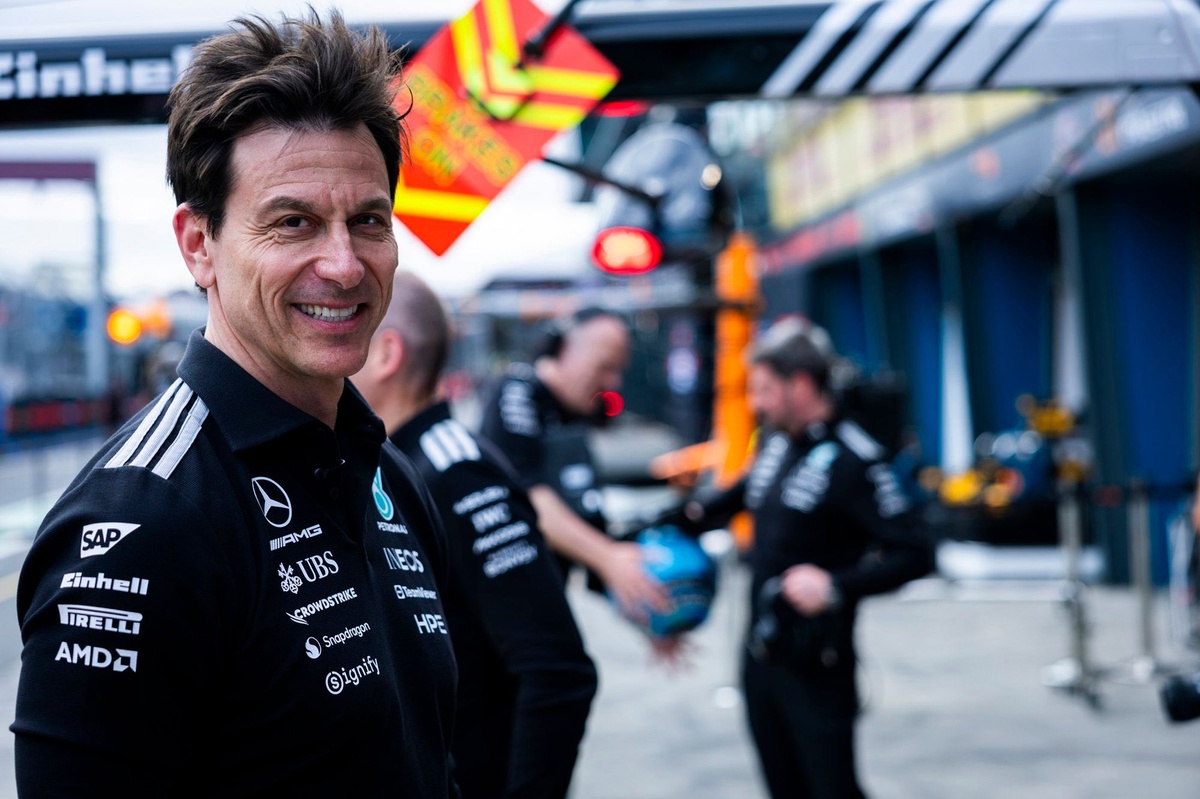
Mercedes team principal Wolff has already voiced his opinion on the latter issue, stressing that full transparency and precision from the FIA are essential.
“The principle of the ADUO was to allow teams that were on the back foot, in terms of the power unit, to catch up, but not to leapfrog,” Wolff told media including Motorsport.com.
“And it needs to be very clear that whatever decisions are being made, whichever team is granted an ADUO, that any such decision may have a big impact on the performance picture and on the championship, if not done with absolute precision, clarity, and transparency.
“It needs to be clear that gamesmanship hasn’t got any place here. It needs to be with the right spirit here that the FIA acts upon an ADUO.”
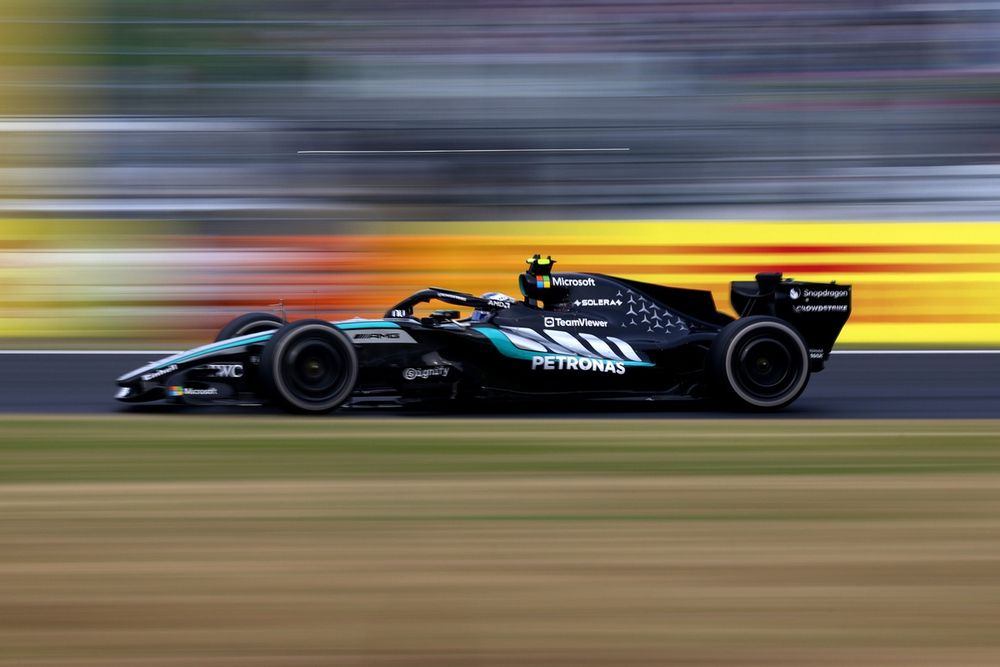
Andrea Kimi Antonelli, Mercedes
Photo by: Mark Thompson / Getty Images
According to Wolff, the primary purpose of ADUO should be to help manufacturers in difficulty, and in his view only Honda currently fits that description.
“Of course, the teams will have their own performance pictures. And as it seems for me, there’s one engine manufacturer that has a problem and we need to help. And then all the others are pretty much in the same ballpark.”
With that, Wolff indicates that ADUO is essentially meant as a mechanism to help those who are behind, not as a tool for manufacturers – or as a consequence of that, teams – that are already closely matched to gain positions purely through additional development opportunities.
“I would be very surprised to see, and disappointed, if ADUO decisions would come up with any interferences into the competitive pecking order as it stands at the moment.”
Does Ferrari qualify for ADUO or not?
Attention naturally turns to Ferrari, as that factory team – together with McLaren in Japan – has so far emerged as the closest challenger to Mercedes.
Team principal Frederic Vasseur has made no secret of the fact that ADUO could be a way for Ferrari to make further gains on the engine side, as he put it in Shanghai: “The addition of the ADUO will be an opportunity for us to close the gap.”
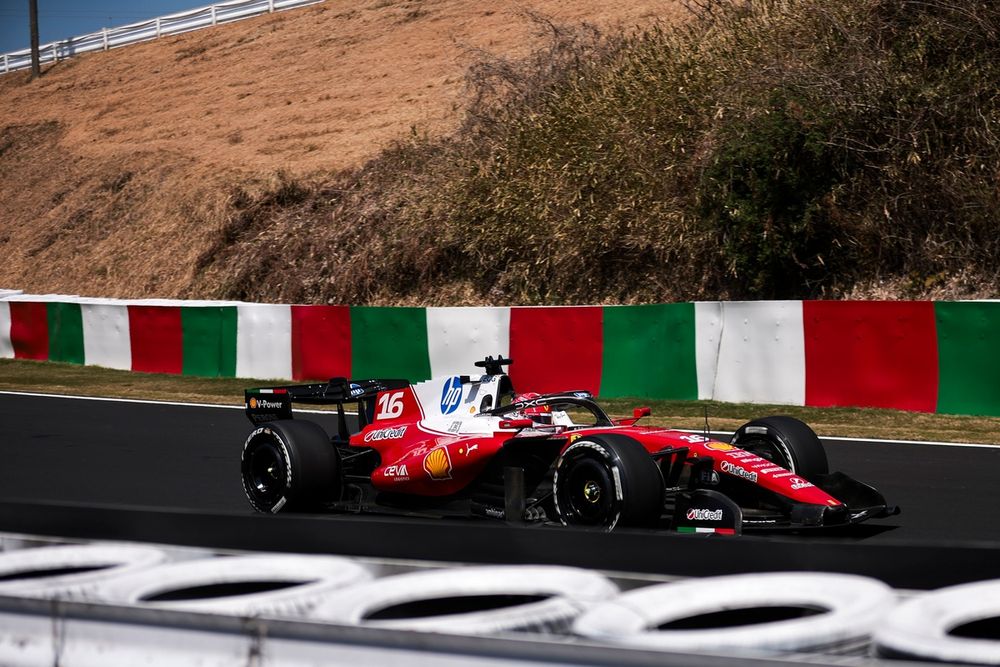
Charles Leclerc, Ferrari
Photo by: Ferrari
However, the question of whether such a power deficit should justify ADUO is complicated by several factors. Rivals argue that Ferrari has made certain strategic choices itself, including the use of a smaller turbo. While that may offer advantages at the start, it could impact the power output, and does that justify ADUO or not?
Wolff says he is not necessarily worried about that specific question, but mainly emphasises that ADUO should be used as it was originally intended.
“I wouldn’t call it worried. I think we are all monitoring how decisions are being made. We have precise data from our own analytics of where we see engine performance of our competitors and ourselves.
“In that respect, I think the FIA is looking at the same data and I would very much hope that they continue to see themselves as protecting the integrity of the sport. Because you don’t want to allow an ADUO to a team that suddenly leapfrogs someone. The ADUO [system] was always meant as a catch-up mechanism and not as a leapfrog mechanism.”
Read Also:
We want to hear from you!
Let us know what you would like to see from us in the future.
– The Autosport.com Team