

The seven-member council for a rural municipality near Regina — only three of whom were elected to their positions — has approved a development agreement for Bell Canada’s planned 300-megawatt AI data centre.
With the vote passing Monday evening, construction on the facility — expected to be one of the largest artificial intelligence data centres in Canada — could begin as early as this spring.
The decision comes after weeks of criticism around transparency and the speed of the project. Critics, including a Regina city councillor, raised concerns about how quickly the proposal was moving forward.
Roughly 100 protestors gathered outside the Rural Municipality of Sherwood office during the meeting, many voicing their opposition to the data centre.
The telecom giant has said it plans to begin construction this spring, after formally announcing its partnership with the Saskatchewan government only last month.
Public information about the planned AI data centre has largely come through documents filed to the RM. Monday’s agenda documents also shed some light on the project ahead of the vote.
Seven families own property on the outskirts of Regina near the planned 64.5-hectare site of the data centre. They were scheduled to speak as delegates at Monday’s meeting.
All submitted letters say they wished to speak about “outstanding questions” and matters raised in prior submissions to the RM of Sherwood since January.
WATCH | RM set to vote on AI data centre near Regina:
RM set to vote on AI data centre near Regina
The Rural Municipality of Sherwood’s council is set to vote on a massive artificial intelligence data centre project near Regina on Monday, in its first meeting since the majority of council members were replaced.
The letters list six topic categories for those concerns: noise mitigation, lighting, stormwater and drainage, aquifer and groundwater, roads and environmental and health impact assessments.
Specifically, the landowners asked whether independent environmental and human health impact assessments were completed or if they’re required as conditions of the development agreement.
Also included are 41 “formal questions for the public record” to be answered in a yes or no format by council about what’s “present as a binding, enforceable clause in the development agreement” before the vote.
There were questions around penalties for non-compliance, whether technical assessments outlined in an executive summary for the project were done by qualified professionals registered in Saskatchewan and whether specific tests or surveys have been carried out.
The landowners are asking if base-line water tests have been done by a hydrogeologist for all residential wells within the data centre’s radius.
“Multiple adjacent landowners rely on local wells,” one letter to council says, noting that without such testing, there’s no way to establish cause and responsibility or bring a legal claim if water quality degrades after construction begins.
The landowners are asking for independent testing to be done before construction by a hydrogeologist chosen by the RM of Sherwood, and for test results to be filed with the RM.
“We are not opposing the development. We are asking that the concerns of neighbouring ratepayers be resolved through enforceable conditions before the agreement is executed,” the landowners wrote.
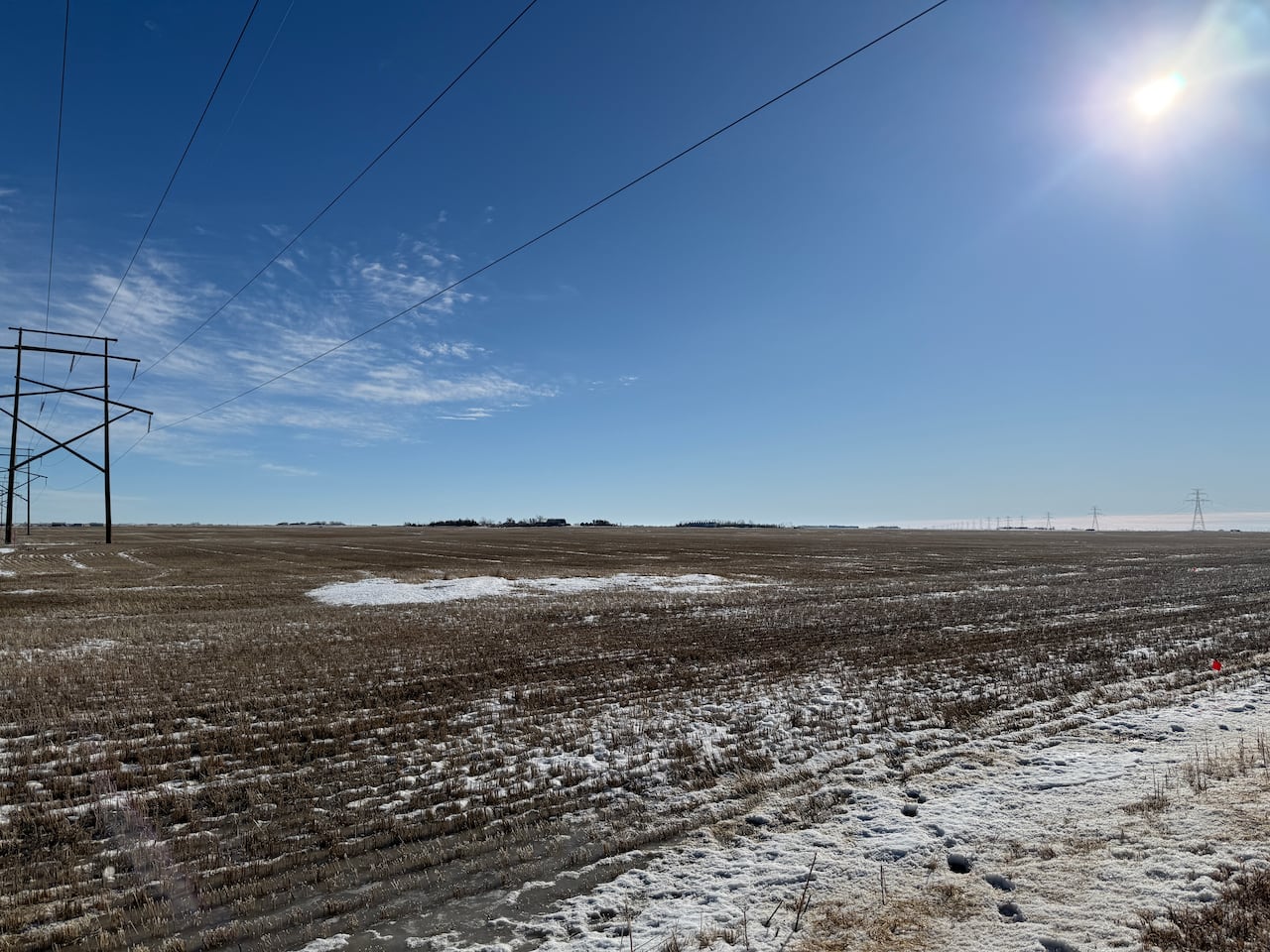 This empty field south of Regina is the location of a Bell Canada AI data centre set for construction this spring. (Alexander Quon/CBC)
A 17-page draft development agreement is included in the agenda package, but it does not contain all of the information requested by the affected landowners.
In it, Bell Canada says no groundwater will be used for “onsite activities” and that potable water will “not be utilized for processing or cooling purposes.” Instead, according to the executive summary, the data centre will have “air-cooled, closed-loop chilling technology.”
The centre will be connected to the City of Regina’s water system, but that will service regular building water use and ensure “industrial fire flow requirements” are met, the document says.
In the draft development agreement, Bell pledges to manage stormwater onsite and says drainage work will not redirect flow onto adjacent lands “without written approval from the affected landowners and the Water Security Agency approvals, where applicable.”
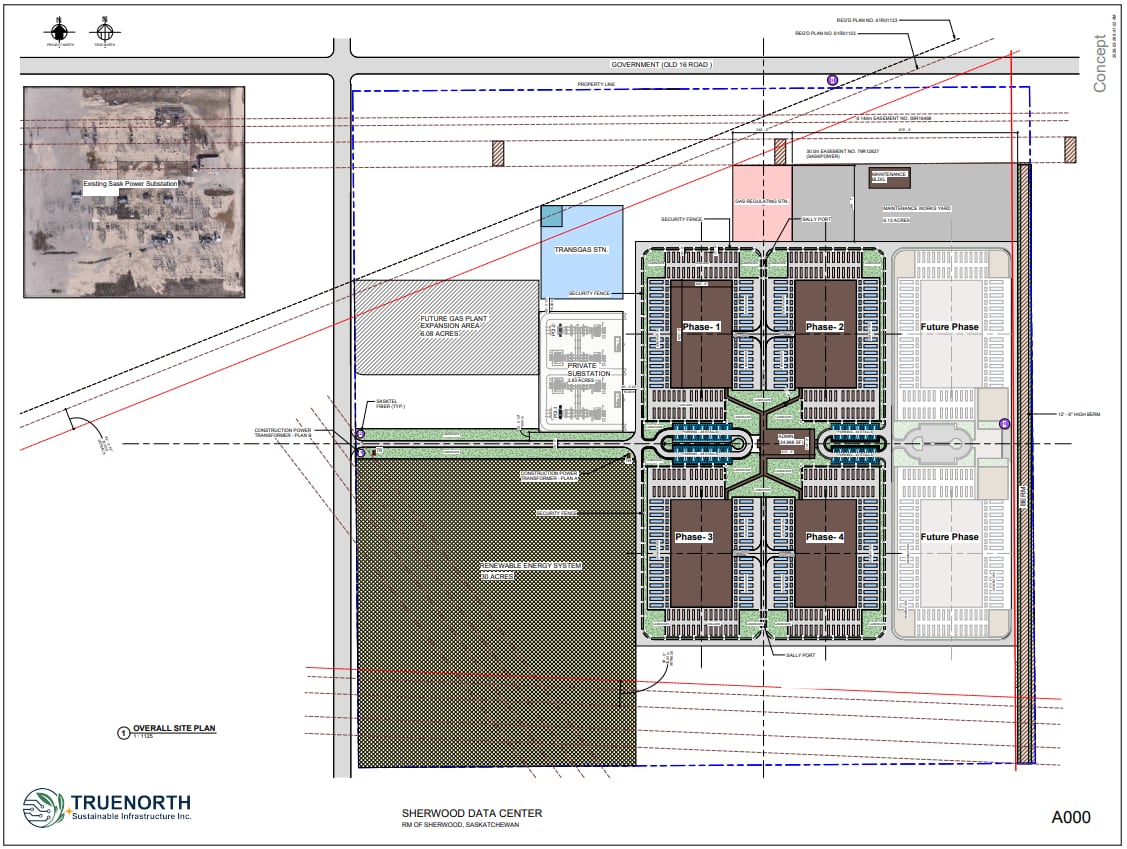 The RM of Sherwood posted this conceptual site plan for the AI data centre on its website. (RM of Sherwood)
Under that agreement, before any drilling, excavation or work that would disturb the ground, Bell Canada “shall, at its sole cost, identify all active domestic, agricultural and commercial water wells located within 1.6 km of the Development Lands,” and hire a licensed professional to do baseline pre-development water quality testing for the wells.
There is no stipulation that the licensed professional must be independent.
If construction of the data centre negatively affects a tested well, Bell Canada is responsible for investigation and mitigation, including restoring the well’s water condition or providing an alternative water supply to the satisfaction of the affected landowner, according to the draft agreement.
Concerns about democratic process
The majority of the RM’s council members were appointed by the province on an interim basis only 10 days ago. Monday was their first regular council meeting.
Four of the seven current councillors do not live in the RM and were not elected by the residents they will represent.
Shannon Zachidniak, a city councillor for Regina’s Ward 8, said it would have been more appropriate to hold the vote after the RM election scheduled for the fall. The current council should table the development application, she said at a protest against the AI data centre in Regina on Saturday.
“I think this decision should be made by democratically elected councillors.”
WATCH | Regina city councillor says RM of Sherwood is moving too fast on AI data centre: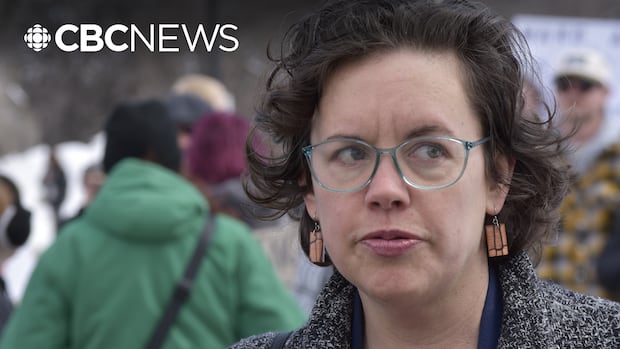
Regina city councillor says RM of Sherwood is moving too fast on AI data centre
Regina city councillor Shanon Zachidniak is calling on the rural municipality of Sherwood to slow down the approval process of a Bell Canada AI data centre. She was unable to get on the list of presenters who will speak at a council meeting scheduled for April 20, 2026.
Building an AI data centre is a new realm for everyone, she said.
“I think it is important to slow this down and make sure it’s done properly.”
Zachidniak said she would attend the Monday council meeting. She tried to register to be a delegation speaker but found the submission process inaccessible and opaque, she said.
“I missed the deadline, which I couldn’t see posted anywhere.”
Outstanding questions and concerns include “a lack of clarity” on why four previous RM council members abruptly resigned in March, halting regular council business as quorum was lost.
“If there’s truly nothing to hide, then there’s nothing to lose by slowing things down,” Zachidniak said.
None of the councillors who resigned have spoken publicly about why they did so, but their resignation letters are included in the April 20 agenda documents.
Former Reeve Susan Oakley-Paul wrote that she was resigning “due to medical issues.” Former deputy councillor Trent Reiger did not list a reason for his resignation. Former councillor Grant Paul wrote that “due to the direction the RM council is going I cannot have my name affiliated with the RM anymore.”
John Wilke, who served as councillor for division 3 and was first elected in 1991, wrote in his resignation letter that due to problems with his RM email, he could not access materials for a special council meeting held on March 16 ahead of time.
Wilke declined to speak in-depth about his resignation, but told CBC News that due to the email issues he did not feel prepared for the closed-door special council meeting on March 16.
He said he was uncomfortable with what happened during that meeting and the issues that were dealt with. It was that closed-door meeting that motivated him to resign, he said.
Province says appointees have experience
When questioned by reporters on April 13 about why none of the newly appointed councillors are from the RM, Government Relations Minister Eric Schmalz said the province chose people with municipal experience so there wouldn’t be a long onboarding process.
“We want to make sure that we’re appointing people that are skilled municipal leaders that have had a tenured service in other municipalities,” Schmalz said.
The four appointees are: Ray Orb as reeve, Mitch Huber, Donna Strudwick and Judy Harwood.
Schmalz said council will take input from the community and there will be “plenty of meetings coming up where community members can voice their opinions on any number of subjects, including the new data centre.”