
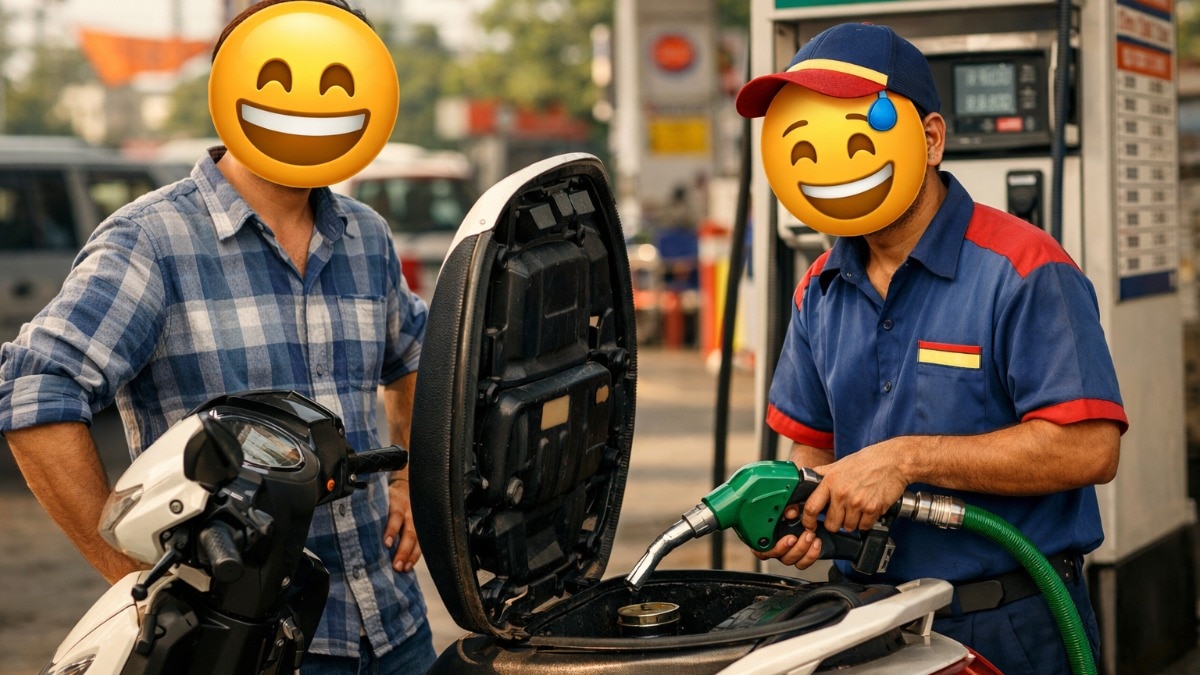
Over 50 days, as the Middle East turned into a backdrop for Madmax Fury, a miracle has been unfolding at petrol pumps across India. Petrol and diesel are flowing into tanks of scooters and cars at the same price as four years ago. This is in sharp contrast to the over 120 countries that have increased fuel prices by up to 40%, according to Global Petrol Prices [dot] com, a data aggregator and research platform that tracks energy prices worldwide.
Giving company to cool Indians might be the penguins of Madagascar, which is one of the 20-odd countries to not have hiked petrol and diesel prices. It is indeed a miracle because no major economy in the world has frozen fuel rates like India has, barring premium-grade fuels. Behind the miracle is a magic, and we will discuss that too.
The US, which has considerable petroleum reserves and refining capacity, has raised gasoline (petrol) prices by up to 40% since the beginning of the war on Iran on February 28. The national average for regular gasoline stood at around $2.94 per gallon in February in the US. By early April, it climbed to around $4.11–$4.14 per gallon.
Closer home, Pakistan has hiked petrol prices by 42.7% to PKR 458.40 per litre, according to Reuters. Pakistani petroleum minister Ali Pervaiz Malik said the price rise was because of the global volatility in supplies and pricing, and the government was forced to pass on the burden to consumers. Similar hikes in fuel prices have taken place in Nepal and Sri Lanka too. Bangladesh’s case is interesting, and we will discuss that in a bit.
Fuel drives not just industries, its rates have a direct bearing on inflation (price rise). The impact on the economy is two-pronged. While high crude prices slow down manufacturing, inflationary pressures bind the government’s hands because it has to resort to fiscal prudence, keeping higher allocations for fuel.
A sharp rise in crude prices is disastrous for a fast-growing economy like India, which imports around 90% of its oil requirements.
Like India, China too, is a growth engine of the world and imports oil. It has gone ahead and increased fuel prices, while cushioning the industry. By late March, fuel prices in China went up by around 20%. Beijing has, however, intervened to soften the impact by regulating the scheduled pricing mechanism.
While India hasn’t raised prices at all, China has gone in for moderate increases, taking care of oil refiners, the industry and its citizens. It is impossible that a major economy like India can keep on absorbing the price shocks.
State-owned fuel retailers are incurring losses of Rs 18 on a litre of petrol and Rs 35 on diesel, according to a Macquarie Group report quoted by several news outlets.
Pump rates in India were linked to global crude prices and the last hike was in May 2022.
Retail prices in Delhi have remained frozen at Rs 94.77 per litre for petrol and Rs 87.67 for diesel. Some private retailers, like Nayara Energy, have passed on modest increases (Rs 5 per litre) in March. While government-linked oil marketing companies (OMCs), which dominate the market, increased rates of premium fuel marginally, they kept the price of normal fuels unchanged.
AVERAGE PETROL PRICES ($ PER LITRE)
CountryJanuaryFebruaryMarchApril (mid-month)% Change (Jan–Apr)US$0.83$0.86$1.08$1.06+27.7%UK$1.85$1.90$1.93$2.00+8.1%China$1.25$1.28$1.34$1.37+9.6%Brazil$1.20$1.23$1.25$1.29+7.5%South Africa$1.15$1.17$1.18$1.20+4.3%Pakistan$1.30$1.40$1.51$1.65+26.9%Bangladesh$0.98$0.98$1.03$1.10+12.2%India$1.04$1.04$1.04$1.040%
Source: GlobalPetrolPrices(dot)com
The government has mandated blending of ethanol with petrol, which it says will reduce import dependency. The government has also cut the excise duty on petrol and diesel to reduce the burden on OMCs. However, there is chatter that the state-owned OMCs are seeking a hike in prices, but the political executive thinks otherwise. And the miracle at petrol pumps continues.
Behind the miracle in India might be a magic. The magic is called elections.
“April 28th is Tankful Day,” wrote satirist and columnist Kamlesh Singh, referring to the last day of voting in the Assembly election in West Bengal.
Other than Bengal, elections are being held in Assam, Kerala, Puducherry and Tamil Nadu. The results will be out on May 4. The BJP-led Centre might have tried to keep petrol prices steady to send across a message that “all is well”.
This is where the story of Bangladesh fits in. Bangladesh, which got a new government after an election in February, tried to stave off a fuel price hike for weeks. High fuel prices are seen as an unpopular step. But Dhaka finally gave in to the realities and hiked prices of petrol by Taka 19 to Taka 135 a litre, and diesel by Taka 15 to Taka 115 on Saturday (April 18).
India too, has helped the government of PM Tarique Rahman by supplying diesel. But the shortage has been visible in long queues at petrol pumps across Bangladesh. A Dhaka resident told me last week that people had to wait for 6-7 hours in queues for fuel.
At March-end, Indian government’s information body, the PIB, fact-checked several reports and said there was no cause for panic as the country’s fuel supply remained “stable and secure”. “India has a total reserve capacity of 74 days, with the current stock cover at around 60 days,” PIB Fact Check posted on X on March 27.
While the government has to ensure that fuel is available and there isn’t any panic, like the one seen in the case of LPG cylinders, prices are bound to go up. The election link to the miracle at India’s pumps has been called out.
“It’s just a matter of time, after the elections, prices of petrol, diesel, and LPG will be hiked too. The Modi government has neither direction nor strategy — just empty rhetoric. The question isn’t what the government is saying — it’s what’s left on your plate,” Rahul Gandhi, the Leader of the Opposition in the Lok Sabha, posted on X in March.
Even parties in poll-bound Bengal have used the issue for politics.
Trinamool Congress General Secretary Abhishek Banerjee, during an election rally in West Bengal, dared PM Modi and his ministers to promise that LPG, petrol, and diesel prices won’t be hiked in the next five years.
Then there are pre-emptive strikes too. Politics will most likely be played when the government goes in for a price hike.
“When global crude oil prices fell as they did on seven different occasions in the past 12 years, consumer prices in India were not reduced. Today’s announcement was because of the Assembly elections. Wait till April 30th,” Congress leader Jairam Ramesh posted on X.
On Monday, Brent crude oil price rose by 6.10% to $95.89 a barrel after the US seized an Iran-flagged ship near the Strait of Hormuz and Iran carried out drone strikes on American military vessels.
Prime Minister Narendra Modi has warned that hard times are round the corner and India will have to put up a united stand like in the Covid times. The blockade of the Strait of Hormuz and the oil infrastructure in flames in the Gulf won’t ease the situation in the short term. The International Energy Agency has said this is the worst oil shock to the world.
But are Indians even feeling any shock, barring the LPG shortage and the diversion of gas from factories? Indians seem to be living like the proverbial ostrich that digs its head in the sand. Only that, this time, the sand is of the Middle East and energy infrastructure is burning all around it. Petrol and diesel prices will go up. One can only hope that it is gradual, and there isn’t a shock after weeks of miracle.
– Ends
Published By:
Sushim Mukul
Published On:
Apr 20, 2026 12:56 IST
Tune In