
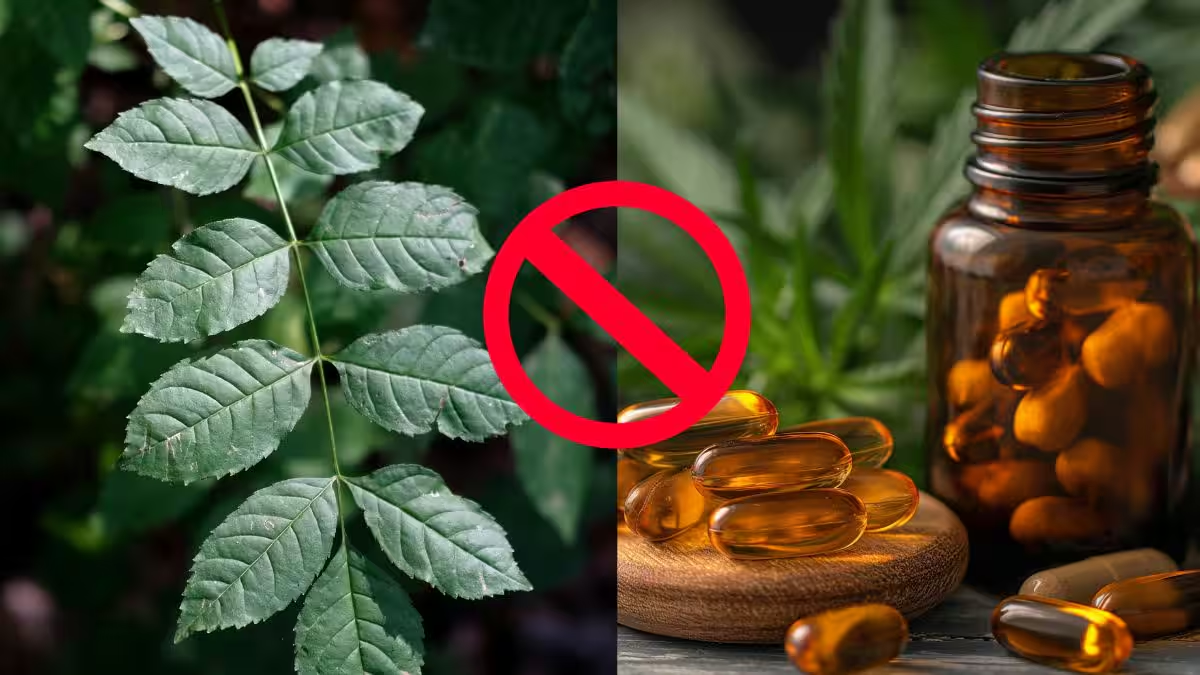
In a move that has caught both consumers and the supplement industry off guard, India has restricted the use of ashwagandha leaves owing to various safety concerns
Ashwagandha has long been marketed as a natural fix for everything from stress to sleep, making it an ancient remedy enjoying a modern wellness boom.
However, in a move that has caught both consumers and the supplement industry off guard, India has banned the use of ashwagandha leaves, restricting its use in food and supplements.
Here’s everything you need to know.
Not a blanket ban but a restrictive move
The directive comes from the Food Safety and Standards Authority of India (FSSAI) along with the Ministry of AYUSH.
It specifically prohibits the use of ashwagandha leaves in food products and nutraceuticals, while continuing to allow the use of the plant’s root, which has a long history in Ayurvedic medicine.
STORY CONTINUES BELOW THIS AD
This distinction is crucial: ashwagandha as a whole has not been banned – only a particular part of the plant.
In an order dated April 16, FSSAI instructed state authorities to maintain “strict vigilance” and initiate legal action against any food business operators found using unauthorised leaf-based ingredients. It also directed manufacturers to clearly specify on product labels which parts of the plant are being used.
The regulator noted that it had come to its attention that some manufacturers were incorporating ashwagandha leaves and their extracts in products. It clarified that, under existing regulations, the use of ashwagandha leaves – in raw form, extract, or any other variation – is not permitted.
The core issue: Safety concerns
The decision is largely based on emerging scientific findings about the chemical composition of the leaves.
Studies have shown that ashwagandha leaves contain higher concentrations of certain compounds called withanolides, particularly withaferin-A, which can be biologically potent.
According to regulatory advisories, these compounds may pose health risks, including liver toxicity, gastrointestinal distress, and potential neurotoxic effects.
Because of these risks, authorities have taken a precautionary approach, especially given the growing use of ashwagandha in commercial supplements.
Why the root is still allowed
In contrast, the root of ashwagandha (Withania somnifera) has been widely used for centuries in Ayurveda and is considered comparatively safe when used appropriately.
Regulators therefore permit only root-based extracts in products, aligning with traditional usage and established safety profiles.
A precautionary regulatory approach
The ban reflects what policymakers often call the “precautionary principle” – acting to limit potential harm even if all scientific evidence is not yet fully conclusive.
With the rapid expansion of India’s nutraceutical and wellness market, authorities are also aiming to standardise ingredients and prevent misuse or over-concentration of potentially harmful compounds.
Follow Firstpost on Google for the latest lifestyle updates including stories on travel and tourism, culture, health, and more. Stay informed with in-depth coverage of global developments, right from geopolitics and diplomacy to major world news with the latest perspectives, only on Firstpost.
First Published:
April 21, 2026, 11:24 IST
End of Article