
This story is a collaboration between Concordia University’s journalism department and CBC Montreal.
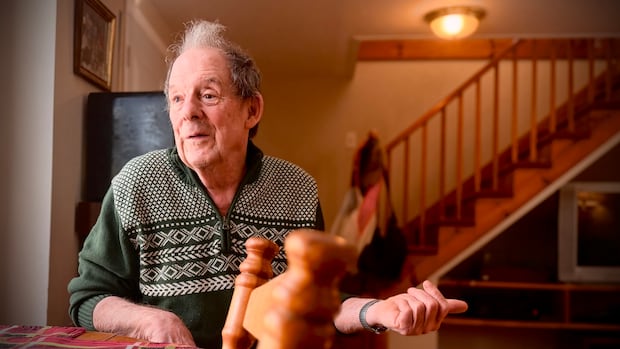
He’s blind, but 75-year-old Donald Farmer lives alone, salts the entrance to his house and does his own laundry. On the weekends, he cooks dinner with his girlfriend when she visits from her nursing home. And he even passionately restores old CCM bikes in his upstairs “man cave.”
But leaving his house does not come as easy since he lost his left eye to glaucoma in 1983, and now has only two per cent vision in his right eye.
Before his sight worsened, Farmer would use the STM’s adapted transport program, a paratransit bus service that drops clients at their destination’s door.
With his vision further decreased, he now needs an escort to guide him after he is dropped off. The problem is the STM won’t allow him to have a companion join him on the ride.
Fortunately for Farmer, a West Island non-profit provides a service tailored to his transportation needs.
WATCH | Volunteer drivers are helping seniors stay independent: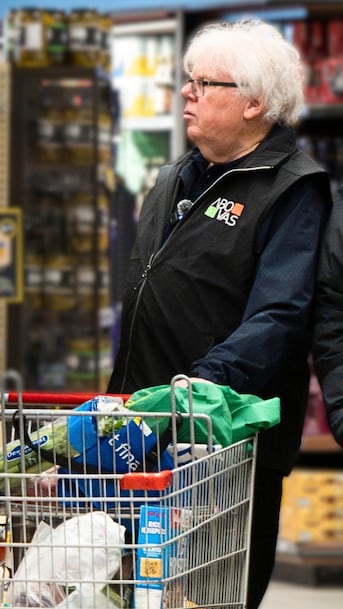
Volunteer drivers help Montreal seniors stay independent
In the West Island, non-profit group ABOVAS provides social and medical accompaniment for seniors with physical or mental challenges to help them maintain their autonomy. #westisland #seniors #montreal #grocery #community #independence #autonomy
For over 15 years, Accompagnement Bénévole De L’Ouest / Volunteer Accompaniment Service (ABOVAS) has paired clients with medical conditions or disabilities with a volunteer who drives them and helps them attend medical visits.
And since 2022, volunteers can also shop with clients or accompany them to the bank or on other outings.
The service is available to anyone aged 65 or older with a physical or cognitive impairment, and to those under 65 with a medical recommendation. ABOVAS aims to address a gap: those who are “too healthy” for institutional aid, but too vulnerable to be fully independent.
Montreal’s senior isolation crisis
Farmer is among thousands of seniors who cannot go shopping or to a medical appointment on their own because of disabilities or mobility issues. The problem is only likely to get worse.
Ten years from now, nearly half a million Montrealers will be 65 or older. According to regional public health data, one in three Montreal seniors lives alone, and many struggle with daily tasks, which can lead to deep isolation.
Dr. Michael Kalin, a Montreal family physician, cares for many seniors in his practice and notes that isolation has a negative impact on their physical and mental health.
“They become very isolated, depressed, but also it can lead to issues with cognition, memory, and there’s just their general well-being,” he said.
Kalin’s assessment aligns with data from the Canadian Longitudinal Study on Aging, which found that seniors who cannot find the rides they need feel isolated and have worse mental and physical health than those who can.
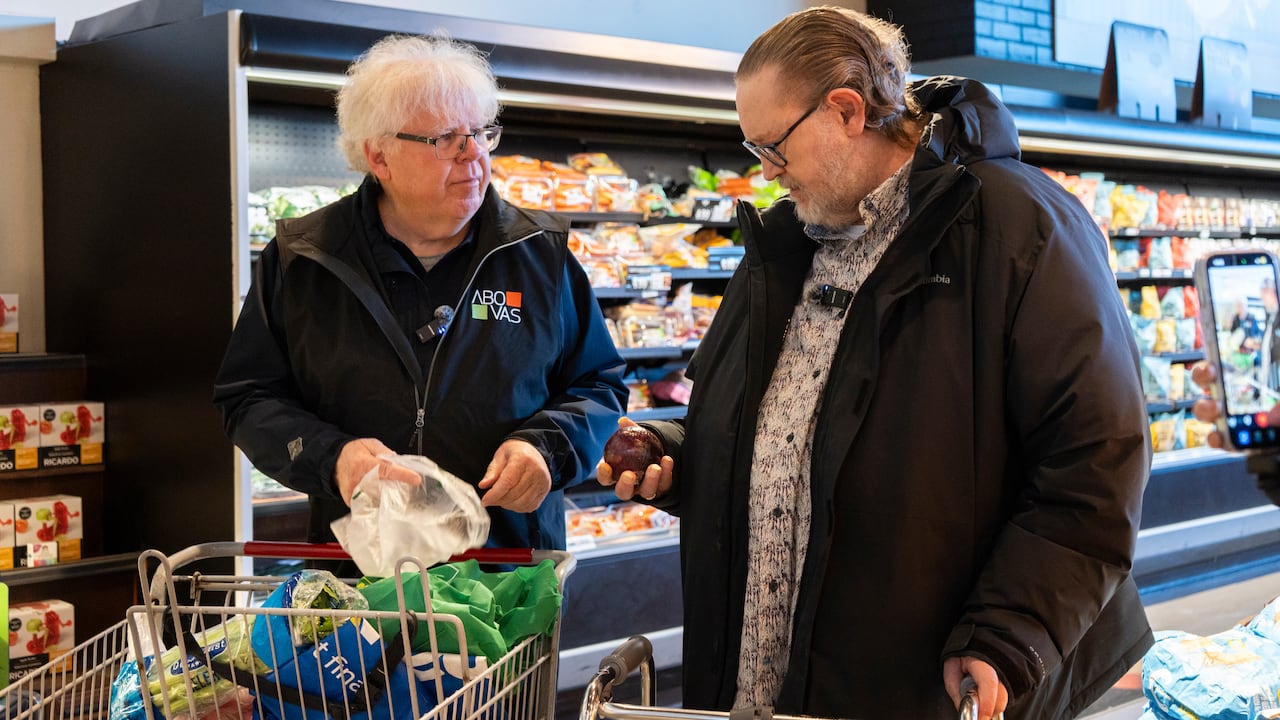 James Garand (right) and Michael Benson sort through salad options at the grocery story. Thanks to Benson, Garand is able to run his errands and maintain his autonomy. (Irène de Grave)A growing demand
Since the COVID-19 pandemic, demand for services has grown, with the number of social accompaniments up by more than 100 per cent between 2022 and 2023, according to ABOVAS.
Both the social and medical programs rely on volunteers using their own vehicles to accompany seniors in need. While the service is technically free, clients pay a compensation of $15 to $50 to cover vehicle wear and tear of each ride.
ABOVAS maintains a small team of three people to manage the programs. They vet volunteers and match them with clients based on specific needs and compatibility.
“Most of our clients are alone, unfortunately,” said Monica Farag, their medical coordinator. For those who have a caregiver or a spouse, “they can’t do it all, it’s just too much.”
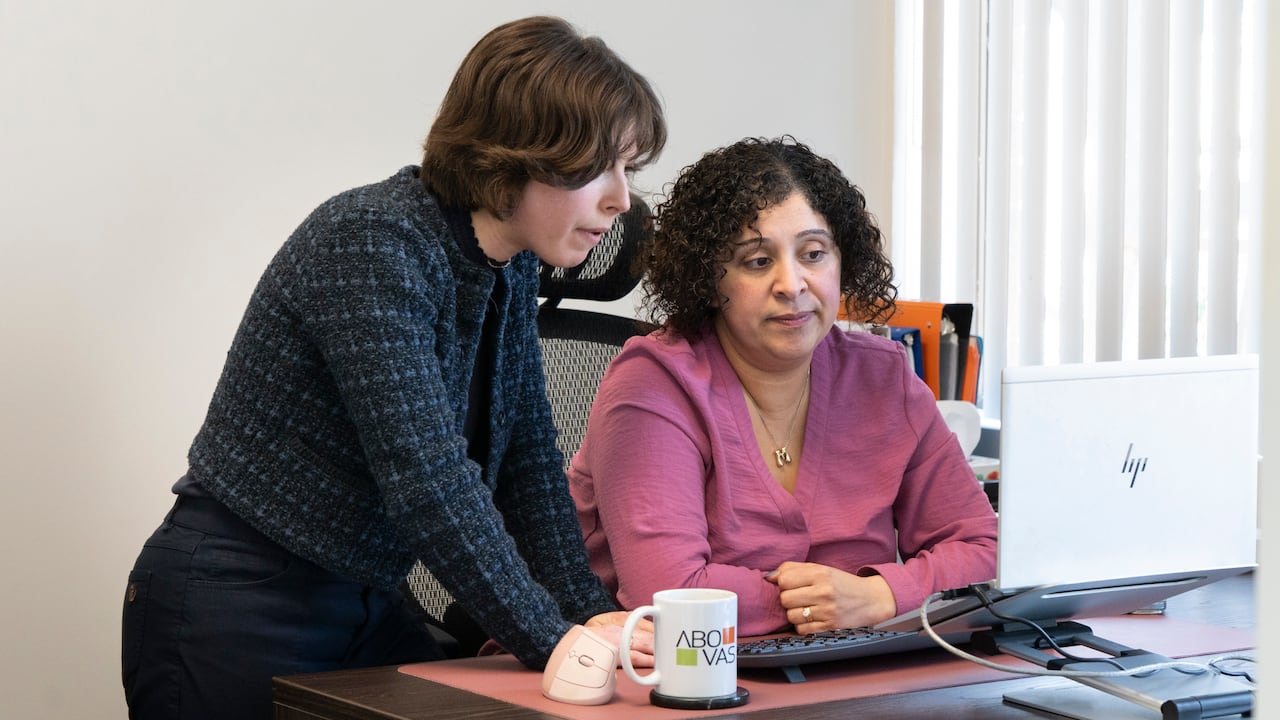 Monica Farag (right) and Amanda Wakefield working in the ABOVAS offices. (Irène de Grave)
“I almost never go out because I’m afraid of falling,” said James Garand, 59, a veteran who has similar visual issues to Farmer.
For Garand, being accompanied by a volunteer gives him a sense of security.
“They are really going to follow you, guide you, then take your arm, and then you run errands,” he said.
Michael Benson, 65, who began volunteering for ABOVAS last year, said clients often tell him the service makes trips easier and eases their anxiety.
“It’s a tremendous feeling for them and for me to provide that to them,” he said.
Service gap
ABOVAS helps seniors who, like Farmer and many others, are falling through the cracks of social services.
A range of people fall within this category: those with cancer, severe anxiety, early-stage Alzheimer’s disease, or those who use a cane or walker.
Despite having only two per cent vision, Farmer is deemed too healthy for adapted transport with accompaniment. This means even if family or friends are willing to help him, they cannot ride the adapted transport bus together.
Farmer appealed the decision and also contacted Gregory Kelley, a member of the national assembly for his electoral division, Jacques-Cartier.
Kelley’s office confirmed that they met with Farmer and asked Quebec’s Ministry of Transport and Sustainable Mobility to review the decision. The request was denied.
Kelley’s office expressed their disappointment.
“The STM requires more funding, improved accessibility infrastructure, and increased capacity to serve the public. Both the users of Transport Adapté and public transit riders of STM deserve better,” wrote Kelley’s political advisor Nikolitsa Michelakis in an email.
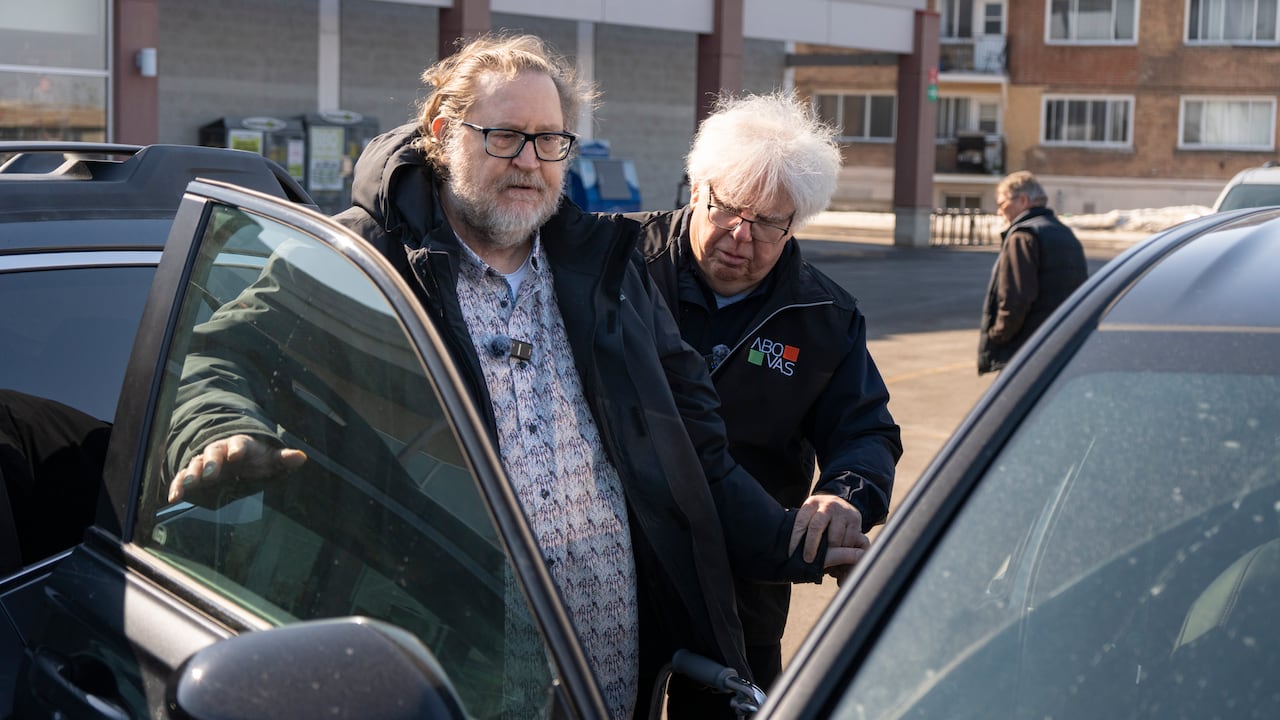 Michael Benson (right) guiding James Garand out of the car. As soon as Garand gets out of the car, he needs his walker in order to be able to move around safely. (Irène de Grave)
According to the adapted transport eligibility policy, “a user with a visual impairment may use paratransit for trips made alone, and regular public transit for accompanied trips.”
With ABOVAS receiving more demands for services than they can handle, clients need to request a service nearly two weeks ahead of time.
“That’s part of the struggle,” said Farag. “I’ve had people call me and say, ‘The hospital just called, can you help me tomorrow?’ and it’s a bit of a challenge.”
The services are also offered exclusively to West Island residents.
The joy of being able to live at home
Despite those challenges, ABOVAS gives more seniors the opportunity to maintain autonomy and live at home longer.
Benson said he sees that first hand, during his outings as a volunteer.
“You are contributing, making them feel independent. Because there’s a lot of people that want to be independent,” Benson said.
Farmer agrees. He feels for the people who have moved to a nursing home, like his girlfriend.
“ People had all kinds of different careers. And now they’re living in a senior home. They just have a room,” said Farmer. At his Sainte-Anne-de-Bellevue home, Farmer said he’s still able to make a meal or restore a bike, and that keeps him young.
“You don’t stop playing ’cause you get old. You get old ’cause you stop playing.”
About the authors
Charlotte Theofanous obtained a Bachelor of Arts degree from McGill University and a Graduate Diploma in Journalism from Concordia University. She has interned at The Suburban and will pursue a Master of Arts in Digital Innovation in Journalism Studies at Concordia.
Mijon Zulu is a Barbadian-Zimbabwean audio and video podcast producer and freelance journalist based in Montreal. He studied English literature and fine art at Williams College. After establishing a career in podcast production at Consequence Media, he pursued a research-creation graduate degree in digital innovation in journalism at Concordia University.
Irène de Grave is a French visual journalist with a graduate diploma in visual journalism from Concordia University. Previously she obtained a bachelor’s degree in Communications at Université de Montréal. She does freelance photography and enjoys working on long-format documentaries.