
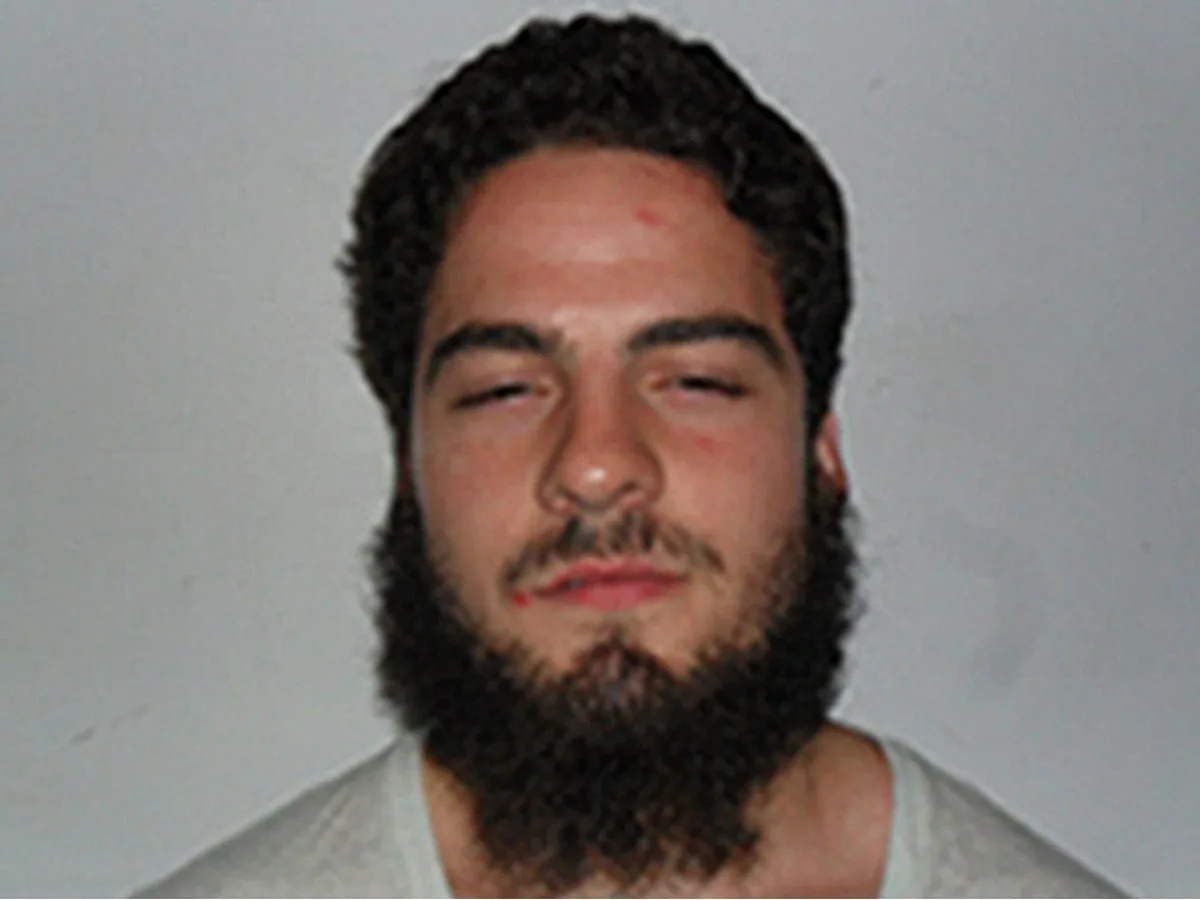
An Ottawa man convicted in an ISIS-related terrorism case is getting out of prison having served two-thirds of his 17-year sentence, even though the parole board says he continues to hold extremist views and remains a public-safety risk.
The Parole Board of Canada says Ashton Larmond, 35, has made some progress through programming available to him in prison, as well as counselling. However, the board has also noted his involvement in a recent assault on another inmate. He punched another inmate in the face, then kneeled on him and struck him again, breaking his nose, which the board cited as evidence he remains comfortable using violence.
The parole board has placed special conditions on Larmond, which must be followed throughout the rest of his sentence. That includes monitoring his phone use and finances. He must also take part in treatment and live in a community-based residential facility or psychiatric facility approved by the Correctional Service of Canada.
In the summer of 2013, the RCMP intercepted conversations between Larmond and another Ottawa man who had flown overseas and joined ISIS in December 2012. He told the man that he wanted to join him. According to RCMP documents, Larmond’s mother called the Ottawa police in September 2013 saying her son wanted to go kill for terrorists.
Police arrested Larmond on January 9, 2015, in the Ottawa area, while his twin brother Carlos was arrested at Montreal’s airport as he was trying to leave Canada for Syria. Ashton had been considering taking an overland route through Alaska, Russia, and Afghanistan to reach Syria.
They were arrested along with a third suspect following an RCMP undercover counterterrorism operation called Project Slipstream.
Ashton subsequently pleaded guilty to one count related to encouraging others to engage in terrorist violence. His brother Carlos pleaded guilty to one count of attempting to leave Canada to participate in the activities of a terrorist group and was sentenced to seven years in prison.
As his release approached, Ashton told the parole board he hoped to work in the food industry or at a hardware store, and to fundraise for groups that help “people of the Muslim faith who are suffering.”
But the board ruled his potential for reintegrating into society was “low.” And noted he did not have a viable release plan.
Without conditions on his release, the board said, he would “present an undue risk to society.”
Our website is the place for the latest breaking news, exclusive scoops, longreads and provocative commentary. Please bookmark nationalpost.com and sign up for our daily newsletter, Posted, here.