
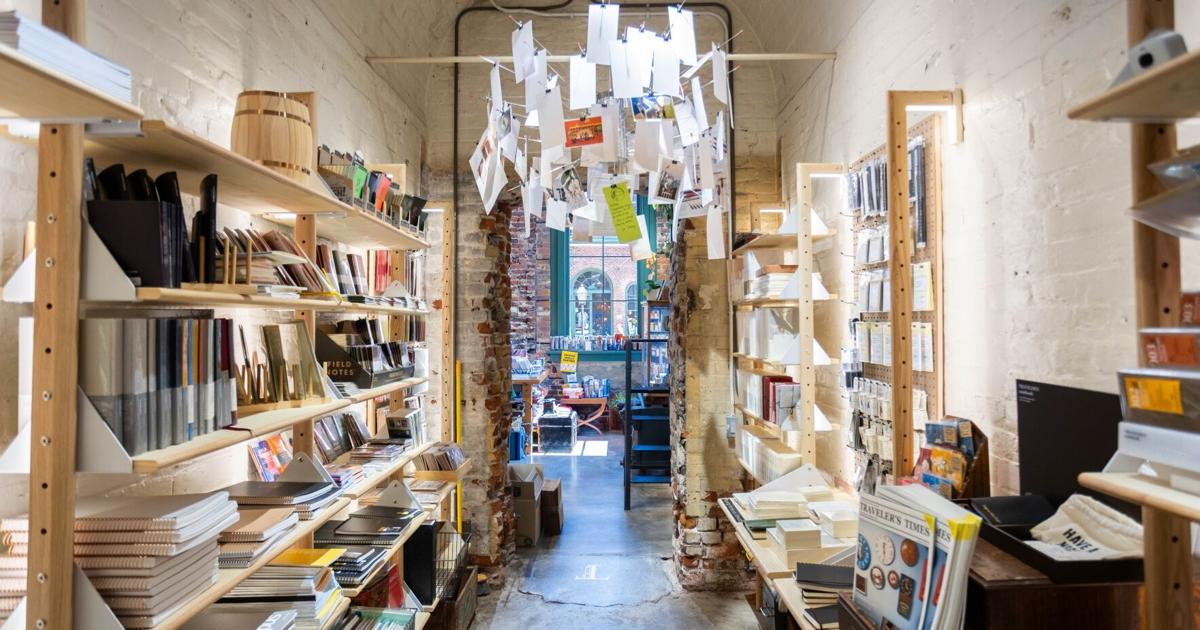
A new 4,305-square-foot marketplace has opened in Toronto’s historic Distillery District and it’s bringing together independent Canadian brands inside one of the site’s oldest Victorian-era buildings.
On April 22, The Cooperage Marketplace officially launched with two entrances at 6 Trinity St. and 52 Gristmill Lane. However, regardless of the entryway you stroll through, you’ll be met by grand double-doored archways with original architectural detailing above.
Once making your way inside, visitors will be nestled in a storied building that dates back to the 1860s.
Long before its current use, this spot served as a hub for making, storing and repairing whisky barrels. Now, the “cooperage” title is a nod to the building’s original heritage.

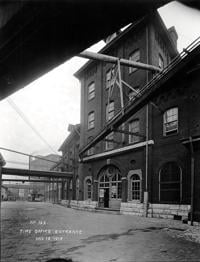
An archival photo of The Cooperage Marketplace building in 1918.
The Distillery Historic District
And with a “thoughtful approach to adaptive architecture and design,” led by Jamie Goad, architect and co-owner of the Distillery District, the building’s history is still visible at the marketplace.
“You immediately feel the history of the place,” Polly Campbell, assistant property manager, retail at The Distillery Historic District, told Toronto.com.
Whether it be the exposed brick and plaster, fire-charred wooden beams, or the three historic vaults worked into the interior, guests can wander through the space’s heritage while also perusing seven independent Canadian businesses under one roof.
Offerings will range from fashion, accessories and jewelry to gourmet food and specialty retail from a lineup that includes Toronto Pen Shoppe, Orso Activewear, Millicent Vee Knits, KINDSUNDAY, Lilith’s Garden, Love, Calista, and Kovacic Truffles.

Orso Activewear at Cooperage Marketplace.
The Distillery Historic District
“The layout encourages you to move through the space, discovering both the brands and the building. It adds to the feeling of exploration The Distillery District is known for, while giving emerging, local businesses a more accessible opportunity to have a storefront in one of the city’s most iconic retail destinations,” said Campbell.
Updates to the space include nine-foot-tall windows, designed as replicas of the originals and based on archival photographs. Plus, Cooperage signage featuring a cooper and barrel to reference the building’s historic use.
“As an architect, the focus has always been on working with what’s already there — not trying to make it perfect, but allowing the building’s history to remain intact,” said Goad.
“Then we layer in contrasting modern elements like glass storefronts so the marketplace can function today without losing what makes it so special.”
After opening to the public more than a decade ago in 2003, the Distillery District has since become a National Historic Site of Canada.
It has preserved 13 acres of Victorian-era industrial architecture, now recognized as the largest collection of its kind in North America.
So, whether you’re a history buff or a local shopper, the new marketplace offers the opportunity to step back in time while supporting today’s generation of Canadian makers.