
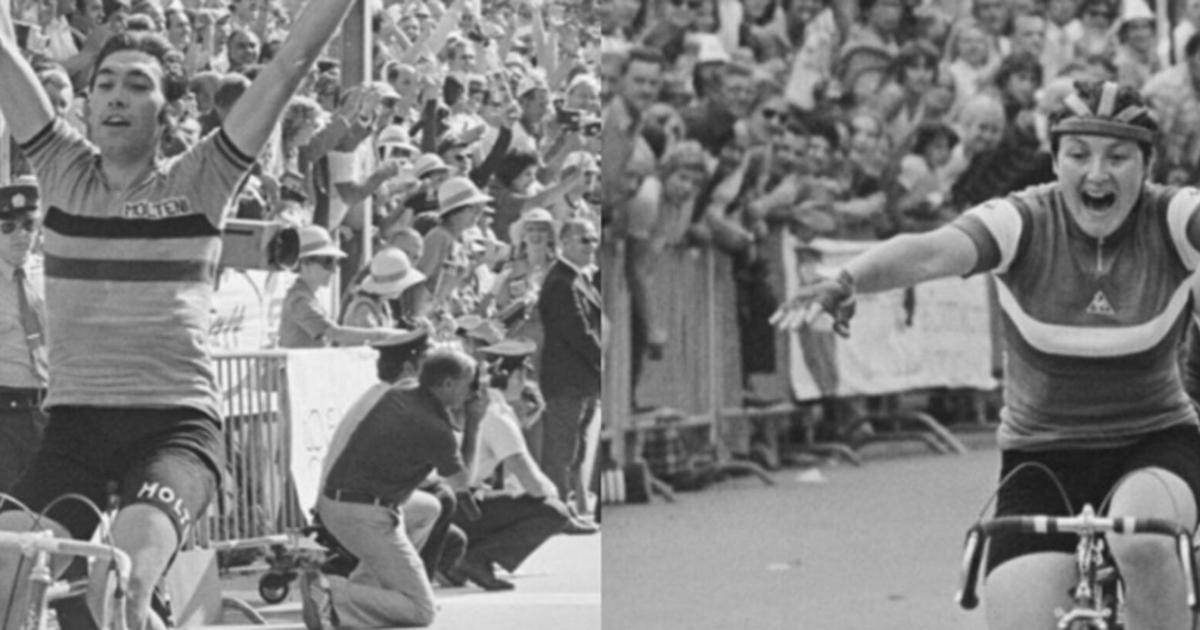
It’s as big as the Olympics, says Montreal Mayor Soraya Martinez Ferrada. The UCI Road World Championships is coming to Montreal next September, just five months from now. Yet the administration assures Montrealers that the city — and its roads — will be ready to handle 1,000 cyclists from 80 different countries.
“We don’t have a choice,” says Executive Committee Vice-President Christine Black. The Montréal-Nord borough mayor is responsible for family, seniors, youth, sports and recreation.
This past February, Martinez Ferrada was navigating some of the worst pothole-ridden streets in town, when she found herself with “deux flats.” Even she has admitted that Montreal’s roads are the worst they have been in a long time.
No problem, says Black. Measures will be put in place “to ensure that the roads are beautiful, not only for the athletes who will be using them, but also for the citizens,” for the race routes, and for the surrounding areas. In 2017, when then-mayor Denis Coderre brought in the ill-fated Formula E race, he had the roads paved but only around the race route. Granted, the city’s streets did not look as bad then as they do now.
This will be the second time Montreal has hosted the event. The first was in 1974, the first one held outside Europe. By all accounts it was a success. Jean Drapeau, the man who built an island and a subway system for Expo ’67, and a village for the 1976 Olympics, was mayor.
The annual bicycle race, organized by the Switzerland-based Union Cyclist Internationale, consists of several events, with athletes competing on national teams. It is expected to bring 500,000 spectators into the city, with another 200 million around the world watching on television “who will be able to see and learn about Montreal,” says Black. “And some of them will probably say ‘That looks good, I want to go visit’.”
The race routes will cover seven boroughs plus Westmount, and eight towns in the Montérégie.
There will, of course, be road closures — a section of Parc Avenue from Sept. 5 to Oct. 4, temporary street closures two hours before the race opening as soon as possible afterwards, and also bus route diversions and “parking solutions.”
“We have a lot of work to do,” Black says, “but we are making the effort to ensure that we can meet Montrealers’ expectations.”
Lest comparisons be made with the 1976 Olympics, and Drapeau’s clumsy assurance that they could “no more run a deficit than a man can have baby,” Black says the event is supposed to bring in $76 million in revenue.
Inasmuch as Valérie Plante had always been characterized as anti-car, at least one commentator has accused Martinez Ferrada of being anti-bike (based on the city’s plan to either dismantle or hide its bike-counting program). And while the mayor did make the campaign commitment to audit the city’s bicycle paths, in January her administration budgeted nearly $565 million to maintain the existing ones.
Cycling enthusiasts are encouraged by the event. “The UCI Road World Championship, like all major cycling events, can help spark greater interest and enthusiasm for cycling,” says Jean-François Rheault of Vélo Québec. “But it’s also about the tangible improvements made to host the event. For example, the resurfacing of Voie maritime will create an even better playground for cyclists. And the fact that citizens can ride the same courses as the professionals is incredibly inspiring.”
If hosting the event ends up raising the profile of cycling in Montreal, it could become even more of a cycling city than even Plante had imagined.