

Listen to this article
Estimated 4 minutes
The audio version of this article is generated by AI-based technology. Mispronunciations can occur. We are working with our partners to continually review and improve the results.
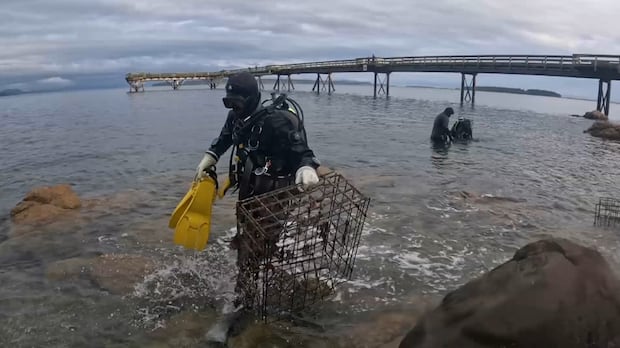
On a recent dive at Sidney Pier, a picturesque seaside area in the town of Sidney on Vancouver Island, divemaster Ryan Swan says he noticed things that were under water that shouldn’t have been there.
“There was quite a bit of crab traps and fishing gear underneath here,” Swan said. “So I talked to some of my friends and dive buddies and suggested, hey, let’s do an ocean cleanup at Sidney Pier.”
Swan, who is also a content creator, documented their efforts on his YouTube account. He says after a day in the water, where “there wasn’t a lot of planning,” they removed about 20 traps.
Swan says his goal isn’t to discourage recreational fishing or crabbing, which are popular at the pier — nor is it to encourage unco-ordinated cleanups.
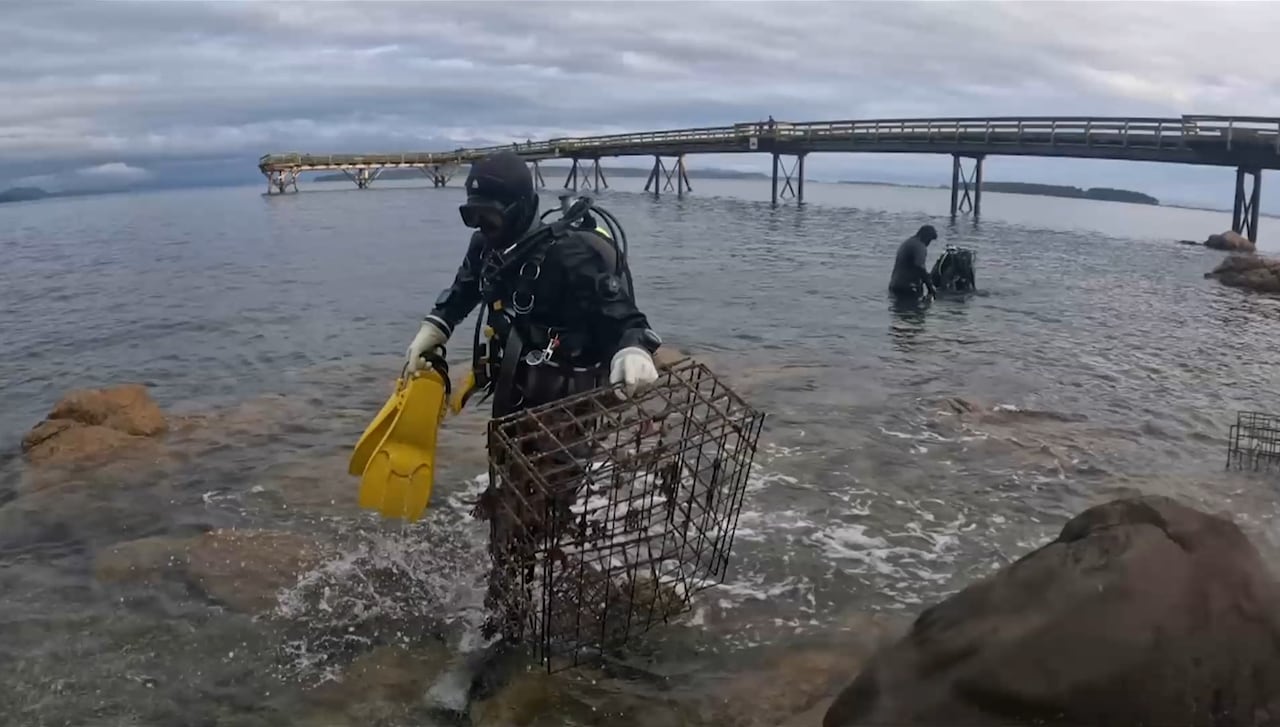 Divemaster and commercial diver Quinn Ashford, a friend of Ryan Swan, is pictured during a cleanup at Sidney Pier. After finding abandoned gear underwater at the pier, Swan says he decided to do his part, inviting a few friends and fellow divers to clear the area. (Ryan Swan/Be Sea Adventures)
Instead, he says it’s to draw attention to the amount of abandoned gear underwater — a problem also known as ghost gear, which officials and scientists say has detrimental effects on the environment and the fishing industry.
‘A real thorn in the side of wildlife’
Fisheries and Oceans Canada (DFO) says between 2020 and 2025, it has invested more than $58.4 million to tackle ghost gear, which includes fishing nets, lines, traps, and rope. Since 2020, it has removed 2,563 tonnes of gear and more than 985 kilometres of rope from Canadian waters.
Peter Ross, a senior scientist at the Raincoast Conservation Foundation, says ghost gear has been “a real thorn in the side of wildlife for a long time,” citing the International Whaling Commission’s estimate that 300,000 whales and dolphins die yearly from entanglement with fishing gear.
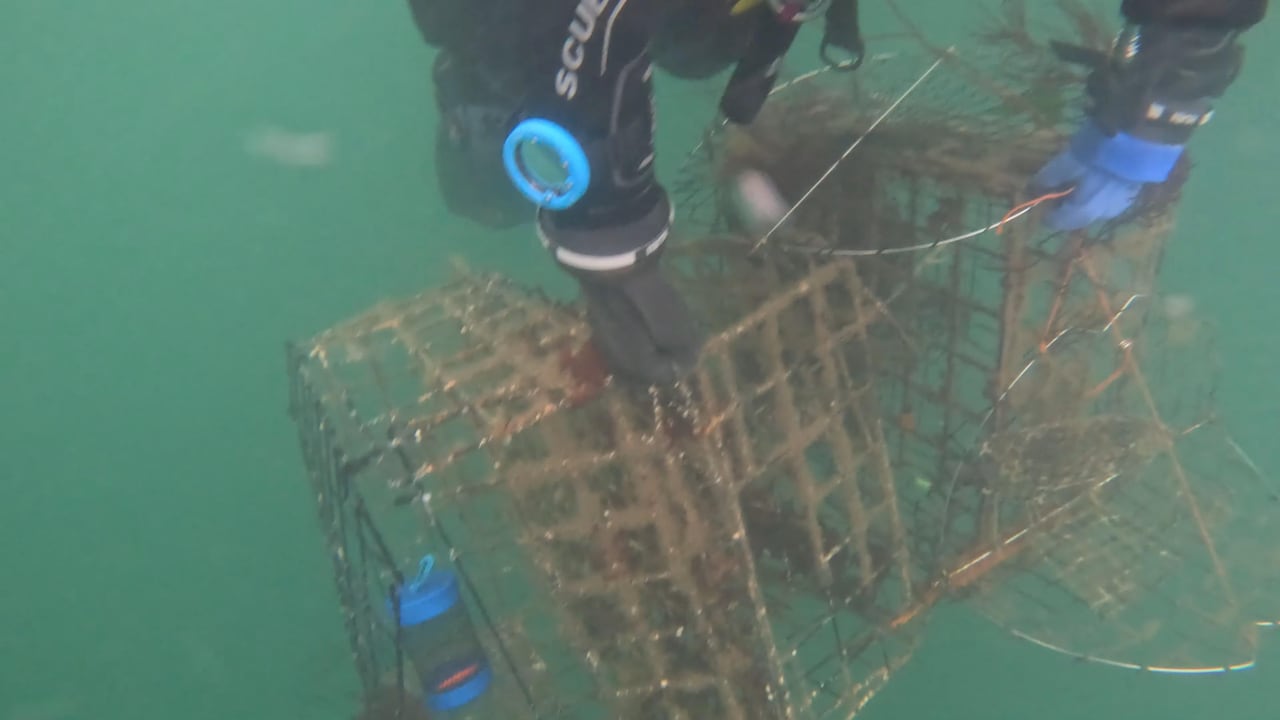 Swan says his group removed about 20 crab traps from Sidney Pier during an informal cleanup they recently conducted. DFO says since 2020, more than 2,563 tonnes of ghost gear have been removed from Canadian waters. (Ryan Swan/Be Sea Adventures)
Experts say the equipment often ends up in the water by accident due to inclement weather or tidal conditions. In rare cases, they are deliberately discarded.
DFO says commercial fish harvesters are mandated to report lost gear as a condition of their licence; failure to do so can result in charges or fines. It also says there are currently no reporting requirements for recreational fishing, but it is being considered.
The department adds that anyone who finds abandoned gear in the water should report it rather than attempt to retrieve it; further, gear retrievals must be authorized “as they are considered a fishing activity, which requires a permit.”
Permit, buy-in contribute to cleanup success: non-profit
Commercial diver Bourton Scott, co-founder of the Emerald Sea Protection Society — which has been conducting ghost gear cleanups since it was founded in 2016 — says it was unclear at first whether they needed a permit.
The non-profit has worked on gear retrievals around B.C. waters, including the Gulf Islands and, more recently, in Alert Bay, near Port McNeill on northern Vancouver Island.
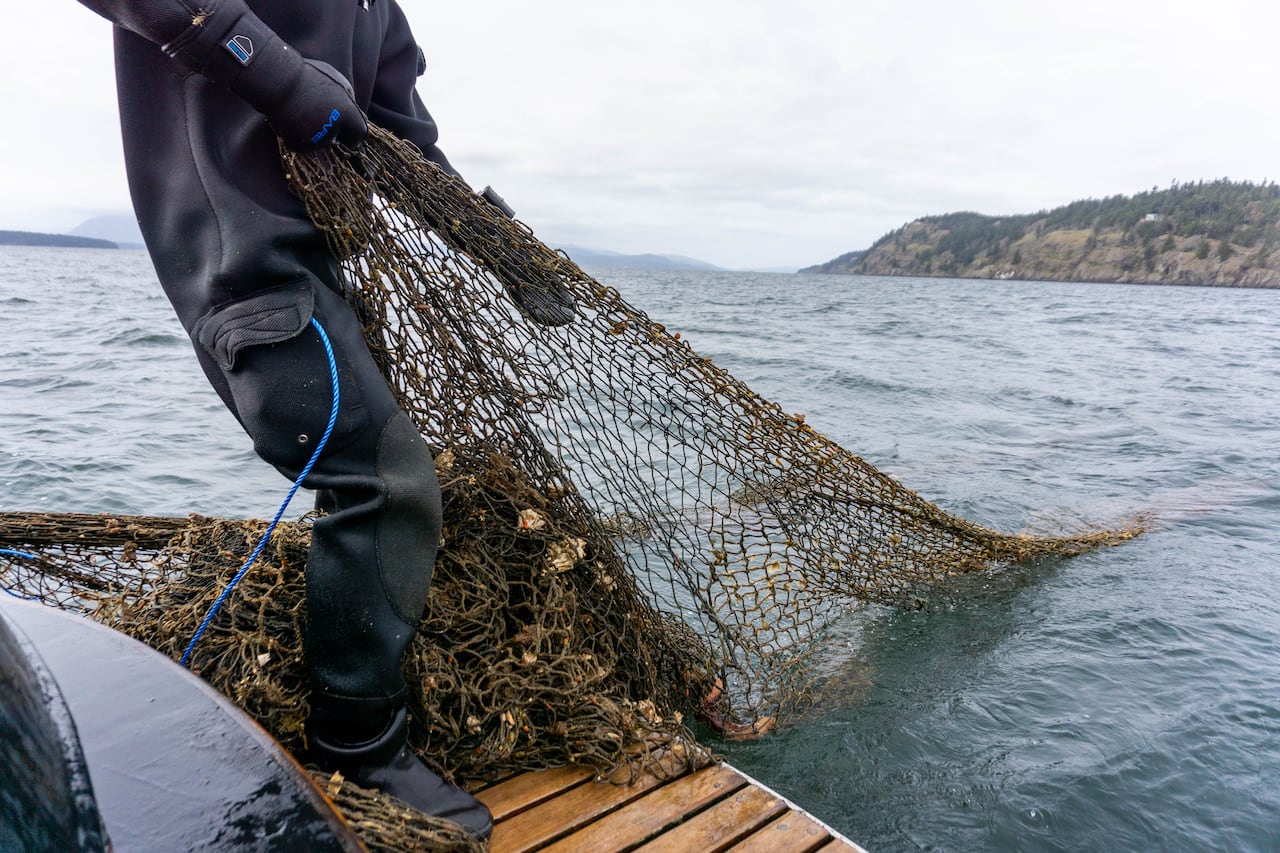 Bourton Scott, co-founder of the Emerald Sea Protection Society, says the permitting process for ghost gear cleanups typically takes weeks, but that the resulting support from DFO and buy-in from local communities are essential to the success of their work. (Emerald Sea Protection Society)
“As soon as we started to scale up the breadth of the projects, it became very crucial for us to develop the back-end paperwork,” Scott said. “So it was all a learning curve from day one.”
He says the permitting process includes weeks of engagement with partners like First Nations and community groups, as well as the development of safety and emergency response plans.
“There’s a lot of conversation that happens before anybody actually hits the ground running and starts cleaning up gear,” he said, adding that the buy-in from communities and support from DFO have contributed to the success of their work.
DFO says Canada is investing $15 million over three years to modernize the location, retrieval and disposal of ghost gear as part of its 2030 Nature Strategy, with funding details for projects to be announced “in due course.”
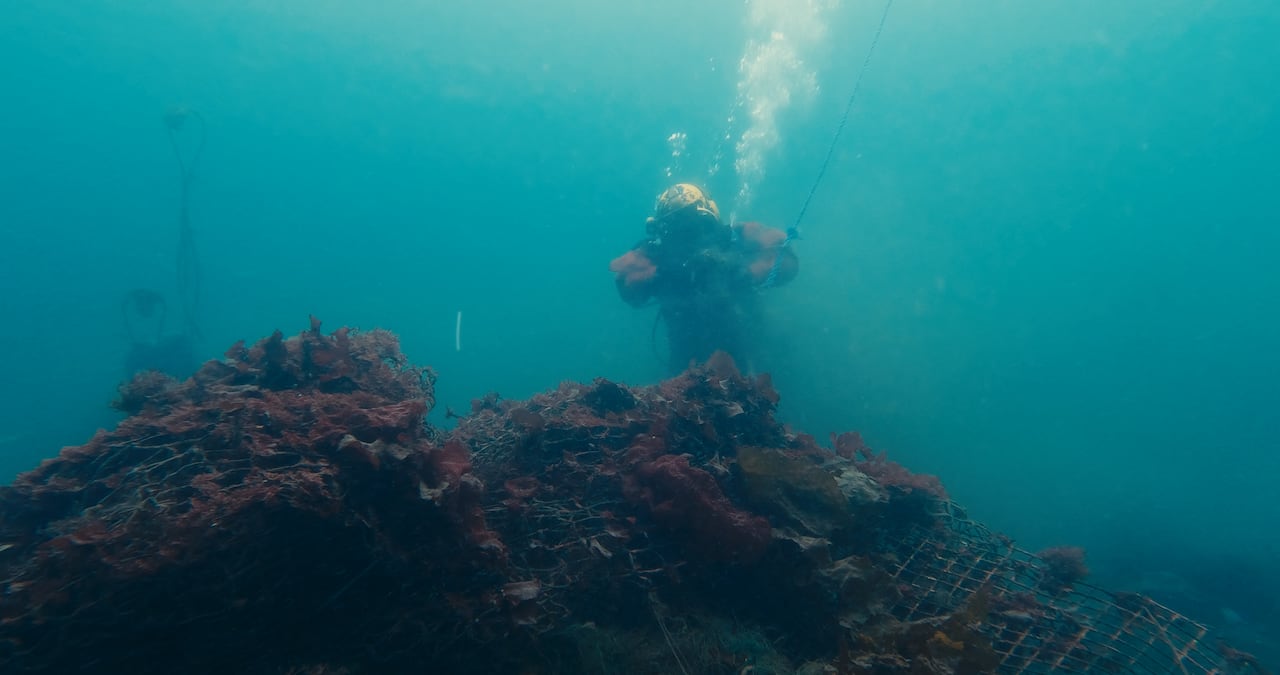 Scott says gear retrieval projects can take a week or two to complete, and involve teams of four to 10 people, including divers and surface crew. (Emerald Sea Protection Society)
Meanwhile, Swan says he’s since been made aware of the permitting requirement after reporting the items they found at Sidney Pier to DFO.
He says he doesn’t have plans for another cleanup just yet, although it’s “always something that I’m thinking about.”
For now, he says his goal remains the same.
“For me, it’s important to care for the ocean, care for the environment.”