
 14 min read
Ene Underwood had a problem. The 62-year-old’s solo bikepacking trip was facing an imposing logjam caused by a recent landslide on a steep gravel road in the backcountry of British Columbia. There was no route around the obstacle, and trying to climb over seemed risky. “There really aren’t a lot of 62-year-old women who have the fitness, core strength, and sense of adventure that it takes to be doing something this crazy,” she remembers thinking. She could have turned around and climbed back up the road to find another route down, but that would have been an arduous ascent, and to get back to her cozy log cabin, she’d have to do a much longer route. You can’t train for this kind of moment. You have to go with your gut—and your guts.
Up and over she went, shouldering her bike as she climbed. It took half an hour, but she made it. That night, tucked safely into her cabin and reflecting in her journal, she knew she’d accomplished something that wouldn’t show up in her riding stats. She felt alive, and powerful, albeit a little subdued. “It’s a fantastic story,” she says. Then adds, “But only because I lived through it.”
Aging may change the way we ride, but it doesn’t have to mean giving up on goals or the pursuit of joy and endorphins. In fact, many cyclists who ride into their 50s, 60s, and 70s report that in some ways the experience is better than it was in their younger years. Without the obligation to shuttle kids to sporting events, or after retiring from work, older cyclists have more freedom and time to ride. The 2017 National Household Travel Survey found that cyclists over 50 ride more often for fitness and recreation than their younger counterparts.
We talked with nine Bicycling members, coaches, dietitians, and other experts to get their real-world advice, plans, and strategies for riding into your 50s and beyond. And if you want to improve your own riding, be sure to check out Bicycling’s How to Ride Strong at 50+ program. It contains more workouts, tips, and expert advice. And it’s free for Bicycling members.
trevor raab
Make Whatever Changes You Need to Keep Riding
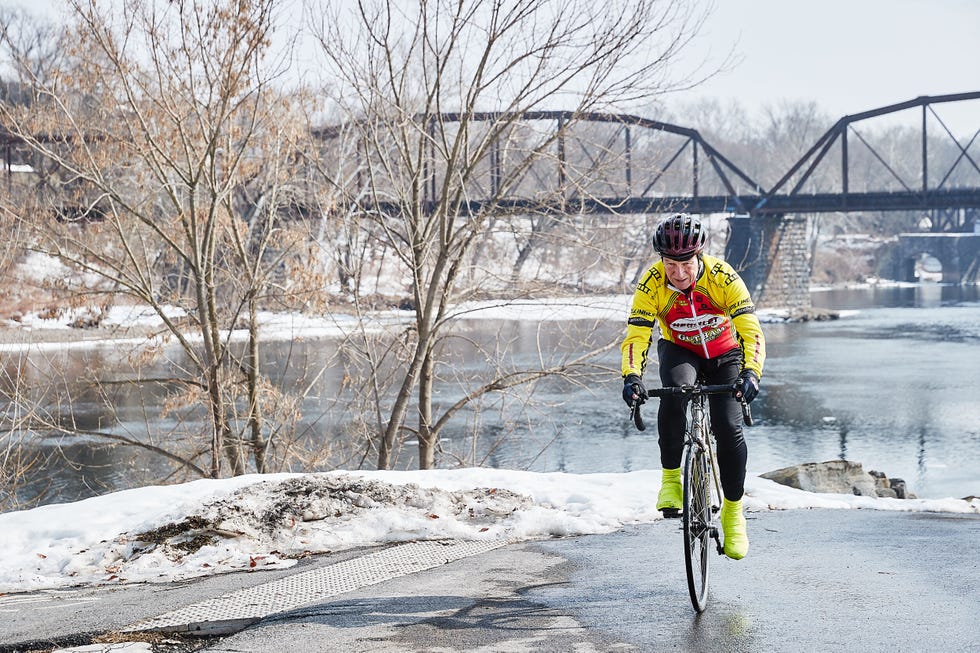
Fred Miller, 74, Bethlehem, Pennsylvania
Retired postman Fred Miller is passionate about pedaling. He has been since he came home from the Vietnam War in his mid-twenties and was struggling to figure out what was next. “I was kind of a wild child,” he says. “Cycling pretty much saved my life.”
Cycling, he says, forced him to clean up his lifestyle back then, and it’s still working now: Eat better, drink less, stop smoking, and pedal. “Because of it, I was able to maintain a healthy lifestyle,” he says. It worked. More than 50 years later, he’s keeping up with his daughter when they ride together outside.
He may be riding a bit slower these days—he says he averages around 14 miles an hour—but he makes time to ride inside or outside year-round, pedaling on the indoor trainer while he watches cyclocross racing in the winter, or getting one of his riding buddies to go out for a chilly ride when temps creep above freezing. In 2025 alone, he logged over 400 hours of riding on Strava.
But back pain has become a constant problem that culminated in a laminectomy two years ago. He still experiences pain from that, and says that finding a physical therapist who’s familiar with the rigors of the bike was key for his recovery. “Most physical therapists expect that you just want to walk or sit in a chair all day,” he says. “I want to ride.”
The other factor in alleviating his discomfort was doing a bike fit. He says as he gets older, his position on the bike keeps changing, along with his flexibility and mobility. “He’s really good. Really knows his stuff, and he knows cyclists,” Miller says.
He needs to keep a routine of daily mobility work and physical therapy in order to ride the way he wants to, and though those activities are much less fun than riding a bike, he knows that if he wants to keep putting in hundred-mile rides when the weather is good, and wants to stay fit enough to continue keeping up with his daughter, he has to commit to maintaining his overall fitness more than he did when he fell in love with cycling.
Emiliano Grando
Miles Matter, but Mindful Miles Matter More
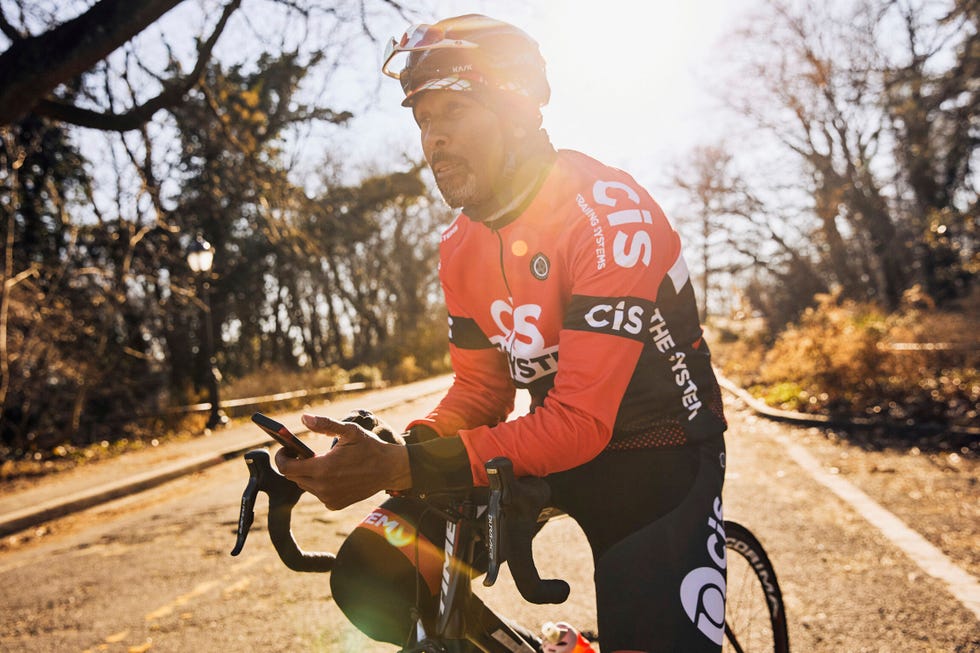
David Lipscomb, 56, Brooklyn, NY
Performance coach, martial artist, author and frequent Bicycling contributor David Lipscomb knows what it’s like to go from being at the top of your sport to struggling to keep up. As a former Cat 2 racer, he was enthusiastically racing in the elite field, but when he was struck by a car driver while riding in 2015, he was forced to reevaluate his relationship with the sport. It was already evolving—he was 45 years old at the time—but the long hospital stint brought him face to face with more decisions than whether to drop from the Elite category to the Masters field.
Now, he blends the mindset skills that he learned from martial arts with his own racing history and on-bike coaching to help other riders reach their goals. “Discipline and consistency are the things that martial artists do and they learn to do, and they respect that discipline and that consistency,” he says. “That’s what cycling does. It’s about control.”
In martial arts, Lipscomb learned that discipline doesn’t mean just logging hours; it’s about practicing the smallest details of each movement in a focused, intentional way. “Every little thing that you do either makes or breaks how you perform,” he says, adding that he believes the same is true on a bike: There are always little things you can focus on, like finding your optimal cadence or staying fully locked in during your next FTP test rather than letting your mind drift.
Ultimately, success on the bike is built on days, weeks and months spent honing skills. He says that people often are looking for that “missing piece,” whether it’s a new interval workout or piece of gear that’s going to magically change everything. But there’s no one-time solution to making improvements on the bike: It just takes fully showing up for yourself, ride after ride.
Courtesy James Slauson
Get Out With Young Riders
James Slauson, 62, Boone, NC
Emergency room doctors work all kinds of weird hours, they see some of the worst things a person can see, and they have one of the highest stress jobs a person can have. But that hasn’t stopped James Slauson from riding his bike for at least 10 hours most weeks for the last couple decades. And in his sixties, he’s actually increased his overall training volume as he’s added in more miles, strength training, and integrated cross-training like snowboarding.
In December of 2025, he lost his good friend and mentee, 31-year-old Blaise Schaeffer, in a tragic hit and run. For several years, the two cyclists trained together and traveled to races like the Tour of America’s Dairyland annually. Though he misses his friend, Slauson hasn’t stopped riding. He feels the tension between being grateful for every mile that he’s able to ride, while also being increasingly aware of his own mortality. “Every time I get back from a ride now, I tell my wife, ‘I’m back and I’m alive,’” he says.
He’s also become more philosophical about what it means to age in this sport. Despite his best efforts, metrics like FTP and VO2 max will drop as the years march on, but to age on the bike is a privilege, and one he doesn’t take for granted anymore. “If you’re putting in the work, I think it’s easier to accept the numbers for what they are,” he says.
“We had done so much together,” he says, sharing that they had even recently done a training trip in Mallorca, Spain. “I was planning on having another 20 or 30 years to do all this stuff.”
Finding a mentee may not be feasible for everyone, but he says older riders can benefit from joining group rides, leading beginner rides, and volunteering in the cycling community. Those relationships can add powerful depth and meaning to cycling that you can’t often get from race results or training rides on their own.
Courtesy Patricia McNeal
Invest Your Time and Money in Riding (and Shift Gears!)
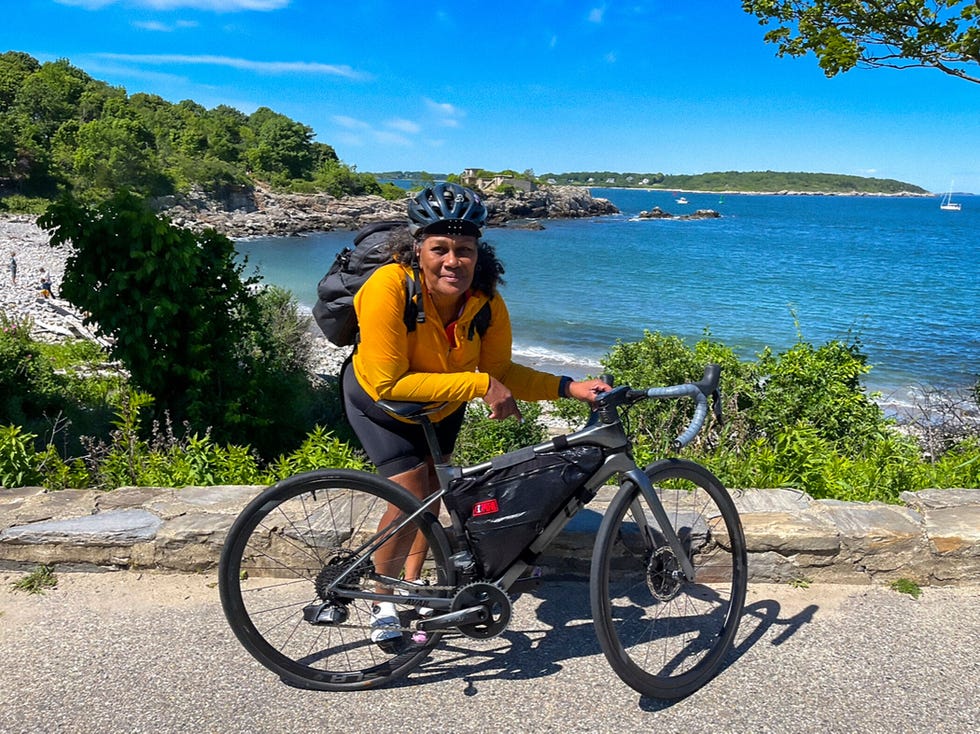
Patricia McNeal, 64, Panama City Beach, Florida
In 2013, Patricia McNeal wasn’t the cyclist she is today. She was in the hospital, recovering from a stroke. As she lay in the hospital bed, she knew she needed to make some changes. She was already riding casually, but she dedicated herself to the bike. She shifted to a vegan diet. She did her first century ride. And then, a lightbulb went off. “I’m like, Oh my God, if I can do 100 miles, I can ride to California,” she says. “And that’s what happened.”
In 2018, she rode 2,200 miles across the country, racking up 100-milers most days, and she’s planning even more adventures in coming years. The cross-country ride was a big shock for a rider who learned to pedal in pancake flat Florida: For one thing, in order to simplify shifting, her husband had encouraged her to stay in the most comfortable gear. Then she admits that she forgot she could change gears. “I was walking crying, going up those mountains.”
She also realized it wasn’t easy to stay entertained on a solo mission. “During that trip, I was singing, making up songs. I thought I was Tupac at one time,” she recalls. The challenge, she says, was eye-opening and taught her a lot about herself (though nowadays, she knows she can shift into an easier gear instead of walking up a climb).
When McNeal talks to older riders, one thing she notices is that many are afraid or unwilling to invest in their riding, whether that means buying a new bike or having to start from a place of low-or-no fitness. Riding 100 miles or making it across the country doesn’t happen overnight. It’s the result of months of training and logging high-volume rides day after day. In short, cycling is an investment. And sometimes, that investment is cold, hard cash: When McNeal first started her cycling journey, she was furious with her husband for spending $2,000 on her bike—she would have preferred a Louis Vuitton purse. But she can look back now and say the bike has more than paid for itself.
Courtesy Ene Underwood
Adventure Equals Fitness
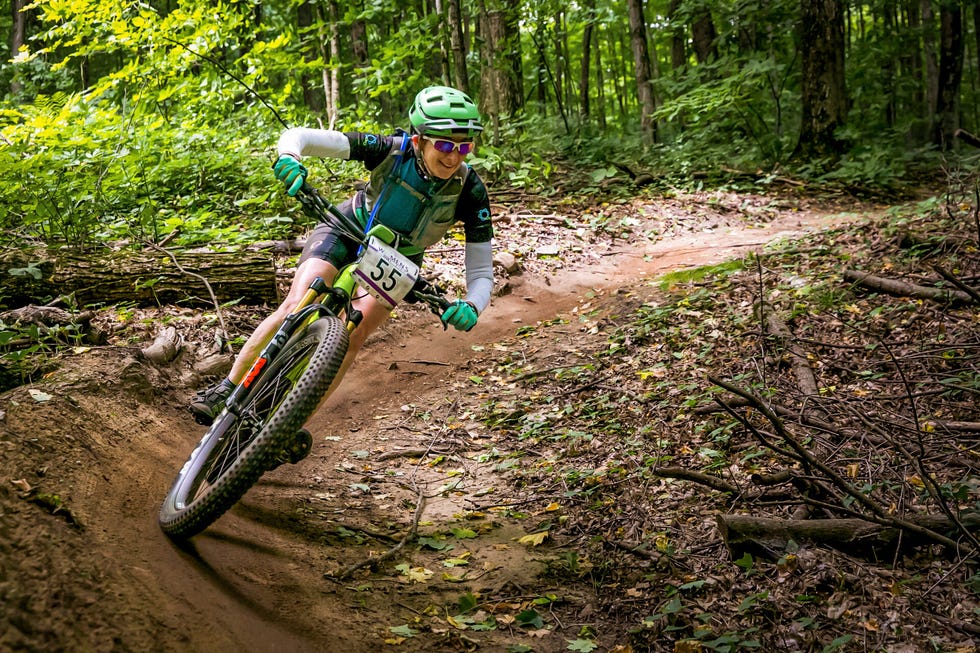
Ene Underwood, 63, Toronto, Canada
When Underwood isn’t sitting in a board meeting as the CEO for Habitat for Humanity’s Toronto chapter, she’s likely pedaling her bike, either indoors on the trainer during the winter, or on longer jaunts outside of Toronto, exploring new gravel roads and trails around Canada. And most of it, she’s doing alone—purposefully.
“My professional life is a full-on life with people all the time,” she says. “Some people are very extroverted. They want to be with people in their work life. They want to be with people in their personal life. But for me, I need to be able to turn it off sometimes, in order to be able to turn it on.”
The longtime mountain biker picked up bikepacking during the pandemic: Her favorite bike shop had a few riders who kept talking about a local 300-mile bikepacking route, and she thought it sounded like a good new challenge since the mountain bike stage race she’d been training for was cancelled. Her initial plan was to credit-card bikepack, using hotels and AirBNBs instead of carrying enough gear to be self-sufficient. But as more COVID restrictions came into place, she started to contemplate camping, eventually buying all the gear and, on the ride, falling in love with sleeping on the side of a trail, communing with nature in a whole new way. But that doesn’t mean she’s given up her competitiveness. Underwood says she still ruthlessly tracks her metrics like total mileage, heart rate and power, works with a coach to figure out what to do whether she has two or 10 hours to train in a week, is constantly trying to improve her technical skills—and continues to improve.
Courtesy Peter Abraham
Connect With Your Cycling Community
Peter Abraham, 62, Los Angeles, CA
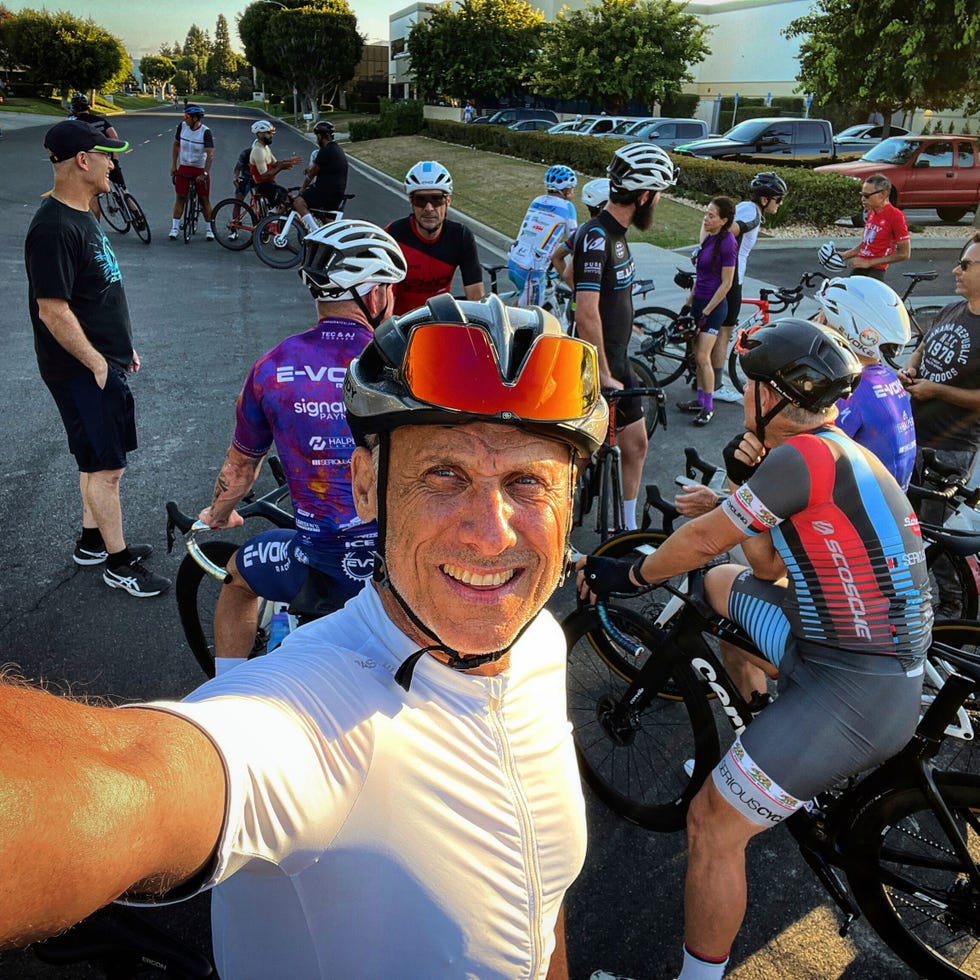
Peter Abraham, host of our exclusive program for Bicycling Members, “How to Ride Strong at50+,” started riding at 16 when his dad’s old bike was the only way to get to school. He raced in college, then through the years fell in and out of love with cycling until, in the last decade, he reconnected with old friends riding in the Santa Monica mountains and made a few new ones on local group rides.
Finding your cycling community is the key to longevity in cycling, says Abraham. Whether that means a few friends who are always up for a ride, or something more formal like a club or team that you join, the friendship and accountability that come from people you pedal with can keep you pushing yourself more than you ever could riding solo.
Abraham also recommends looking for a skills clinic or coach to help you pick up cycling skills like cornering, riding with a group, climbing and descending, no matter how long you’ve been riding. “There are a lot of skills that are not taught, even for honestly, like, high-level racers that are coming up through the system,” he says. “You might have a fitness coach who gives you a program to follow, but in terms of the skills, there’s nobody doing it.”
His skills and fitness still allow him to keep up with some of the faster pros in the area (at least, when they aren’t racing at full speed) and he says the fastest he’s ever felt and the most he’s ever learned was following pro crit racer Justin Williams into a series of corners during a local ‘fun’ race. “You can always get better at the skills on the bike, and saving seconds in the corners can allow you to keep up even when you’re no longer the fittest in the bunch,” Abraham says.
Kaori Peters
Nutrition is Key
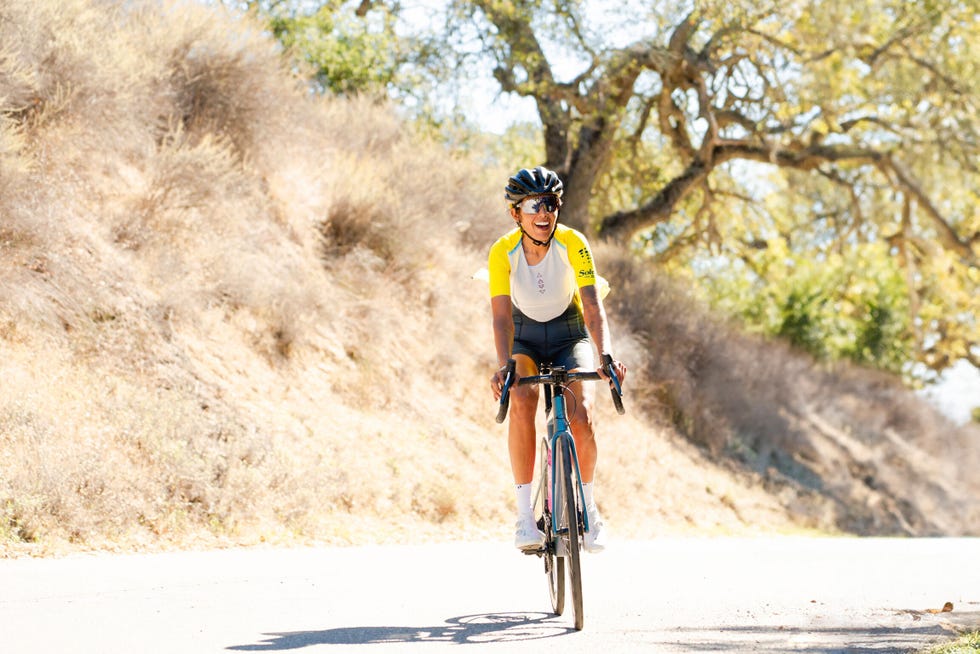
Namrita Kumar Brooke, 49, Pensacola, Florida
While Namrita Kumar Brooke would love to crank out four- to six-hour road and gravel rides on a regular basis, the cycling coach and registered dietitian is all about the intervals lately. Which makes sense as the mom of two has gotten more time-crunched and realized that volume alone won’t keep her fit or fast. While she’d have more fun if she drove to gravel roads and trails, she tends to train on the road these days, since she can ride out the door onto quiet, safe roads.
The ultra-endurance athlete is acutely aware of how much else has changed during her years in the sport—one of the most notable, she says, being nutrition. Like many longtime riders, Brooke rode during the eras of “eating is cheating,” and the keto/low-carb craze, both of which, she says, set endurance athletes back more than they ever knew. These days, whether it’s a 60-minute interval workout or that much-anticipated six-hour ride, she never leaves home without some ride fuel in her jersey pockets. “I work with so many riders who have always done fasted training and barely eat during races,” she says. Even for older riders who are concerned about weight gain, taking in 30 to 50 grams (120-200 calories) per hour on the bike on every ride that includes intervals or is over 60 minutes may dramatically increase your performance. And surprisingly, it may even improve your body composition.
“Carbs aren’t bad for you,” Brooke says. But the type and timing matters, especially for older athletes. She recommends using simple, sugary carbs for before, during and after training, then focusing on carbs that are higher in fiber, like vegetables, at all other meals.
Courtesy Frank Overton
You Gotta Be Consistent
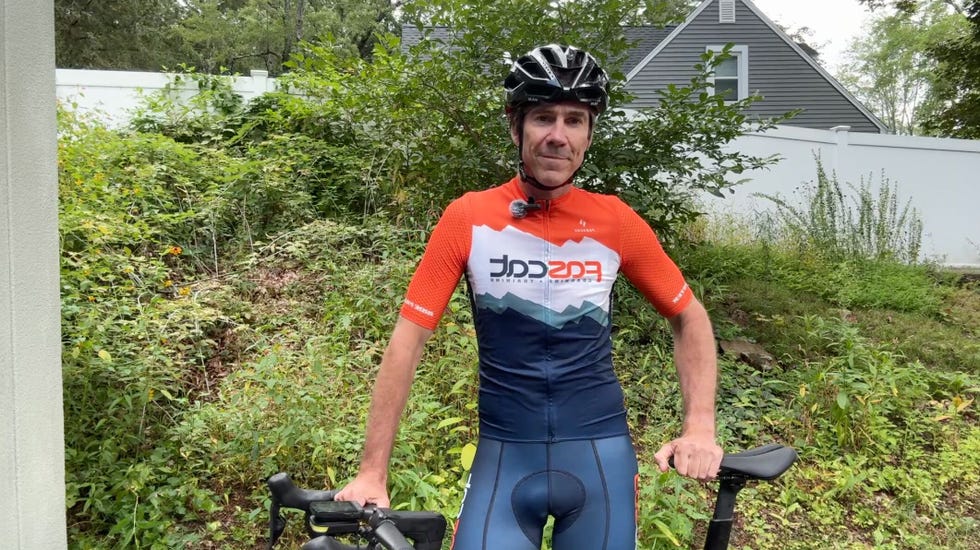
Frank Overton, 54, Boulder, Colorado
Longtime competitive cyclist Frank Overton founded FasCat Coaching more than 20 years ago, helping thousands of athletes achieve their cycling goals while still pursuing his own. His training has shifted over the years, and the former semi-pro mountain biker now spends more time on the trainer—it sits in his office so he’s never far from his workout area—than ever, especially in bad weather.
“It’s just not the same as it was when we were 30 years old, when you could do whatever workout you wanted, eat whatever you wanted, sleep as much or little as you wanted, and wake up ready to do it again the next day,” he says.
Overton has found the path to success for aging cyclists lies in consistency on the bike, and that comes from setting up systems that allow us to ride easily. “As we get older, if we take long breaks from the bike, it takes a lot longer to get back to where you want to be when you do come back,” he says. “It’s not a month or two, it can take years. So don’t stop.”
Consistency doesn’t mean that you need to put in long, hard rides every day. In fact, Overton notes that consistency still should include variety, especially as we get older. A week of his training often involves one to two shorter, harder interval sessions on the bike, with one session of short sprint-style intervals and another featuring longer threshold or tempo bouts. An endurance ride or two let him explore local trails (or watch a movie on the trainer). Then, an easy spin may be a warmup to the strength training that he prioritizes for himself and for his older athletes. And of course, consistency only is possible if you’re rested and recovered, so true consistency on the bike usually includes an off day each week.
Elizabeth Kreutz
Strength Train
Juliet Starrett, 52, Marin, CA
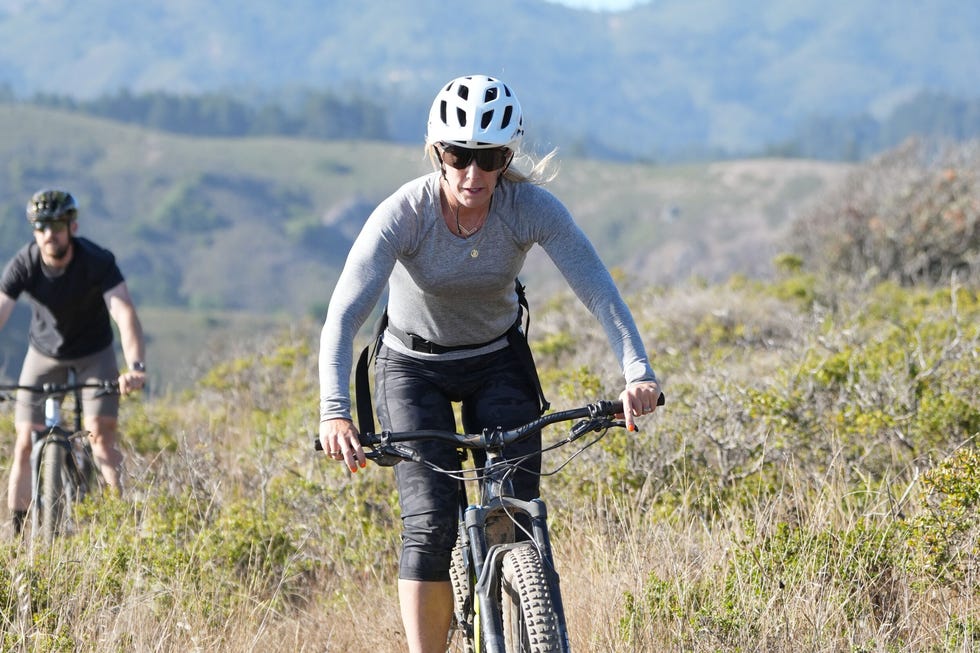
Nothing makes Built to Move author Juliet Starrett happier than shredding on the trails around Marin County—the birthplace of mountain biking—now that she’s a decade into her mountain biking journey. The former professional paddler and founder of The Ready State had all the fitness needed to power up climbs, but technical skills and confidence to let her bike drift over rocks and roots took a while to build. But her husband Kelly Starrett made for a good cycling partner, she says, and was willing to slow down his rides as she got up to speed. Now, the two of them are able to hop into local group rides or seek out new secret singletrack around Mount Tam, and mountain biking is her favorite mode of cardio.
But considering the Starretts are best known for starting one of the earliest CrossFits, it’s no surprise that she still firmly believes that strength training is the key to improving in cycling, and future-proofing our ability to ride for decades to come. “I’m obsessed with the concept of durability,” she says. “Our whole goal is to have durable bodies as we age, so that we can adventure and manage injury. If you’re riding, you’re probably going to take a few little crashes. The more durable you are, the stronger you are, the better you’ll be able to bounce back.”
Starrett recommends a strength training program that hits all the major muscle groups and incorporates mobility work as well. She adds that aging athletes in particular need to start strength training as soon as possible, since sarcopenia (muscle loss) and osteoporosis (weakened bones due to a loss of bone density) are common issues in older adults who don’t do any high-impact exercises. While cycling has many benefits, improved muscle growth and bone density aren’t among them, so subbing in two strength sessions per week, even if you have to skip a ride, is important for your long-term ability to stay riding.