
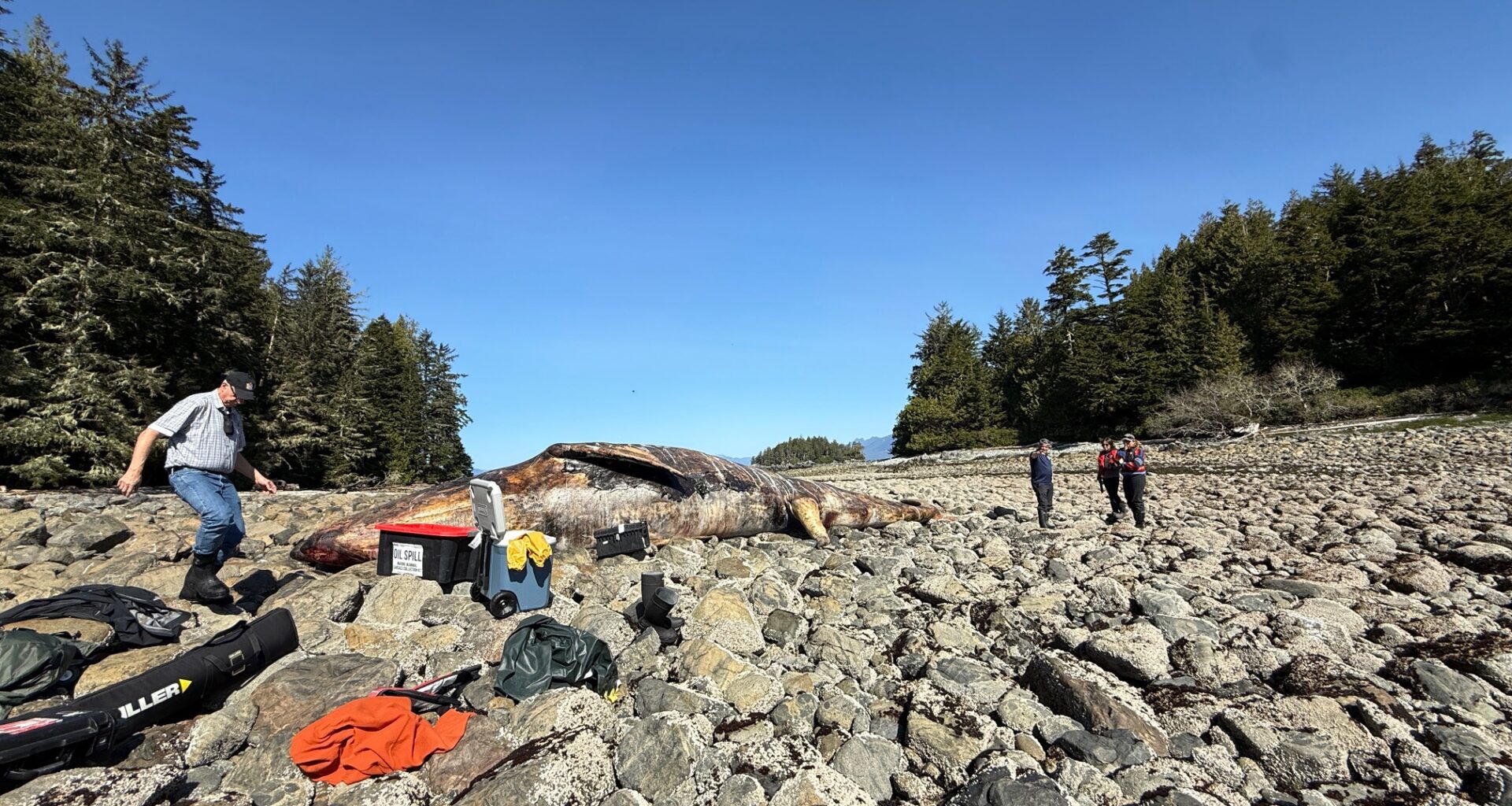
Fishery officials are looking into the deaths of four grey whales that were discovered off Vancouver Island over the span of just 10 days.
Experts say it is an unusually high number of mortalities, though it’s a trend also being seen in Washington State.
The bodies were located near Bamfield, Barkley Sound, Clayoquot and Sidney.
“Two of those four dead gray whales were extremely emaciated. Never seen such poor body condition,” said Paul Cottrell, marine mammal coordinator with Fisheries and Oceans Canada (DFO).
“With the necropsy that we did most recently in Sidney, B.C. the animal had Cyamidae, which are whale lice, which they normally have. But there was an infestation when the body condition gets really poor, it actually can eat the animal alive, and it was quite disturbing to see the poor shape of this animal,” he said.
Of the four recent grey whale deaths, three were male and one was female. In total, there have been five grey whale deaths in B.C. since the start of the year, putting it on track to beat the record of 11 grey whale deaths recorded in B.C. over an entire year in 2019.
Grey whale body condition on the decline
Wendy Szaniszlo with the DFO’s cetacean research program says the body condition of grey whales has been on the decline for several years.
Using drones, DFO is looking to track specific whales over time “to see how the body condition changes from season to season and year to year,” she said.
“And as you can imagine, what we’ve found over the past few years has been poor body condition, which is quite a concerning trend of what this means for the gray whales their health,” said Szaniszlo.
She attributes some of the malnutrition to a lack of prey in the arctic. Grey whales migrate from warmer waters in Mexico in the winter to as far away as Alaska in the summer.
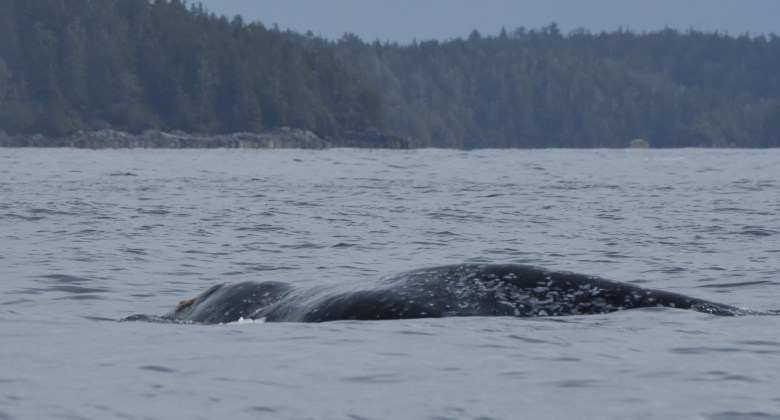 A grey whale is pictured in Barkley Sound on April 17, 2026. (DFO)
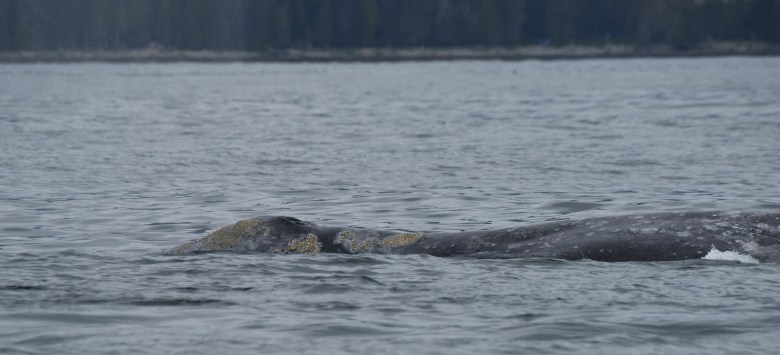 A grey whale is pictured in Barkley Sound on April 17, 2026. (DFO)
With warmer winters and ice melting earlier in the year in the Arctic and sub-Arctic regions, prey that grey whales generally feed on is becoming less abundant.
“The changing water temperatures has affected the prey availability, and there hasn’t been as much prey, or the quality has been down. So that has contributed, it’s thought, to the malnutrition and the decreased birth rates and the deaths that we’re seeing right now,” she said.
Grey whale populations on the decline
Grey whale populations have trended up and down over the past several decades, but recently numbers have been on the decline, according to Cottrell.
The population has dropped by about 50 per cent over the past decade, from a peak of 28,000 in 2016 to 14,00 in 2024.
In 2016, the U.S. issued a grey whale unusual mortality event, triggering researchers in Canada, the U.S. and Mexico to monitor grey whales and standardize some research and necropsy practices in 2019.
Populations continued to decline until 2024, at which point the unusual mortality event designation was removed.
“The unfortunate thing is that in 2025 and currently in 2026, we’re seeing even more of a decrease in that population,” said Cottrell.
There are three types of grey whale populations, according to the Committee on the Status of Endangered Wildlife in Canada (COSEWIC).
The Pacific Coast Feeding Group and Western Pacific populations are both considered endangered, while the Northern Pacific Migratory population is considered “not at risk,” according to COSEWIC’s latest assessment in 2017.
RELATED: MERS warns of ‘high collision risk’ after grey whale sightings near Port McNeill
Both Cottrell and Szaniszlo say they’re grateful for the assistance of local First Nations – including the Huu-ay-aht, Kyuquot/Cheklesahht, and W̱SÁNEĆ nations – for their help locating the whales and assisting with the necropsies.
Overall, Szaniszlo says more research is needed to help protect grey whales in British Columbia and in feeding grounds north and south of the Canadian border.
“Quite a bit of work has been done in Clayoquot and Barkley Sound, so southwest Vancouver Island, trying to understand gray whales and their ecology. But there’s a lot we don’t know in Central and Northern British Columbia,” she said.
“So it is quite important to continue this work, and we’re collaborating with colleagues in the United States, in Washington and Oregon, as well as in Tofino area as well, with the hope that if we’re using the same protocols and sharing the data, we can better understand what’s going on with these animals, and therefore try to help protect them.”
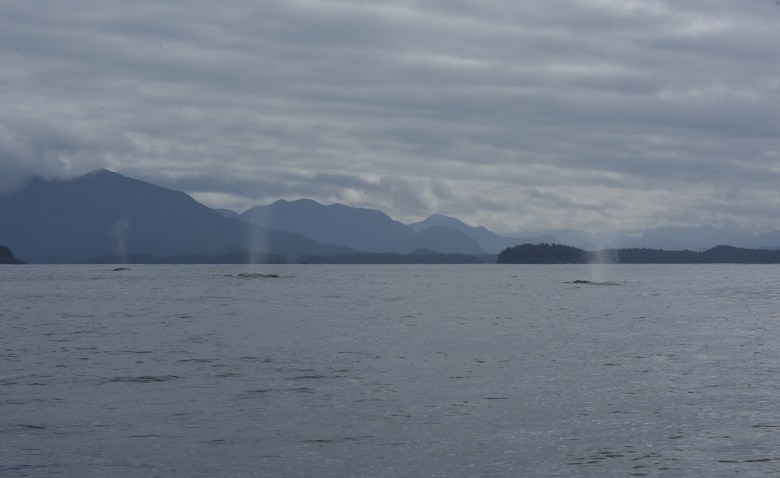 Grey whales are pictured in Barkley Sound on April 17, 2026. (DFO)