
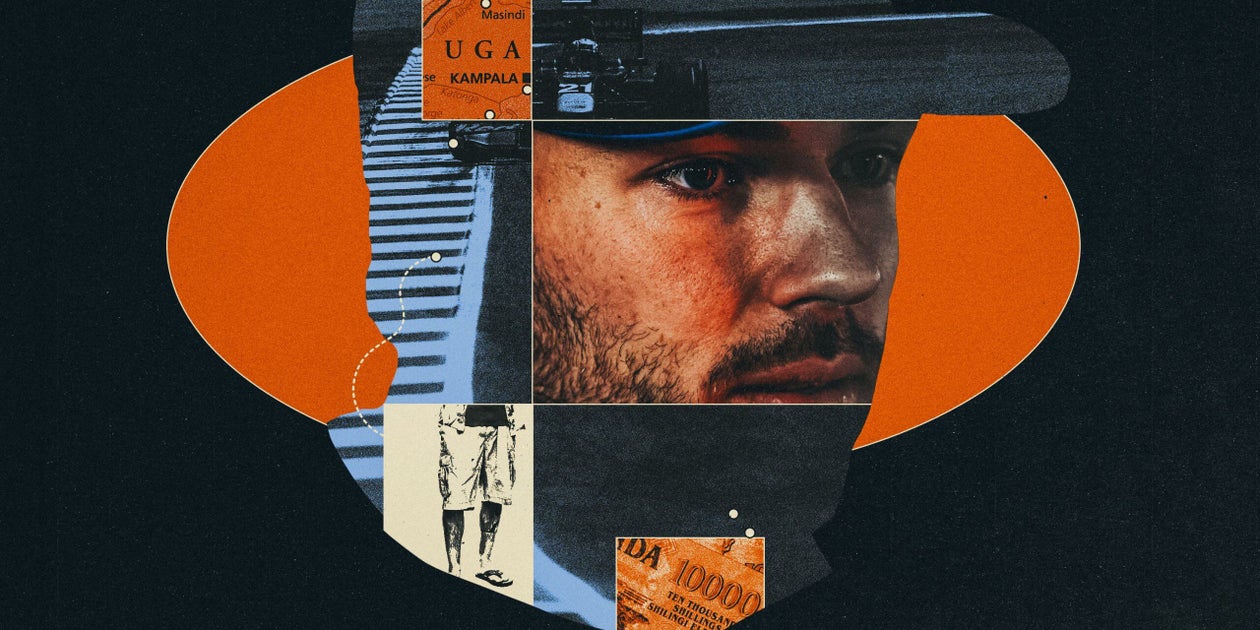
A 19-year-old racing driver, just one year from achieving his dream of reaching Formula 1. Glory and riches await.
But he does not have enough money to get there. Until an email drops.
A mysterious businessman is offering the $200,000 he needs to complete a critical season. There is one catch. An immediate meeting in Uganda’s capital, Kampala, to seal the deal in the middle of a volatile election.
In February 2016, now Alpine F1 star Pierre Gasly did not think twice — he was on the plane to Paris, mother in tow, father back home in Normandy, France, fraught with worry. Things did not pan out how he hoped.
“I’m not sure I’m too interested in meeting the bloke now,” Gasly told The Athletic in an interview. “I’m not even sure he exists!”
This is a story of gold, deceit and desperation on the path to F1. And a warning to those still treading it.
A recent investigation by BBC Sport found that costs for junior drivers have shot up in recent years to three times the amount of money Gasly and his fellow hopeful F1 drivers had to find a decade ago.
The Alpine driver, who is eighth in the 2026 F1 standings and has won much recent praise for his strong results early in the new season, is keen for his tale to serve as a caution to young racers — those who may be considering “compromising their family life and way of living” in pursuit of a dream that is very hard to make real.
Red Bull could see Gasly’s potential. By 2016, he had been racing for its junior team for two years, and the young Frenchman had tested two of its F1 cars. He’d shown impressive speed, but hadn’t won a race.
Helmut Marko — then the all-powerful director of the Red Bull junior team — had had enough. He felt Gasly had to win the 2016 GP2 title (now Formula 2) or face his exit from Red Bull’s program. Marko then increased the pressure on Gasly by reducing the budget Red Bull would provide to fund his season to $500,000, only half the total needed to race for a top GP2 squad.
Red Bull’s junior scheme is perhaps the most famous example of how teams in top motorsport categories use their wealth to help drivers progress when they cannot fund such seats themselves. Typically, a junior scheme would fund an entire season with a team in F2 or the categories below. In 2016, Gasly also received some financial support from the French motorsport federation.
“I’m there on my own, no manager (to help find extra sponsorship),” Gasly said.
But he did have an alternative path. A new team entering GP2 could take a lower offer of $700,000, as it still needed to prove its place in the new championship. This was Prema Racing, which has since made F2 champions of Charles Leclerc, Oscar Piastri and Mick Schumacher.
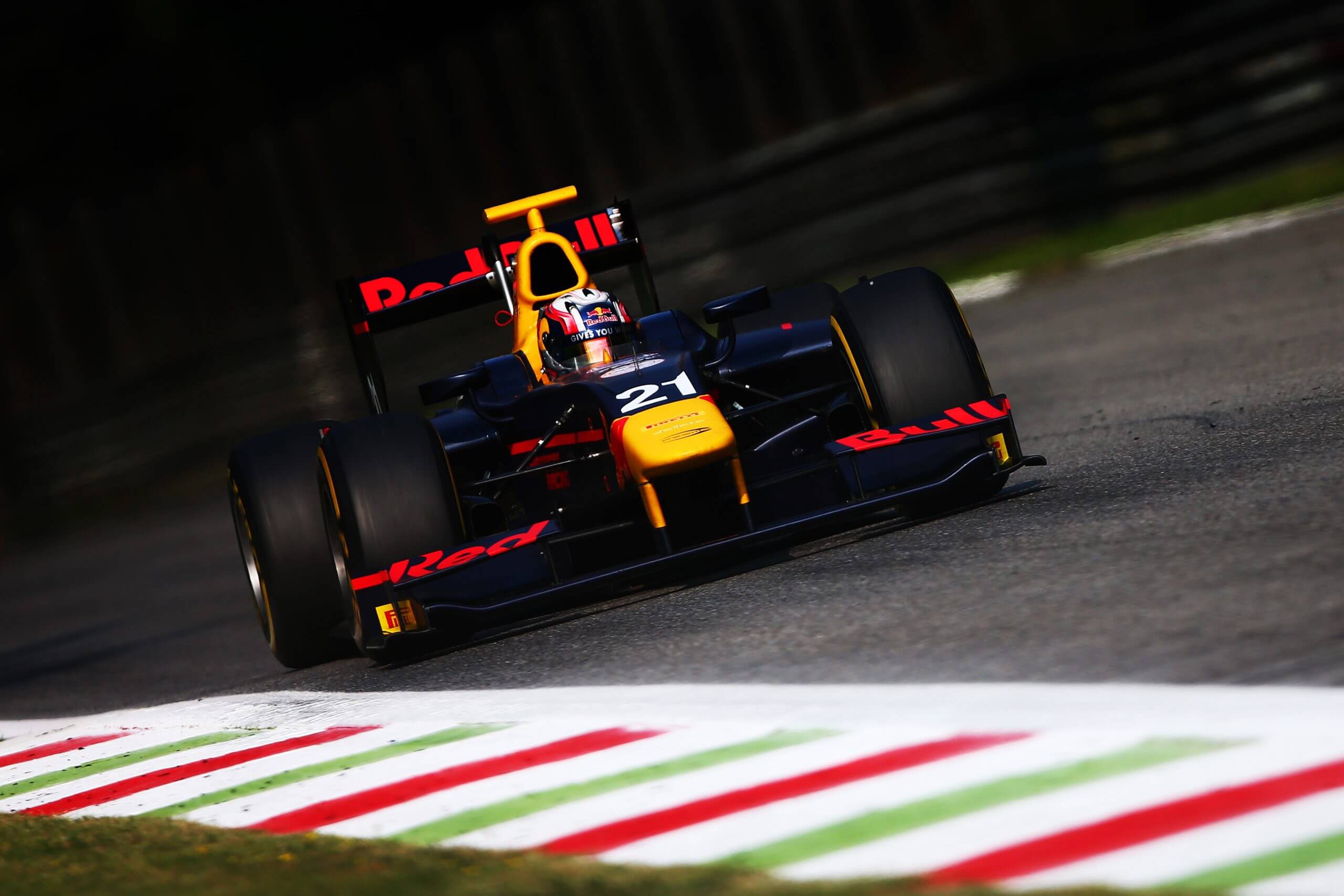
Pierre Gasly drives for Prema Racing at the 2016 Italian GP2 round at the Monza circuit. (Dan Istitene / Getty Images)
“We had to make an investment to put ourselves on the level,” former Prema team boss Rene Rosin told The Athletic. “The first phone call with Pierre, I saw something click between us.”
Gasly believed if he signed with a lesser team at Red Bull’s funding limit, he would have “a shot at the top five (places in the championship)” but knew “that’s not going to get me to F1.” Days before his 20th birthday in February 2016, he signed for Prema.
“It was like, ‘we’ve got to do it, and I’m going to find $200k from I don’t know where,’” Gasly said.
The email arrived soon after.
Gasly told this story once before, in 2021. At the 2025 Las Vegas Grand Prix, he further explained how he and his parents — Jean-Jacques and Pascale — had been contacted by “a legit guy in France, which makes what happened even more strange.”
A world exists to link young sporting stars with companies hoping they can one day carry their branding on the biggest stage — particularly in motorsport. For junior drivers, there’s a small industry behind the scenes that connects young hopefuls with such sponsors. For a cut of the money on offer, brokers link the two sides.
“But I would say it’s a handful of people offering them the right support,” said Guido Hakkenberg, former head of gaming partnerships at the Williams F1 team, who these days runs motorsport partnerships and PR advisory firm, Racing United.
In Gasly’s case, the perfect scenario seemed to appear. His source in the French sports sponsorship industry, whom Gasly declined to name in the interview with The Athletic, told him a Ugandan businessman — “apparently doing exports, imports, Russia, Africa,” Gasly said — could plug his funding hole.
The Gasly family’s wealth is considerable. Three of Pierre’s four brothers had raced karts before him. But it was not enough to cover the sudden gap in 2016. It had needed Red Bull’s financial muscle to get Gasly so far, and because Marko had already suggested an F1 graduation was possible for 2017 if he won the 2016 GP2 title, the sudden shortfall had to be covered.
“We were told, ‘that guy has $250,000 to invest in sports. He’s interested in Pierre’s profile,’ blah, blah, blah,” Gasly said.
“The guy is working between Moscow and Uganda. I said, ‘Ok, I’ll just ask him to meet in Moscow because it’s a three-and-a-half-hour flight from Paris, rather than going all the way to Uganda’. And the guy’s like, ‘Well, I can’t leave right now. So you have 48 hours to get here.
“‘If you’re interested, you can come and meet me with my lawyer. But otherwise, no problem. It’s fine. I’ll find something else to work on.’”
The Gaslys were split. At the time, Uganda was gripped by a volatile election between Yoweri Museveni, in power since 1986, and challenger Kizza Besigye. The latter would lose the 2016 election in a contest that The New York Times called “marred by widespread irregularities” and violence. Besigye was put under house arrest.
“My dad was like, ‘ There’s no f—— way you get there.’ I’m telling my mom I’m going without them,” said Gasly. “Mom being mom is like, ‘Well, I’m not leaving my kid doing it alone.’ So next thing we do is buy the flights. And we end up going to Uganda the next day.”
Jean-Jacques stayed behind, fretting.
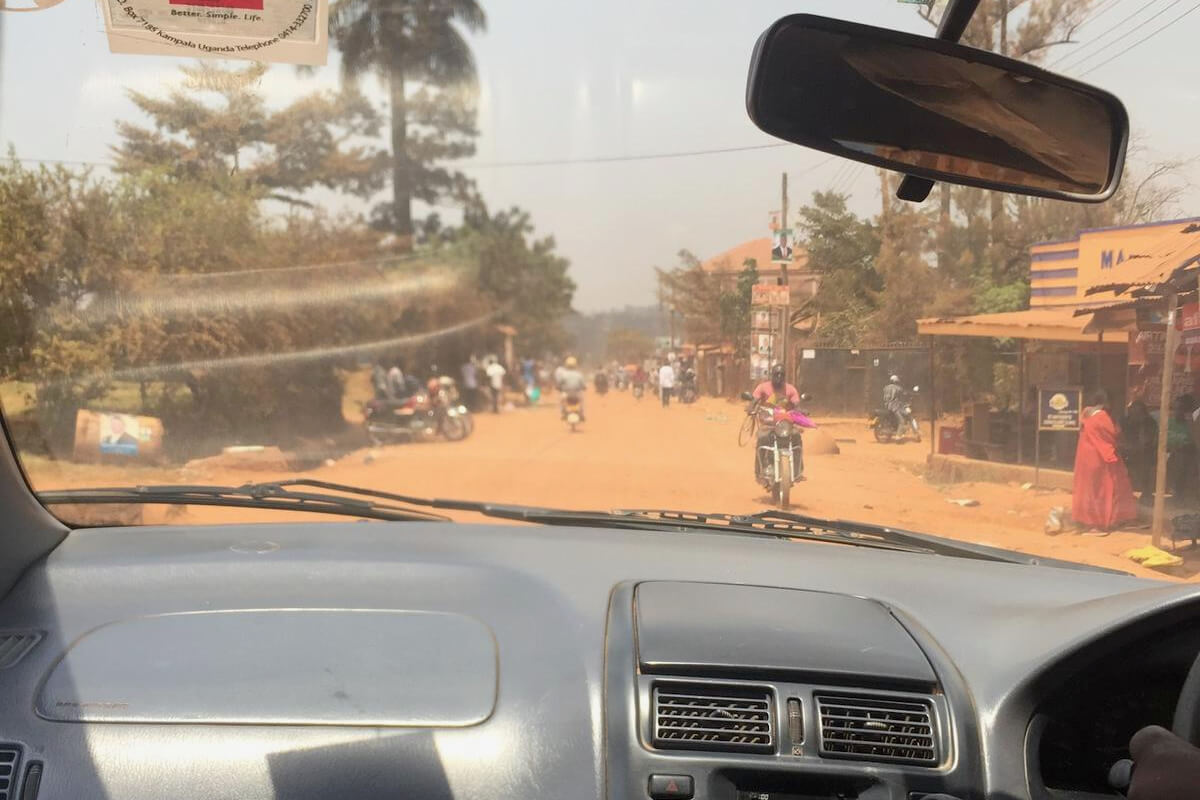
Pierre Gasly’s view on his taxi ride through Kampala, Uganda, in February 2016. (Picture supplied by Pierre Gasly)
Pierre and Pascale landed at Entebbe International Airport, 25 miles southwest of Kampala. They had paid $3,600 for two coach-class tickets.
“We arrive. A driver was supposed to wait for us. No driver. Jump in a taxi. Broken car,” said Gasly. “We stopped after half a mile to pump up the pressures because all the tires were flat.
“And then, as it was in the middle of a political election, there was a lot of military everywhere. Main roads blocked. Fires everywhere. It was eye-opening.”
They eventually arrived at the meeting point — a Kampala hotel. But their prospective benefactor, whom Gasly also declined to name, was nowhere to be seen and wasn’t answering Gasly’s calls. Mother and son went to bed increasingly anxious.
“Next morning, he said he had to do something related to the elections. He had to vote,” said Gasly, who was now really getting suspicious about the legitimacy of his proposed new backer. “So he sent his lawyer.”
The arrival did not assuage Gasly’s growing concerns.
“The lawyer showed up in a flower shirt and flip-flops. He sat down and said, ‘I’m here representing this guy.’ I was like, ‘Ok, do you know what you’re here for?’ He’s like, ‘All I know is that you want his money, but you’ve got to explain to me why.’”
Gasly was stunned. The conversation veered from the comparative calm of his motorsport career to Ugandan politics.
Ultimately, “his lawyer offered some dodgy way to get the money,” which was to take the $200,000 in gold bullion bars. “To which we refused,” Gasly said. “I’m not a gold dealer …”
“We were looking for money and ended up losing money,” added Gasly, whose father wouldn’t speak to him afterwards for “a couple of weeks for putting ourselves in such a situation.”
“When I think about it now, it’s crazy,” he continued. “But that’s how far we were willing to go to make it happen.”
Nine months later, Gasly clinched the 2016 GP2 title with Prema.
In the intervening time, he had won four races and gone head-to-head with his Prema teammate, and future fellow F1 driver, the Italian racer Antonio Giovinazzi. During his GP2 campaign, he again tested the F1 cars of the Toro Rosso (now Racing Bulls) and Red Bull squads.
“He had everything to go to F1,” said Rosin. He later added, “Pierre’s determination was massive. He was breaking the balls of everybody to get money. He was really committed to everything.”
Gasly had found the cash he needed to pay Prema — increasing his sponsor stickers from just Red Bull’s own and that of the French motorsport federation, with new deals to promote motorsport car parts producers and an insurance business.
“It took time, and Rene was very nice. He allowed me extra time to cover the cost,” Gasly said. “But it was quite a hassle through that year.”
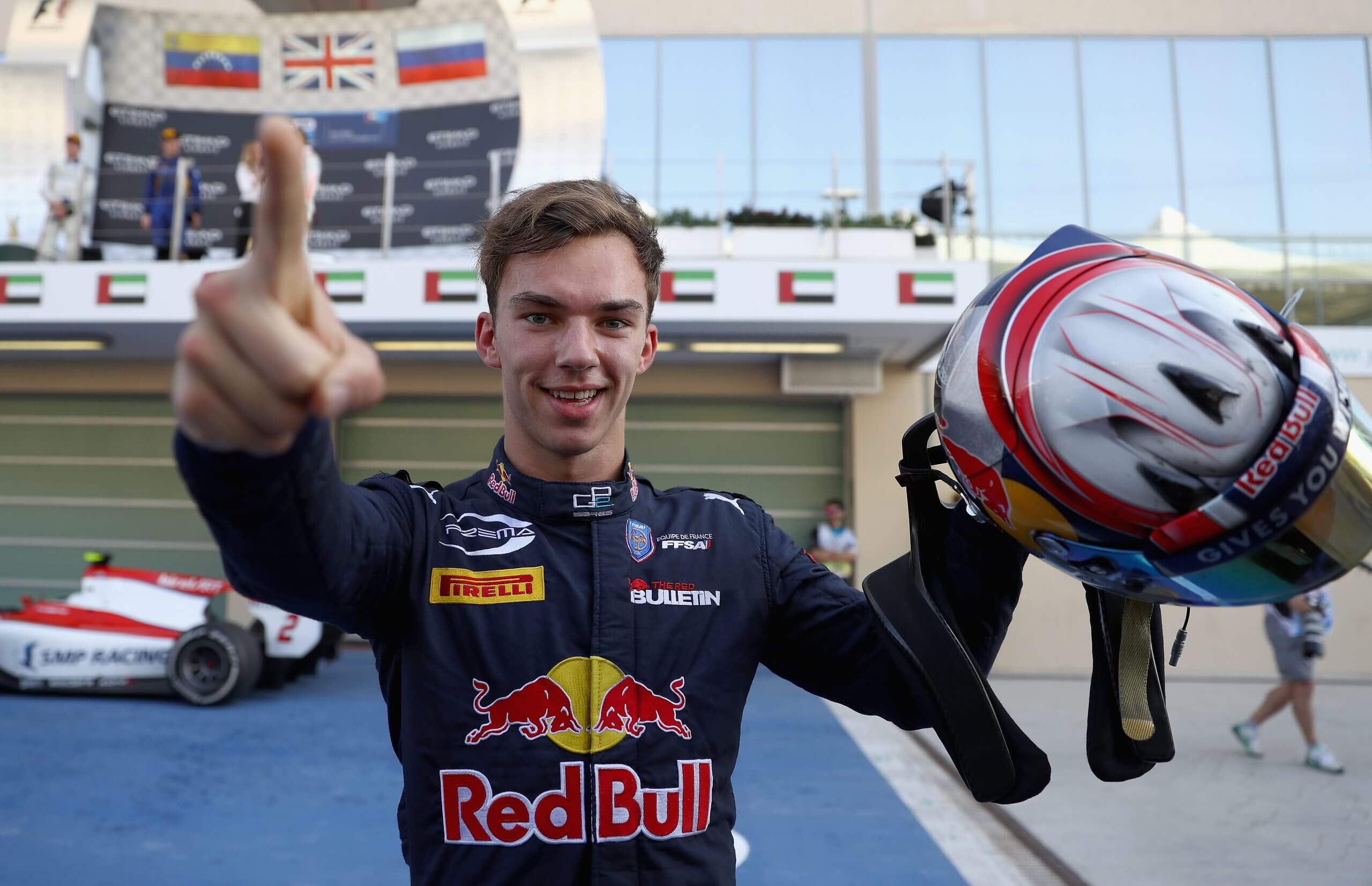
Pierre Gasly celebrates after winning the 2016 GP2 title at the Yas Marina circuit in Abu Dhabi. (Clive Mason / Getty Images)
Gasly eventually entered F1 at the tail end of the 2017 season – finally joining Red Bull’s junior team before getting promoted to its main squad in 2019.
That move didn’t work out, with Max Verstappen on his rise to four straight world titles from 2021-2024, and Red Bull’s second seat becoming a revolving door that first spat out Gasly midway through 2019.
But, back at the renamed AlphaTauri squad in 2020, he won that year’s Italian GP.
His big money move to lead Alpine was still to come in 2023. But as he sat alone on the famous Monza podium and the ticker tape streamed down that sunny Sunday, Gasly didn’t want to leave. He was thinking of all the effort that’d brought him to tangible F1 glory.
“It’s an interesting story,” Gasly said of his rapid Ugandan trip. “Apart from the fact that I was really pissed off.
“On the flip side, I got back, and it made me appreciate everything I had to another extent. It was eye-opening on the human side.”
In 2026, the stakes are even higher for young drivers. The average price for an F2 seat has tripled over the past decade, now nearing $3 million.
“Because F1 is doing so incredibly well, it doesn’t need those kinds of sponsors anymore,” Hakkenberg said of Gasly’s story. “That’s the pressure that some F1 teams used to have, but that’s still there with the drivers. And it’s less regulated, their area, in terms of finding money.”
Gasly’s knowledge of being on the verge of an F1 drive had driven him to take risks with plugging his sudden budget shortfall. But he warns that others are making bigger financial commitments far earlier in their careers these days, without any guarantee they will reach the same level.
“People compromising their family life and way of living — that happens a lot (in junior racing),” said Gasly.
“You might have a one or two percent chance, and people go all in. You see families really compromising the next 15-20 years, taking so much risk when it’s most likely not going to pay off.”
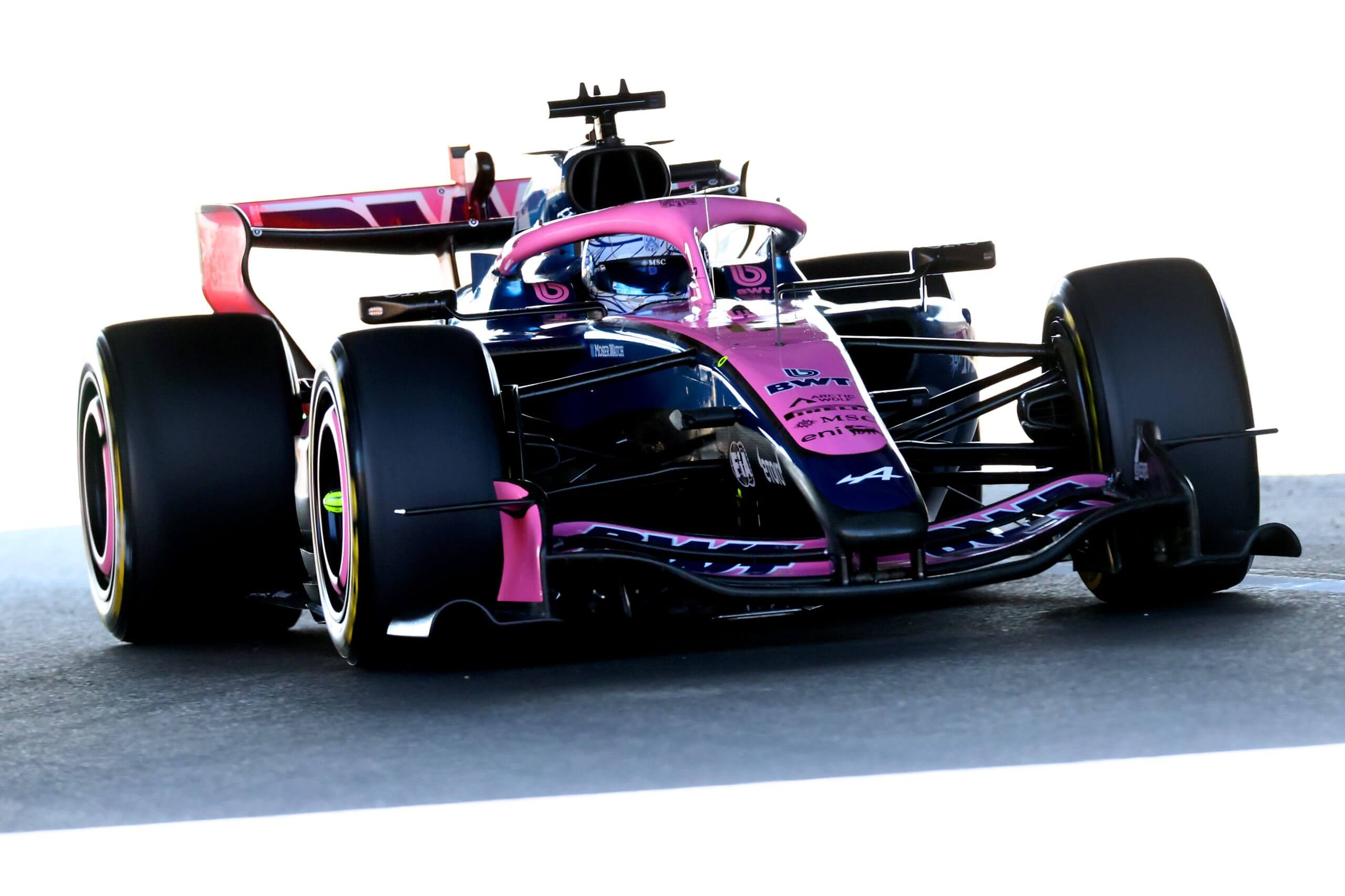
Pierre Gasly racing for Alpine in the 2026 Japanese Grand Prix at the Suzuka track. (Clive Mason / Getty Images)
It did for Gasly. His move to Alpine pushed him towards the upper echelons of F1 driver salaries — earnings exceeding $10 million a year — around the time of his first Alpine contract, signed in 2023. He signed an update to that deal in 2025.
Boosted by that salary increase, these days he’s the investor in French third-tier soccer club FC Versailles and, from January 2026, the MotoGP motorcycling team run by ex-F1 team boss Guenther Steiner.
Business, including lucrative property investments, is one of Gasly’s main interests away from F1.
“I just want to give back as much as I can,” Gasly said. “Sacrifices from my parents also affected my brothers, (so I) make sure that my whole family is covered.
“On top of that, I’m able to do the stuff that I like in life now. I’ve always enjoyed football, I’m able to be involved in football. And padel. It’s just that life is growing and you get different opportunities, which I was miles away from imagining back in 2016.”