
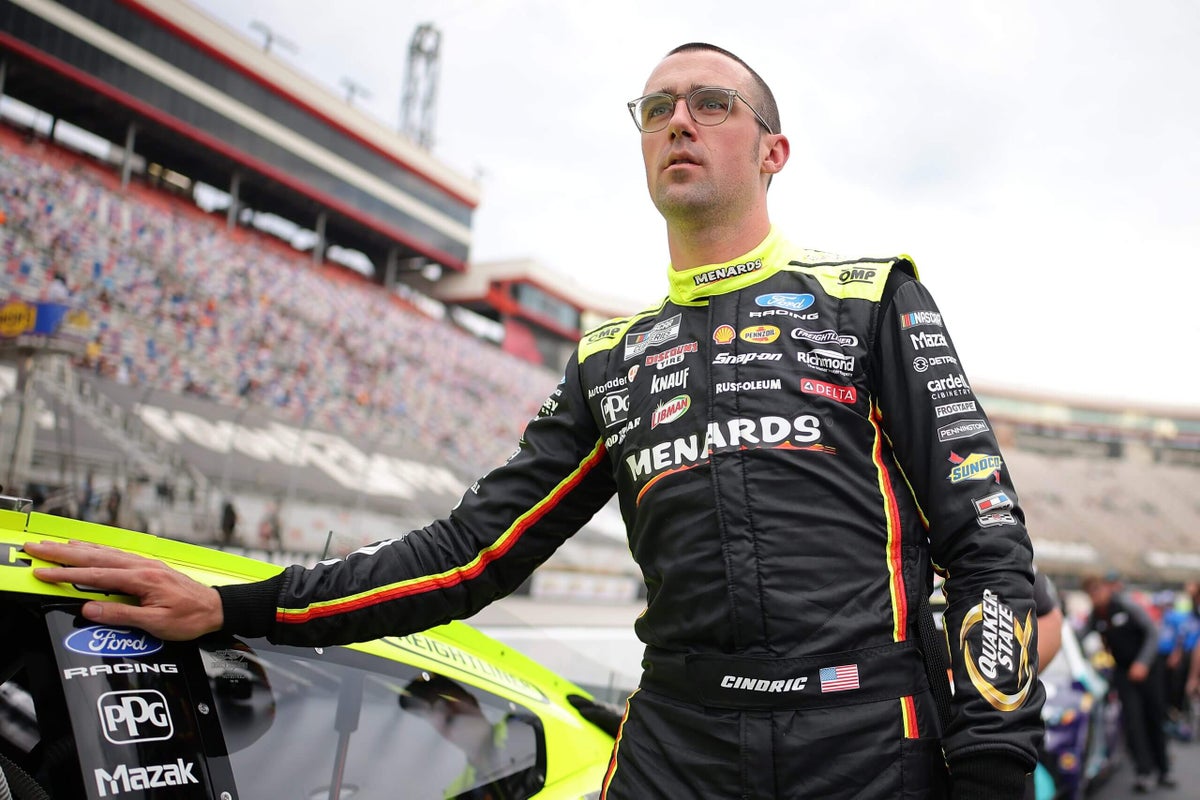
Each week, The Athletic asks the same 12 questions to a different race car driver. Up next: Austin Cindric, the defending winner of the Talladega Superspeedway spring race and one of the favorites as the NASCAR Cup Series returns there this weekend. This interview has been edited and condensed, but the full version is available on the 12 Questions Podcast.
1. Do you typically arrive for things early, late or on time, and why?
Right on the number, almost to a point where it’s somewhat comedic for me.
2. What is the pettiest thing that annoys you during a race weekend?
Not having enough time to eat lunch on race day is usually the thing. That’s a good way to set me off, is not having enough time to actually be physically prepared to race.
How does that happen?
You’re running around (to appearances and sponsor obligations), and sometimes time that looks like more time isn’t enough time. I have a bit of a routine, but I still want to make sure I’m fully physically prepared to go out there and sit in the car for four hours.
3. What is something you’ve learned to stop explaining to people?
People ask me every weekend what my favorite racetrack is, and for the longest time, I would explain that I don’t necessarily have a favorite racetrack. I’ve stopped telling that story, because it’s just a mouthful. Sometimes I can explain afterward, but otherwise I just tell them Dover.
I’m inherently a very honest person, so if I don’t have one, I’m gonna tell you I don’t have one. But that’s a lame answer to tell race fans and your sponsors and everybody else, so you feel obligated to explain why.
4. If you could go back to the early days before you reached NASCAR, what is one different decision you wish you had made?
I wish I would have gotten to do more karting when I was younger.
Because I watch some of the kids now at the go-kart track — I don’t know what the class is called, maybe Cadet — but they do a lot of racing like bump drafting, trying to figure out when to pass, when not to pass, a lot of side-by-side switching the lead. They can’t ever get away from each other.
The kids who are good at that have a lot of race craft skills that I feel like I developed as a teenager when I first started racing in NASCAR.
Being comfortable being side by side and interacting with competitors … I know I would have grown in an area that I had to grow later, so I always think about that.
5. What is it like to be in a debrief after a bad race?
Bad for me or bad for the company? Because they’re very different. For both, you have to read the room. If someone has a strong opinion of where you were off — whether that’s me or the team — you have to acknowledge that.
And if no one has a strong opinion, then as a leader of the team, you have to not only break down what happened and how you got there, but also ask if you missed anything.
Those are the most important meetings. Those are the ones where you’re honest with the people around you — things you did, things others did. You have to tell others what they could have done better, and they have to tell you what you could do better.
At this level, you assume everyone is trying their hardest and using every ounce of knowledge they have. So if I’ve done that and the day is still bad, I’m going to need someone else to help me figure out why it didn’t work.
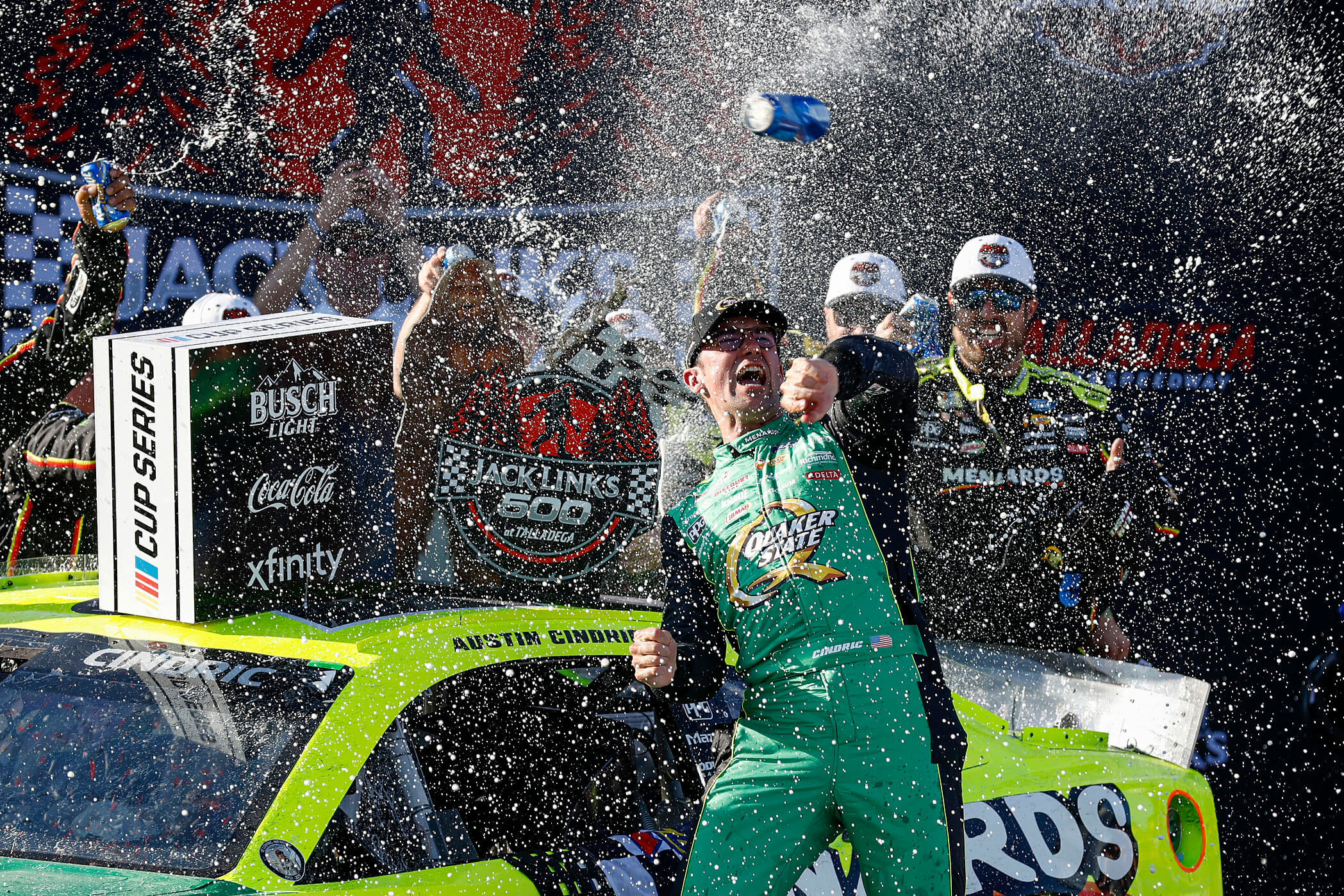
Austin Cindric won last year’s spring race at Talladega, the third Cup Series win of his career. (Sean Gardner / Getty Images)
6. I’m asking each person a pair of wild-card questions: One about the past and one about the present. In terms of the past, you got your first career win at Canadian Tire Motorsport Park in 2017 when you bumped Kaz Grala out of the way on the last lap (in the Truck Series). At the time, you got a lot of hate for that. But you were trying to win to get a playoff spot. So almost 10 years later, how do you view that incident now?
That was one of the single most important decisions I’ve ever made in my career. I’m not here if I don’t win that race. Because I don’t make the playoffs, I don’t finish third in the championship, I don’t earn a shot for Roger (Penske) and Ford and Roush to take a chance on me to run full-time Xfinity.
At that time, I wasn’t going to make the playoffs, and I hadn’t done enough up to that point (in his career). The Truck team (Brad Keselowski Racing) shut down that same year. From a big-picture standpoint, a lot doesn’t happen if I don’t make the playoffs in the Trucks.
It was kind of a Hail Mary for me to even go run the Trucks in the first place. I’d only done like four races before that. It was my first full season in a stock car, and I was racing in the Truck Series; there were basic concepts I didn’t understand yet.
As far as the noise and the negativity — you look back at every race there up to that point, I think there was only one finish where the leader wasn’t wrecked. Even the year before, not only did (John Hunter) Nemechek and (Cole) Custer wreck each other, but my teammate also wrecked me in the last corner, and I would have won the race if that wouldn’t have happened. That was all in the back of my mind — the precedent had been set.
I never understood why guys waited until the last corner. If you’re going to get somebody, at least get them earlier and don’t yard-sale them. I knew I was better than Kaz in that section of the track, so I drove in as hard as I could and knew it would stick, and if I ran into him, that’s what it will be.
Not trying to justify it — but going back to my first point, if that doesn’t happen, I’m not sure I’m here.
7. As far as the present, at Bristol last week, you posted an AI video of a gladiator telling people to tune into the race. It drew a ton of harsh blowback, with people upset at you for using AI. Many of the comments were about AI slop. So then for Kansas, you doubled down and posted actual AI slop — a video of a man cleaning up a mess of tomatoes that had been thrown at him, followed by some bizarre imagery. Why did you keep going with the AI videos after people were mad?
This ended up going way better than I ever thought it would as a social experiment. (Laughs.) Maybe it’s not fair for someone in my position to use our race fans as part of a social experiment, but the basis of it is, I get really bored with the monotonous posting. I don’t see myself as an influencer. If I have something meaningful to say, I’ll say it and I’ll make a post. I want anyone who follows me to know it’s coming from me; it’s not coming from anyone else, I’m not being asked to do this — whatever the words are, it’s coming from me, and I want those posts to be genuine.
But every race week, you have to do these “Tune in!” posts. I understand their importance — I use drivers’ pages to find race schedules myself — but it’s a boring space.
I’d started doing these the last couple years. I had a cool graphic made to mimic an old Ford ad, and I’ve run out of that idea. I didn’t really have a good idea going into this year, so I didn’t do it. Then I started seeing all these AI videos and thought, “No one in racing from a social posting standpoint is using much AI. … This could be great.”
So I got a free trial, typed in some prompts that were related to the race weekend, just plug it out there and see how it goes. And wow! (Laughs.) I had no idea how negatively some people view it. As far as doubling down — I mean, I have the free trial, so why not have fun with it? …
I’ve had a great time playing with it, but there are two things I don’t want. One, I don’t want to create more work for myself, and I am the one generating these, so that’s time away from my week. If they’re appreciated, great; if not, maybe I have to do something else to fill the void.
But I also don’t want to incite negativity. So for that reason, it’ll probably die with my free trial.
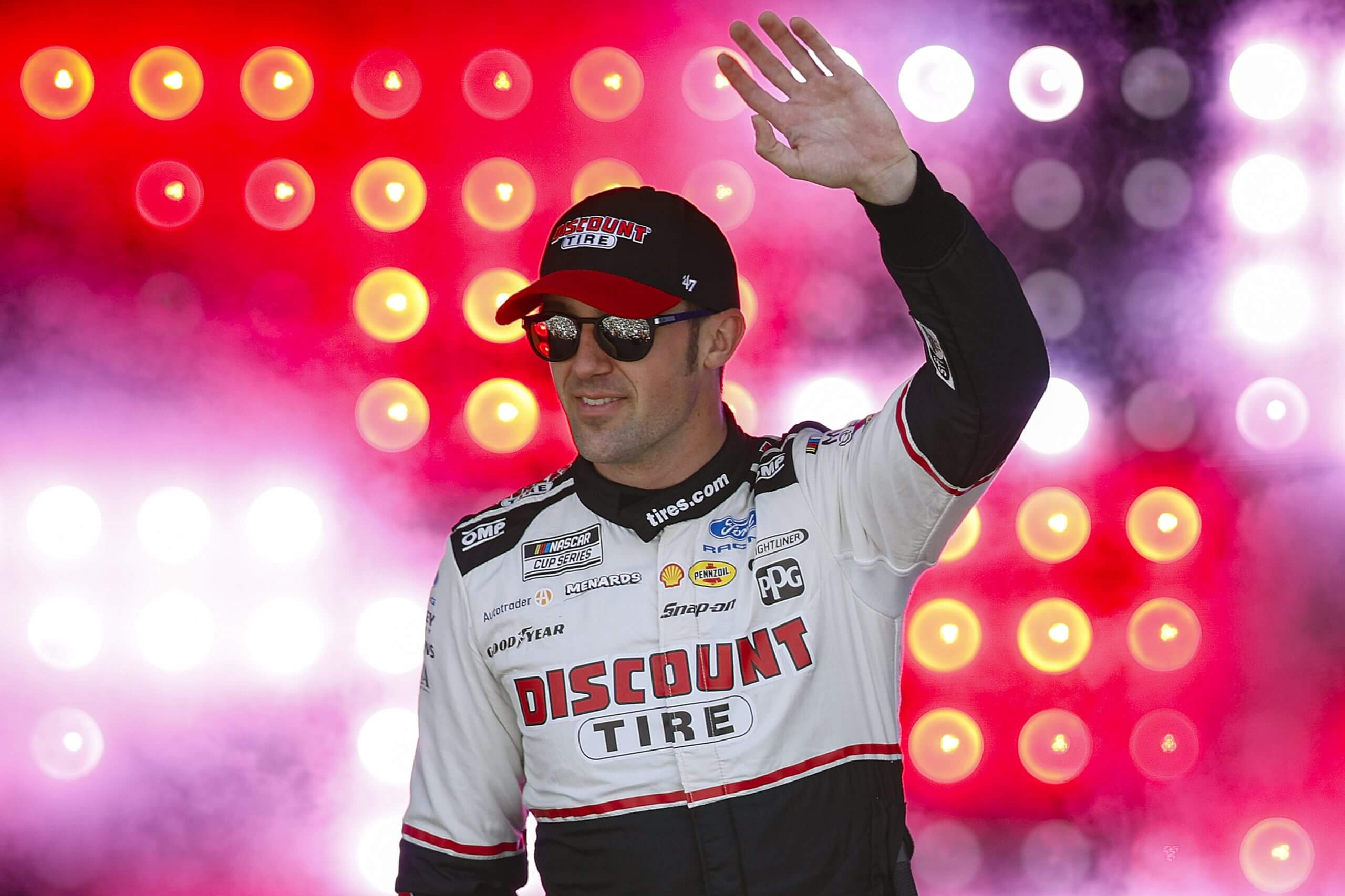
“It’ll probably die with my free trial,” Austin Cindric says of his use of AI. (Sean Gardner / Getty Images)
8. If you could get any driver’s helmet in the history of motorsports, whose would it be?
Greg Moore. My dad has one helmet, and I’ve seen several others, but that’d be a cool one to have.
9. When things are not going well, do you prefer people leave you alone or check in on you?
Totally situational. From a personal side, from a professional side — I’m someone who generally keeps to myself on most things. So yeah, totally depends.
10. What is something about yourself that would surprise people who think they know you?
Most people think I’m very reserved or shy. Not true. But I don’t open up to a ton of people. When I do, you get all of it or none of it.
11. What is something you laugh about now that was absolutely not funny at the time?
When I raced Rallycross, they had me doing media rides before I’d even done a race. They had a little parking lot course at the Port of L.A. I was 15 or 16, trying to learn the car and driving people around this racetrack.
I came over a crest, got loose, didn’t correct it right, had a passenger in the car and I took out these Jersey barriers with the right side of the car. Ripped the mirror off — not my car — and I thought it was over. I was on the verge of tears. Thought no one would let me drive the race car, I had a person in the car, what does that all mean?
Scott Speed comes running up to my car, opens my door, and says, “Now it’s a party!” (Laughs.)
I didn’t know how to respond. I couldn’t tell if he was making fun of me. My dad was laughing.
Now I say that all the time when something goes wrong: “Now it’s a party!”
12. Each week, I ask a driver to give me a question for the next person. Last week was Chase Elliott and he wanted to know: What is the biggest leadership trait you’ve learned from Roger Penske that you’ll carry with you beyond your racing days?
That is a hell of a question. The first thing that comes to mind is remembering everyone’s name — at 27 years old, I haven’t mastered that quality. I don’t know if I ever will, so I don’t know if that’s something I could take. But if I would I could, because it definitely makes an impact.
But more than that, it’s remembering experiences with people. When he’s one-on-one with you — whether you’re a driver, custodian, facilities guy, race engineer — every experience is fairly human and personal.
It catches people off guard that he’s not (intimidating). He is a very powerful figure, but he’s just another guy. He’s a racer. Staying true to that for as long as he has — that personal experience with each person no matter who you are or where you rank — is critically important if you’re going to be a leader.
The next interview is with Bubba Wallace. Do you have a question I can ask him?
You get to add one zero to anything in your life — what would you choose and why?