

Listen to this article
Estimated 5 minutes
The audio version of this article is generated by AI-based technology. Mispronunciations can occur. We are working with our partners to continually review and improve the results.
Many parts of Alberta saw significant snowfall this past winter.
But while some residents of those areas celebrate the benefits of that high precipitation, the central Alberta city of Camrose is buckling up for what could be a dry season ahead that may lead to water restrictions yet again.
In a news release issued earlier this month, the city said it received approximately 67 millimetres of precipitation this winter, two mm less than the average for the region based on records kept since the 1990s.
“It wasn’t record lows or record highs, it was just lower than average,” said Jeremy Enarson, the engineering services manager for the City of Camrose.
But after a couple of dry years, he said the city was hoping “to receive a significant amount of precipitation and run-off to help not only to fill the lake, but to continue to flow into the lake well after the lake is full.”
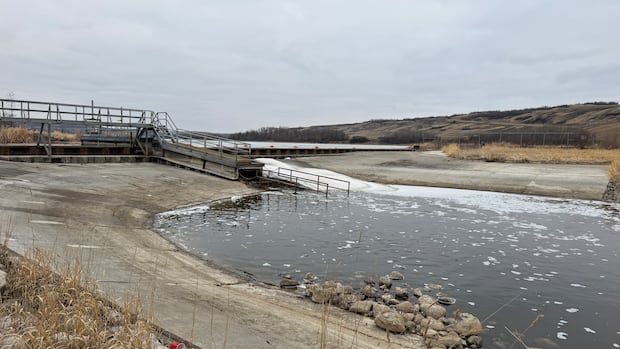
Camrose draws water from Dried Meat Lake, located south of the city. In its latest update on the water situation, the city said already low levels of water in the lake because of a dry fall mean there may not be enough run-off to sustain water levels through the spring.
The Battle River Basin and all its five subwatersheds remain under a provincial water shortage advisory for low flow conditions — as they have been since May 31, 2023.
“Every bit of precipitation helps,” said Sarah Skinner, watershed programs manager at the Battle River Watershed Alliance.
“But we’ve been in such a water and precipitation deficit that it takes a lot to build up that soil moisture again, those water reserves that have been depleted over a much longer period of time.”
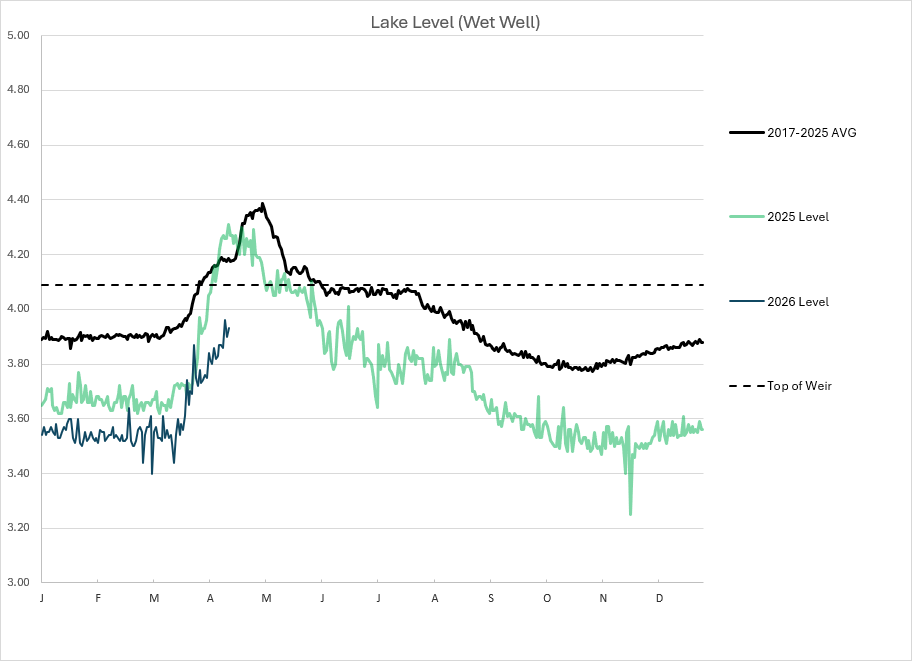 This graph shows how much water is in the lake. 2025 and 2026 levels are lower than 2017-2025. (City of Camrose)
So the expectation is that much of the moisture that came down in Camrose is expected to soak into the ground rather than replenish the lake as it begins its usual seasonal rise.
Nearby Edmonton logged precipitation that was 416 per cent above its 30-year average in December, making it the city’s sixth wettest December to date.
So then why is the Battle River Basin still facing this dry spell?
Skinner said climate patterns like El Niño and La Niña play a role, but also noted the Battle River is a small prairie-fed river which “does have a lot of those ebbs and flows.”
“It doesn’t have that consistent input of mountain glacial run-off or snowpack run-off.”
That means it relies on precipitation, which can lead to fluctuations over years, according to Skinner. She noted the region faced a similar situation back in the early 2000s and again in 2009.
Camrose’s conservation concept
Last year, the city implemented Stage 1 water restrictions that remained in place until the end of October. Those restrictions put limitations on the watering of lawns and are brought in when water levels in the lake drop below 120 days of available storage.
A lack of further precipitation this spring and summer could increase the speed at which Stage 1 restrictions may come into effect, and could potentially threaten to result in the city needing to bring in Stage 2 or even Stage 3 restrictions. The thresholds for those restrictions to come into play are when there is less than 60 and 30 days of water available, and those restrictions include full bans on watering lawns and washing cars.
But Enarson said it’s hard to predict what will happen this year.
“We’re obviously hopeful that we’re going to have a wet year and we wouldn’t have to impose [restrictions], but it really depends on conditions,” he said.
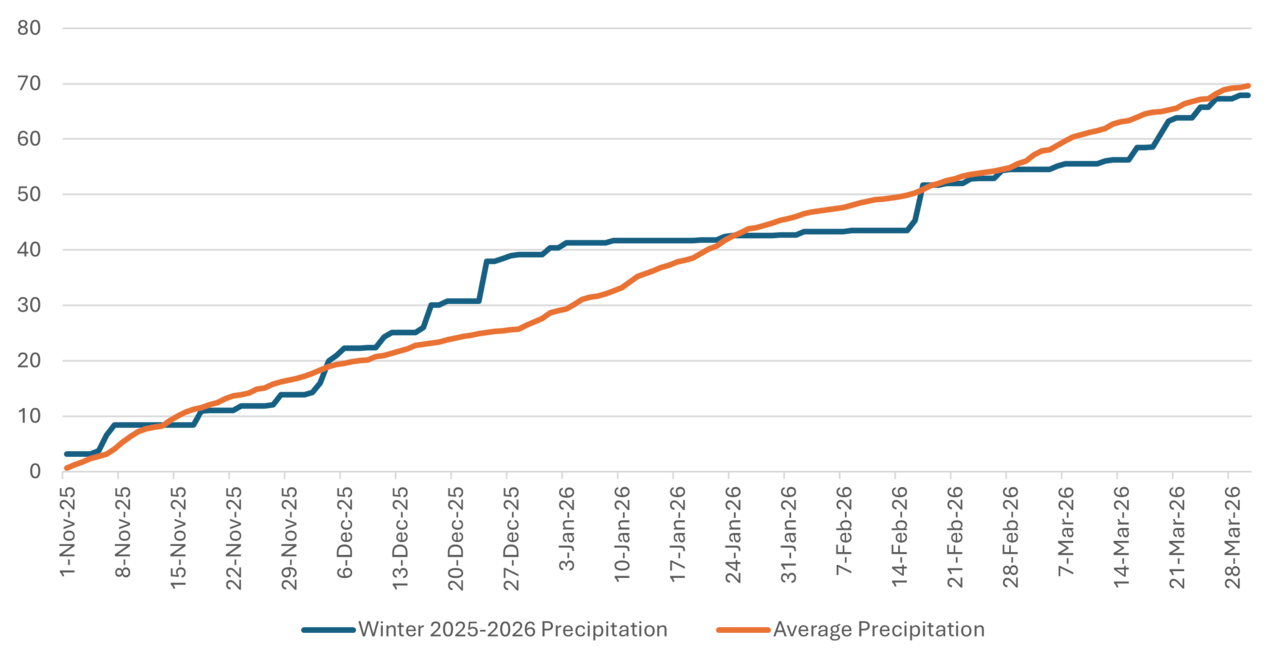 This graph shows winter 2025-2026 precipitation compared to average in Camrose. The total was still slightly less than the average, despite seeing higher amounts in December like most places in Alberta. (City of Camrose)
Water restrictions affect power-washing and landscaping businesses the same as residents when working on residential properties, and Enarson said after concerns were raised by some businesses last year, some changes were made to the restrictions in an effort to try and minimize the effects on them.
Skinner is happy to see Camrose using water restrictions as needed, but said she believes a lot of innovative water storage and water-saving measures could also be explored.
“Encouraging things as small as rain barrels,” she said. “There are great examples from different places around the world of using grey water in different ways, and we don’t really practise that broadly here on the Prairies.”
Skinner added that she also wants to see rural landowners conserving wetlands to try and help with the situation.
“[It] can be very significant because that’s natural water storage, … then slowly filter into the groundwater and the surrounding environment.”