
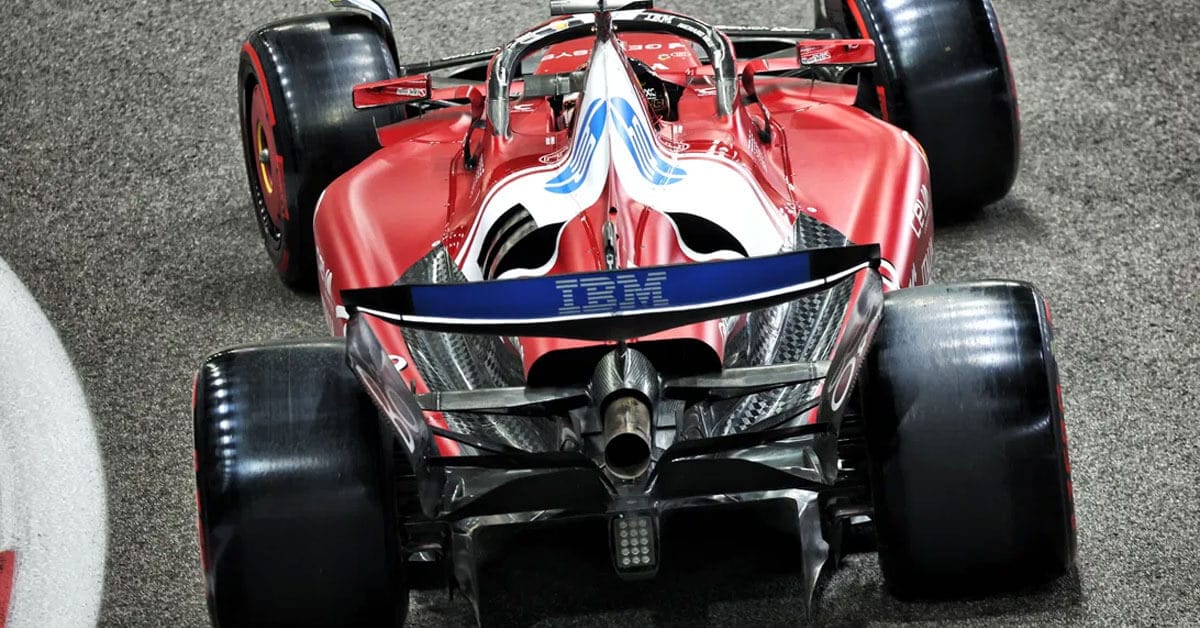
The Ferrari Formula 1 project is once again at the centre of technical debate, with renewed analysis focusing on the SF-26 and its exhaust-related FTM system. Within the Formula 1 paddock, engineers, analysts, and insiders are increasingly discussing whether certain design choices may be influencing overall power unit performance for Ferrari’s current driver lineup, including Lewis Hamilton and Charles Leclerc.
Technical debate surrounding Ferrari’s SF-26 FTM system
In recent days, attention across the Formula 1 technical community has shifted towards Ferrari’s FTM system, with speculation centred on how exhaust flow management may be affecting performance output. Technical interpretations suggest that partial restriction of exhaust gases can increase backpressure within the system, which in turn may influence engine efficiency and overall power delivery.
From an engineering perspective, this concept is well understood. In a naturally aspirated engine, such restrictions would typically result in a clear performance disadvantage. However, Formula 1 power units operate using complex turbo-hybrid technology, meaning the relationship between exhaust flow, turbocharger behaviour, and energy recovery systems is significantly more sophisticated.
For modern Formula 1 engines used by teams like Ferrari, the exhaust gases play a critical role in driving the turbocharger turbine, which directly impacts both combustion efficiency and hybrid energy recovery. As a result, even small modifications to exhaust behaviour can have cascading effects on system performance across different phases of a lap driven by Lewis Hamilton and Charles Leclerc.
Possible performance impact and uncertainty over horsepower estimates
While changes in exhaust flow characteristics do not automatically translate into a direct loss of performance in all operating conditions, some technical reports have suggested that the impact could amount to a reduction in power output, particularly at higher engine speeds.
Unofficial estimates circulating within the paddock have speculated a potential loss in the region of 10 to 15 horsepower. However, such figures remain difficult to confirm due to the highly complex interaction between hybrid deployment strategies, energy recovery systems, and internal combustion engine mapping within modern Formula 1 power units.
For Ferrari, where marginal gains and losses can significantly influence lap time performance, even small variations in output can have a noticeable effect over a race distance, especially when optimising performance for Lewis Hamilton and Charles Leclerc.
 Debate over ADUO regulations and Ferrari development direction
A key point of discussion within Formula 1 circles is whether the observed characteristics of the FTM system could be linked to compliance with ADUO-related technical directives governing performance parameters.
Some interpretations within the paddock have suggested that the Italian side may have intentionally reduced certain performance aspects in order to remain fully compliant with regulatory constraints. However, this theory remains highly speculative and is met with significant scepticism among technical observers.
It is widely considered unlikely that a competitive Formula 1 team like Ferrari would deliberately sacrifice engine performance, especially in a season where every fraction of performance is critical to championship ambitions involving Lewis Hamilton and Charles Leclerc.
Instead, it is more plausible that the current exhaust behaviour is the result of previous engineering decisions related to reliability targets, thermal management optimisation, or the integration of hybrid systems within the broader power unit architecture.
Ongoing Ferrari SF-26 development and expected updates
Ferrari continues to refine and optimise the SF-26 package, with development work ongoing across multiple technical areas. The planned updates to the FTM system, expected to be introduced around the Miami race weekend, are likely to provide further clarity on the direction of development.
These updates may help determine whether the current configuration represents a deliberate strategic compromise, a temporary solution during an active development phase, or simply an unintended consequence of earlier design choices within the Ferrari Formula 1 power unit concept.
For Lewis Hamilton and his Maranello teammate, the evolution of these systems will be crucial in determining the competitiveness of Ferrari across different circuits and operating conditions throughout the season.
Conclusion: uncertainty remains in Formula 1 technical debate
As is often the case in Formula 1, early technical interpretations can be misleading without full access to internal data and development context. While speculation around the Ferrari SF-26 and its FTM system continues to grow, the true impact on performance remains uncertain.
What is clear, however, is that Ferrari remains fully engaged in continuous development, with upcoming upgrades expected to provide a more definitive understanding of the system’s role within the overall performance package driven by Lewis Hamilton and Charles Leclerc.
Apr 24, 2026David Carter
Let other Scuderia Fans know about us


