
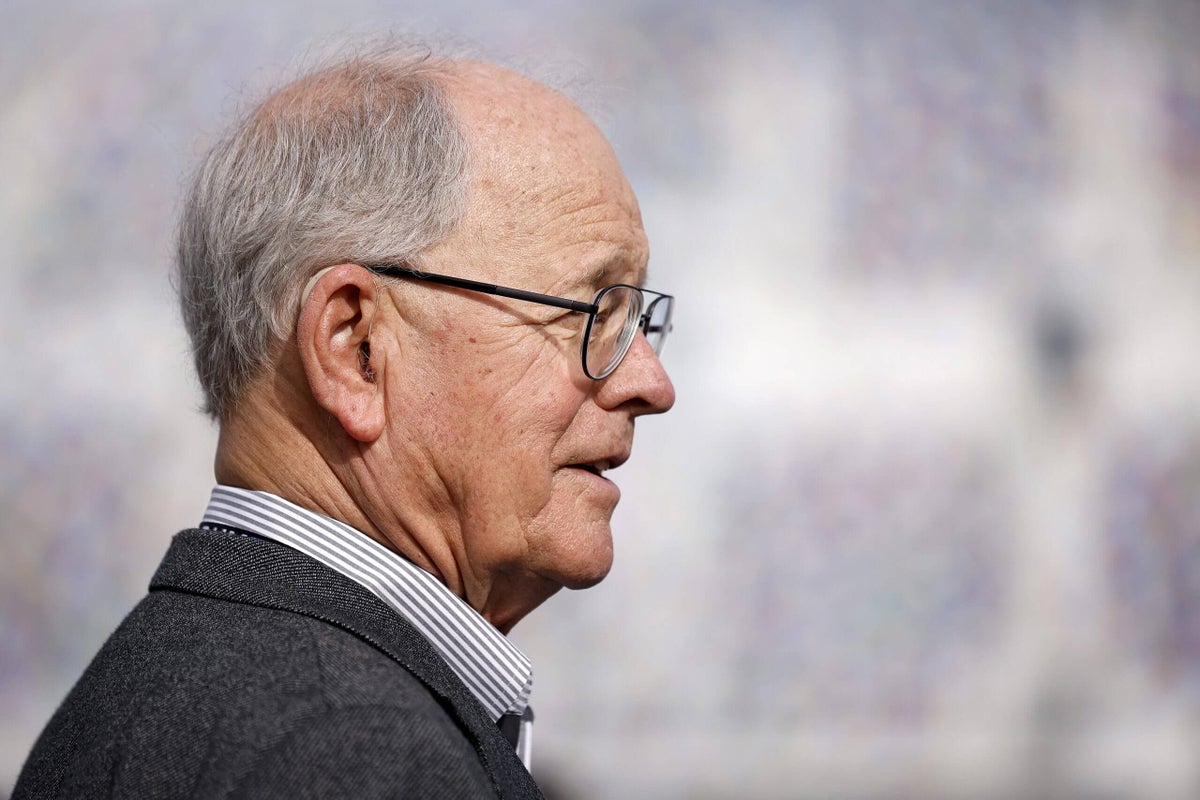
BIRMINGHAM, Ala. — Since losing its way in the mid-2000s as the once-Southern sport that tried to grow too big and too fast, NASCAR has struggled to find its identity.
For all too long, it seemed to answer the question “Who are you?” with “Who do you want us to be?”
In the same breath, it could be both forward-thinking and herald a return to retro roots. It could be ambitious for international growth while consolidating more events back into the South. It could seek a high-end, Formula 1-style clientele while bending over backward to show blue-collar fans it had not abandoned them.
Part of that was the product of a sport that saw its popularity plummet from that mid-2000s high point. The natural reaction was to throw a variety of ideas at the wall and see what sticks. The problem was that trying to be everything to everyone was not productive, and it worked like quicksand.
Another major factor was the lack of a cohesive and decisive leadership team, laid bare by communications revealed during last December’s antitrust lawsuit.
In the aftermath of that lawsuit’s settlement, race teams led by Michael Jordan ended up getting all they had originally pleaded for during contentious, two-year negotiations over the sport’s financial structure. Along the way, they were rebuffed by NASCAR chairman and CEO Jim France — this despite the team-friendly views of his top lieutenants, NASCAR commissioner Steve Phelps and NASCAR president Steve O’Donnell.
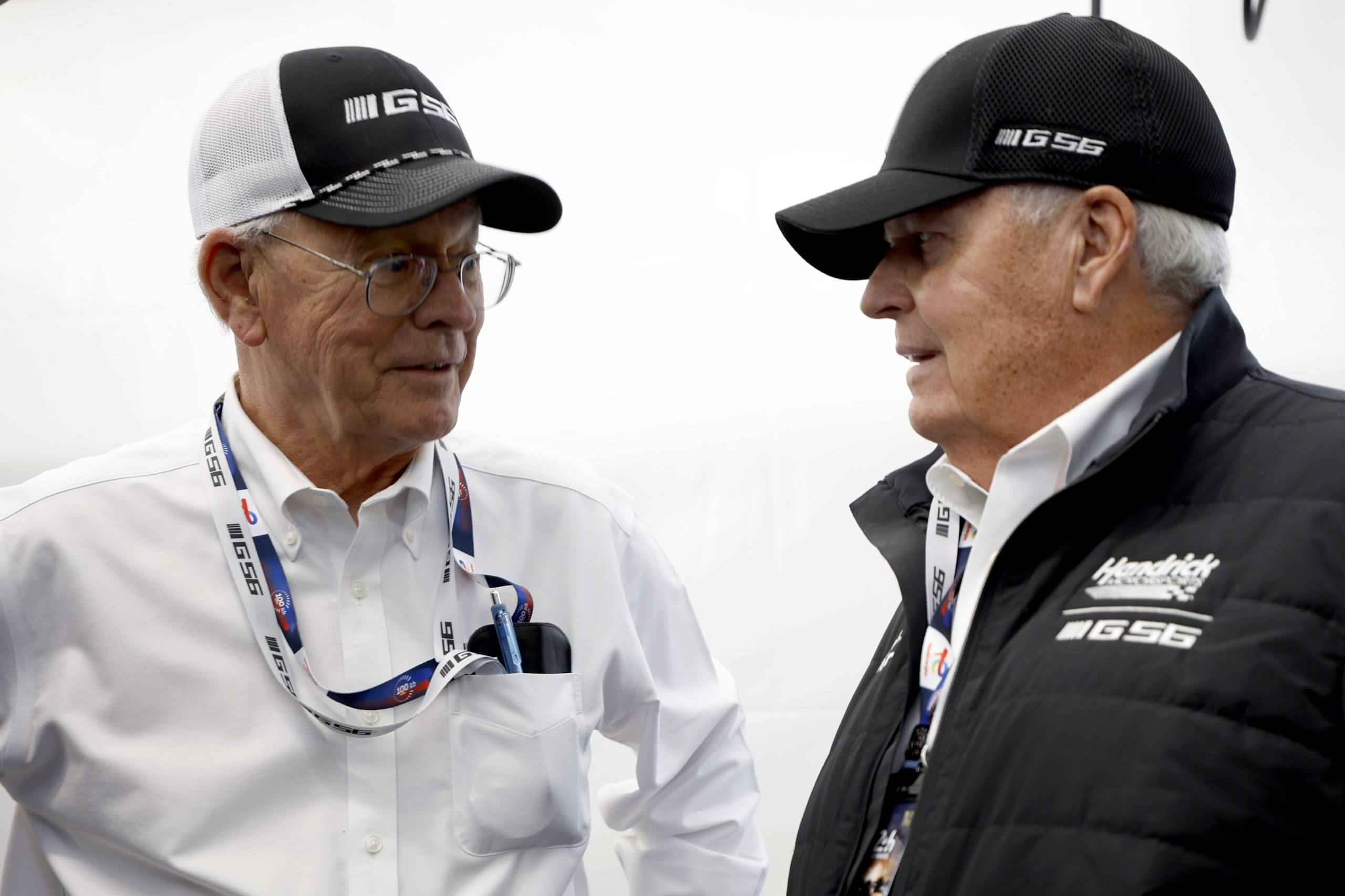
Jim France (left) and NASCAR team owner Rick Hendrick in 2023. (Chris Graythen / Getty Images)
France, it became clear, was the roadblock to reasonable, common-sense changes. France was the one who ignored his closest friends in racing, like team owners Roger Penske, Rick Hendrick and Joe Gibbs, who begged him to give them a fair deal.
He would not. The thing was, France felt his family’s entire legacy was at stake. His father, Bill France Sr., founded NASCAR in 1948. His brother, Bill France Jr., took the reins and led NASCAR to an era of even greater prosperity.
To France, NASCAR teams were allowed to play in the sandbox, but would never control the sandbox — not the rules, not the money, not the direction of where it was going. And so when the teams tried to seize more power than they’d ever had before, France did what his father and brother would have done: He did not relent.
It backfired. France stubbornly took the fight all the way to a federal courtroom, refusing to strike a deal with the teams before heaps of NASCAR’s financial information and private communications exposed the true inner workings of the sport.
By the time he finished testifying a week and a half into the trial, the damage had already been done. The trial destabilized NASCAR’s leadership structure, leading to Phelps’ departure, and left scars on those who remained. It was enough to wonder why France shouldn’t resign immediately and transfer power to the next member of the France family, 34-year-old Ben Kennedy.
Kennedy, a former NASCAR driver himself, has the respect of the garage area. He is a progressive thinker who came up with NASCAR’s race inside the Los Angeles Memorial Coliseum, pushed for a street race in Chicago, and helped lead an international race in Mexico City last year.
Yet he is still young. And though he remains on the fast track to running NASCAR himself one day, perhaps such a rapid timeline was aggressive.
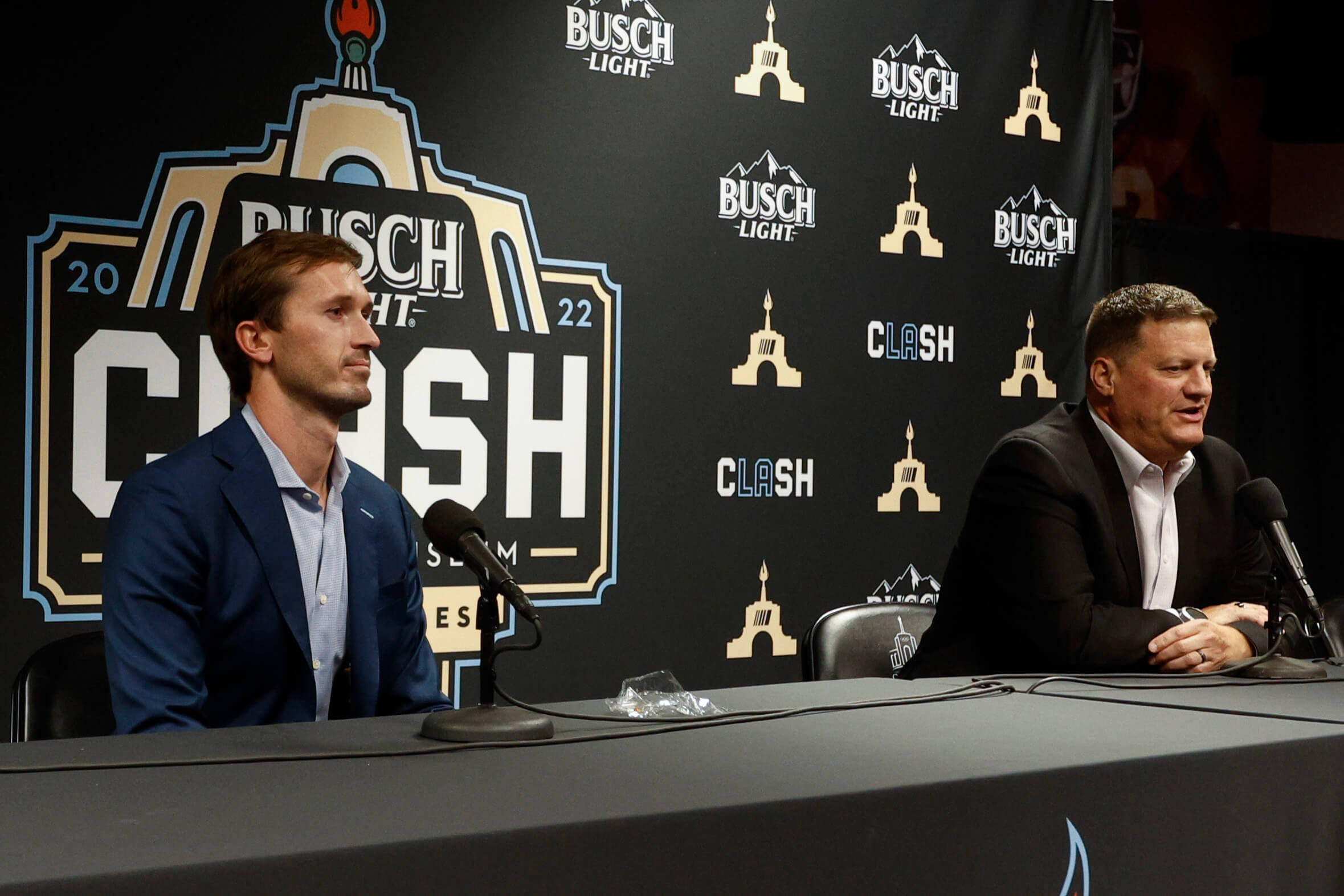
Ben Kennedy (left) and Steve O’Donnell in 2022. (Chris Graythen / Getty Images)
Enter O’Donnell, a key Kennedy mentor, who found himself a survivor of the bruising antitrust trial despite many questions as to whether he’d meet a similar fate as Phelps. O’Donnell is a NASCAR lifer, but he is also much more of a moderate than the old-school, hard-line France.
So when The Athletic reported Friday that France will step down as CEO, it made sense that the next leadership team also came into view: O’Donnell as the first non-France CEO in company history, along with Kennedy as COO at his side to continue learning and take on more responsibility.
The two of them should make for a much more cohesive unit. They often appear aligned on most issues, and Kennedy has even picked up some of O’Donnell’s verbal style over the years.
And though France will remain as chairman of the board, the crucial decisions will now funnel through O’Donnell — along with Kennedy’s valued input, of course.
Thus, this transition marks a new era for NASCAR, a significant departure from the DNA of the sport’s generational leadership — both literally and figuratively.
After all, France never wanted this job. That was never part of the plan. But in 2018, his nephew Brian France — then NASCAR’s CEO — was arrested in the Hamptons for driving while intoxicated. Brian France took a leave of absence, Jim France was forced to step up on behalf of the family temporarily, and then the role became permanent when it was obvious Brian had no pathway to return.
It made sense: Jim France is a NASCAR lifer. He started working at Daytona International Speedway when it opened in 1959 as a high school student who helped park cars at the race.
Later, he did odd jobs like mowing the grass, working in the mailroom and helping the promotional publicity department. Eventually, he rose to become chairman and CEO of what was then called International Speedway Corp. — the racetrack ownership arm of the France family.
But his real love was the sports cars of NASCAR-owned IMSA, a series in which France owns a team himself. Perhaps by coincidence, NASCAR’s “Next Gen” car, the model currently still experiencing growing pains in its fifth year, turned out to be a cousin to a sports car and was an outlier among previous generations of stock cars.
France quickly established himself as a humble and unassuming CEO. He would often slip through the garage unrecognized, wearing a hat and jeans, and never did a news conference during his nearly eight-year term (France left the public-facing comments to Phelps, O’Donnell and Kennedy).
And while he oversaw NASCAR through a challenging period of the pandemic and a new media rights deal, France’s legacy — fair or not — will always be linked to the high-profile charter negotiations and ensuing trial.
Will NASCAR dramatically change now with O’Donnell and Kennedy having more freedom to steer the ship in the direction they see fit? No.
But with NASCAR’s top leaders now in genuine alignment, NASCAR will struggle much less to present a unified vision of what it is and where it’s going.